
Name
2024_19_15_011-Service File.jpg
MIME type
image/jpeg
File size
879960
Width
3280
Height
2056
Media Use
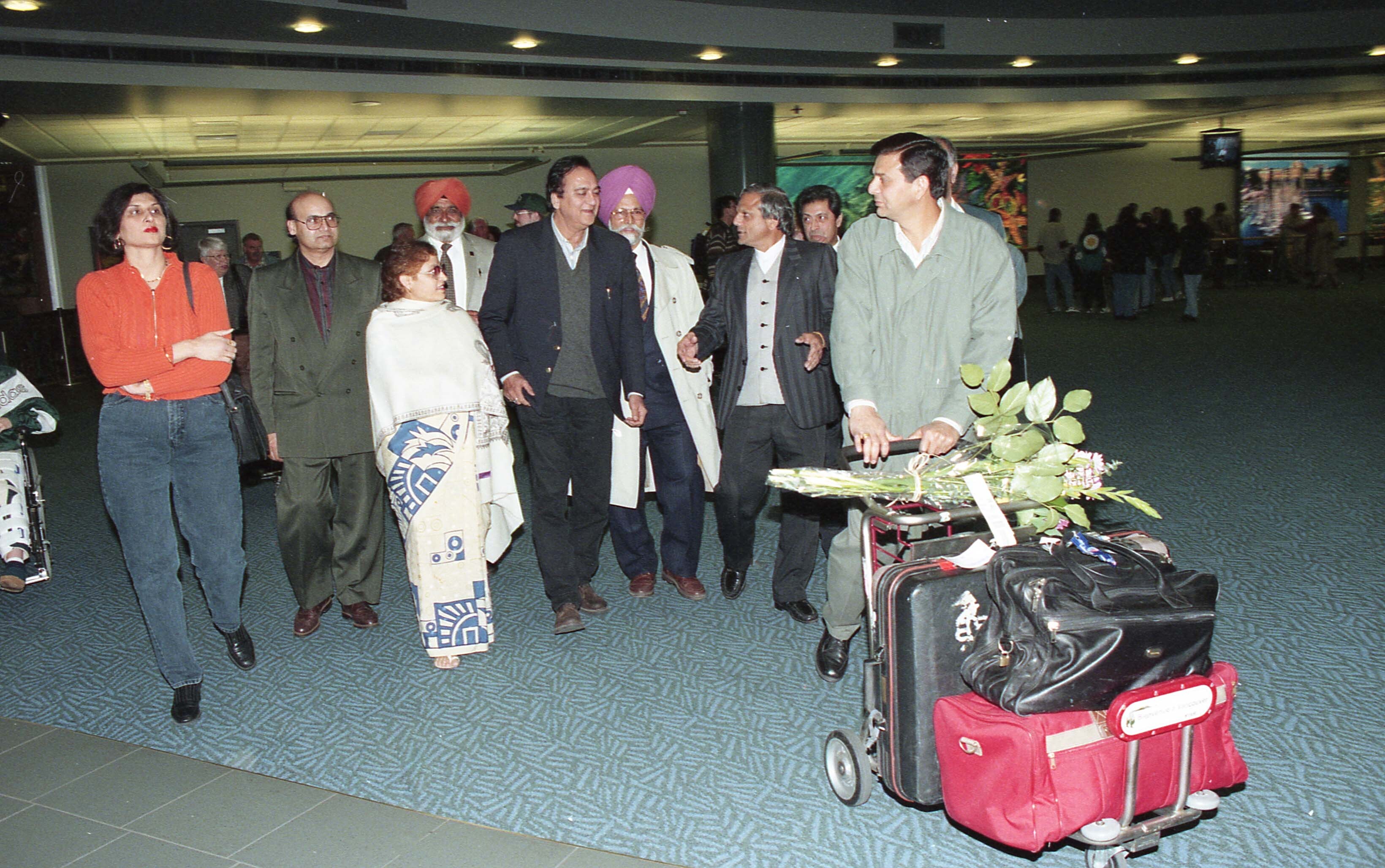
[Photograph of Sunil Dutt with other individuals at the Vancouver International Airport]
Details
Creators
Creator: Chandra Bodalia
Date Created
1997-04-15
Description
Photograph of Sunil Dutt, with a group of unidentified individuals, at the Vancouver International Airport in British Columbia. Among the group is Sudarshan Kumar Bakshi.
Sunil Dutt (born June 6, 1929, Jhelum district, Pakistan – died May 25, 2005, Mumbai, India) was an Indian actor, producer, director, social activist, and politician. While he continued to act until the time of his death, he assumed other offscreen roles in the film industry and also became involved in politics and with various social issues. Dutt debuted in Hindi cinema with Railway Platform (1955), and his major success came six movies later with Mother India (1957). Dutt acted in some 100 films, produced 7, and directed 6. Also keenly interested in politics, Dutt became the sheriff of Mumbai in 1981. In 1984 he joined the Congress (I) party (so named for its descent from the Indian National Congress party and its leadership by Indira Gandhi) and was elected a member of parliament from north west Mumbai for five terms (1984, 1989, 1991 [resigned in 1993 in protest over religious violence], 1999, and 2004). He worked actively for the cause of slum dwellers. In 2004 he was appointed India's Minister for Youth Affairs and Sports, a post he held until his death. In 1981, he founded the Nargis Dutt Cancer Foundation in memory of his wife, Nargis, who had succumbed to cancer that year. In 1987 Dutt led a 1,250-mile (2,000-km) peace march from Mumbai to the Golden Temple in Amritsar, to pray for peace when Sikh militancy was at its height in Punjab. In 1988, to appeal for global disarmament, he went to Japan and walked from Nagasaki to Hiroshima (both cities were targets of U.S. atomic bombs during World War II). Among Dutt's many awards was the Padma Shri, which he received in 1968. He twice received the Filmfare Award for best actor, in 1964 and in 1966.
A highly respected member of British Columbia's South Asian community, Sudarshan Bakshi is widely known for his community leadership and volunteer service.Following his arrival in Canada in 1967, Bakshi worked as a forklift operator and operated his own small blueberry farm for many years. As the father of five daughters, he decided to help young women in Canada and India. In 1988 he began sending money to Indian charities to help poor young women and families struggling to deal with the dowry system and helped young women learn skills like needlework and sewing that would make them financial contributors within their family units. By the 1990s, Bakshi took his charitable efforts to the lumber mill where he worked, organizing a charity lunch to benefit BC's Children's Hospital. Success led him to found the Janta Sewak Society, dedicated to assisting underfunded charities. Through this society, he has raised more than $1.3 million dollars, supporting a range of charities, including the Canadian Red Cross, Delta Hospital Foundation, Canadian Cancer Society, and many others. Bakshi is a founding member of the Five Rivers Community Services Society. He has also worked to increase understanding and tolerance between cultural groups. He is a founding member of the South Asian Human Rights Organization, which works to build bridges between various factions, religions and countries. Bakshi is the recipient of multiple awards, including, the Queen Elizabeth LL Diamond Jubilee Medal in 2013, the Order of BC in 2007, the Hind Rattan Award in 2000 from the NRI Welfare Society of India, and the Rashtriya Rattan Award in 1999 from the International Friendship Forum of India.
Sunil Dutt (born June 6, 1929, Jhelum district, Pakistan – died May 25, 2005, Mumbai, India) was an Indian actor, producer, director, social activist, and politician. While he continued to act until the time of his death, he assumed other offscreen roles in the film industry and also became involved in politics and with various social issues. Dutt debuted in Hindi cinema with Railway Platform (1955), and his major success came six movies later with Mother India (1957). Dutt acted in some 100 films, produced 7, and directed 6. Also keenly interested in politics, Dutt became the sheriff of Mumbai in 1981. In 1984 he joined the Congress (I) party (so named for its descent from the Indian National Congress party and its leadership by Indira Gandhi) and was elected a member of parliament from north west Mumbai for five terms (1984, 1989, 1991 [resigned in 1993 in protest over religious violence], 1999, and 2004). He worked actively for the cause of slum dwellers. In 2004 he was appointed India's Minister for Youth Affairs and Sports, a post he held until his death. In 1981, he founded the Nargis Dutt Cancer Foundation in memory of his wife, Nargis, who had succumbed to cancer that year. In 1987 Dutt led a 1,250-mile (2,000-km) peace march from Mumbai to the Golden Temple in Amritsar, to pray for peace when Sikh militancy was at its height in Punjab. In 1988, to appeal for global disarmament, he went to Japan and walked from Nagasaki to Hiroshima (both cities were targets of U.S. atomic bombs during World War II). Among Dutt's many awards was the Padma Shri, which he received in 1968. He twice received the Filmfare Award for best actor, in 1964 and in 1966.
A highly respected member of British Columbia's South Asian community, Sudarshan Bakshi is widely known for his community leadership and volunteer service.Following his arrival in Canada in 1967, Bakshi worked as a forklift operator and operated his own small blueberry farm for many years. As the father of five daughters, he decided to help young women in Canada and India. In 1988 he began sending money to Indian charities to help poor young women and families struggling to deal with the dowry system and helped young women learn skills like needlework and sewing that would make them financial contributors within their family units. By the 1990s, Bakshi took his charitable efforts to the lumber mill where he worked, organizing a charity lunch to benefit BC's Children's Hospital. Success led him to found the Janta Sewak Society, dedicated to assisting underfunded charities. Through this society, he has raised more than $1.3 million dollars, supporting a range of charities, including the Canadian Red Cross, Delta Hospital Foundation, Canadian Cancer Society, and many others. Bakshi is a founding member of the Five Rivers Community Services Society. He has also worked to increase understanding and tolerance between cultural groups. He is a founding member of the South Asian Human Rights Organization, which works to build bridges between various factions, religions and countries. Bakshi is the recipient of multiple awards, including, the Queen Elizabeth LL Diamond Jubilee Medal in 2013, the Order of BC in 2007, the Hind Rattan Award in 2000 from the NRI Welfare Society of India, and the Rashtriya Rattan Award in 1999 from the International Friendship Forum of India.
Note
https://www.britannica.com/biography/Sunil-Dutt
https://jantasewaksociety.org/founder/
Extent
1 photograph : col. negative
Rights
CC BY-NC-SA 4.0
Subjects
Subject (Topical)
Subject (Geographic)
Subject (Name)_Person