
Awareness
Creator: Bodalia, Chandra
Description
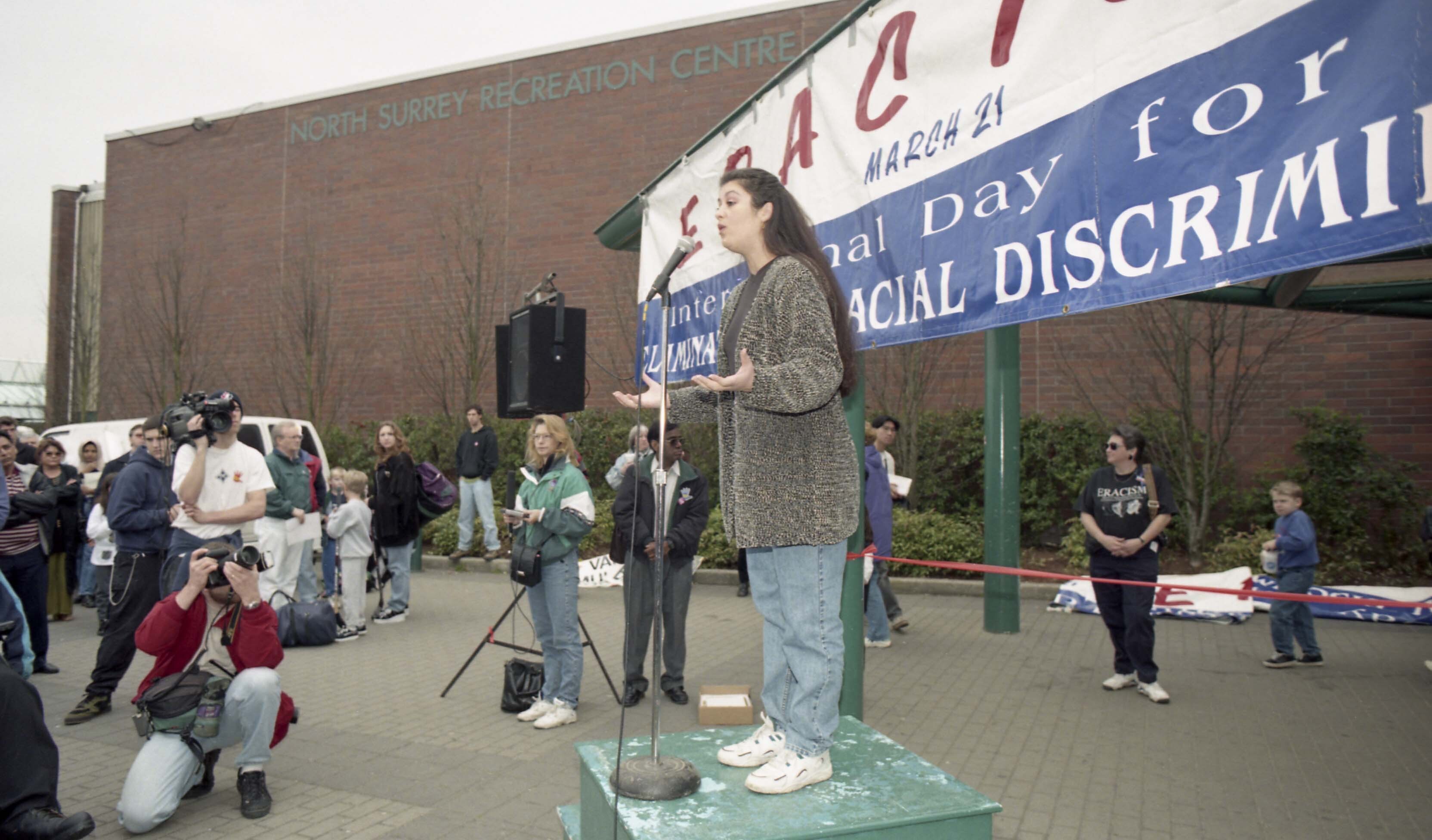
Photograph of an unidentified individual addressing the audience at the International Day for the Elimination of Racial Discrimination event, called Eracism, held in Surrey, British Columbia (B.C.).
The International Day for the Elimination of Racial Discrimination is guided by the United Nations International Convention on the Elimination of All Forms of Racial Discrimination and recognizes that the injustices and prejudices fueled by racial discrimination take place every day. Observed annually on March 21, it commemorates the day police in Sharpeville, South Africa, opened fire and killed 69 people at a peaceful demonstration against apartheid "pass laws" in 1960. This day serves as a call to action for individuals, organizations, and all levels of government to actively work to eliminate all forms of racial discrimination, injustice, systemic racism and hate.
The International Day for the Elimination of Racial Discrimination is guided by the United Nations International Convention on the Elimination of All Forms of Racial Discrimination and recognizes that the injustices and prejudices fueled by racial discrimination take place every day. Observed annually on March 21, it commemorates the day police in Sharpeville, South Africa, opened fire and killed 69 people at a peaceful demonstration against apartheid "pass laws" in 1960. This day serves as a call to action for individuals, organizations, and all levels of government to actively work to eliminate all forms of racial discrimination, injustice, systemic racism and hate.

Creator: Bodalia, Chandra
Description
Photograph of an unidentified individual addressing the audience at the International Day for the Elimination of Racial Discrimination event, called Eracism, held in Surrey, British Columbia (B.C.).
The International Day for the Elimination of Racial Discrimination is guided by the United Nations International Convention on the Elimination of All Forms of Racial Discrimination and recognizes that the injustices and prejudices fueled by racial discrimination take place every day. Observed annually on March 21, it commemorates the day police in Sharpeville, South Africa, opened fire and killed 69 people at a peaceful demonstration against apartheid "pass laws" in 1960. This day serves as a call to action for individuals, organizations, and all levels of government to actively work to eliminate all forms of racial discrimination, injustice, systemic racism and hate.
The International Day for the Elimination of Racial Discrimination is guided by the United Nations International Convention on the Elimination of All Forms of Racial Discrimination and recognizes that the injustices and prejudices fueled by racial discrimination take place every day. Observed annually on March 21, it commemorates the day police in Sharpeville, South Africa, opened fire and killed 69 people at a peaceful demonstration against apartheid "pass laws" in 1960. This day serves as a call to action for individuals, organizations, and all levels of government to actively work to eliminate all forms of racial discrimination, injustice, systemic racism and hate.

Creator: Bodalia, Chandra
Description
Photograph of an unidentified individual addressing the audience at the International Day for the Elimination of Racial Discrimination event, called Eracism, held in Surrey, British Columbia (B.C.).
The International Day for the Elimination of Racial Discrimination is guided by the United Nations International Convention on the Elimination of All Forms of Racial Discrimination and recognizes that the injustices and prejudices fueled by racial discrimination take place every day. Observed annually on March 21, it commemorates the day police in Sharpeville, South Africa, opened fire and killed 69 people at a peaceful demonstration against apartheid "pass laws" in 1960. This day serves as a call to action for individuals, organizations, and all levels of government to actively work to eliminate all forms of racial discrimination, injustice, systemic racism and hate.
The International Day for the Elimination of Racial Discrimination is guided by the United Nations International Convention on the Elimination of All Forms of Racial Discrimination and recognizes that the injustices and prejudices fueled by racial discrimination take place every day. Observed annually on March 21, it commemorates the day police in Sharpeville, South Africa, opened fire and killed 69 people at a peaceful demonstration against apartheid "pass laws" in 1960. This day serves as a call to action for individuals, organizations, and all levels of government to actively work to eliminate all forms of racial discrimination, injustice, systemic racism and hate.

Creator: Bodalia, Chandra
Description
Photograph of unidentified individuals at the International Day for the Elimination of Racial Discrimination event, called Eracism, held in Surrey, British Columbia (B.C.).
The International Day for the Elimination of Racial Discrimination is guided by the United Nations International Convention on the Elimination of All Forms of Racial Discrimination and recognizes that the injustices and prejudices fueled by racial discrimination take place every day. Observed annually on March 21, it commemorates the day police in Sharpeville, South Africa, opened fire and killed 69 people at a peaceful demonstration against apartheid "pass laws" in 1960. This day serves as a call to action for individuals, organizations, and all levels of government to actively work to eliminate all forms of racial discrimination, injustice, systemic racism and hate.
The International Day for the Elimination of Racial Discrimination is guided by the United Nations International Convention on the Elimination of All Forms of Racial Discrimination and recognizes that the injustices and prejudices fueled by racial discrimination take place every day. Observed annually on March 21, it commemorates the day police in Sharpeville, South Africa, opened fire and killed 69 people at a peaceful demonstration against apartheid "pass laws" in 1960. This day serves as a call to action for individuals, organizations, and all levels of government to actively work to eliminate all forms of racial discrimination, injustice, systemic racism and hate.
Creator: Bodalia, Chandra
Description
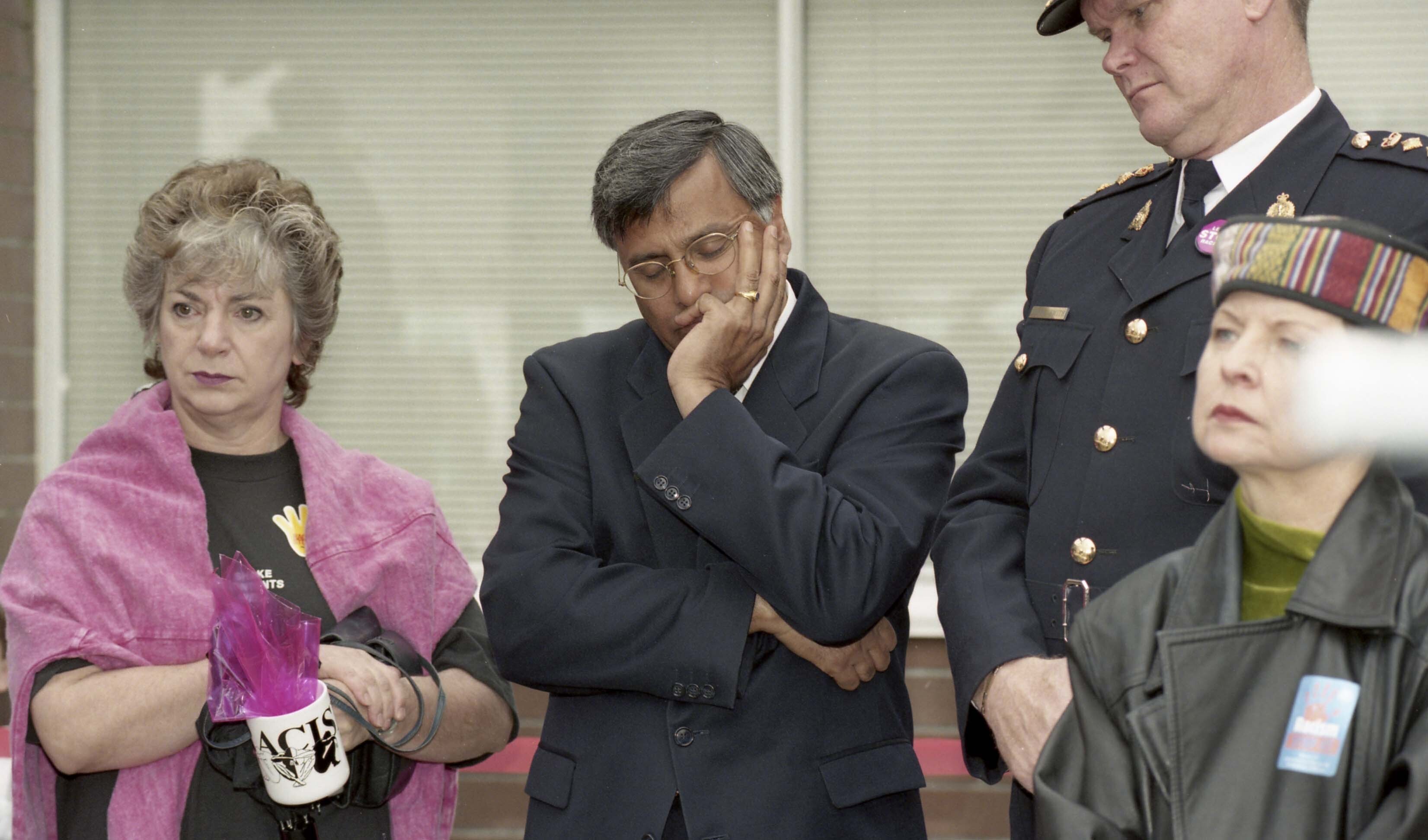
Photograph of Sue Hammell, Ujjal Dosanjh and Penny Priddy with an unidentified individual at the International Day for the Elimination of Racial Discrimination event, called Eracism, held in Surrey, British Columbia (B.C.).
Sue Hammell is a former Member of the Legislative Assembly for Surrey-Green Timbers, serving multiple terms since 1991. She held key roles, including Minister for Women's Equality, and co-founded the Minerva Foundation for BC Women. Hammell also worked internationally to support female leaders and served as Executive Director of the Surrey Aboriginal Society.
Ujjal Dosanjh is a Canadian lawyer, civil rights activist, and politician. Born in Panjab, India in 1947, Dosanjh emigrated to England at the age of 17 and came to Canada four years later, in 1968. He started off at a Vancouver sawmill, but when a back injury hindered his career at the mill, he enrolled at Langara College and completed a degree in political science at Simon Fraser University. He earned a law degree at the University of British Columbia and established a law practice in Vancouver in 1979. First elected as MLA for Vancouver-Kensington in 1991, Dosanjh twice served as Caucus Chair and also chaired the Select Standing Committee on Parliamentary Reform, Ethical Conduct, Standing Orders and Private Bills. Dosanjh was sworn in as British Columbia's 33rd Premier and Canada's first Indo-Canadian Premier on February 24, 2000, serving until 2001. He had previously served as Minister of Government Services and Minister Responsible for Multiculturalism, Human Rights, Sports and Immigration in 1995, and served as Attorney General from August 1995 to February 2000. He was also the leader of the provincial New Democratic Party (NDP) and later served as a Member of Parliament with the Liberal Party. A long time human rights activist, his past community involvements include: South Vancouver Neighbourhood House, MOSAIC, the B.C. Multicultural Society and the B.C. Civil Liberties Association. In 1977 he helped set up the first farm workers' legal information services while he was chair of the Labour Advocacy Research Association. Throughout his career, Dosanjh has been a strong advocate for social justice, healthcare, and public policy issues.
Penny Priddy is a Canadian politician who served as a Member of the Legislative Assembly for Surrey-Newton from 1991 to 2001. She held several ministerial roles, including Minister of Women's Equality, Minister of Health, and Minister of Education. A trained nurse, she worked extensively in community services, supporting children, families, and people with disabilities. Priddy was also active in the Surrey School Board and various community organizations.
The International Day for the Elimination of Racial Discrimination is guided by the United Nations International Convention on the Elimination of All Forms of Racial Discrimination and recognizes that the injustices and prejudices fueled by racial discrimination take place every day. Observed annually on March 21, it commemorates the day police in Sharpeville, South Africa, opened fire and killed 69 people at a peaceful demonstration against apartheid "pass laws" in 1960. This day serves as a call to action for individuals, organizations, and all levels of government to actively work to eliminate all forms of racial discrimination, injustice, systemic racism and hate.
Sue Hammell is a former Member of the Legislative Assembly for Surrey-Green Timbers, serving multiple terms since 1991. She held key roles, including Minister for Women's Equality, and co-founded the Minerva Foundation for BC Women. Hammell also worked internationally to support female leaders and served as Executive Director of the Surrey Aboriginal Society.
Ujjal Dosanjh is a Canadian lawyer, civil rights activist, and politician. Born in Panjab, India in 1947, Dosanjh emigrated to England at the age of 17 and came to Canada four years later, in 1968. He started off at a Vancouver sawmill, but when a back injury hindered his career at the mill, he enrolled at Langara College and completed a degree in political science at Simon Fraser University. He earned a law degree at the University of British Columbia and established a law practice in Vancouver in 1979. First elected as MLA for Vancouver-Kensington in 1991, Dosanjh twice served as Caucus Chair and also chaired the Select Standing Committee on Parliamentary Reform, Ethical Conduct, Standing Orders and Private Bills. Dosanjh was sworn in as British Columbia's 33rd Premier and Canada's first Indo-Canadian Premier on February 24, 2000, serving until 2001. He had previously served as Minister of Government Services and Minister Responsible for Multiculturalism, Human Rights, Sports and Immigration in 1995, and served as Attorney General from August 1995 to February 2000. He was also the leader of the provincial New Democratic Party (NDP) and later served as a Member of Parliament with the Liberal Party. A long time human rights activist, his past community involvements include: South Vancouver Neighbourhood House, MOSAIC, the B.C. Multicultural Society and the B.C. Civil Liberties Association. In 1977 he helped set up the first farm workers' legal information services while he was chair of the Labour Advocacy Research Association. Throughout his career, Dosanjh has been a strong advocate for social justice, healthcare, and public policy issues.
Penny Priddy is a Canadian politician who served as a Member of the Legislative Assembly for Surrey-Newton from 1991 to 2001. She held several ministerial roles, including Minister of Women's Equality, Minister of Health, and Minister of Education. A trained nurse, she worked extensively in community services, supporting children, families, and people with disabilities. Priddy was also active in the Surrey School Board and various community organizations.
The International Day for the Elimination of Racial Discrimination is guided by the United Nations International Convention on the Elimination of All Forms of Racial Discrimination and recognizes that the injustices and prejudices fueled by racial discrimination take place every day. Observed annually on March 21, it commemorates the day police in Sharpeville, South Africa, opened fire and killed 69 people at a peaceful demonstration against apartheid "pass laws" in 1960. This day serves as a call to action for individuals, organizations, and all levels of government to actively work to eliminate all forms of racial discrimination, injustice, systemic racism and hate.

Creator: Bodalia, Chandra
Description
Photograph of an unidentified individual at the International Day for the Elimination of Racial Discrimination event, called Eracism, held in Surrey, British Columbia (B.C.).
The International Day for the Elimination of Racial Discrimination is guided by the United Nations International Convention on the Elimination of All Forms of Racial Discrimination and recognizes that the injustices and prejudices fueled by racial discrimination take place every day. Observed annually on March 21, it commemorates the day police in Sharpeville, South Africa, opened fire and killed 69 people at a peaceful demonstration against apartheid "pass laws" in 1960. This day serves as a call to action for individuals, organizations, and all levels of government to actively work to eliminate all forms of racial discrimination, injustice, systemic racism and hate.
The International Day for the Elimination of Racial Discrimination is guided by the United Nations International Convention on the Elimination of All Forms of Racial Discrimination and recognizes that the injustices and prejudices fueled by racial discrimination take place every day. Observed annually on March 21, it commemorates the day police in Sharpeville, South Africa, opened fire and killed 69 people at a peaceful demonstration against apartheid "pass laws" in 1960. This day serves as a call to action for individuals, organizations, and all levels of government to actively work to eliminate all forms of racial discrimination, injustice, systemic racism and hate.
Creator: Bodalia, Chandra
Description
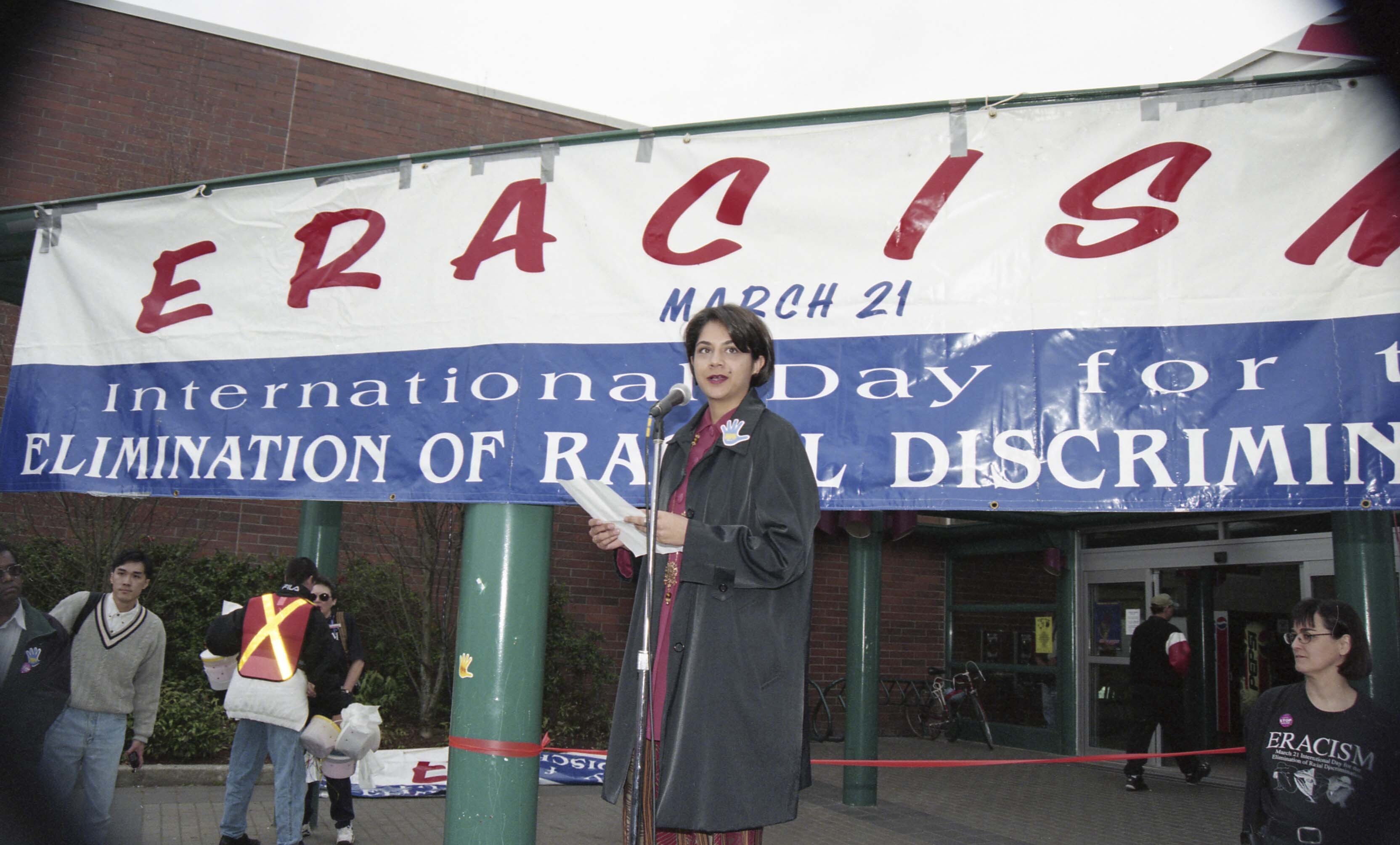
Photograph of an unidentified individual addressing the audience at the International Day for the Elimination of Racial Discrimination event, called Eracism, held in Surrey, British Columbia (B.C.).
The International Day for the Elimination of Racial Discrimination is guided by the United Nations International Convention on the Elimination of All Forms of Racial Discrimination and recognizes that the injustices and prejudices fueled by racial discrimination take place every day. Observed annually on March 21, it commemorates the day police in Sharpeville, South Africa, opened fire and killed 69 people at a peaceful demonstration against apartheid "pass laws" in 1960. This day serves as a call to action for individuals, organizations, and all levels of government to actively work to eliminate all forms of racial discrimination, injustice, systemic racism and hate.
The International Day for the Elimination of Racial Discrimination is guided by the United Nations International Convention on the Elimination of All Forms of Racial Discrimination and recognizes that the injustices and prejudices fueled by racial discrimination take place every day. Observed annually on March 21, it commemorates the day police in Sharpeville, South Africa, opened fire and killed 69 people at a peaceful demonstration against apartheid "pass laws" in 1960. This day serves as a call to action for individuals, organizations, and all levels of government to actively work to eliminate all forms of racial discrimination, injustice, systemic racism and hate.
Creator: Chandra Bodalia
Description
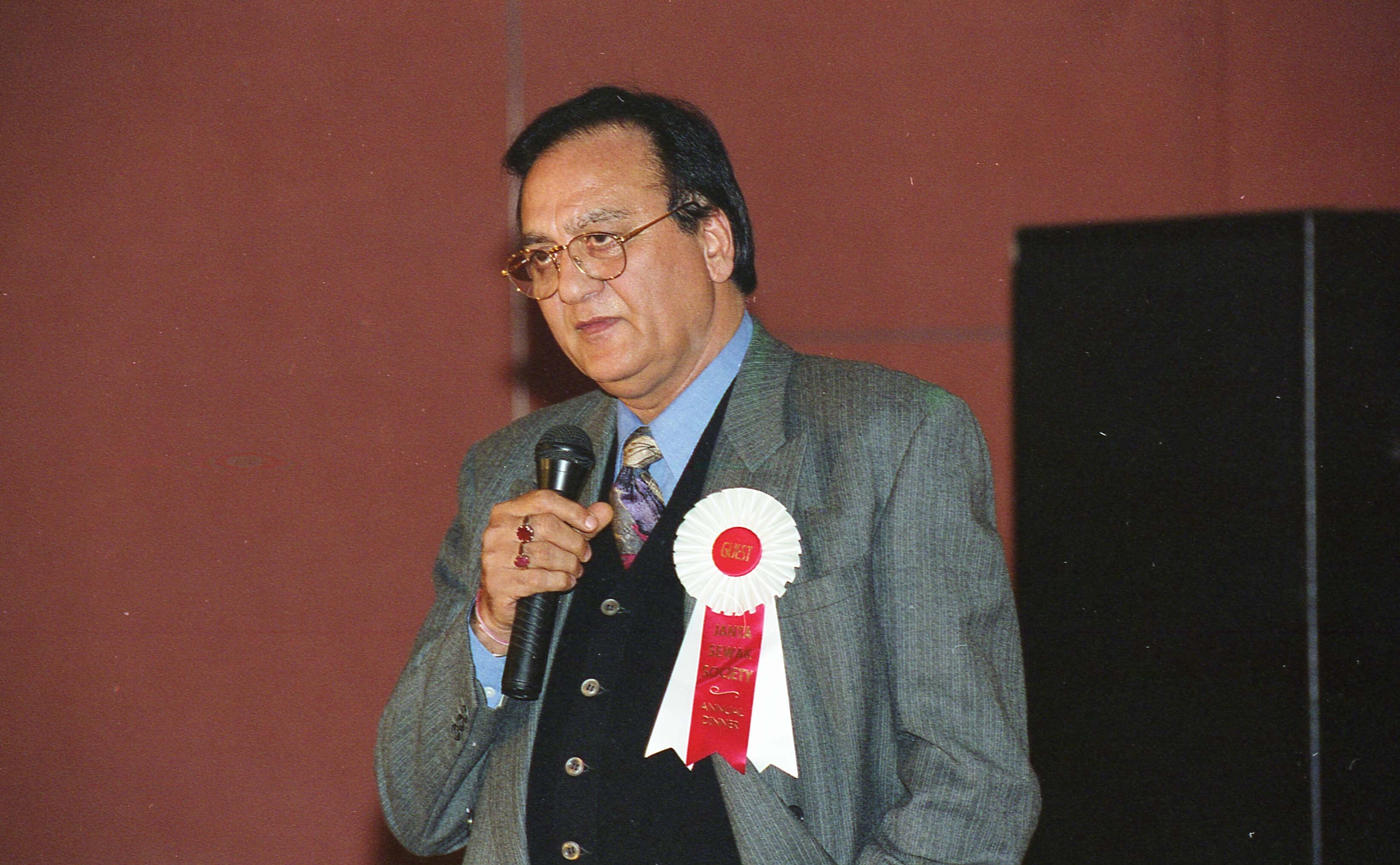
Photograph of Sunil Dutt addressing the audience at the Janta Sewak Society & Nargis Dutt Cancer Foundation annual dinner. The event took place at the Fraserview Hall in Vancouver, British Columbia.
Sunil Dutt (born June 6, 1929, Jhelum district, Pakistan – died May 25, 2005, Mumbai, India) was an Indian actor, producer, director, social activist, and politician. While he continued to act until the time of his death, he assumed other offscreen roles in the film industry and also became involved in politics and with various social issues. Dutt debuted in Hindi cinema with Railway Platform (1955), and his major success came six movies later with Mother India (1957). Dutt acted in some 100 films, produced 7, and directed 6. Also keenly interested in politics, Dutt became the sheriff of Mumbai in 1981. In 1984 he joined the Congress (I) party (so named for its descent from the Indian National Congress party and its leadership by Indira Gandhi) and was elected a member of parliament from north west Mumbai for five terms (1984, 1989, 1991 [resigned in 1993 in protest over religious violence], 1999, and 2004). He worked actively for the cause of slum dwellers. In 2004 he was appointed India's Minister for Youth Affairs and Sports, a post he held until his death. In 1981, he founded the Nargis Dutt Cancer Foundation in memory of his wife, Nargis, who had succumbed to cancer that year. In 1987 Dutt led a 1,250-mile (2,000-km) peace march from Mumbai to the Golden Temple in Amritsar, to pray for peace when Sikh militancy was at its height in Punjab. In 1988, to appeal for global disarmament, he went to Japan and walked from Nagasaki to Hiroshima (both cities were targets of U.S. atomic bombs during World War II). Among Dutt's many awards was the Padma Shri, which he received in 1968. He twice received the Filmfare Award for best actor, in 1964 and in 1966.
The Janta Sewak Society (JSS) is a volunteer-run organization supporting education, healthcare, and services for children and vulnerable individuals in Canada and overseas since 1988. It has contributed over $400,000 to charities, including B.C. Children's Hospital and the International Red Cross, providing scholarships, medical aid, and essential resources.
The Nargis Dutt Cancer Foundation is a non-profit charitable organization established in 1981, dedicated to enhancing medical care in the Indian subcontinent. Registered as a 501(c)(3) organization, the foundation focuses on supporting advanced training for physicians in cancer diagnosis and treatment, as well as procuring and donating medical equipment from the United States to healthcare providers in India, ensuring better access to treatment for underprivileged cancer patients.
Sunil Dutt (born June 6, 1929, Jhelum district, Pakistan – died May 25, 2005, Mumbai, India) was an Indian actor, producer, director, social activist, and politician. While he continued to act until the time of his death, he assumed other offscreen roles in the film industry and also became involved in politics and with various social issues. Dutt debuted in Hindi cinema with Railway Platform (1955), and his major success came six movies later with Mother India (1957). Dutt acted in some 100 films, produced 7, and directed 6. Also keenly interested in politics, Dutt became the sheriff of Mumbai in 1981. In 1984 he joined the Congress (I) party (so named for its descent from the Indian National Congress party and its leadership by Indira Gandhi) and was elected a member of parliament from north west Mumbai for five terms (1984, 1989, 1991 [resigned in 1993 in protest over religious violence], 1999, and 2004). He worked actively for the cause of slum dwellers. In 2004 he was appointed India's Minister for Youth Affairs and Sports, a post he held until his death. In 1981, he founded the Nargis Dutt Cancer Foundation in memory of his wife, Nargis, who had succumbed to cancer that year. In 1987 Dutt led a 1,250-mile (2,000-km) peace march from Mumbai to the Golden Temple in Amritsar, to pray for peace when Sikh militancy was at its height in Punjab. In 1988, to appeal for global disarmament, he went to Japan and walked from Nagasaki to Hiroshima (both cities were targets of U.S. atomic bombs during World War II). Among Dutt's many awards was the Padma Shri, which he received in 1968. He twice received the Filmfare Award for best actor, in 1964 and in 1966.
The Janta Sewak Society (JSS) is a volunteer-run organization supporting education, healthcare, and services for children and vulnerable individuals in Canada and overseas since 1988. It has contributed over $400,000 to charities, including B.C. Children's Hospital and the International Red Cross, providing scholarships, medical aid, and essential resources.
The Nargis Dutt Cancer Foundation is a non-profit charitable organization established in 1981, dedicated to enhancing medical care in the Indian subcontinent. Registered as a 501(c)(3) organization, the foundation focuses on supporting advanced training for physicians in cancer diagnosis and treatment, as well as procuring and donating medical equipment from the United States to healthcare providers in India, ensuring better access to treatment for underprivileged cancer patients.
Creator: Chandra Bodalia
Description
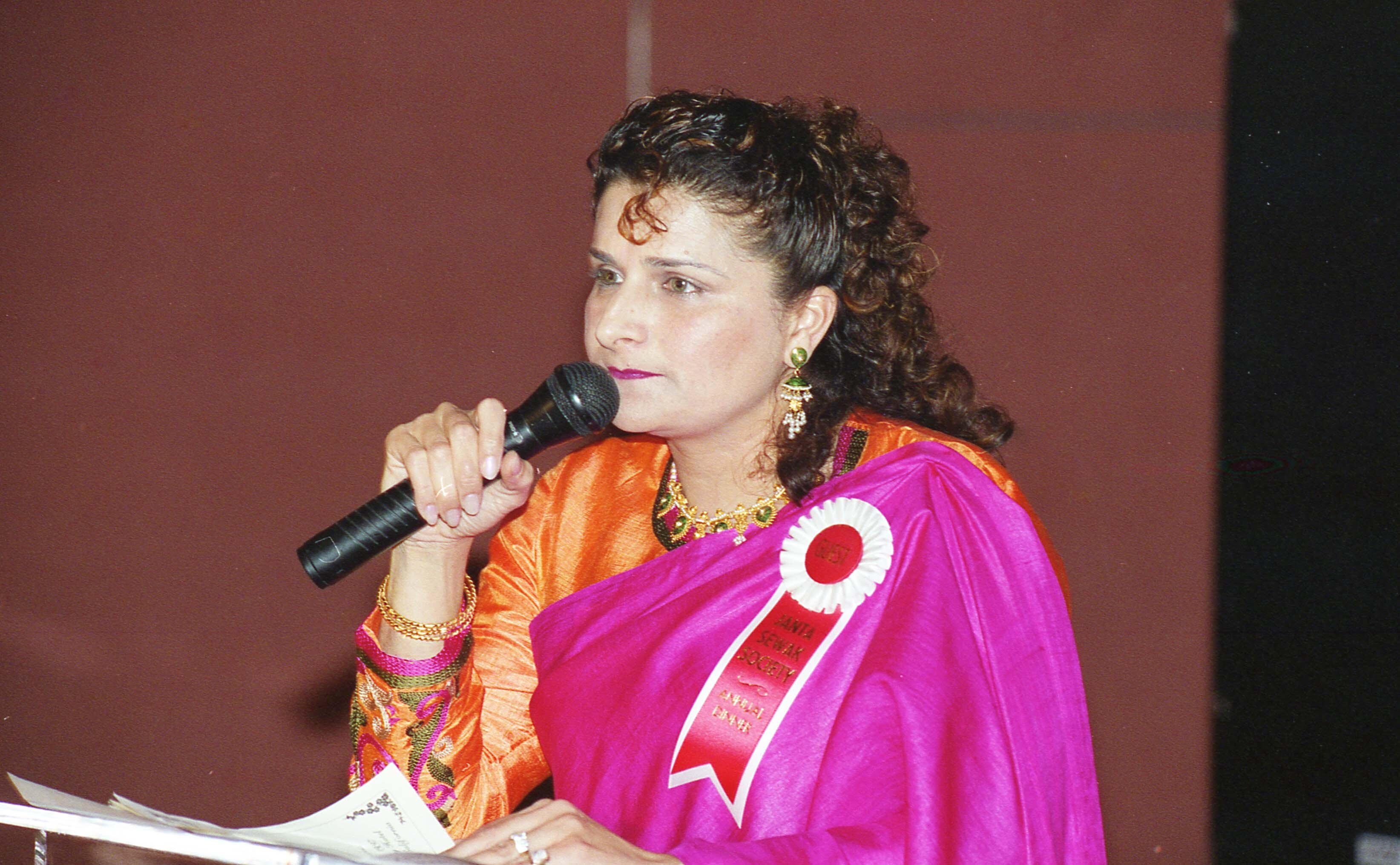
Photograph of an unidentified speaker at the Janta Sewak Society & Nargis Dutt Cancer Foundation annual dinner. The event took place at the Fraserview Hall in Vancouver, British Columbia.
The Janta Sewak Society (JSS) is a volunteer-run organization supporting education, healthcare, and services for children and vulnerable individuals in Canada and overseas since 1988. It has contributed over $400,000 to charities, including B.C. Children's Hospital and the International Red Cross, providing scholarships, medical aid, and essential resources.
The Nargis Dutt Cancer Foundation is a non-profit charitable organization established in 1981, dedicated to enhancing medical care in the Indian subcontinent. Registered as a 501(c)(3) organization, the foundation focuses on supporting advanced training for physicians in cancer diagnosis and treatment, as well as procuring and donating medical equipment from the United States to healthcare providers in India, ensuring better access to treatment for underprivileged cancer patients.
The Janta Sewak Society (JSS) is a volunteer-run organization supporting education, healthcare, and services for children and vulnerable individuals in Canada and overseas since 1988. It has contributed over $400,000 to charities, including B.C. Children's Hospital and the International Red Cross, providing scholarships, medical aid, and essential resources.
The Nargis Dutt Cancer Foundation is a non-profit charitable organization established in 1981, dedicated to enhancing medical care in the Indian subcontinent. Registered as a 501(c)(3) organization, the foundation focuses on supporting advanced training for physicians in cancer diagnosis and treatment, as well as procuring and donating medical equipment from the United States to healthcare providers in India, ensuring better access to treatment for underprivileged cancer patients.
Creator: Chandra Bodalia
Description
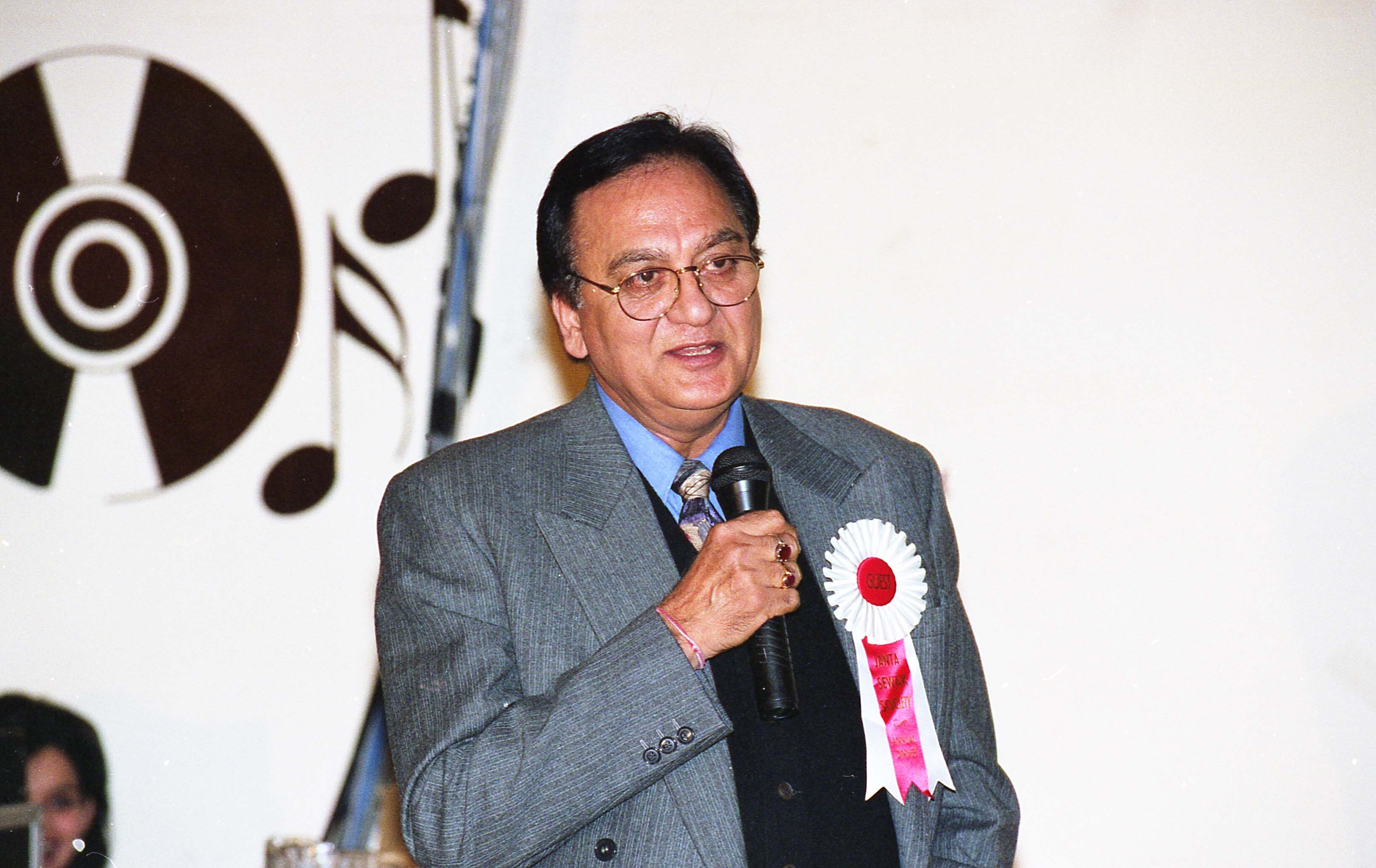
Photograph of Sunil Dutt addressing the audience at the Janta Sewak Society & Nargis Dutt Cancer Foundation annual dinner. The event took place at the Fraserview Hall in Vancouver, British Columbia.
Sunil Dutt (born June 6, 1929, Jhelum district, Pakistan – died May 25, 2005, Mumbai, India) was an Indian actor, producer, director, social activist, and politician. While he continued to act until the time of his death, he assumed other offscreen roles in the film industry and also became involved in politics and with various social issues. Dutt debuted in Hindi cinema with Railway Platform (1955), and his major success came six movies later with Mother India (1957). Dutt acted in some 100 films, produced 7, and directed 6. Also keenly interested in politics, Dutt became the sheriff of Mumbai in 1981. In 1984 he joined the Congress (I) party (so named for its descent from the Indian National Congress party and its leadership by Indira Gandhi) and was elected a member of parliament from north west Mumbai for five terms (1984, 1989, 1991 [resigned in 1993 in protest over religious violence], 1999, and 2004). He worked actively for the cause of slum dwellers. In 2004 he was appointed India's Minister for Youth Affairs and Sports, a post he held until his death. In 1981, he founded the Nargis Dutt Cancer Foundation in memory of his wife, Nargis, who had succumbed to cancer that year. In 1987 Dutt led a 1,250-mile (2,000-km) peace march from Mumbai to the Golden Temple in Amritsar, to pray for peace when Sikh militancy was at its height in Punjab. In 1988, to appeal for global disarmament, he went to Japan and walked from Nagasaki to Hiroshima (both cities were targets of U.S. atomic bombs during World War II). Among Dutt's many awards was the Padma Shri, which he received in 1968. He twice received the Filmfare Award for best actor, in 1964 and in 1966.
The Janta Sewak Society (JSS) is a volunteer-run organization supporting education, healthcare, and services for children and vulnerable individuals in Canada and overseas since 1988. It has contributed over $400,000 to charities, including B.C. Children's Hospital and the International Red Cross, providing scholarships, medical aid, and essential resources.
The Nargis Dutt Cancer Foundation is a non-profit charitable organization established in 1981, dedicated to enhancing medical care in the Indian subcontinent. Registered as a 501(c)(3) organization, the foundation focuses on supporting advanced training for physicians in cancer diagnosis and treatment, as well as procuring and donating medical equipment from the United States to healthcare providers in India, ensuring better access to treatment for underprivileged cancer patients.
Sunil Dutt (born June 6, 1929, Jhelum district, Pakistan – died May 25, 2005, Mumbai, India) was an Indian actor, producer, director, social activist, and politician. While he continued to act until the time of his death, he assumed other offscreen roles in the film industry and also became involved in politics and with various social issues. Dutt debuted in Hindi cinema with Railway Platform (1955), and his major success came six movies later with Mother India (1957). Dutt acted in some 100 films, produced 7, and directed 6. Also keenly interested in politics, Dutt became the sheriff of Mumbai in 1981. In 1984 he joined the Congress (I) party (so named for its descent from the Indian National Congress party and its leadership by Indira Gandhi) and was elected a member of parliament from north west Mumbai for five terms (1984, 1989, 1991 [resigned in 1993 in protest over religious violence], 1999, and 2004). He worked actively for the cause of slum dwellers. In 2004 he was appointed India's Minister for Youth Affairs and Sports, a post he held until his death. In 1981, he founded the Nargis Dutt Cancer Foundation in memory of his wife, Nargis, who had succumbed to cancer that year. In 1987 Dutt led a 1,250-mile (2,000-km) peace march from Mumbai to the Golden Temple in Amritsar, to pray for peace when Sikh militancy was at its height in Punjab. In 1988, to appeal for global disarmament, he went to Japan and walked from Nagasaki to Hiroshima (both cities were targets of U.S. atomic bombs during World War II). Among Dutt's many awards was the Padma Shri, which he received in 1968. He twice received the Filmfare Award for best actor, in 1964 and in 1966.
The Janta Sewak Society (JSS) is a volunteer-run organization supporting education, healthcare, and services for children and vulnerable individuals in Canada and overseas since 1988. It has contributed over $400,000 to charities, including B.C. Children's Hospital and the International Red Cross, providing scholarships, medical aid, and essential resources.
The Nargis Dutt Cancer Foundation is a non-profit charitable organization established in 1981, dedicated to enhancing medical care in the Indian subcontinent. Registered as a 501(c)(3) organization, the foundation focuses on supporting advanced training for physicians in cancer diagnosis and treatment, as well as procuring and donating medical equipment from the United States to healthcare providers in India, ensuring better access to treatment for underprivileged cancer patients.