
Folk dancing
Member of
Creator: Bodalia, Chandra
Description
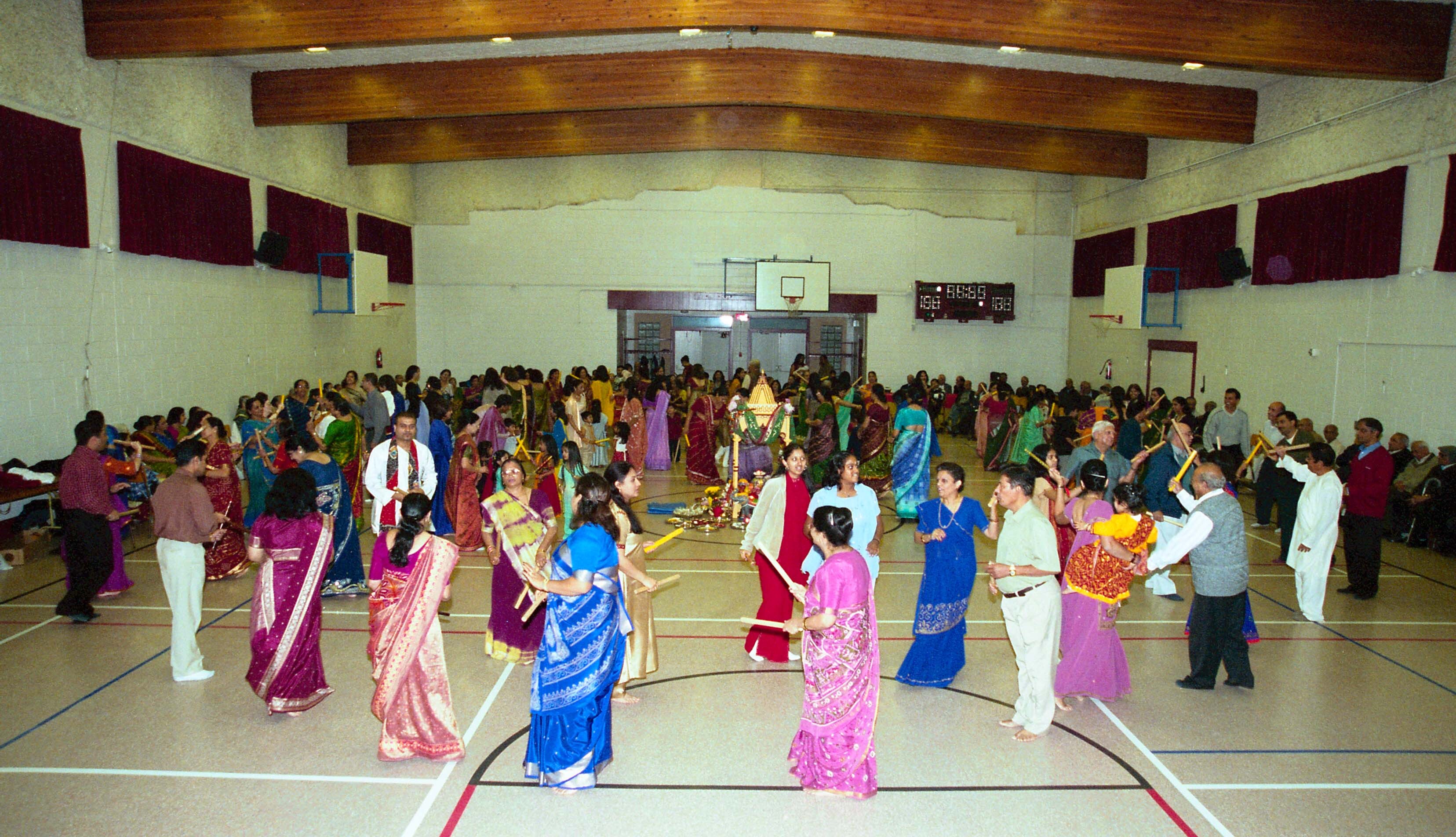
Photograph of a group of unidentified individuals playing dandiya, a folk dance, at the Navratri celebration organised by the Gujarati Hindu Seniors Society of British Columbia (GHSS) in Burnaby, British Columbia (B.C.).
Dandiya dance is a traditional folk dance form originating from the state of Gujarat in India. It is usually performed during the Hindu festival of Navratri, which is a nine-day celebration of the goddess Durga. In Dandiya dance, participants use small wooden sticks called "dandiyas" to rhythmically strike each other's sticks in pairs, while dancing in a circle. The dance is accompanied by traditional music played on instruments like the dhol, tabla, and flute.
Navratri, in Hinduism, is a major festival held in honour of the divine feminine, goddess Durga. Navratri occurs over 9 days during the month of Ashvin (in the Gregorian calendar, usually September-October). The festival is celebrated differently in India's various regions. For many people it is a time of religious reflection and fasting, while for others it is a time for dancing and feasting. Dances performed include garba, especially in Gujarat. Garba is a type of Indian dance commonly performed at festivals and on other special occasions in the state of Gujarat. In addition to family observances, the puja, or ritual, days are also celebrated with public concerts, recitations, plays, and fairs.
The Gujarati Hindu Seniors Society of British Columbia (GHSS) is a registered charitable organization established in 1994 by a group of Gujarati pioneers who immigrated from various parts of the world and settled in Canada. The society was founded to create a space where Gujarati-speaking Hindu seniors could connect, share their language, faith, and cultural heritage, and build a strong community. It offers cultural events like Navratri and Diwali celebrations, health and wellness seminars, and support services, including funeral assistance and emotional support groups. GHSS also maintains a library and a business directory to help seniors access local services.
Dandiya dance is a traditional folk dance form originating from the state of Gujarat in India. It is usually performed during the Hindu festival of Navratri, which is a nine-day celebration of the goddess Durga. In Dandiya dance, participants use small wooden sticks called "dandiyas" to rhythmically strike each other's sticks in pairs, while dancing in a circle. The dance is accompanied by traditional music played on instruments like the dhol, tabla, and flute.
Navratri, in Hinduism, is a major festival held in honour of the divine feminine, goddess Durga. Navratri occurs over 9 days during the month of Ashvin (in the Gregorian calendar, usually September-October). The festival is celebrated differently in India's various regions. For many people it is a time of religious reflection and fasting, while for others it is a time for dancing and feasting. Dances performed include garba, especially in Gujarat. Garba is a type of Indian dance commonly performed at festivals and on other special occasions in the state of Gujarat. In addition to family observances, the puja, or ritual, days are also celebrated with public concerts, recitations, plays, and fairs.
The Gujarati Hindu Seniors Society of British Columbia (GHSS) is a registered charitable organization established in 1994 by a group of Gujarati pioneers who immigrated from various parts of the world and settled in Canada. The society was founded to create a space where Gujarati-speaking Hindu seniors could connect, share their language, faith, and cultural heritage, and build a strong community. It offers cultural events like Navratri and Diwali celebrations, health and wellness seminars, and support services, including funeral assistance and emotional support groups. GHSS also maintains a library and a business directory to help seniors access local services.
Member of
Creator: Bodalia, Chandra
Description
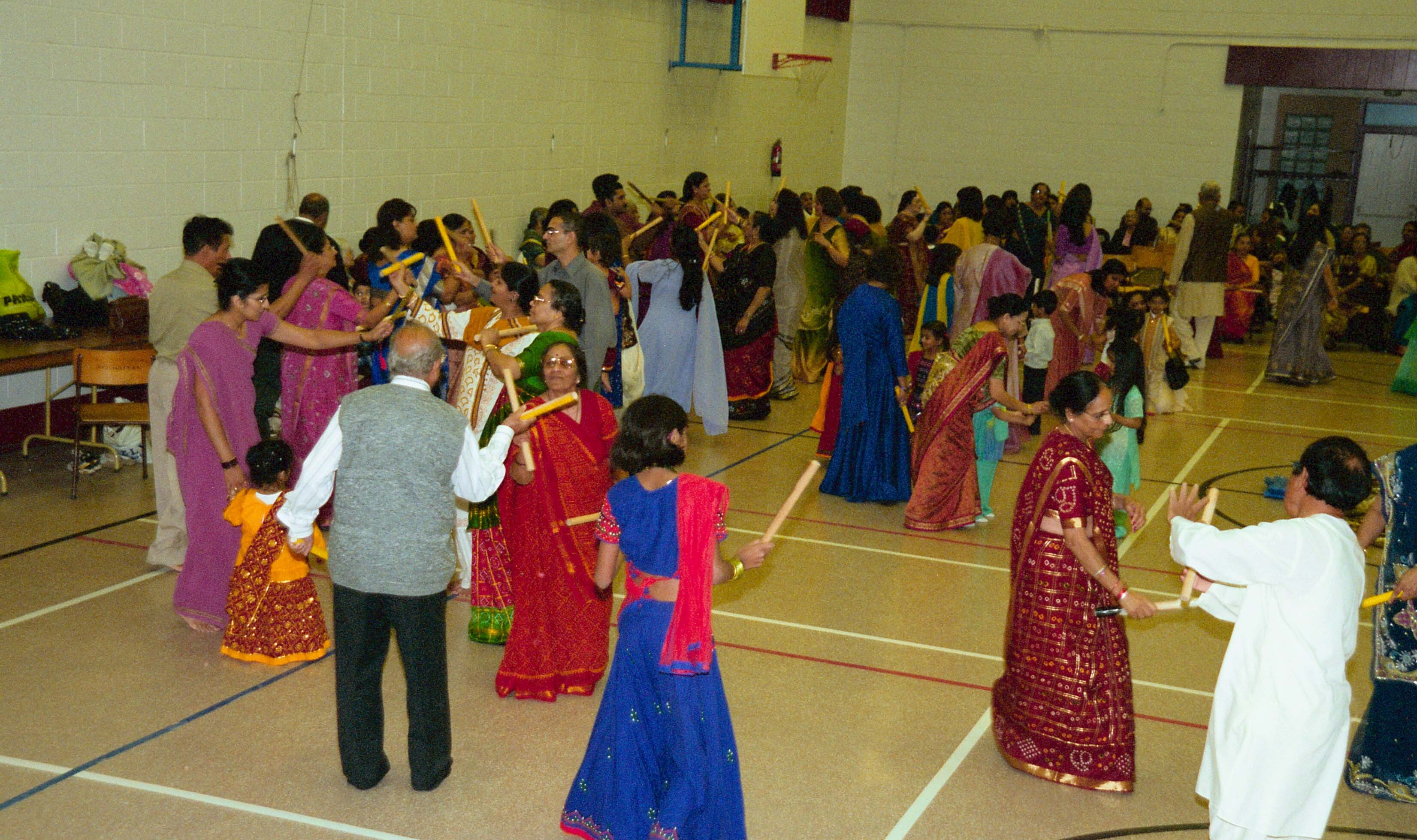
Photograph of a group of unidentified individuals playing dandiya, a folk dance, at the Navratri celebration organised by the Gujarati Hindu Seniors Society of British Columbia (GHSS) in Burnaby, British Columbia (B.C.).
Dandiya dance is a traditional folk dance form originating from the state of Gujarat in India. It is usually performed during the Hindu festival of Navratri, which is a nine-day celebration of the goddess Durga. In Dandiya dance, participants use small wooden sticks called "dandiyas" to rhythmically strike each other's sticks in pairs, while dancing in a circle. The dance is accompanied by traditional music played on instruments like the dhol, tabla, and flute.
Navratri, in Hinduism, is a major festival held in honour of the divine feminine, goddess Durga. Navratri occurs over 9 days during the month of Ashvin (in the Gregorian calendar, usually September-October). The festival is celebrated differently in India's various regions. For many people it is a time of religious reflection and fasting, while for others it is a time for dancing and feasting. Dances performed include garba, especially in Gujarat. Garba is a type of Indian dance commonly performed at festivals and on other special occasions in the state of Gujarat. In addition to family observances, the puja, or ritual, days are also celebrated with public concerts, recitations, plays, and fairs.
The Gujarati Hindu Seniors Society of British Columbia (GHSS) is a registered charitable organization established in 1994 by a group of Gujarati pioneers who immigrated from various parts of the world and settled in Canada. The society was founded to create a space where Gujarati-speaking Hindu seniors could connect, share their language, faith, and cultural heritage, and build a strong community. It offers cultural events like Navratri and Diwali celebrations, health and wellness seminars, and support services, including funeral assistance and emotional support groups. GHSS also maintains a library and a business directory to help seniors access local services.
Dandiya dance is a traditional folk dance form originating from the state of Gujarat in India. It is usually performed during the Hindu festival of Navratri, which is a nine-day celebration of the goddess Durga. In Dandiya dance, participants use small wooden sticks called "dandiyas" to rhythmically strike each other's sticks in pairs, while dancing in a circle. The dance is accompanied by traditional music played on instruments like the dhol, tabla, and flute.
Navratri, in Hinduism, is a major festival held in honour of the divine feminine, goddess Durga. Navratri occurs over 9 days during the month of Ashvin (in the Gregorian calendar, usually September-October). The festival is celebrated differently in India's various regions. For many people it is a time of religious reflection and fasting, while for others it is a time for dancing and feasting. Dances performed include garba, especially in Gujarat. Garba is a type of Indian dance commonly performed at festivals and on other special occasions in the state of Gujarat. In addition to family observances, the puja, or ritual, days are also celebrated with public concerts, recitations, plays, and fairs.
The Gujarati Hindu Seniors Society of British Columbia (GHSS) is a registered charitable organization established in 1994 by a group of Gujarati pioneers who immigrated from various parts of the world and settled in Canada. The society was founded to create a space where Gujarati-speaking Hindu seniors could connect, share their language, faith, and cultural heritage, and build a strong community. It offers cultural events like Navratri and Diwali celebrations, health and wellness seminars, and support services, including funeral assistance and emotional support groups. GHSS also maintains a library and a business directory to help seniors access local services.
Member of
Creator: Bodalia, Chandra
Description
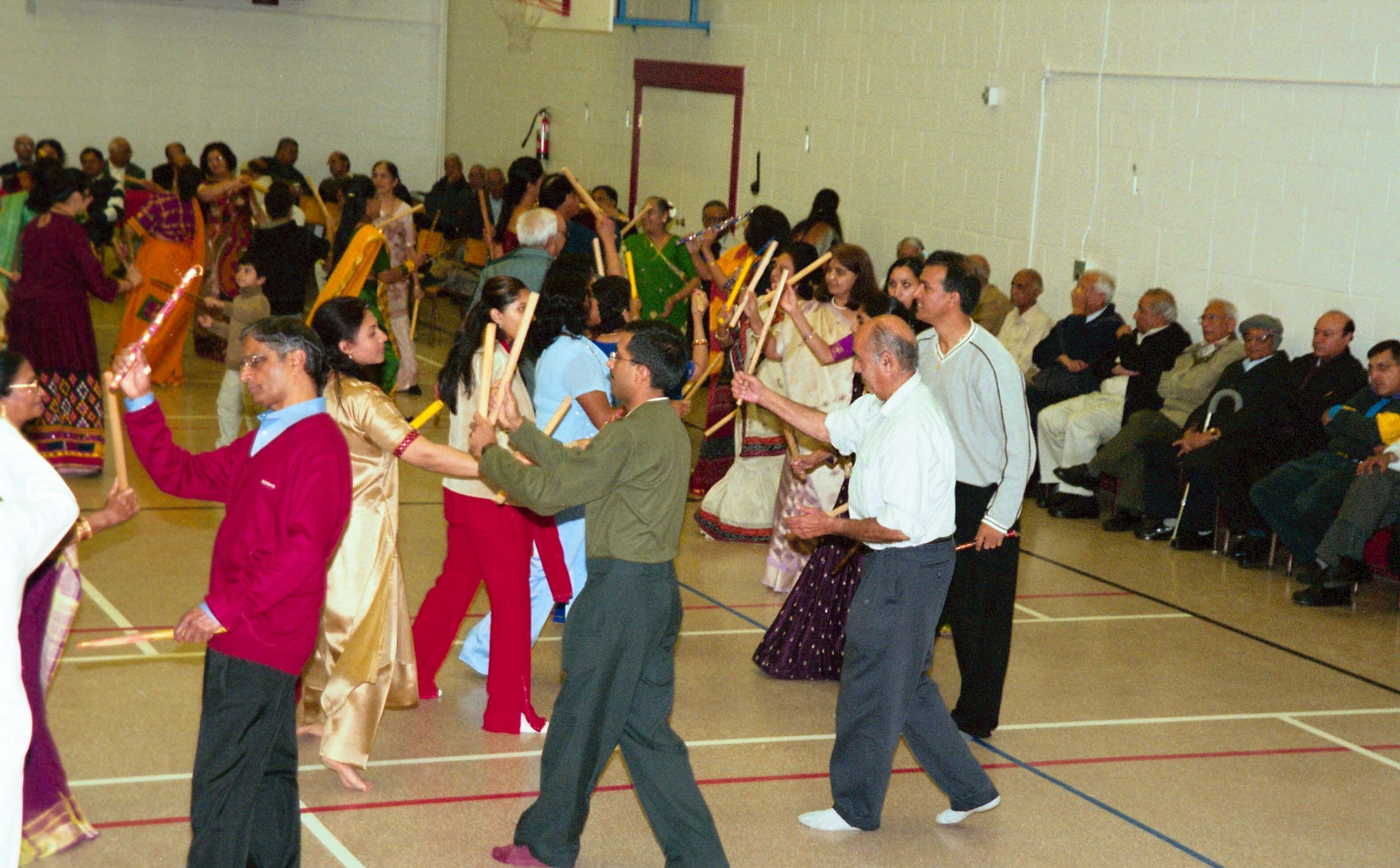
Photograph of a group of unidentified individuals playing dandiya, a folk dance, at the Navratri celebration organised by the Gujarati Hindu Seniors Society of British Columbia (GHSS) in Burnaby, British Columbia (B.C.).
Dandiya dance is a traditional folk dance form originating from the state of Gujarat in India. It is usually performed during the Hindu festival of Navratri, which is a nine-day celebration of the goddess Durga. In Dandiya dance, participants use small wooden sticks called "dandiyas" to rhythmically strike each other's sticks in pairs, while dancing in a circle. The dance is accompanied by traditional music played on instruments like the dhol, tabla, and flute.
Navratri, in Hinduism, is a major festival held in honour of the divine feminine, goddess Durga. Navratri occurs over 9 days during the month of Ashvin (in the Gregorian calendar, usually September-October). The festival is celebrated differently in India's various regions. For many people it is a time of religious reflection and fasting, while for others it is a time for dancing and feasting. Dances performed include garba, especially in Gujarat. Garba is a type of Indian dance commonly performed at festivals and on other special occasions in the state of Gujarat. In addition to family observances, the puja, or ritual, days are also celebrated with public concerts, recitations, plays, and fairs.
The Gujarati Hindu Seniors Society of British Columbia (GHSS) is a registered charitable organization established in 1994 by a group of Gujarati pioneers who immigrated from various parts of the world and settled in Canada. The society was founded to create a space where Gujarati-speaking Hindu seniors could connect, share their language, faith, and cultural heritage, and build a strong community. It offers cultural events like Navratri and Diwali celebrations, health and wellness seminars, and support services, including funeral assistance and emotional support groups. GHSS also maintains a library and a business directory to help seniors access local services.
Dandiya dance is a traditional folk dance form originating from the state of Gujarat in India. It is usually performed during the Hindu festival of Navratri, which is a nine-day celebration of the goddess Durga. In Dandiya dance, participants use small wooden sticks called "dandiyas" to rhythmically strike each other's sticks in pairs, while dancing in a circle. The dance is accompanied by traditional music played on instruments like the dhol, tabla, and flute.
Navratri, in Hinduism, is a major festival held in honour of the divine feminine, goddess Durga. Navratri occurs over 9 days during the month of Ashvin (in the Gregorian calendar, usually September-October). The festival is celebrated differently in India's various regions. For many people it is a time of religious reflection and fasting, while for others it is a time for dancing and feasting. Dances performed include garba, especially in Gujarat. Garba is a type of Indian dance commonly performed at festivals and on other special occasions in the state of Gujarat. In addition to family observances, the puja, or ritual, days are also celebrated with public concerts, recitations, plays, and fairs.
The Gujarati Hindu Seniors Society of British Columbia (GHSS) is a registered charitable organization established in 1994 by a group of Gujarati pioneers who immigrated from various parts of the world and settled in Canada. The society was founded to create a space where Gujarati-speaking Hindu seniors could connect, share their language, faith, and cultural heritage, and build a strong community. It offers cultural events like Navratri and Diwali celebrations, health and wellness seminars, and support services, including funeral assistance and emotional support groups. GHSS also maintains a library and a business directory to help seniors access local services.
Member of
Creator: Bodalia, Chandra
Description
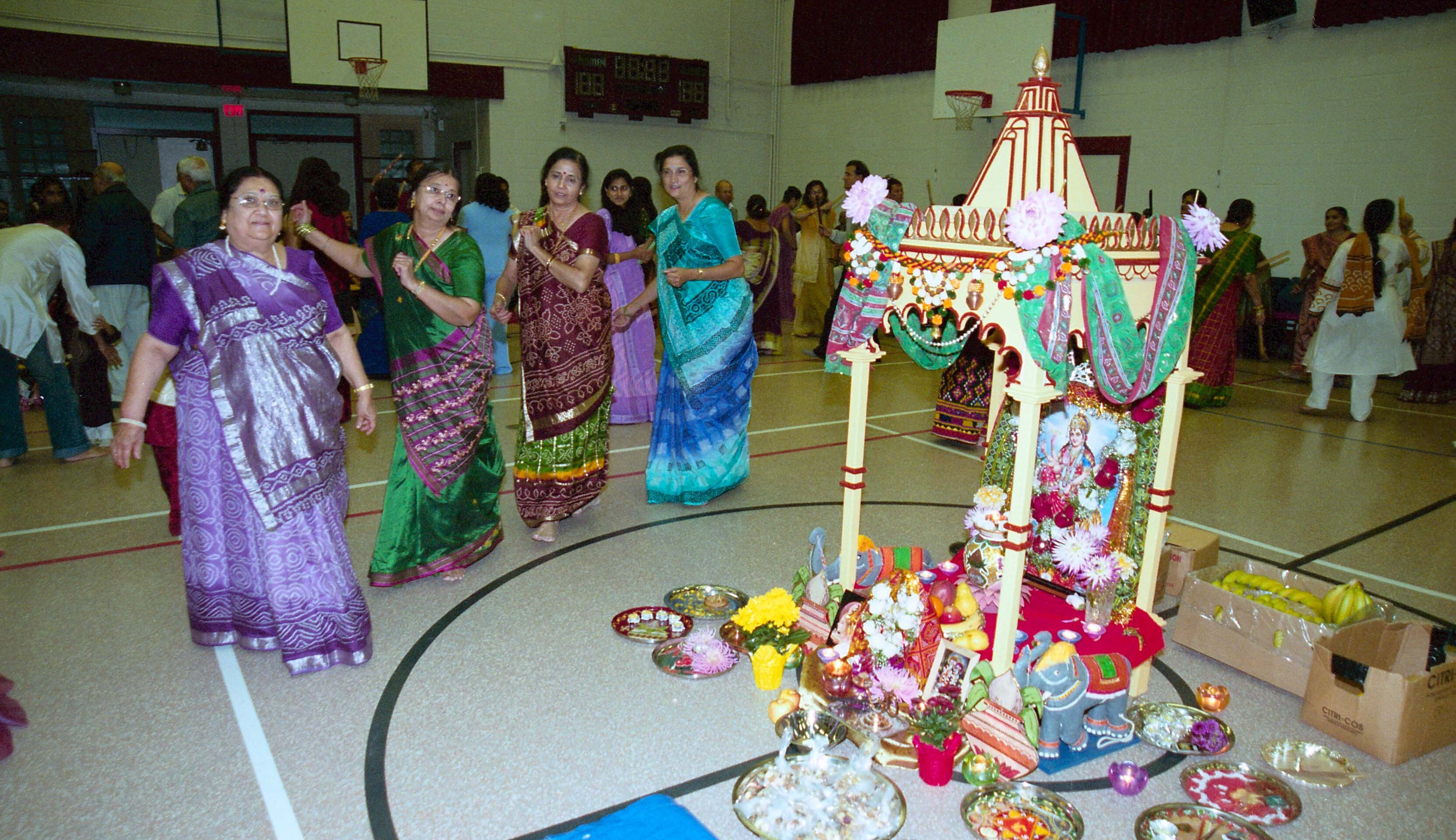
Photograph of a group of unidentified individuals playing dandiya, a folk dance, at the Navratri celebration organised by the Gujarati Hindu Seniors Society of British Columbia (GHSS) in Burnaby, British Columbia (B.C.).
Dandiya dance is a traditional folk dance form originating from the state of Gujarat in India. It is usually performed during the Hindu festival of Navratri, which is a nine-day celebration of the goddess Durga. In Dandiya dance, participants use small wooden sticks called "dandiyas" to rhythmically strike each other's sticks in pairs, while dancing in a circle. The dance is accompanied by traditional music played on instruments like the dhol, tabla, and flute.
Navratri, in Hinduism, is a major festival held in honour of the divine feminine, goddess Durga. Navratri occurs over 9 days during the month of Ashvin (in the Gregorian calendar, usually September-October). The festival is celebrated differently in India's various regions. For many people it is a time of religious reflection and fasting, while for others it is a time for dancing and feasting. Dances performed include garba, especially in Gujarat. Garba is a type of Indian dance commonly performed at festivals and on other special occasions in the state of Gujarat. In addition to family observances, the puja, or ritual, days are also celebrated with public concerts, recitations, plays, and fairs.
The Gujarati Hindu Seniors Society of British Columbia (GHSS) is a registered charitable organization established in 1994 by a group of Gujarati pioneers who immigrated from various parts of the world and settled in Canada. The society was founded to create a space where Gujarati-speaking Hindu seniors could connect, share their language, faith, and cultural heritage, and build a strong community. It offers cultural events like Navratri and Diwali celebrations, health and wellness seminars, and support services, including funeral assistance and emotional support groups. GHSS also maintains a library and a business directory to help seniors access local services.
Dandiya dance is a traditional folk dance form originating from the state of Gujarat in India. It is usually performed during the Hindu festival of Navratri, which is a nine-day celebration of the goddess Durga. In Dandiya dance, participants use small wooden sticks called "dandiyas" to rhythmically strike each other's sticks in pairs, while dancing in a circle. The dance is accompanied by traditional music played on instruments like the dhol, tabla, and flute.
Navratri, in Hinduism, is a major festival held in honour of the divine feminine, goddess Durga. Navratri occurs over 9 days during the month of Ashvin (in the Gregorian calendar, usually September-October). The festival is celebrated differently in India's various regions. For many people it is a time of religious reflection and fasting, while for others it is a time for dancing and feasting. Dances performed include garba, especially in Gujarat. Garba is a type of Indian dance commonly performed at festivals and on other special occasions in the state of Gujarat. In addition to family observances, the puja, or ritual, days are also celebrated with public concerts, recitations, plays, and fairs.
The Gujarati Hindu Seniors Society of British Columbia (GHSS) is a registered charitable organization established in 1994 by a group of Gujarati pioneers who immigrated from various parts of the world and settled in Canada. The society was founded to create a space where Gujarati-speaking Hindu seniors could connect, share their language, faith, and cultural heritage, and build a strong community. It offers cultural events like Navratri and Diwali celebrations, health and wellness seminars, and support services, including funeral assistance and emotional support groups. GHSS also maintains a library and a business directory to help seniors access local services.
Member of
Creator: Bodalia, Chandra
Description
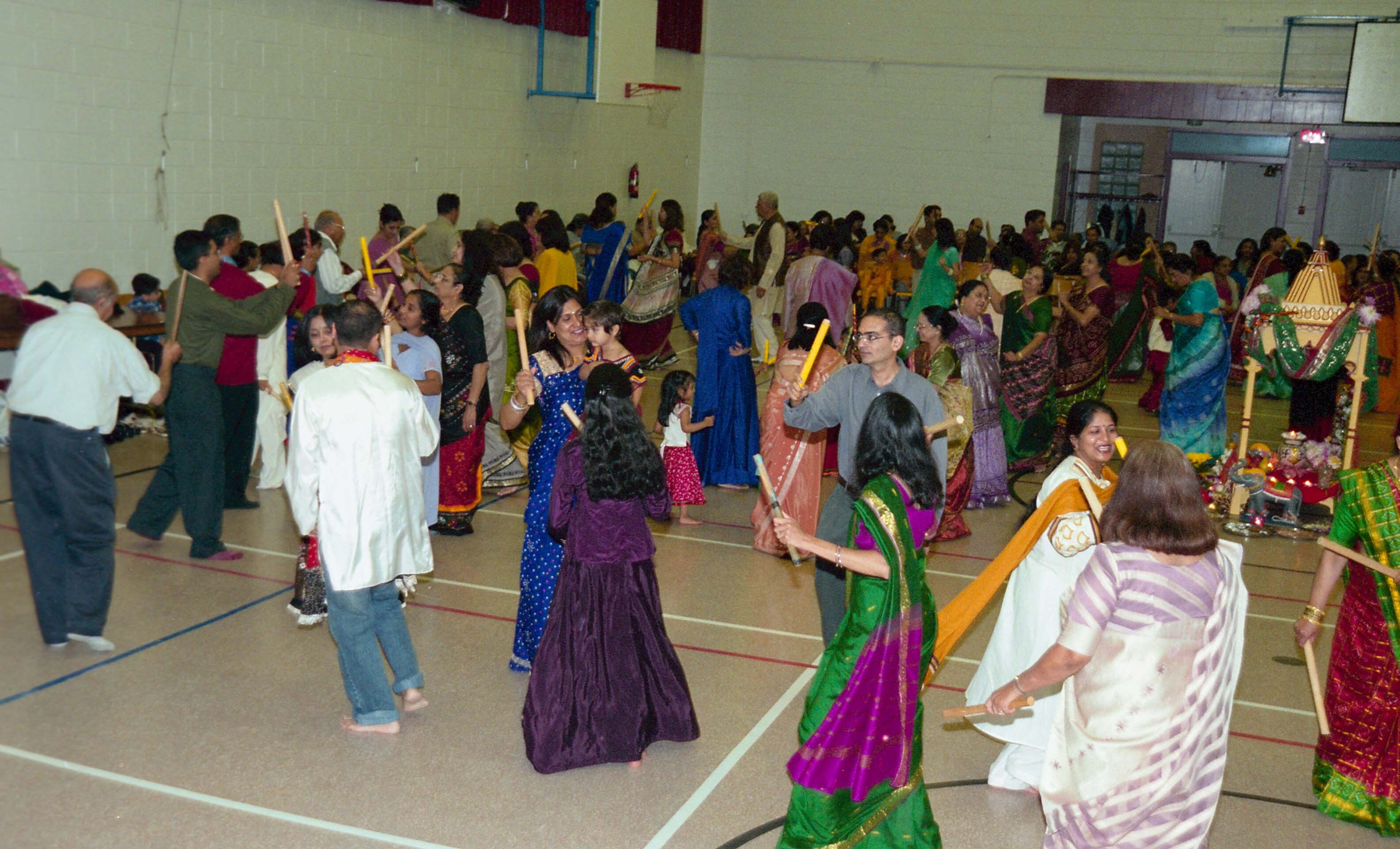
Photograph of a group of unidentified individuals playing dandiya, a folk dance, at the Navratri celebration organised by the Gujarati Hindu Seniors Society of British Columbia (GHSS) in Burnaby, British Columbia (B.C.).
Dandiya dance is a traditional folk dance form originating from the state of Gujarat in India. It is usually performed during the Hindu festival of Navratri, which is a nine-day celebration of the goddess Durga. In Dandiya dance, participants use small wooden sticks called "dandiyas" to rhythmically strike each other's sticks in pairs, while dancing in a circle. The dance is accompanied by traditional music played on instruments like the dhol, tabla, and flute.
Navratri, in Hinduism, is a major festival held in honour of the divine feminine, goddess Durga. Navratri occurs over 9 days during the month of Ashvin (in the Gregorian calendar, usually September-October). The festival is celebrated differently in India's various regions. For many people it is a time of religious reflection and fasting, while for others it is a time for dancing and feasting. Dances performed include garba, especially in Gujarat. Garba is a type of Indian dance commonly performed at festivals and on other special occasions in the state of Gujarat. In addition to family observances, the puja, or ritual, days are also celebrated with public concerts, recitations, plays, and fairs.
The Gujarati Hindu Seniors Society of British Columbia (GHSS) is a registered charitable organization established in 1994 by a group of Gujarati pioneers who immigrated from various parts of the world and settled in Canada. The society was founded to create a space where Gujarati-speaking Hindu seniors could connect, share their language, faith, and cultural heritage, and build a strong community. It offers cultural events like Navratri and Diwali celebrations, health and wellness seminars, and support services, including funeral assistance and emotional support groups. GHSS also maintains a library and a business directory to help seniors access local services.
Dandiya dance is a traditional folk dance form originating from the state of Gujarat in India. It is usually performed during the Hindu festival of Navratri, which is a nine-day celebration of the goddess Durga. In Dandiya dance, participants use small wooden sticks called "dandiyas" to rhythmically strike each other's sticks in pairs, while dancing in a circle. The dance is accompanied by traditional music played on instruments like the dhol, tabla, and flute.
Navratri, in Hinduism, is a major festival held in honour of the divine feminine, goddess Durga. Navratri occurs over 9 days during the month of Ashvin (in the Gregorian calendar, usually September-October). The festival is celebrated differently in India's various regions. For many people it is a time of religious reflection and fasting, while for others it is a time for dancing and feasting. Dances performed include garba, especially in Gujarat. Garba is a type of Indian dance commonly performed at festivals and on other special occasions in the state of Gujarat. In addition to family observances, the puja, or ritual, days are also celebrated with public concerts, recitations, plays, and fairs.
The Gujarati Hindu Seniors Society of British Columbia (GHSS) is a registered charitable organization established in 1994 by a group of Gujarati pioneers who immigrated from various parts of the world and settled in Canada. The society was founded to create a space where Gujarati-speaking Hindu seniors could connect, share their language, faith, and cultural heritage, and build a strong community. It offers cultural events like Navratri and Diwali celebrations, health and wellness seminars, and support services, including funeral assistance and emotional support groups. GHSS also maintains a library and a business directory to help seniors access local services.
Member of
Creator: Chandra Bodalia
Description
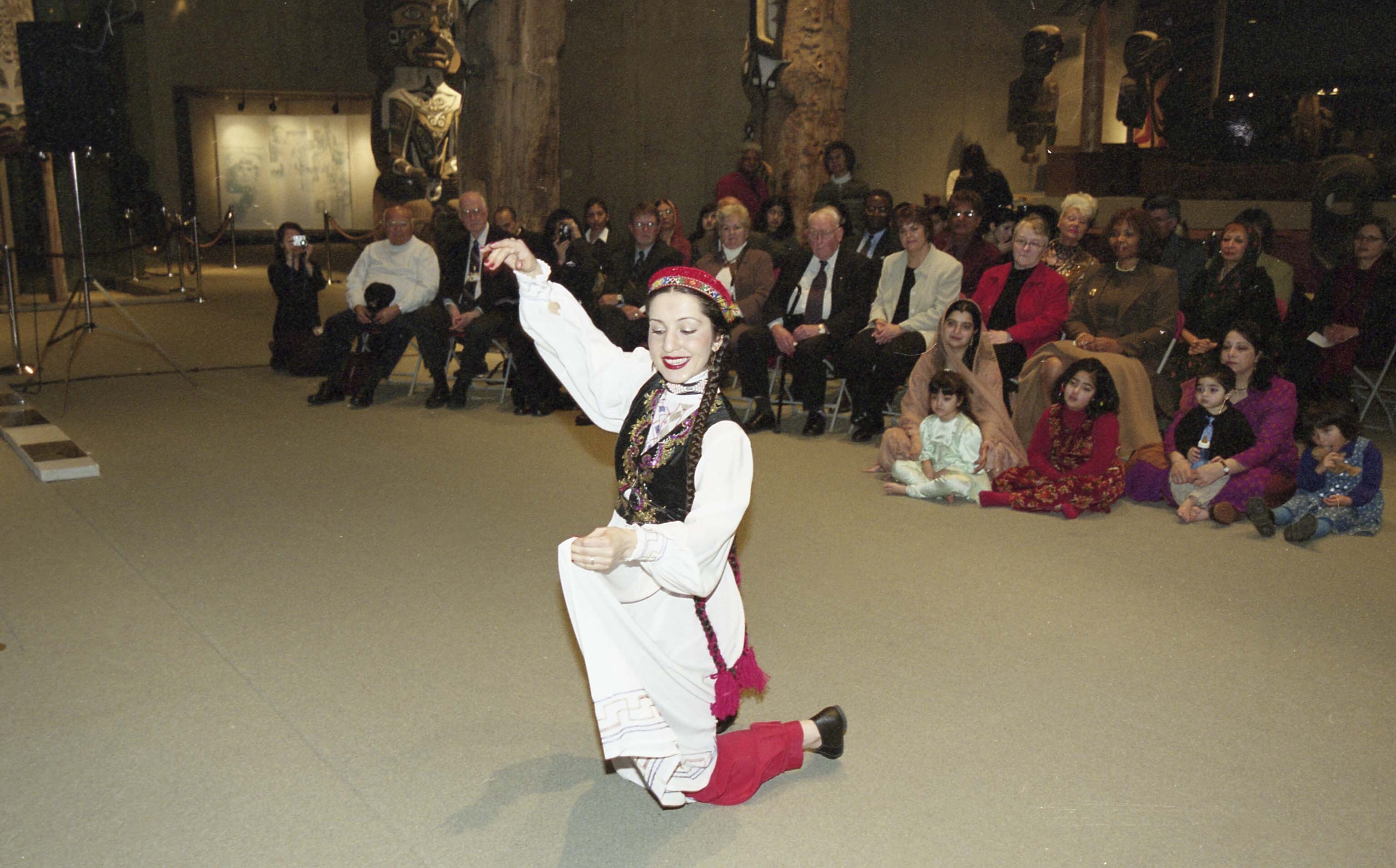
Photograph of an unidentified woman performing a traditional Pamiri folk dance, "Rapo", at the public celebration of Eid-ul-Adha on February 19, 2004, co-hosted by UBC Museum of Anthropology and the Committee for Racial Justice (CRJ) in Vancouver, British Columbia.
A traditional Pamiri folk dance from the Pamir mountains of Gorno Badakhshan, Tajikistan, 'rapo' is performed with empathic feet movement. Rapo is the soul of Pamiri dance. It is used as a signature piece on any auspicious occasion. A graceful dance, 'rapo' features a distinct beat from the valleys of the mountains.
Eid al-Adha is the second most important celebration of Islam, (the first being Eid-ul-Fitr). It takes place on the tenth day of the twelfth and last month (Zulhijjah) of the Islamic calendar. In 2004, this celebration began on the morning of the 1st of February. Eid-ul-Adha celebrates the occasion when Abraham was willing to sacrifice his son to show his obedience to Allah (God). Muslims all around the world celebrate this day, although it has particular significance for pilgrims who complete a pilgrimage (Hajj) to Mecca.
The Museum of Anthropology (MOA) at the University of British Columbia is committed to promoting awareness and understanding of culturally diverse ways of knowing the world through challenging and innovative programs and partnerships with Indigenous, local and global communities.
The MOA and the CRJ first co-hosted an event in December 2003. Following its success, they created a year-long series of public events that offer cultural communities opportunities to share their cultural practices with a wider public. The idea is to create opportunities for people to come together in common purpose to share and celebrate their differences.
A traditional Pamiri folk dance from the Pamir mountains of Gorno Badakhshan, Tajikistan, 'rapo' is performed with empathic feet movement. Rapo is the soul of Pamiri dance. It is used as a signature piece on any auspicious occasion. A graceful dance, 'rapo' features a distinct beat from the valleys of the mountains.
Eid al-Adha is the second most important celebration of Islam, (the first being Eid-ul-Fitr). It takes place on the tenth day of the twelfth and last month (Zulhijjah) of the Islamic calendar. In 2004, this celebration began on the morning of the 1st of February. Eid-ul-Adha celebrates the occasion when Abraham was willing to sacrifice his son to show his obedience to Allah (God). Muslims all around the world celebrate this day, although it has particular significance for pilgrims who complete a pilgrimage (Hajj) to Mecca.
The Museum of Anthropology (MOA) at the University of British Columbia is committed to promoting awareness and understanding of culturally diverse ways of knowing the world through challenging and innovative programs and partnerships with Indigenous, local and global communities.
The MOA and the CRJ first co-hosted an event in December 2003. Following its success, they created a year-long series of public events that offer cultural communities opportunities to share their cultural practices with a wider public. The idea is to create opportunities for people to come together in common purpose to share and celebrate their differences.
Member of
Creator: Chandra Bodalia
Description
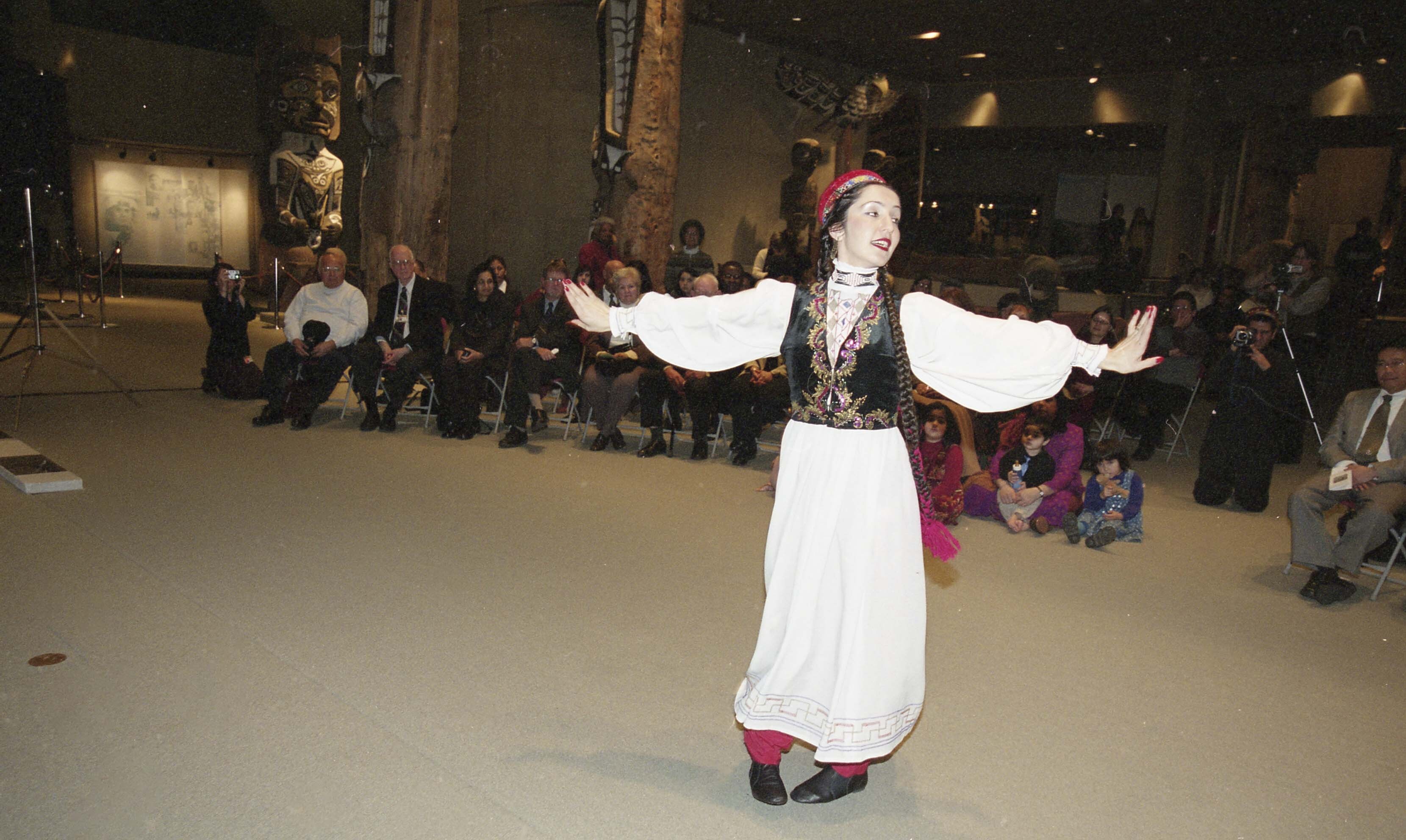
Photograph of an unidentified woman performing a traditional Pamiri folk dance, "Rapo", at the public celebration of Eid-ul-Adha on February 19, 2004, co-hosted by UBC Museum of Anthropology and the Committee for Racial Justice (CRJ) in Vancouver, British Columbia.
A traditional Pamiri folk dance from the Pamir mountains of Gorno Badakhshan, Tajikistan, 'rapo' is performed with empathic feet movement. Rapo is the soul of Pamiri dance. It is used as a signature piece on any auspicious occasion. A graceful dance, 'rapo' features a distinct beat from the valleys of the mountains.
Eid al-Adha is the second most important celebration of Islam, (the first being Eid-ul-Fitr). It takes place on the tenth day of the twelfth and last month (Zulhijjah) of the Islamic calendar. In 2004, this celebration began on the morning of the 1st of February. Eid-ul-Adha celebrates the occasion when Abraham was willing to sacrifice his son to show his obedience to Allah (God). Muslims all around the world celebrate this day, although it has particular significance for pilgrims who complete a pilgrimage (Hajj) to Mecca.
The Museum of Anthropology (MOA) at the University of British Columbia is committed to promoting awareness and understanding of culturally diverse ways of knowing the world through challenging and innovative programs and partnerships with Indigenous, local and global communities.
The MOA and the CRJ first co-hosted an event in December 2003. Following its success, they created a year-long series of public events that offer cultural communities opportunities to share their cultural practices with a wider public. The idea is to create opportunities for people to come together in common purpose to share and celebrate their differences.
A traditional Pamiri folk dance from the Pamir mountains of Gorno Badakhshan, Tajikistan, 'rapo' is performed with empathic feet movement. Rapo is the soul of Pamiri dance. It is used as a signature piece on any auspicious occasion. A graceful dance, 'rapo' features a distinct beat from the valleys of the mountains.
Eid al-Adha is the second most important celebration of Islam, (the first being Eid-ul-Fitr). It takes place on the tenth day of the twelfth and last month (Zulhijjah) of the Islamic calendar. In 2004, this celebration began on the morning of the 1st of February. Eid-ul-Adha celebrates the occasion when Abraham was willing to sacrifice his son to show his obedience to Allah (God). Muslims all around the world celebrate this day, although it has particular significance for pilgrims who complete a pilgrimage (Hajj) to Mecca.
The Museum of Anthropology (MOA) at the University of British Columbia is committed to promoting awareness and understanding of culturally diverse ways of knowing the world through challenging and innovative programs and partnerships with Indigenous, local and global communities.
The MOA and the CRJ first co-hosted an event in December 2003. Following its success, they created a year-long series of public events that offer cultural communities opportunities to share their cultural practices with a wider public. The idea is to create opportunities for people to come together in common purpose to share and celebrate their differences.
Member of
Creator: Chandra Bodalia
Description
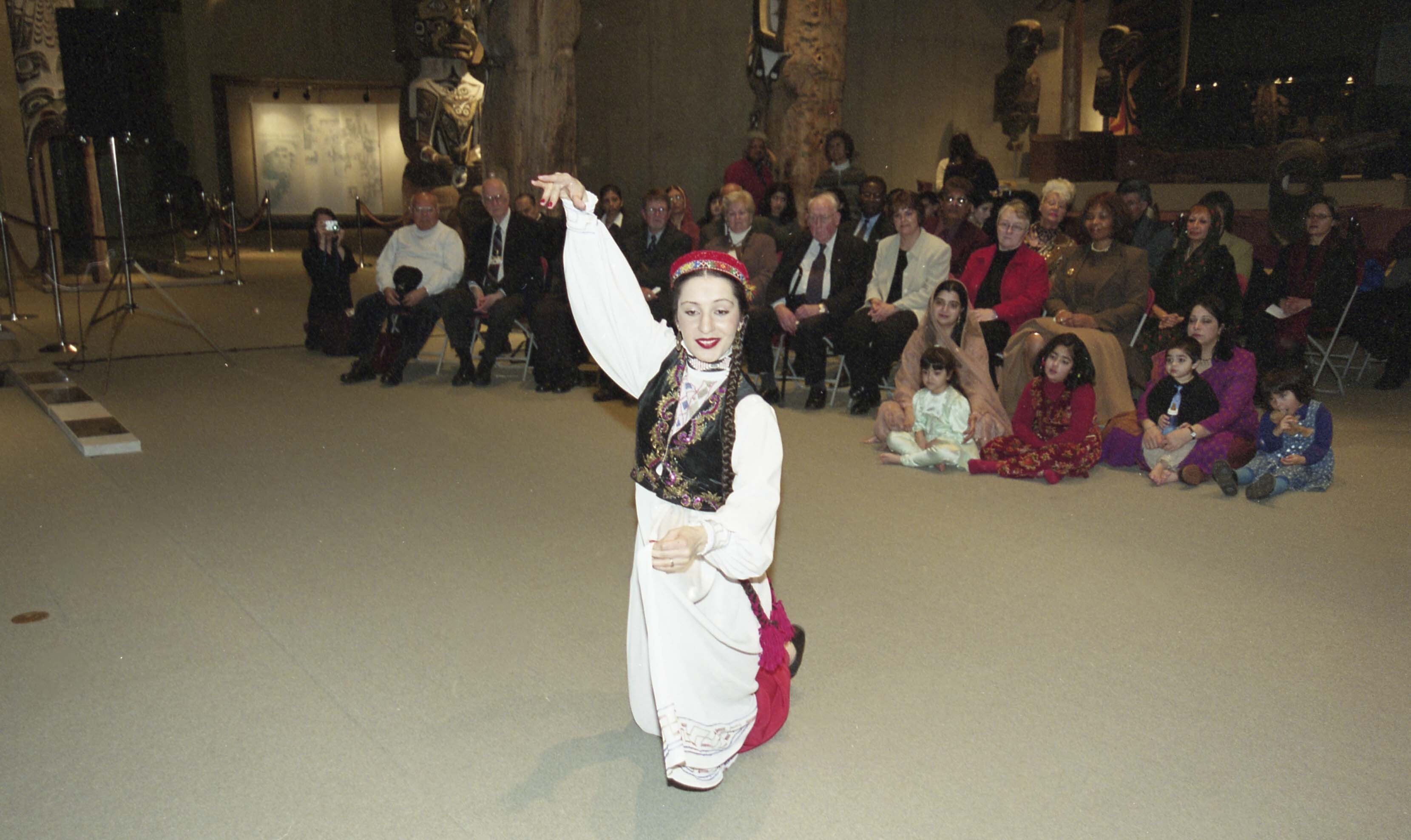
Photograph of an unidentified woman performing a traditional Pamiri folk dance, "Rapo", at the public celebration of Eid-ul-Adha on February 19, 2004, co-hosted by UBC Museum of Anthropology and the Committee for Racial Justice (CRJ) in Vancouver, British Columbia.
A traditional Pamiri folk dance from the Pamir mountains of Gorno Badakhshan, Tajikistan, 'rapo' is performed with empathic feet movement. Rapo is the soul of Pamiri dance. It is used as a signature piece on any auspicious occasion. A graceful dance, 'rapo' features a distinct beat from the valleys of the mountains.
Eid al-Adha is the second most important celebration of Islam, (the first being Eid-ul-Fitr). It takes place on the tenth day of the twelfth and last month (Zulhijjah) of the Islamic calendar. In 2004, this celebration began on the morning of the 1st of February. Eid-ul-Adha celebrates the occasion when Abraham was willing to sacrifice his son to show his obedience to Allah (God). Muslims all around the world celebrate this day, although it has particular significance for pilgrims who complete a pilgrimage (Hajj) to Mecca.
The Museum of Anthropology (MOA) at the University of British Columbia is committed to promoting awareness and understanding of culturally diverse ways of knowing the world through challenging and innovative programs and partnerships with Indigenous, local and global communities.
The MOA and the CRJ first co-hosted an event in December 2003. Following its success, they created a year-long series of public events that offer cultural communities opportunities to share their cultural practices with a wider public. The idea is to create opportunities for people to come together in common purpose to share and celebrate their differences.
A traditional Pamiri folk dance from the Pamir mountains of Gorno Badakhshan, Tajikistan, 'rapo' is performed with empathic feet movement. Rapo is the soul of Pamiri dance. It is used as a signature piece on any auspicious occasion. A graceful dance, 'rapo' features a distinct beat from the valleys of the mountains.
Eid al-Adha is the second most important celebration of Islam, (the first being Eid-ul-Fitr). It takes place on the tenth day of the twelfth and last month (Zulhijjah) of the Islamic calendar. In 2004, this celebration began on the morning of the 1st of February. Eid-ul-Adha celebrates the occasion when Abraham was willing to sacrifice his son to show his obedience to Allah (God). Muslims all around the world celebrate this day, although it has particular significance for pilgrims who complete a pilgrimage (Hajj) to Mecca.
The Museum of Anthropology (MOA) at the University of British Columbia is committed to promoting awareness and understanding of culturally diverse ways of knowing the world through challenging and innovative programs and partnerships with Indigenous, local and global communities.
The MOA and the CRJ first co-hosted an event in December 2003. Following its success, they created a year-long series of public events that offer cultural communities opportunities to share their cultural practices with a wider public. The idea is to create opportunities for people to come together in common purpose to share and celebrate their differences.
Member of
Creator: Chandra Bodalia
Description
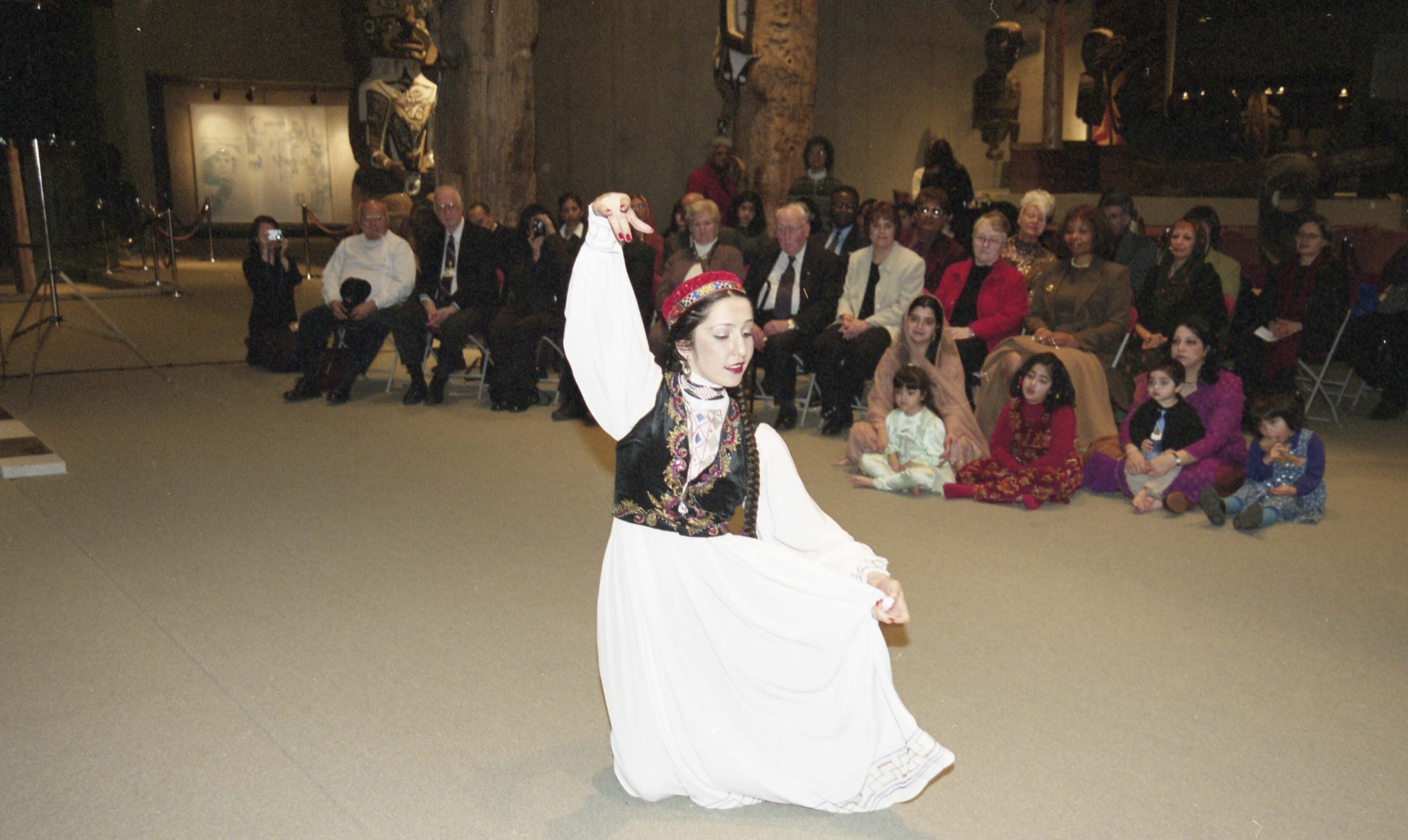
Photograph of an unidentified woman performing a traditional Pamiri folk dance, "Rapo", at the public celebration of Eid-ul-Adha on February 19, 2004, co-hosted by UBC Museum of Anthropology and the Committee for Racial Justice (CRJ) in Vancouver, British Columbia.
A traditional Pamiri folk dance from the Pamir mountains of Gorno Badakhshan, Tajikistan, 'rapo' is performed with empathic feet movement. Rapo is the soul of Pamiri dance. It is used as a signature piece on any auspicious occasion. A graceful dance, 'rapo' features a distinct beat from the valleys of the mountains.
Eid al-Adha is the second most important celebration of Islam, (the first being Eid-ul-Fitr). It takes place on the tenth day of the twelfth and last month (Zulhijjah) of the Islamic calendar. In 2004, this celebration began on the morning of the 1st of February. Eid-ul-Adha celebrates the occasion when Abraham was willing to sacrifice his son to show his obedience to Allah (God). Muslims all around the world celebrate this day, although it has particular significance for pilgrims who complete a pilgrimage (Hajj) to Mecca.
The Museum of Anthropology (MOA) at the University of British Columbia is committed to promoting awareness and understanding of culturally diverse ways of knowing the world through challenging and innovative programs and partnerships with Indigenous, local and global communities.
The MOA and the CRJ first co-hosted an event in December 2003. Following its success, they created a year-long series of public events that offer cultural communities opportunities to share their cultural practices with a wider public. The idea is to create opportunities for people to come together in common purpose to share and celebrate their differences.
A traditional Pamiri folk dance from the Pamir mountains of Gorno Badakhshan, Tajikistan, 'rapo' is performed with empathic feet movement. Rapo is the soul of Pamiri dance. It is used as a signature piece on any auspicious occasion. A graceful dance, 'rapo' features a distinct beat from the valleys of the mountains.
Eid al-Adha is the second most important celebration of Islam, (the first being Eid-ul-Fitr). It takes place on the tenth day of the twelfth and last month (Zulhijjah) of the Islamic calendar. In 2004, this celebration began on the morning of the 1st of February. Eid-ul-Adha celebrates the occasion when Abraham was willing to sacrifice his son to show his obedience to Allah (God). Muslims all around the world celebrate this day, although it has particular significance for pilgrims who complete a pilgrimage (Hajj) to Mecca.
The Museum of Anthropology (MOA) at the University of British Columbia is committed to promoting awareness and understanding of culturally diverse ways of knowing the world through challenging and innovative programs and partnerships with Indigenous, local and global communities.
The MOA and the CRJ first co-hosted an event in December 2003. Following its success, they created a year-long series of public events that offer cultural communities opportunities to share their cultural practices with a wider public. The idea is to create opportunities for people to come together in common purpose to share and celebrate their differences.
Member of
Creator: Chandra Bodalia
Description
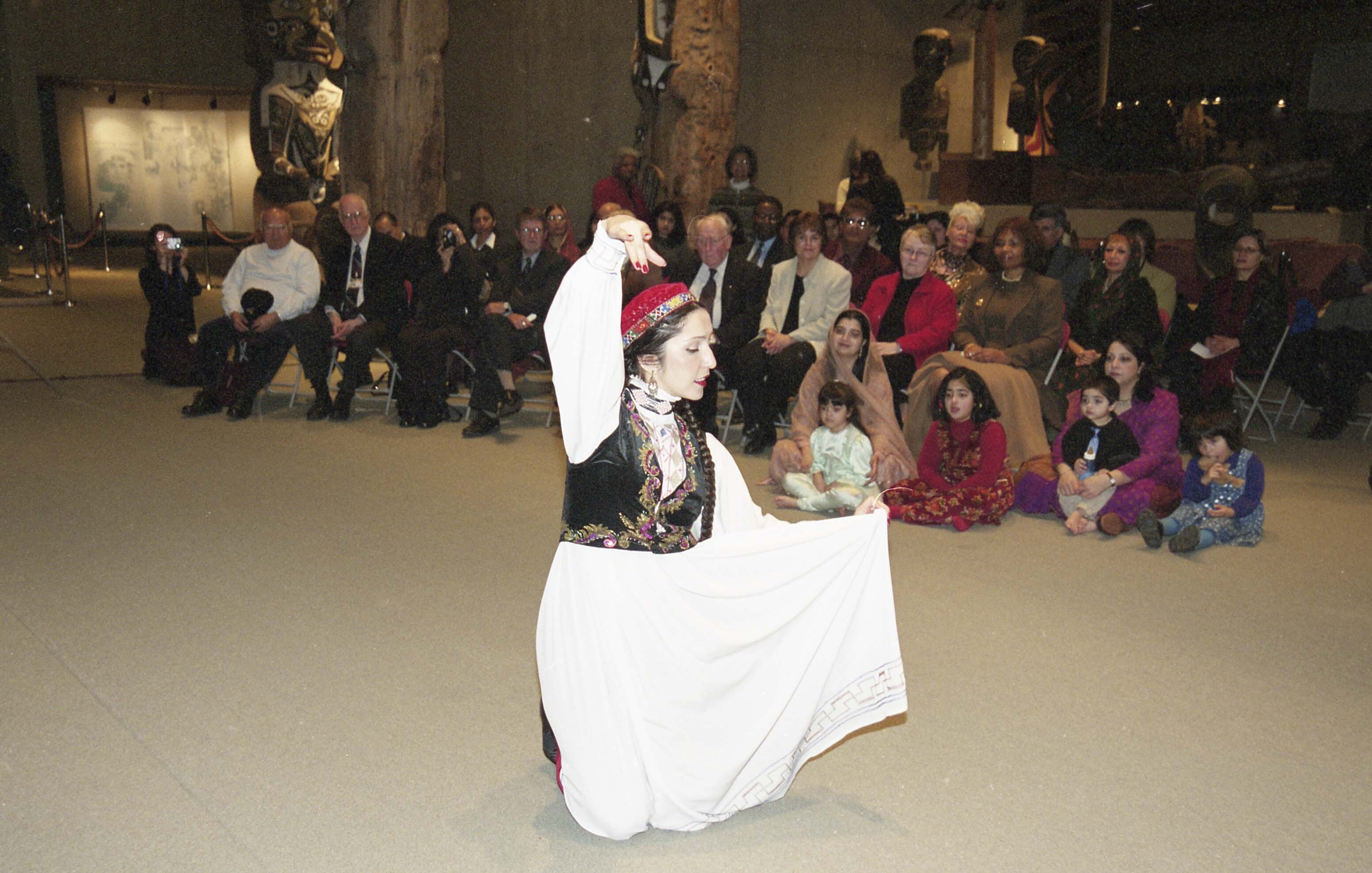
Photograph of an unidentified woman performing a traditional Pamiri folk dance, "Rapo", at the public celebration of Eid-ul-Adha on February 19, 2004, co-hosted by UBC Museum of Anthropology and the Committee for Racial Justice (CRJ) in Vancouver, British Columbia.
A traditional Pamiri folk dance from the Pamir mountains of Gorno Badakhshan, Tajikistan, 'rapo' is performed with empathic feet movement. Rapo is the soul of Pamiri dance. It is used as a signature piece on any auspicious occasion. A graceful dance, 'rapo' features a distinct beat from the valleys of the mountains.
Eid al-Adha is the second most important celebration of Islam, (the first being Eid-ul-Fitr). It takes place on the tenth day of the twelfth and last month (Zulhijjah) of the Islamic calendar. In 2004, this celebration began on the morning of the 1st of February. Eid-ul-Adha celebrates the occasion when Abraham was willing to sacrifice his son to show his obedience to Allah (God). Muslims all around the world celebrate this day, although it has particular significance for pilgrims who complete a pilgrimage (Hajj) to Mecca.
The Museum of Anthropology (MOA) at the University of British Columbia is committed to promoting awareness and understanding of culturally diverse ways of knowing the world through challenging and innovative programs and partnerships with Indigenous, local and global communities.
The MOA and the CRJ first co-hosted an event in December 2003. Following its success, they created a year-long series of public events that offer cultural communities opportunities to share their cultural practices with a wider public. The idea is to create opportunities for people to come together in common purpose to share and celebrate their differences.
A traditional Pamiri folk dance from the Pamir mountains of Gorno Badakhshan, Tajikistan, 'rapo' is performed with empathic feet movement. Rapo is the soul of Pamiri dance. It is used as a signature piece on any auspicious occasion. A graceful dance, 'rapo' features a distinct beat from the valleys of the mountains.
Eid al-Adha is the second most important celebration of Islam, (the first being Eid-ul-Fitr). It takes place on the tenth day of the twelfth and last month (Zulhijjah) of the Islamic calendar. In 2004, this celebration began on the morning of the 1st of February. Eid-ul-Adha celebrates the occasion when Abraham was willing to sacrifice his son to show his obedience to Allah (God). Muslims all around the world celebrate this day, although it has particular significance for pilgrims who complete a pilgrimage (Hajj) to Mecca.
The Museum of Anthropology (MOA) at the University of British Columbia is committed to promoting awareness and understanding of culturally diverse ways of knowing the world through challenging and innovative programs and partnerships with Indigenous, local and global communities.
The MOA and the CRJ first co-hosted an event in December 2003. Following its success, they created a year-long series of public events that offer cultural communities opportunities to share their cultural practices with a wider public. The idea is to create opportunities for people to come together in common purpose to share and celebrate their differences.