
Kanji, Anaar
Member of
Creator: Chandra Bodalia
Description
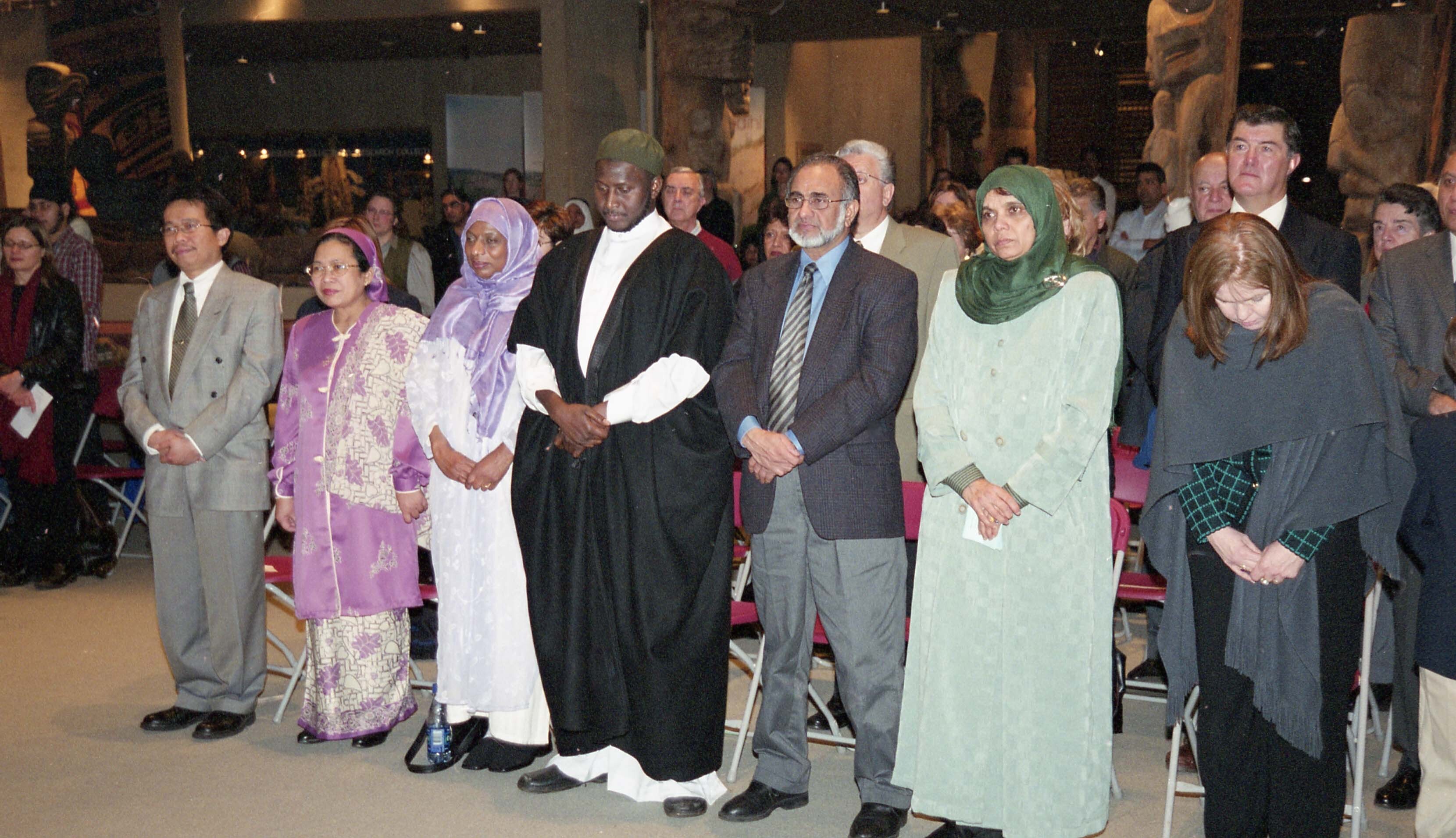
Photograph of the attendees standing at the public celebration of Eid-ul-Adha on February 19, 2004, co-hosted by UBC Museum of Anthropology and the Committee for Racial Justice (CRJ) in Vancouver, British Columbia.
Eid al-Adha is the second most important celebration of Islam, (the first being Eid-ul-Fitr). It takes place on the tenth day of the twelfth and last month (Zulhijjah) of the Islamic calendar. In 2004, this celebration began on the morning of the 1st of February. Eid-ul-Adha celebrates the occasion when Abraham was willing to sacrifice his son to show his obedience to Allah (God). Muslims all around the world celebrate this day, although it has particular significance for pilgrims who complete a pilgrimage (Hajj) to Mecca.
The Museum of Anthropology (MOA) at the University of British Columbia is committed to promoting awareness and understanding of culturally diverse ways of knowing the world through challenging and innovative programs and partnerships with Indigenous, local and global communities.
The MOA and the CRJ first co-hosted an event in December 2003. Following its success, they created a year-long series of public events that offer cultural communities opportunities to share their cultural practices with a wider public. The idea is to create opportunities for people to come together in common purpose to share and celebrate their differences.
Eid al-Adha is the second most important celebration of Islam, (the first being Eid-ul-Fitr). It takes place on the tenth day of the twelfth and last month (Zulhijjah) of the Islamic calendar. In 2004, this celebration began on the morning of the 1st of February. Eid-ul-Adha celebrates the occasion when Abraham was willing to sacrifice his son to show his obedience to Allah (God). Muslims all around the world celebrate this day, although it has particular significance for pilgrims who complete a pilgrimage (Hajj) to Mecca.
The Museum of Anthropology (MOA) at the University of British Columbia is committed to promoting awareness and understanding of culturally diverse ways of knowing the world through challenging and innovative programs and partnerships with Indigenous, local and global communities.
The MOA and the CRJ first co-hosted an event in December 2003. Following its success, they created a year-long series of public events that offer cultural communities opportunities to share their cultural practices with a wider public. The idea is to create opportunities for people to come together in common purpose to share and celebrate their differences.
Member of
Creator: Chandra Bodalia
Description
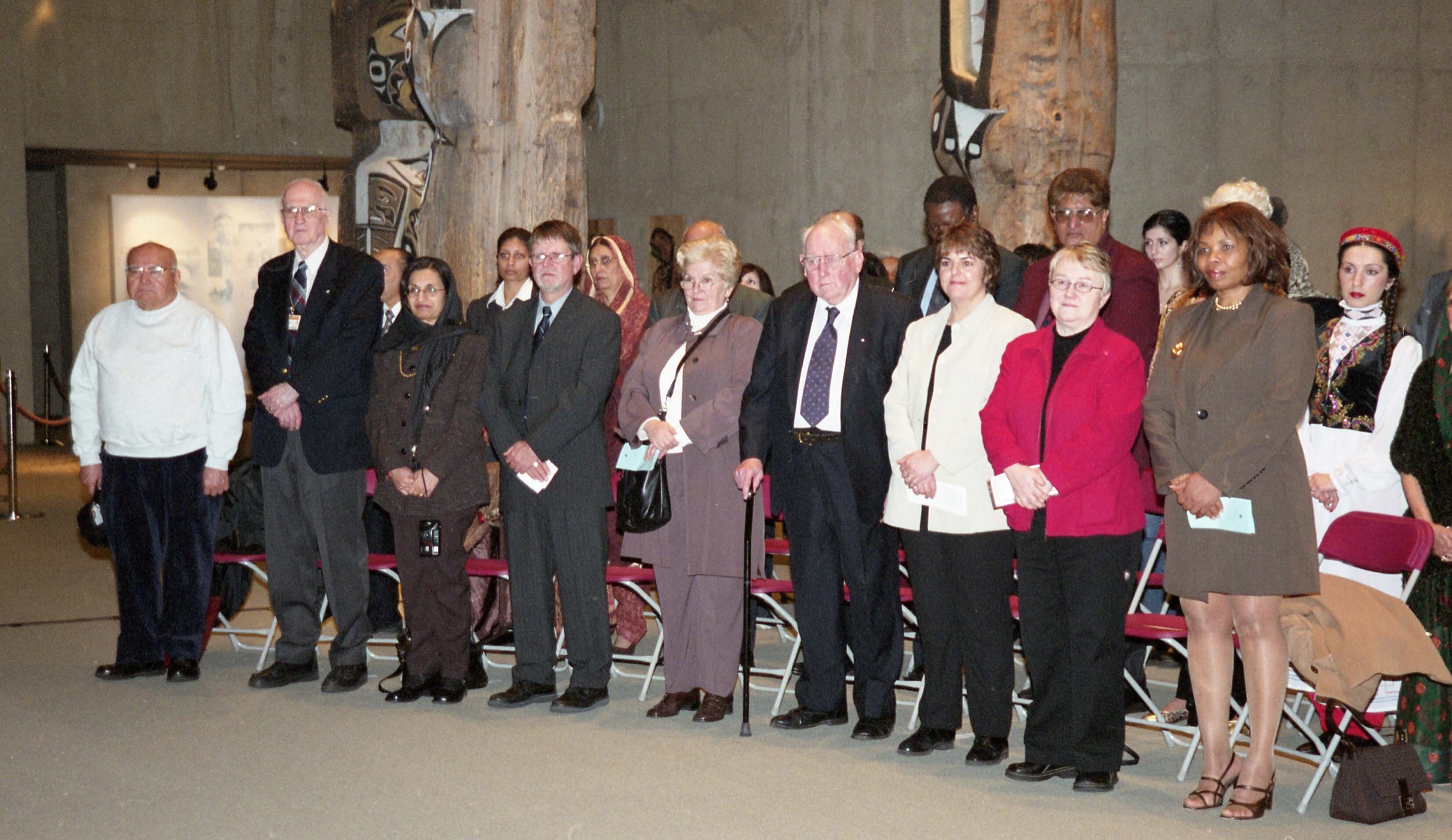
Photograph of the attendees standing at the public celebration of Eid-ul-Adha on February 19, 2004, co-hosted by UBC Museum of Anthropology and the Committee for Racial Justice (CRJ) in Vancouver, British Columbia.
Eid al-Adha is the second most important celebration of Islam, (the first being Eid-ul-Fitr). It takes place on the tenth day of the twelfth and last month (Zulhijjah) of the Islamic calendar. In 2004, this celebration began on the morning of the 1st of February. Eid-ul-Adha celebrates the occasion when Abraham was willing to sacrifice his son to show his obedience to Allah (God). Muslims all around the world celebrate this day, although it has particular significance for pilgrims who complete a pilgrimage (Hajj) to Mecca.
The Museum of Anthropology (MOA) at the University of British Columbia is committed to promoting awareness and understanding of culturally diverse ways of knowing the world through challenging and innovative programs and partnerships with Indigenous, local and global communities.
The MOA and the CRJ first co-hosted an event in December 2003. Following its success, they created a year-long series of public events that offer cultural communities opportunities to share their cultural practices with a wider public. The idea is to create opportunities for people to come together in common purpose to share and celebrate their differences.
Eid al-Adha is the second most important celebration of Islam, (the first being Eid-ul-Fitr). It takes place on the tenth day of the twelfth and last month (Zulhijjah) of the Islamic calendar. In 2004, this celebration began on the morning of the 1st of February. Eid-ul-Adha celebrates the occasion when Abraham was willing to sacrifice his son to show his obedience to Allah (God). Muslims all around the world celebrate this day, although it has particular significance for pilgrims who complete a pilgrimage (Hajj) to Mecca.
The Museum of Anthropology (MOA) at the University of British Columbia is committed to promoting awareness and understanding of culturally diverse ways of knowing the world through challenging and innovative programs and partnerships with Indigenous, local and global communities.
The MOA and the CRJ first co-hosted an event in December 2003. Following its success, they created a year-long series of public events that offer cultural communities opportunities to share their cultural practices with a wider public. The idea is to create opportunities for people to come together in common purpose to share and celebrate their differences.
Member of
Creator: Chandra Bodalia
Description
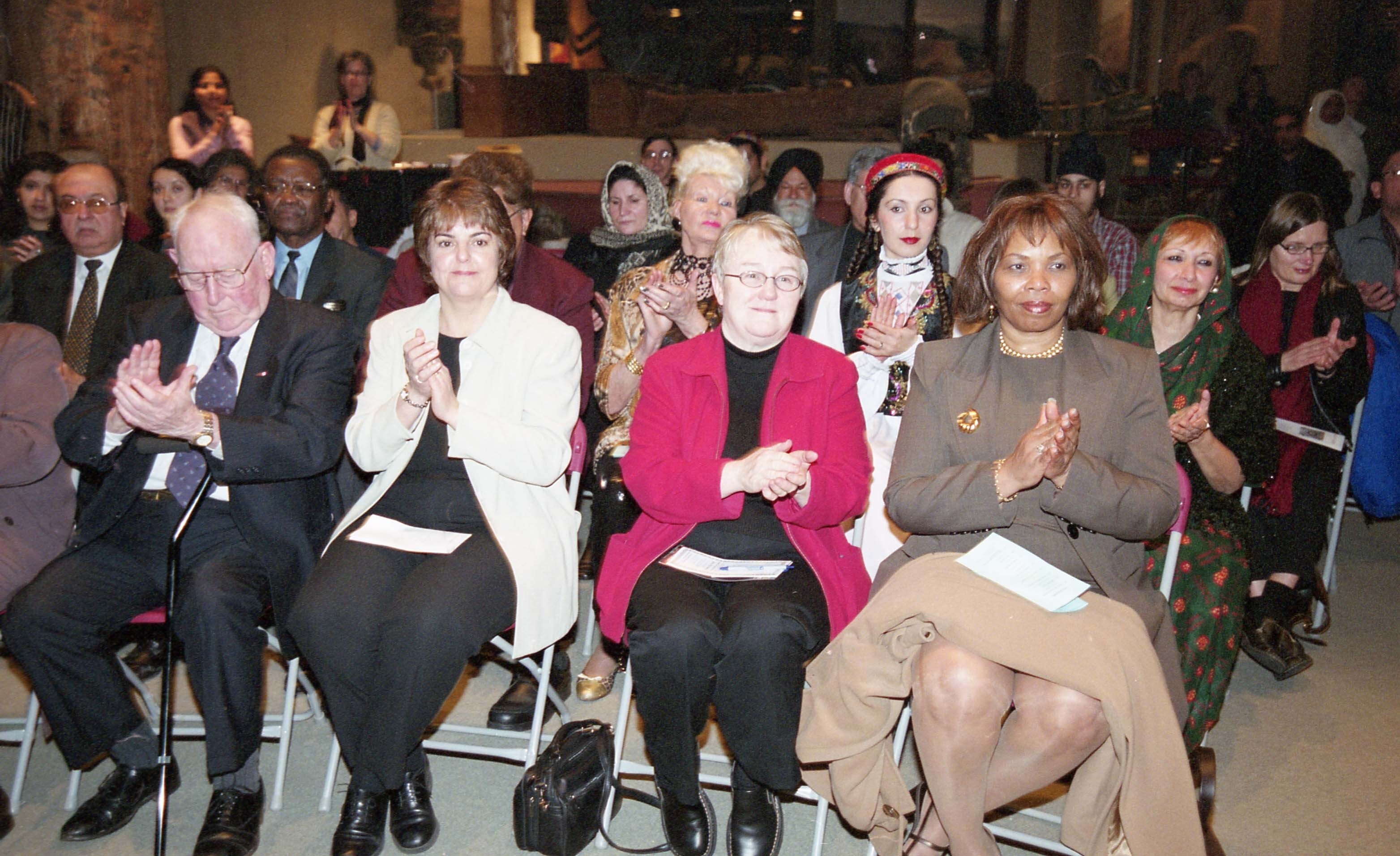
Photograph of the attendees applauding at the public celebration of Eid-ul-Adha on February 19, 2004, co-hosted by UBC Museum of Anthropology and the Committee for Racial Justice (CRJ) in Vancouver, British Columbia.
Eid al-Adha is the second most important celebration of Islam, (the first being Eid-ul-Fitr). It takes place on the tenth day of the twelfth and last month (Zulhijjah) of the Islamic calendar. In 2004, this celebration began on the morning of the 1st of February. Eid-ul-Adha celebrates the occasion when Abraham was willing to sacrifice his son to show his obedience to Allah (God). Muslims all around the world celebrate this day, although it has particular significance for pilgrims who complete a pilgrimage (Hajj) to Mecca.
The Museum of Anthropology (MOA) at the University of British Columbia is committed to promoting awareness and understanding of culturally diverse ways of knowing the world through challenging and innovative programs and partnerships with Indigenous, local and global communities.
The MOA and the CRJ first co-hosted an event in December 2003. Following its success, they created a year-long series of public events that offer cultural communities opportunities to share their cultural practices with a wider public. The idea is to create opportunities for people to come together in common purpose to share and celebrate their differences.
Eid al-Adha is the second most important celebration of Islam, (the first being Eid-ul-Fitr). It takes place on the tenth day of the twelfth and last month (Zulhijjah) of the Islamic calendar. In 2004, this celebration began on the morning of the 1st of February. Eid-ul-Adha celebrates the occasion when Abraham was willing to sacrifice his son to show his obedience to Allah (God). Muslims all around the world celebrate this day, although it has particular significance for pilgrims who complete a pilgrimage (Hajj) to Mecca.
The Museum of Anthropology (MOA) at the University of British Columbia is committed to promoting awareness and understanding of culturally diverse ways of knowing the world through challenging and innovative programs and partnerships with Indigenous, local and global communities.
The MOA and the CRJ first co-hosted an event in December 2003. Following its success, they created a year-long series of public events that offer cultural communities opportunities to share their cultural practices with a wider public. The idea is to create opportunities for people to come together in common purpose to share and celebrate their differences.
Member of
Creator: Chandra Bodalia
Description
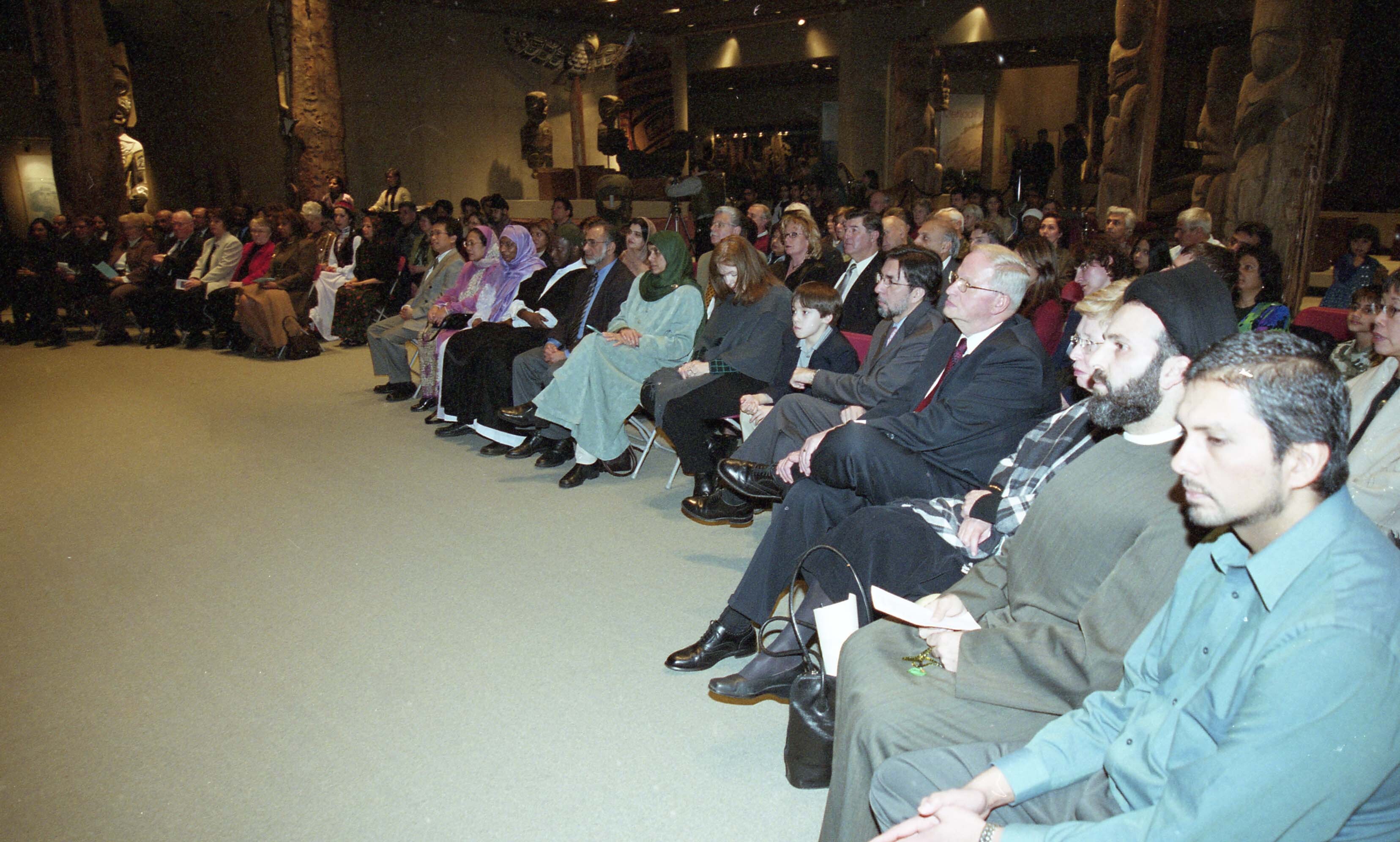
Photograph of the attendees at the public celebration of Eid-ul-Adha on February 19, 2004, co-hosted by UBC Museum of Anthropology and the Committee for Racial Justice (CRJ) in Vancouver, British Columbia.
Eid al-Adha is the second most important celebration of Islam, (the first being Eid-ul-Fitr). It takes place on the tenth day of the twelfth and last month (Zulhijjah) of the Islamic calendar. In 2004, this celebration began on the morning of the 1st of February. Eid-ul-Adha celebrates the occasion when Abraham was willing to sacrifice his son to show his obedience to Allah (God). Muslims all around the world celebrate this day, although it has particular significance for pilgrims who complete a pilgrimage (Hajj) to Mecca.
The Museum of Anthropology (MOA) at the University of British Columbia is committed to promoting awareness and understanding of culturally diverse ways of knowing the world through challenging and innovative programs and partnerships with Indigenous, local and global communities.
The MOA and the CRJ first co-hosted an event in December 2003. Following its success, they created a year-long series of public events that offer cultural communities opportunities to share their cultural practices with a wider public. The idea is to create opportunities for people to come together in common purpose to share and celebrate their differences.
Eid al-Adha is the second most important celebration of Islam, (the first being Eid-ul-Fitr). It takes place on the tenth day of the twelfth and last month (Zulhijjah) of the Islamic calendar. In 2004, this celebration began on the morning of the 1st of February. Eid-ul-Adha celebrates the occasion when Abraham was willing to sacrifice his son to show his obedience to Allah (God). Muslims all around the world celebrate this day, although it has particular significance for pilgrims who complete a pilgrimage (Hajj) to Mecca.
The Museum of Anthropology (MOA) at the University of British Columbia is committed to promoting awareness and understanding of culturally diverse ways of knowing the world through challenging and innovative programs and partnerships with Indigenous, local and global communities.
The MOA and the CRJ first co-hosted an event in December 2003. Following its success, they created a year-long series of public events that offer cultural communities opportunities to share their cultural practices with a wider public. The idea is to create opportunities for people to come together in common purpose to share and celebrate their differences.
Member of
Creator: Chandra Bodalia
Description
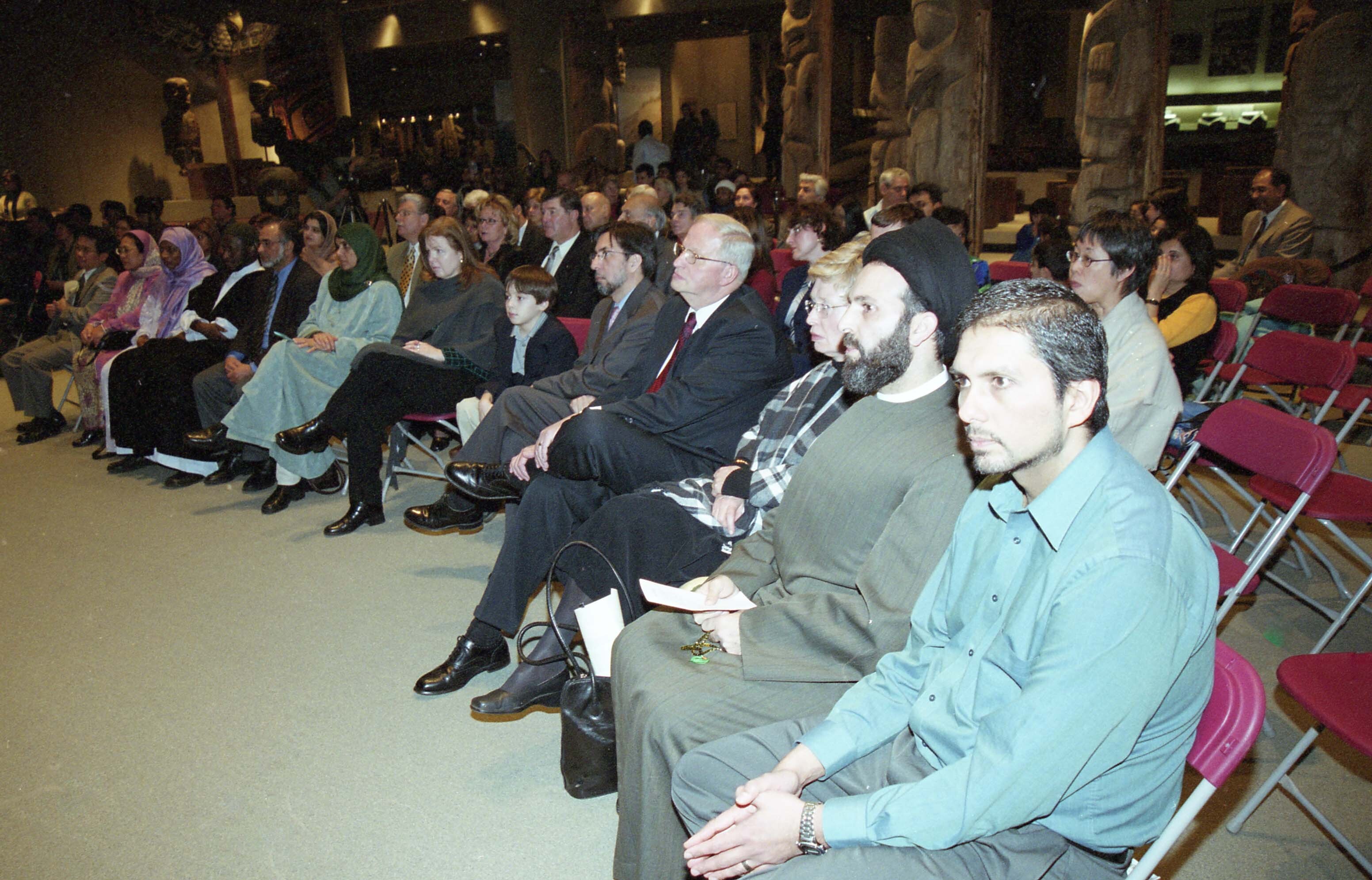
Photograph of the attendees at the public celebration of Eid-ul-Adha on February 19, 2004, co-hosted by UBC Museum of Anthropology and the Committee for Racial Justice (CRJ) in Vancouver, British Columbia.
Eid al-Adha is the second most important celebration of Islam, (the first being Eid-ul-Fitr). It takes place on the tenth day of the twelfth and last month (Zulhijjah) of the Islamic calendar. In 2004, this celebration began on the morning of the 1st of February. Eid-ul-Adha celebrates the occasion when Abraham was willing to sacrifice his son to show his obedience to Allah (God). Muslims all around the world celebrate this day, although it has particular significance for pilgrims who complete a pilgrimage (Hajj) to Mecca.
The Museum of Anthropology (MOA) at the University of British Columbia is committed to promoting awareness and understanding of culturally diverse ways of knowing the world through challenging and innovative programs and partnerships with Indigenous, local and global communities.
The MOA and the CRJ first co-hosted an event in December 2003. Following its success, they created a year-long series of public events that offer cultural communities opportunities to share their cultural practices with a wider public. The idea is to create opportunities for people to come together in common purpose to share and celebrate their differences.
Eid al-Adha is the second most important celebration of Islam, (the first being Eid-ul-Fitr). It takes place on the tenth day of the twelfth and last month (Zulhijjah) of the Islamic calendar. In 2004, this celebration began on the morning of the 1st of February. Eid-ul-Adha celebrates the occasion when Abraham was willing to sacrifice his son to show his obedience to Allah (God). Muslims all around the world celebrate this day, although it has particular significance for pilgrims who complete a pilgrimage (Hajj) to Mecca.
The Museum of Anthropology (MOA) at the University of British Columbia is committed to promoting awareness and understanding of culturally diverse ways of knowing the world through challenging and innovative programs and partnerships with Indigenous, local and global communities.
The MOA and the CRJ first co-hosted an event in December 2003. Following its success, they created a year-long series of public events that offer cultural communities opportunities to share their cultural practices with a wider public. The idea is to create opportunities for people to come together in common purpose to share and celebrate their differences.
Member of
Creator: Chandra Bodalia
Description
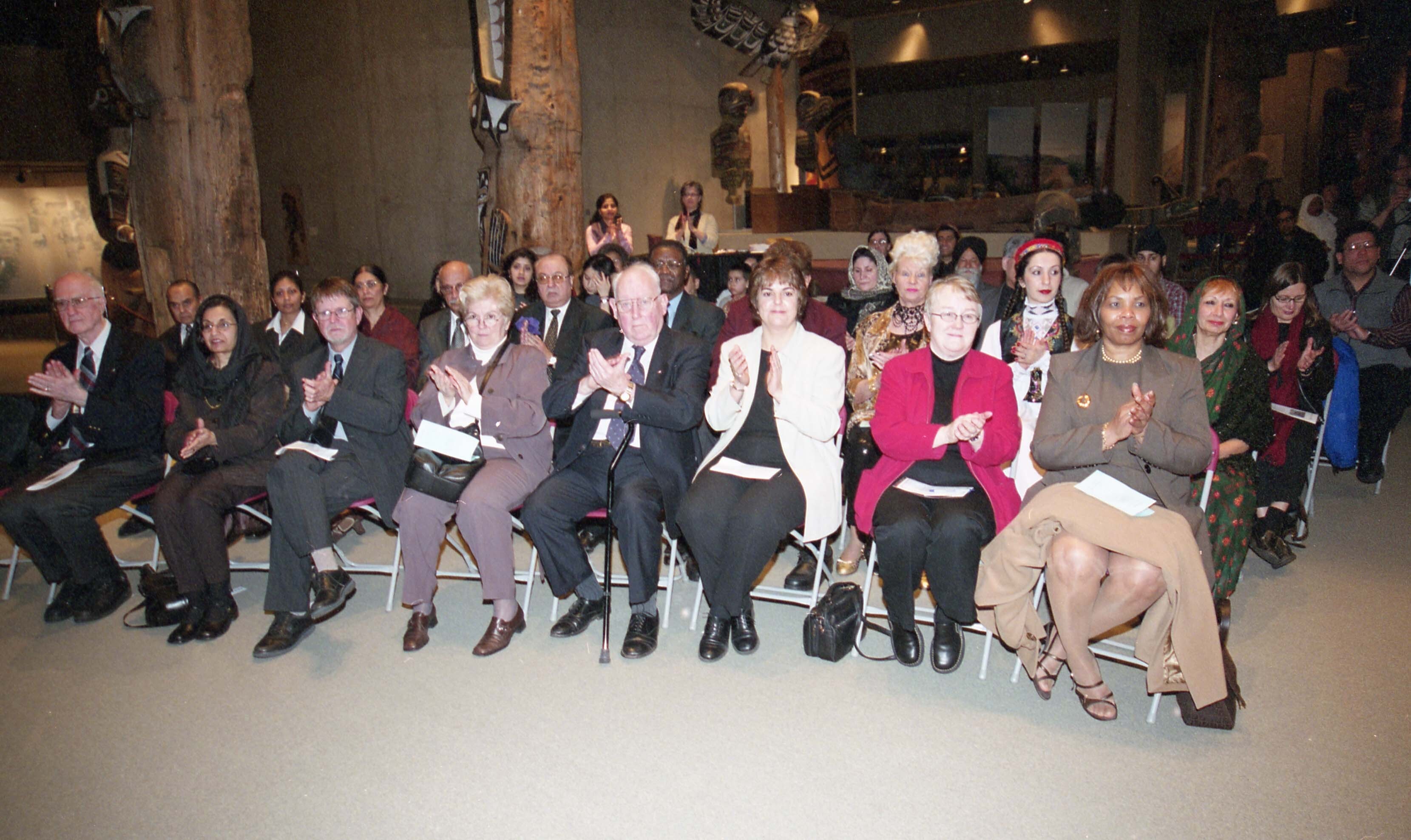
Photograph of the attendees applauding at the public celebration of Eid-ul-Adha on February 19, 2004, co-hosted by UBC Museum of Anthropology and the Committee for Racial Justice (CRJ) in Vancouver, British Columbia.
Eid al-Adha is the second most important celebration of Islam, (the first being Eid-ul-Fitr). It takes place on the tenth day of the twelfth and last month (Zulhijjah) of the Islamic calendar. In 2004, this celebration began on the morning of the 1st of February. Eid-ul-Adha celebrates the occasion when Abraham was willing to sacrifice his son to show his obedience to Allah (God). Muslims all around the world celebrate this day, although it has particular significance for pilgrims who complete a pilgrimage (Hajj) to Mecca.
The Museum of Anthropology (MOA) at the University of British Columbia is committed to promoting awareness and understanding of culturally diverse ways of knowing the world through challenging and innovative programs and partnerships with Indigenous, local and global communities.
The MOA and the CRJ first co-hosted an event in December 2003. Following its success, they created a year-long series of public events that offer cultural communities opportunities to share their cultural practices with a wider public. The idea is to create opportunities for people to come together in common purpose to share and celebrate their differences.
Eid al-Adha is the second most important celebration of Islam, (the first being Eid-ul-Fitr). It takes place on the tenth day of the twelfth and last month (Zulhijjah) of the Islamic calendar. In 2004, this celebration began on the morning of the 1st of February. Eid-ul-Adha celebrates the occasion when Abraham was willing to sacrifice his son to show his obedience to Allah (God). Muslims all around the world celebrate this day, although it has particular significance for pilgrims who complete a pilgrimage (Hajj) to Mecca.
The Museum of Anthropology (MOA) at the University of British Columbia is committed to promoting awareness and understanding of culturally diverse ways of knowing the world through challenging and innovative programs and partnerships with Indigenous, local and global communities.
The MOA and the CRJ first co-hosted an event in December 2003. Following its success, they created a year-long series of public events that offer cultural communities opportunities to share their cultural practices with a wider public. The idea is to create opportunities for people to come together in common purpose to share and celebrate their differences.
Member of
Creator: Chandra Bodalia
Description
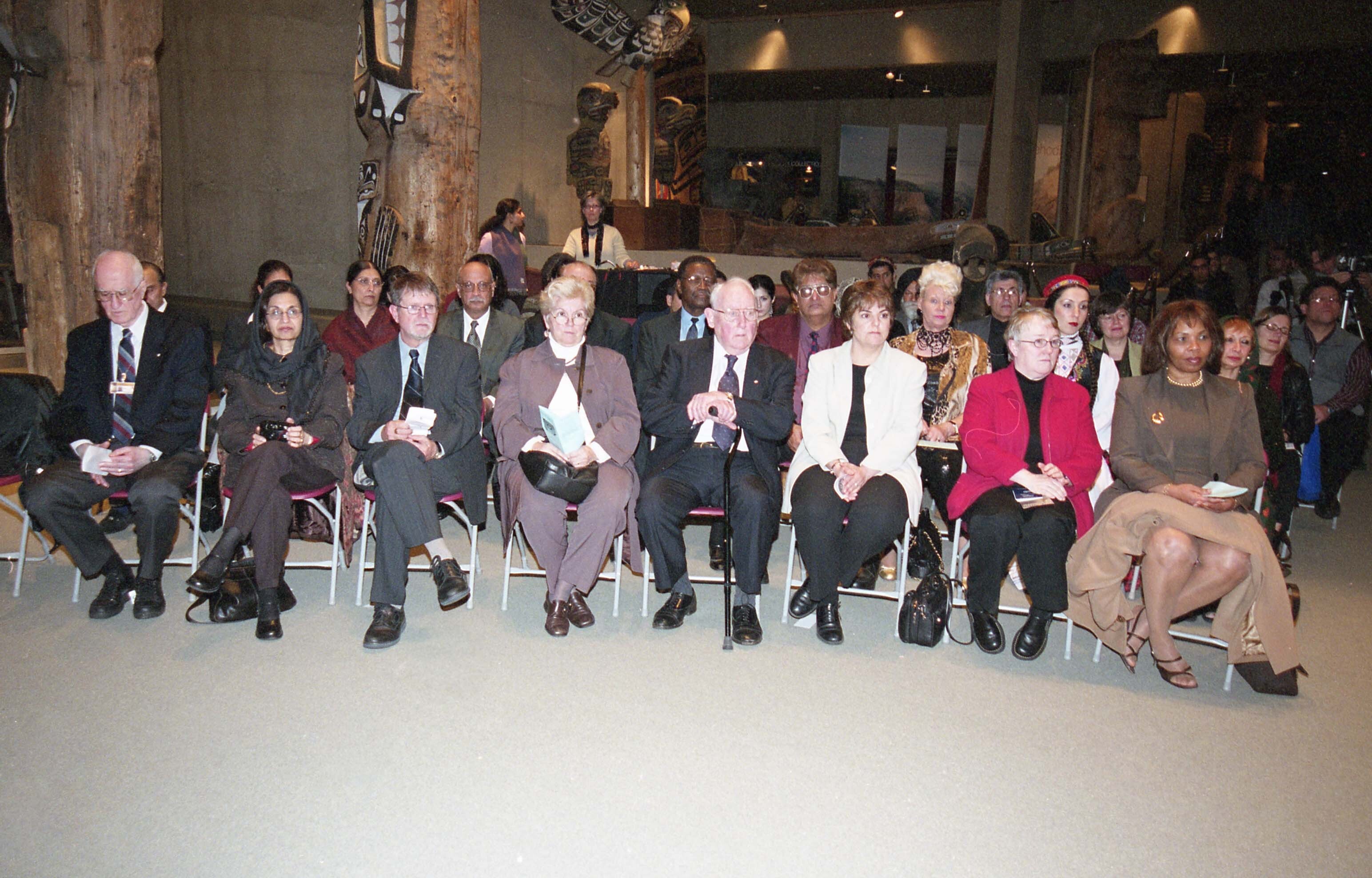
Photograph of the attendees at the public celebration of Eid-ul-Adha on February 19, 2004, co-hosted by UBC Museum of Anthropology and the Committee for Racial Justice (CRJ) in Vancouver, British Columbia.
Eid al-Adha is the second most important celebration of Islam, (the first being Eid-ul-Fitr). It takes place on the tenth day of the twelfth and last month (Zulhijjah) of the Islamic calendar. In 2004, this celebration began on the morning of the 1st of February. Eid-ul-Adha celebrates the occasion when Abraham was willing to sacrifice his son to show his obedience to Allah (God). Muslims all around the world celebrate this day, although it has particular significance for pilgrims who complete a pilgrimage (Hajj) to Mecca.
The Museum of Anthropology (MOA) at the University of British Columbia is committed to promoting awareness and understanding of culturally diverse ways of knowing the world through challenging and innovative programs and partnerships with Indigenous, local and global communities.
The MOA and the CRJ first co-hosted an event in December 2003. Following its success, they created a year-long series of public events that offer cultural communities opportunities to share their cultural practices with a wider public. The idea is to create opportunities for people to come together in common purpose to share and celebrate their differences.
Eid al-Adha is the second most important celebration of Islam, (the first being Eid-ul-Fitr). It takes place on the tenth day of the twelfth and last month (Zulhijjah) of the Islamic calendar. In 2004, this celebration began on the morning of the 1st of February. Eid-ul-Adha celebrates the occasion when Abraham was willing to sacrifice his son to show his obedience to Allah (God). Muslims all around the world celebrate this day, although it has particular significance for pilgrims who complete a pilgrimage (Hajj) to Mecca.
The Museum of Anthropology (MOA) at the University of British Columbia is committed to promoting awareness and understanding of culturally diverse ways of knowing the world through challenging and innovative programs and partnerships with Indigenous, local and global communities.
The MOA and the CRJ first co-hosted an event in December 2003. Following its success, they created a year-long series of public events that offer cultural communities opportunities to share their cultural practices with a wider public. The idea is to create opportunities for people to come together in common purpose to share and celebrate their differences.
Member of
Creator: Chandra Bodalia
Description
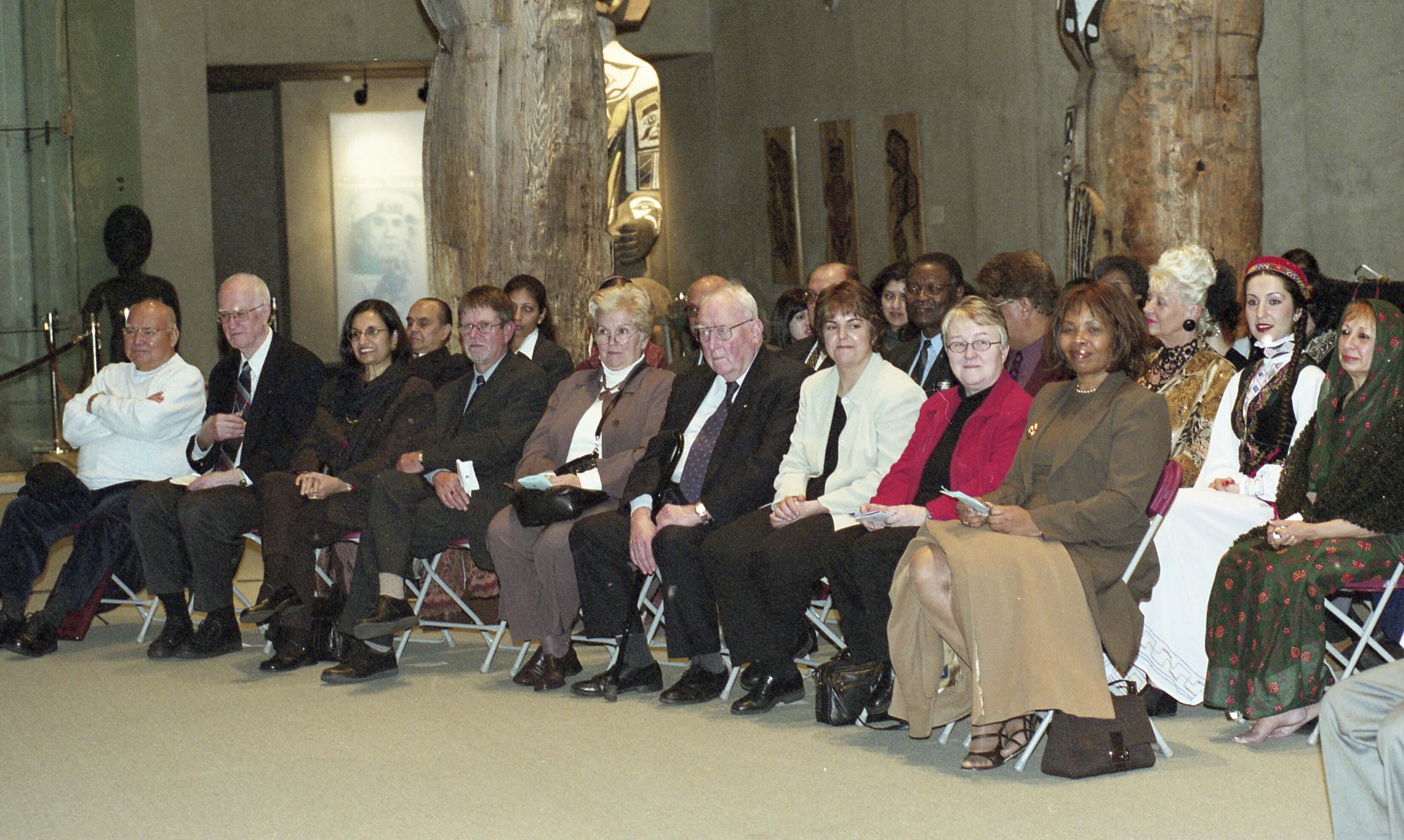
Photograph of the attendees at the public celebration of Eid-ul-Adha on February 19, 2004, co-hosted by UBC Museum of Anthropology and the Committee for Racial Justice (CRJ) in Vancouver, British Columbia.
Eid al-Adha is the second most important celebration of Islam, (the first being Eid-ul-Fitr). It takes place on the tenth day of the twelfth and last month (Zulhijjah) of the Islamic calendar. In 2004, this celebration began on the morning of the 1st of February. Eid-ul-Adha celebrates the occasion when Abraham was willing to sacrifice his son to show his obedience to Allah (God). Muslims all around the world celebrate this day, although it has particular significance for pilgrims who complete a pilgrimage (Hajj) to Mecca.
The Museum of Anthropology (MOA) at the University of British Columbia is committed to promoting awareness and understanding of culturally diverse ways of knowing the world through challenging and innovative programs and partnerships with Indigenous, local and global communities.
The MOA and the CRJ first co-hosted an event in December 2003. Following its success, they created a year-long series of public events that offer cultural communities opportunities to share their cultural practices with a wider public. The idea is to create opportunities for people to come together in common purpose to share and celebrate their differences.
Eid al-Adha is the second most important celebration of Islam, (the first being Eid-ul-Fitr). It takes place on the tenth day of the twelfth and last month (Zulhijjah) of the Islamic calendar. In 2004, this celebration began on the morning of the 1st of February. Eid-ul-Adha celebrates the occasion when Abraham was willing to sacrifice his son to show his obedience to Allah (God). Muslims all around the world celebrate this day, although it has particular significance for pilgrims who complete a pilgrimage (Hajj) to Mecca.
The Museum of Anthropology (MOA) at the University of British Columbia is committed to promoting awareness and understanding of culturally diverse ways of knowing the world through challenging and innovative programs and partnerships with Indigenous, local and global communities.
The MOA and the CRJ first co-hosted an event in December 2003. Following its success, they created a year-long series of public events that offer cultural communities opportunities to share their cultural practices with a wider public. The idea is to create opportunities for people to come together in common purpose to share and celebrate their differences.
Member of
Creator: Chandra Bodalia
Description
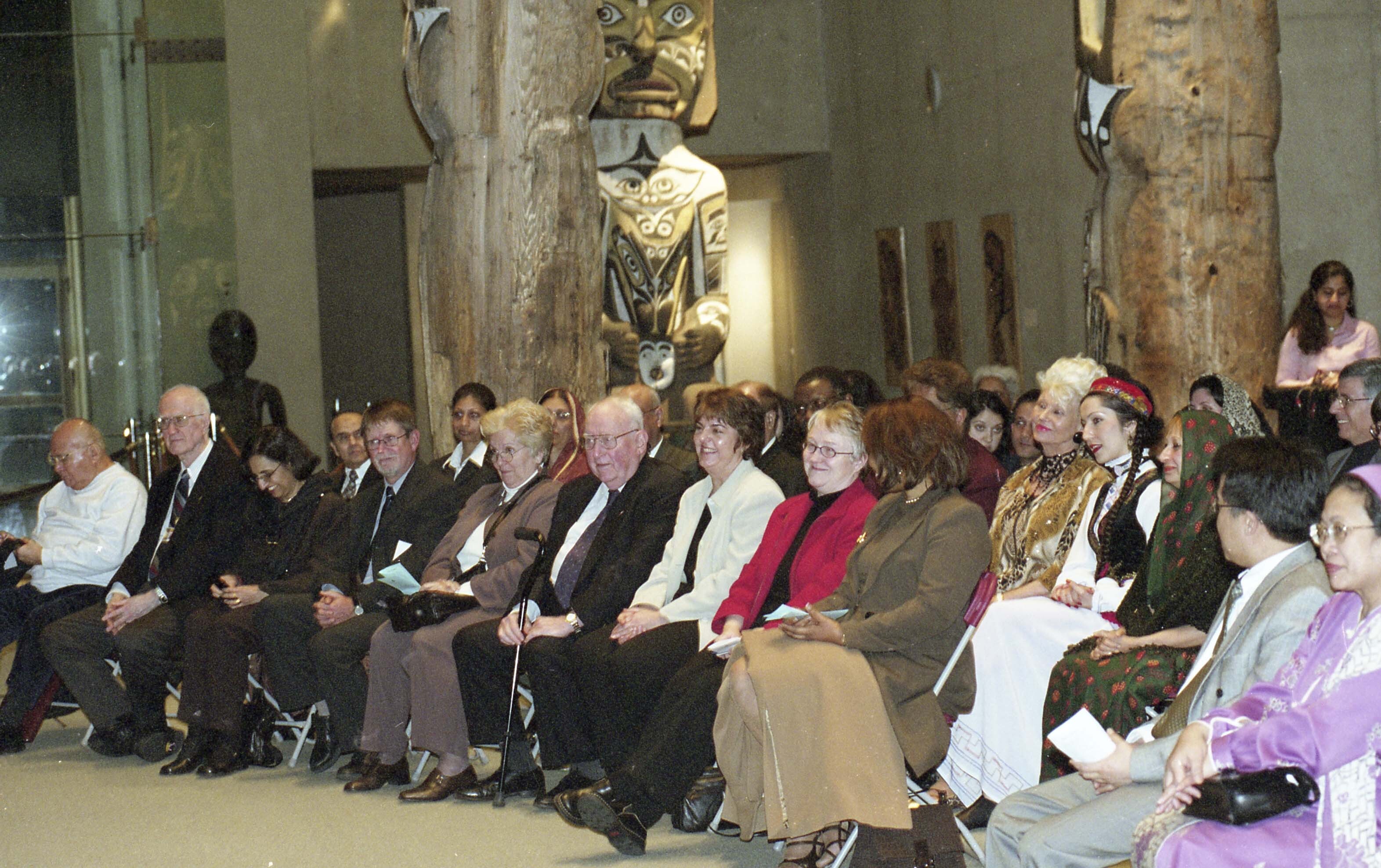
Photograph of the attendees at the public celebration of Eid-ul-Adha on February 19, 2004, co-hosted by UBC Museum of Anthropology and the Committee for Racial Justice (CRJ) in Vancouver, British Columbia.
Eid al-Adha is the second most important celebration of Islam, (the first being Eid-ul-Fitr). It takes place on the tenth day of the twelfth and last month (Zulhijjah) of the Islamic calendar. In 2004, this celebration began on the morning of the 1st of February. Eid-ul-Adha celebrates the occasion when Abraham was willing to sacrifice his son to show his obedience to Allah (God). Muslims all around the world celebrate this day, although it has particular significance for pilgrims who complete a pilgrimage (Hajj) to Mecca.
The Museum of Anthropology (MOA) at the University of British Columbia is committed to promoting awareness and understanding of culturally diverse ways of knowing the world through challenging and innovative programs and partnerships with Indigenous, local and global communities.
The MOA and the CRJ first co-hosted an event in December 2003. Following its success, they created a year-long series of public events that offer cultural communities opportunities to share their cultural practices with a wider public. The idea is to create opportunities for people to come together in common purpose to share and celebrate their differences.
Eid al-Adha is the second most important celebration of Islam, (the first being Eid-ul-Fitr). It takes place on the tenth day of the twelfth and last month (Zulhijjah) of the Islamic calendar. In 2004, this celebration began on the morning of the 1st of February. Eid-ul-Adha celebrates the occasion when Abraham was willing to sacrifice his son to show his obedience to Allah (God). Muslims all around the world celebrate this day, although it has particular significance for pilgrims who complete a pilgrimage (Hajj) to Mecca.
The Museum of Anthropology (MOA) at the University of British Columbia is committed to promoting awareness and understanding of culturally diverse ways of knowing the world through challenging and innovative programs and partnerships with Indigenous, local and global communities.
The MOA and the CRJ first co-hosted an event in December 2003. Following its success, they created a year-long series of public events that offer cultural communities opportunities to share their cultural practices with a wider public. The idea is to create opportunities for people to come together in common purpose to share and celebrate their differences.