
Museum of Anthropology
Member of
Creator: Chandra Bodalia
Description
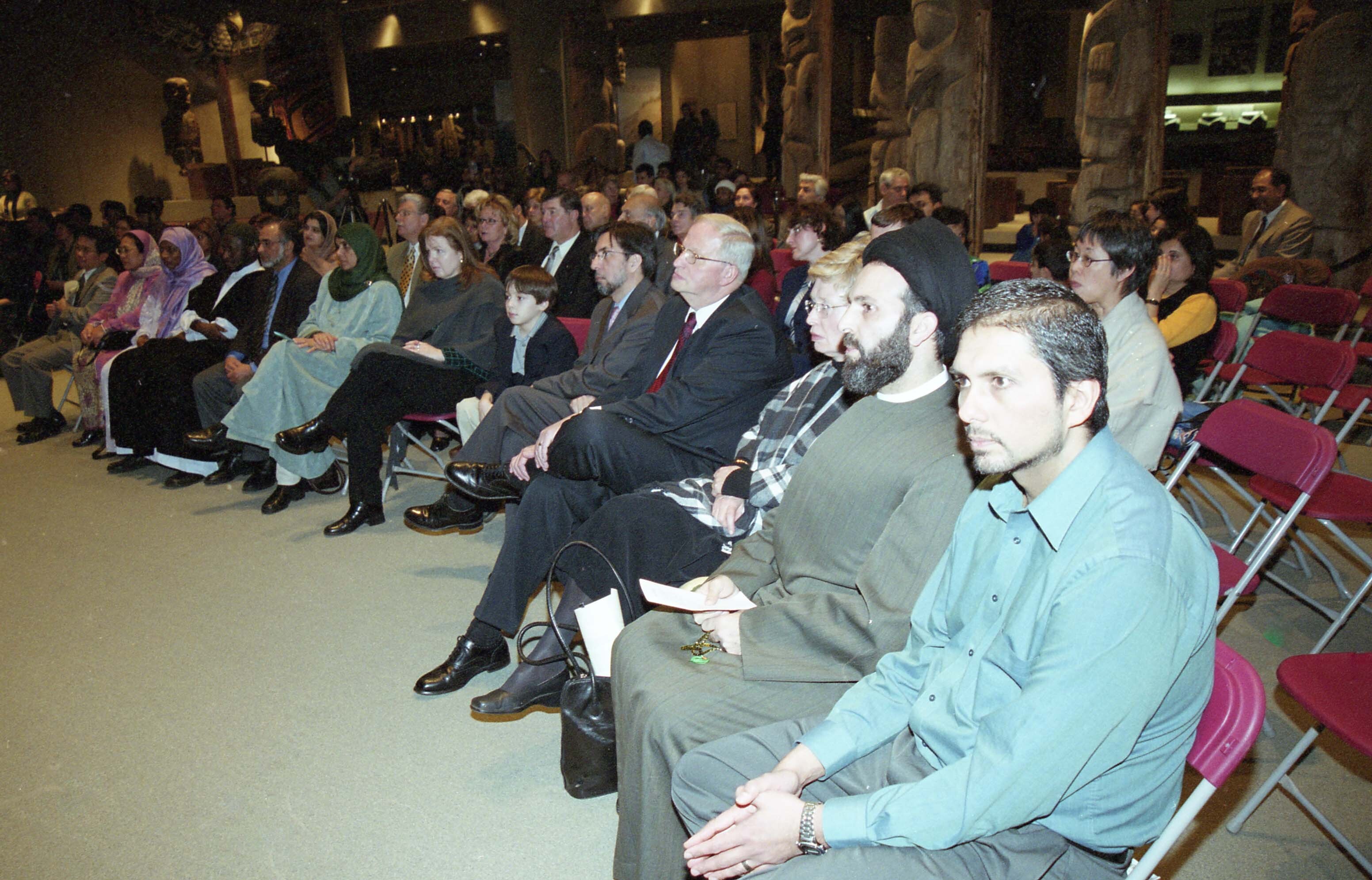
Photograph of the attendees at the public celebration of Eid-ul-Adha on February 19, 2004, co-hosted by UBC Museum of Anthropology and the Committee for Racial Justice (CRJ) in Vancouver, British Columbia.
Eid al-Adha is the second most important celebration of Islam, (the first being Eid-ul-Fitr). It takes place on the tenth day of the twelfth and last month (Zulhijjah) of the Islamic calendar. In 2004, this celebration began on the morning of the 1st of February. Eid-ul-Adha celebrates the occasion when Abraham was willing to sacrifice his son to show his obedience to Allah (God). Muslims all around the world celebrate this day, although it has particular significance for pilgrims who complete a pilgrimage (Hajj) to Mecca.
The Museum of Anthropology (MOA) at the University of British Columbia is committed to promoting awareness and understanding of culturally diverse ways of knowing the world through challenging and innovative programs and partnerships with Indigenous, local and global communities.
The MOA and the CRJ first co-hosted an event in December 2003. Following its success, they created a year-long series of public events that offer cultural communities opportunities to share their cultural practices with a wider public. The idea is to create opportunities for people to come together in common purpose to share and celebrate their differences.
Eid al-Adha is the second most important celebration of Islam, (the first being Eid-ul-Fitr). It takes place on the tenth day of the twelfth and last month (Zulhijjah) of the Islamic calendar. In 2004, this celebration began on the morning of the 1st of February. Eid-ul-Adha celebrates the occasion when Abraham was willing to sacrifice his son to show his obedience to Allah (God). Muslims all around the world celebrate this day, although it has particular significance for pilgrims who complete a pilgrimage (Hajj) to Mecca.
The Museum of Anthropology (MOA) at the University of British Columbia is committed to promoting awareness and understanding of culturally diverse ways of knowing the world through challenging and innovative programs and partnerships with Indigenous, local and global communities.
The MOA and the CRJ first co-hosted an event in December 2003. Following its success, they created a year-long series of public events that offer cultural communities opportunities to share their cultural practices with a wider public. The idea is to create opportunities for people to come together in common purpose to share and celebrate their differences.
Member of
Creator: Chandra Bodalia
Description
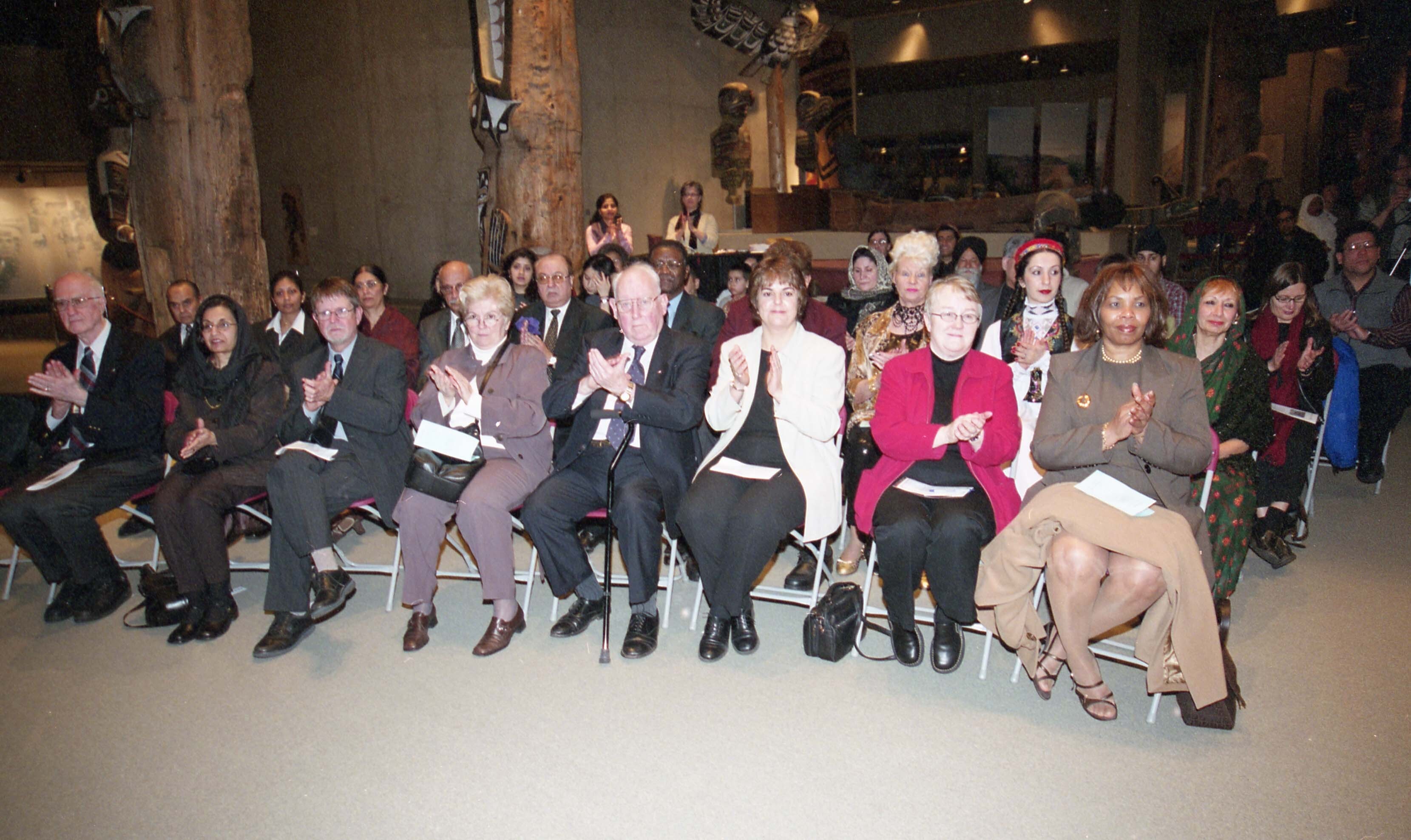
Photograph of the attendees applauding at the public celebration of Eid-ul-Adha on February 19, 2004, co-hosted by UBC Museum of Anthropology and the Committee for Racial Justice (CRJ) in Vancouver, British Columbia.
Eid al-Adha is the second most important celebration of Islam, (the first being Eid-ul-Fitr). It takes place on the tenth day of the twelfth and last month (Zulhijjah) of the Islamic calendar. In 2004, this celebration began on the morning of the 1st of February. Eid-ul-Adha celebrates the occasion when Abraham was willing to sacrifice his son to show his obedience to Allah (God). Muslims all around the world celebrate this day, although it has particular significance for pilgrims who complete a pilgrimage (Hajj) to Mecca.
The Museum of Anthropology (MOA) at the University of British Columbia is committed to promoting awareness and understanding of culturally diverse ways of knowing the world through challenging and innovative programs and partnerships with Indigenous, local and global communities.
The MOA and the CRJ first co-hosted an event in December 2003. Following its success, they created a year-long series of public events that offer cultural communities opportunities to share their cultural practices with a wider public. The idea is to create opportunities for people to come together in common purpose to share and celebrate their differences.
Eid al-Adha is the second most important celebration of Islam, (the first being Eid-ul-Fitr). It takes place on the tenth day of the twelfth and last month (Zulhijjah) of the Islamic calendar. In 2004, this celebration began on the morning of the 1st of February. Eid-ul-Adha celebrates the occasion when Abraham was willing to sacrifice his son to show his obedience to Allah (God). Muslims all around the world celebrate this day, although it has particular significance for pilgrims who complete a pilgrimage (Hajj) to Mecca.
The Museum of Anthropology (MOA) at the University of British Columbia is committed to promoting awareness and understanding of culturally diverse ways of knowing the world through challenging and innovative programs and partnerships with Indigenous, local and global communities.
The MOA and the CRJ first co-hosted an event in December 2003. Following its success, they created a year-long series of public events that offer cultural communities opportunities to share their cultural practices with a wider public. The idea is to create opportunities for people to come together in common purpose to share and celebrate their differences.
Member of
Creator: Chandra Bodalia
Description
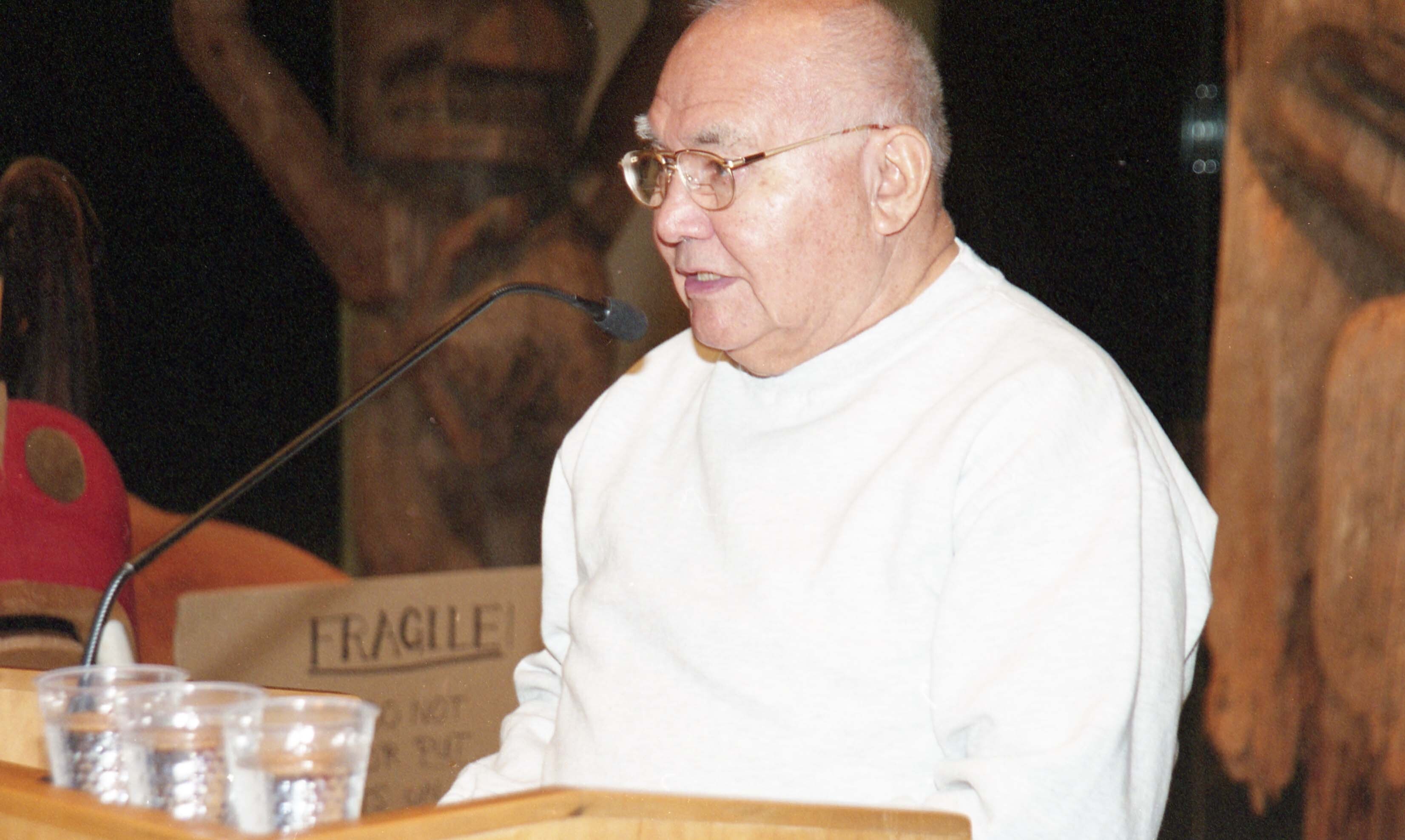
Photograph of an unidentified religious speaker addressing the audience at the public celebration of Eid-ul-Adha on February 19, 2004, co-hosted by UBC Museum of Anthropology and the Committee for Racial Justice (CRJ) in Vancouver, British Columbia.
Eid al-Adha is the second most important celebration of Islam, (the first being Eid-ul-Fitr). It takes place on the tenth day of the twelfth and last month (Zulhijjah) of the Islamic calendar. In 2004, this celebration began on the morning of the 1st of February. Eid-ul-Adha celebrates the occasion when Abraham was willing to sacrifice his son to show his obedience to Allah (God). Muslims all around the world celebrate this day, although it has particular significance for pilgrims who complete a pilgrimage (Hajj) to Mecca.
The Museum of Anthropology (MOA) at the University of British Columbia is committed to promoting awareness and understanding of culturally diverse ways of knowing the world through challenging and innovative programs and partnerships with Indigenous, local and global communities.
The MOA and the CRJ first co-hosted an event in December 2003. Following its success, they created a year-long series of public events that offer cultural communities opportunities to share their cultural practices with a wider public. The idea is to create opportunities for people to come together in common purpose to share and celebrate their differences.
Eid al-Adha is the second most important celebration of Islam, (the first being Eid-ul-Fitr). It takes place on the tenth day of the twelfth and last month (Zulhijjah) of the Islamic calendar. In 2004, this celebration began on the morning of the 1st of February. Eid-ul-Adha celebrates the occasion when Abraham was willing to sacrifice his son to show his obedience to Allah (God). Muslims all around the world celebrate this day, although it has particular significance for pilgrims who complete a pilgrimage (Hajj) to Mecca.
The Museum of Anthropology (MOA) at the University of British Columbia is committed to promoting awareness and understanding of culturally diverse ways of knowing the world through challenging and innovative programs and partnerships with Indigenous, local and global communities.
The MOA and the CRJ first co-hosted an event in December 2003. Following its success, they created a year-long series of public events that offer cultural communities opportunities to share their cultural practices with a wider public. The idea is to create opportunities for people to come together in common purpose to share and celebrate their differences.
Member of
Creator: Chandra Bodalia
Description
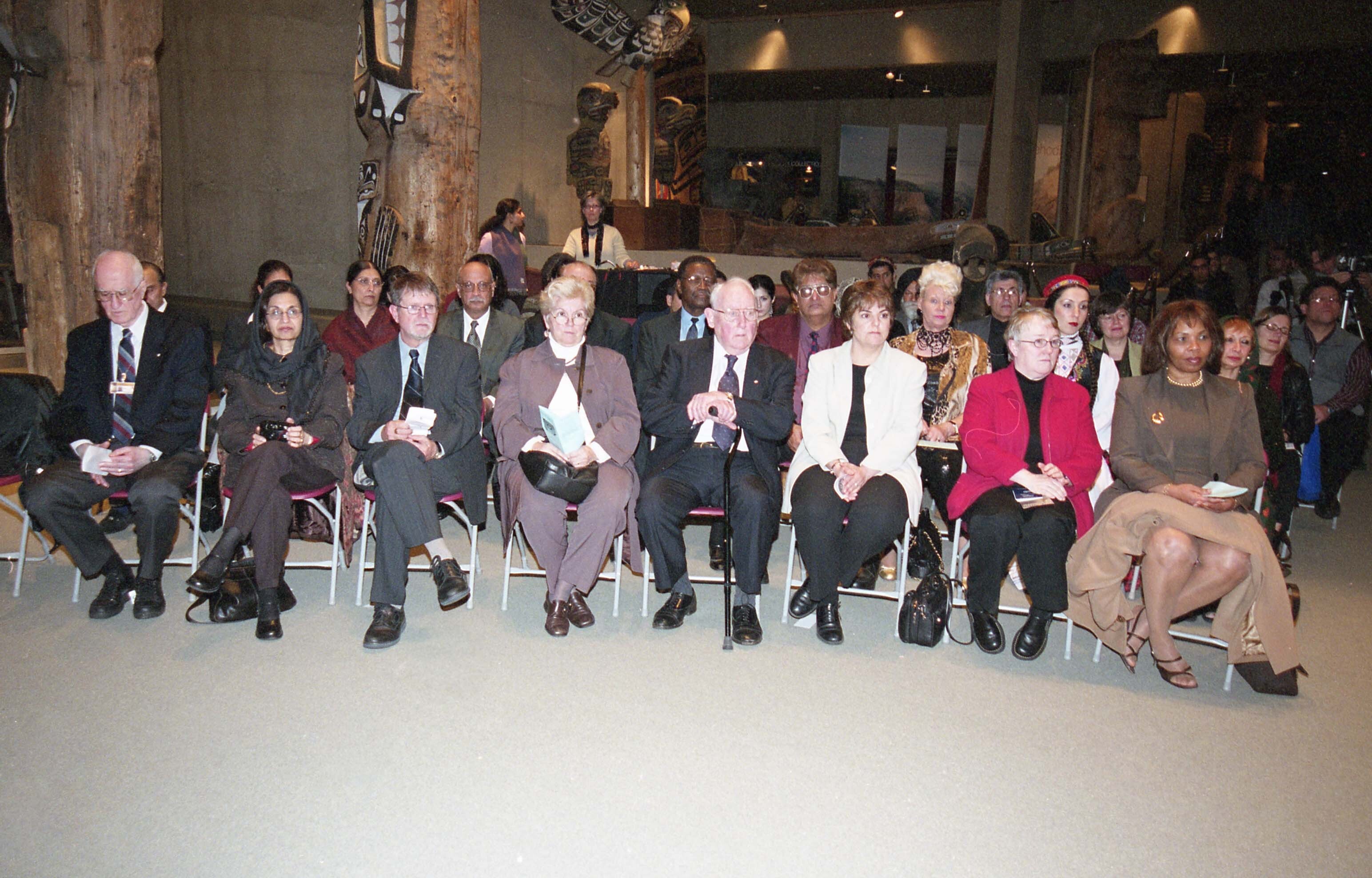
Photograph of the attendees at the public celebration of Eid-ul-Adha on February 19, 2004, co-hosted by UBC Museum of Anthropology and the Committee for Racial Justice (CRJ) in Vancouver, British Columbia.
Eid al-Adha is the second most important celebration of Islam, (the first being Eid-ul-Fitr). It takes place on the tenth day of the twelfth and last month (Zulhijjah) of the Islamic calendar. In 2004, this celebration began on the morning of the 1st of February. Eid-ul-Adha celebrates the occasion when Abraham was willing to sacrifice his son to show his obedience to Allah (God). Muslims all around the world celebrate this day, although it has particular significance for pilgrims who complete a pilgrimage (Hajj) to Mecca.
The Museum of Anthropology (MOA) at the University of British Columbia is committed to promoting awareness and understanding of culturally diverse ways of knowing the world through challenging and innovative programs and partnerships with Indigenous, local and global communities.
The MOA and the CRJ first co-hosted an event in December 2003. Following its success, they created a year-long series of public events that offer cultural communities opportunities to share their cultural practices with a wider public. The idea is to create opportunities for people to come together in common purpose to share and celebrate their differences.
Eid al-Adha is the second most important celebration of Islam, (the first being Eid-ul-Fitr). It takes place on the tenth day of the twelfth and last month (Zulhijjah) of the Islamic calendar. In 2004, this celebration began on the morning of the 1st of February. Eid-ul-Adha celebrates the occasion when Abraham was willing to sacrifice his son to show his obedience to Allah (God). Muslims all around the world celebrate this day, although it has particular significance for pilgrims who complete a pilgrimage (Hajj) to Mecca.
The Museum of Anthropology (MOA) at the University of British Columbia is committed to promoting awareness and understanding of culturally diverse ways of knowing the world through challenging and innovative programs and partnerships with Indigenous, local and global communities.
The MOA and the CRJ first co-hosted an event in December 2003. Following its success, they created a year-long series of public events that offer cultural communities opportunities to share their cultural practices with a wider public. The idea is to create opportunities for people to come together in common purpose to share and celebrate their differences.

Member of
Creator: Chandra Bodalia
Description
Photograph of an unidentified man addressing the audience at the public celebration of Eid-ul-Adha on February 19, 2004, co-hosted by UBC Museum of Anthropology and the Committee for Racial Justice (CRJ) in Vancouver, British Columbia.
Eid al-Adha is the second most important celebration of Islam, (the first being Eid-ul-Fitr). It takes place on the tenth day of the twelfth and last month (Zulhijjah) of the Islamic calendar. In 2004, this celebration began on the morning of the 1st of February. Eid-ul-Adha celebrates the occasion when Abraham was willing to sacrifice his son to show his obedience to Allah (God). Muslims all around the world celebrate this day, although it has particular significance for pilgrims who complete a pilgrimage (Hajj) to Mecca.
The Museum of Anthropology (MOA) at the University of British Columbia is committed to promoting awareness and understanding of culturally diverse ways of knowing the world through challenging and innovative programs and partnerships with Indigenous, local and global communities.
The MOA and the CRJ first co-hosted an event in December 2003. Following its success, they created a year-long series of public events that offer cultural communities opportunities to share their cultural practices with a wider public. The idea is to create opportunities for people to come together in common purpose to share and celebrate their differences.
Eid al-Adha is the second most important celebration of Islam, (the first being Eid-ul-Fitr). It takes place on the tenth day of the twelfth and last month (Zulhijjah) of the Islamic calendar. In 2004, this celebration began on the morning of the 1st of February. Eid-ul-Adha celebrates the occasion when Abraham was willing to sacrifice his son to show his obedience to Allah (God). Muslims all around the world celebrate this day, although it has particular significance for pilgrims who complete a pilgrimage (Hajj) to Mecca.
The Museum of Anthropology (MOA) at the University of British Columbia is committed to promoting awareness and understanding of culturally diverse ways of knowing the world through challenging and innovative programs and partnerships with Indigenous, local and global communities.
The MOA and the CRJ first co-hosted an event in December 2003. Following its success, they created a year-long series of public events that offer cultural communities opportunities to share their cultural practices with a wider public. The idea is to create opportunities for people to come together in common purpose to share and celebrate their differences.
Member of
Creator: Chandra Bodalia
Description
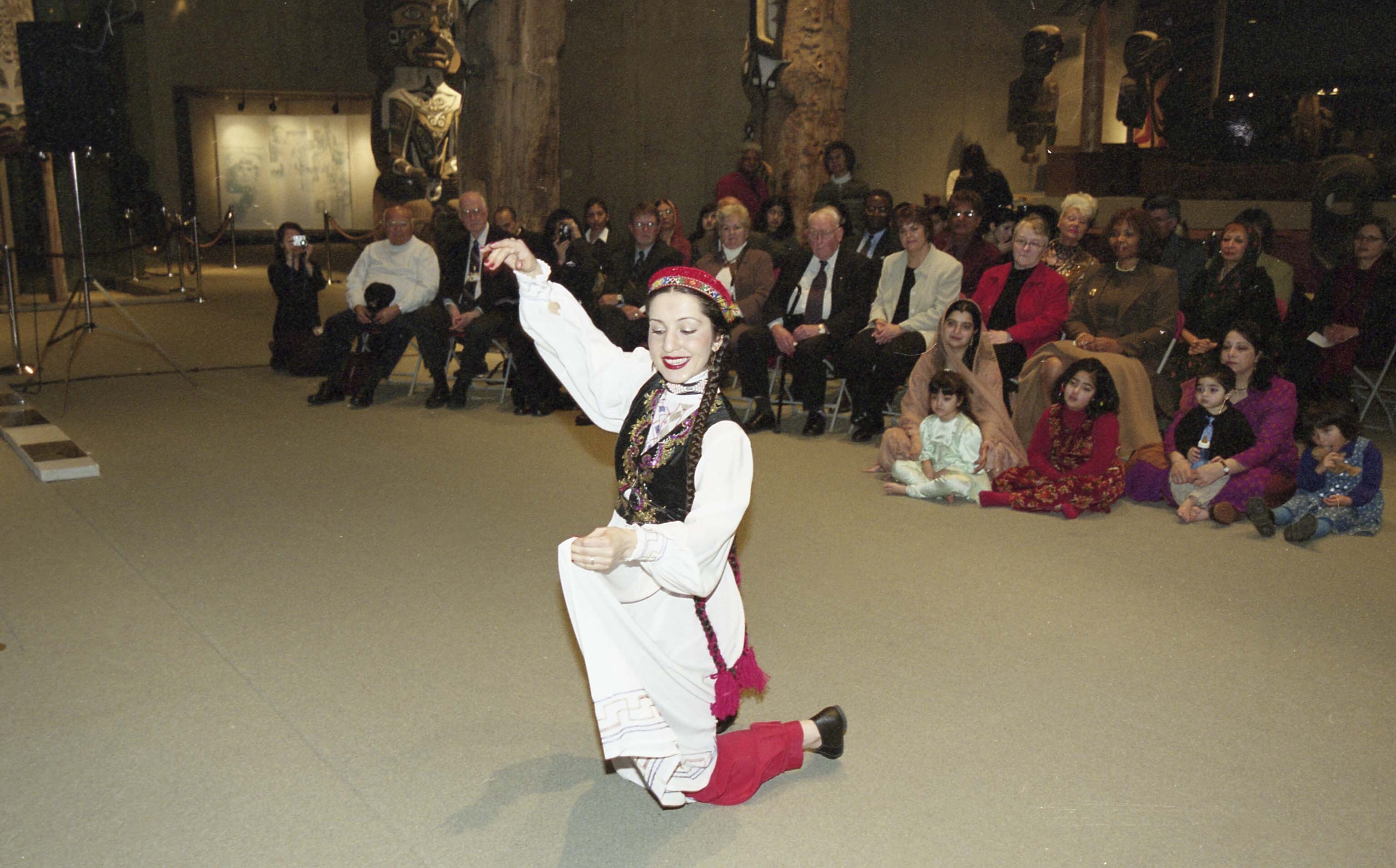
Photograph of an unidentified woman performing a traditional Pamiri folk dance, "Rapo", at the public celebration of Eid-ul-Adha on February 19, 2004, co-hosted by UBC Museum of Anthropology and the Committee for Racial Justice (CRJ) in Vancouver, British Columbia.
A traditional Pamiri folk dance from the Pamir mountains of Gorno Badakhshan, Tajikistan, 'rapo' is performed with empathic feet movement. Rapo is the soul of Pamiri dance. It is used as a signature piece on any auspicious occasion. A graceful dance, 'rapo' features a distinct beat from the valleys of the mountains.
Eid al-Adha is the second most important celebration of Islam, (the first being Eid-ul-Fitr). It takes place on the tenth day of the twelfth and last month (Zulhijjah) of the Islamic calendar. In 2004, this celebration began on the morning of the 1st of February. Eid-ul-Adha celebrates the occasion when Abraham was willing to sacrifice his son to show his obedience to Allah (God). Muslims all around the world celebrate this day, although it has particular significance for pilgrims who complete a pilgrimage (Hajj) to Mecca.
The Museum of Anthropology (MOA) at the University of British Columbia is committed to promoting awareness and understanding of culturally diverse ways of knowing the world through challenging and innovative programs and partnerships with Indigenous, local and global communities.
The MOA and the CRJ first co-hosted an event in December 2003. Following its success, they created a year-long series of public events that offer cultural communities opportunities to share their cultural practices with a wider public. The idea is to create opportunities for people to come together in common purpose to share and celebrate their differences.
A traditional Pamiri folk dance from the Pamir mountains of Gorno Badakhshan, Tajikistan, 'rapo' is performed with empathic feet movement. Rapo is the soul of Pamiri dance. It is used as a signature piece on any auspicious occasion. A graceful dance, 'rapo' features a distinct beat from the valleys of the mountains.
Eid al-Adha is the second most important celebration of Islam, (the first being Eid-ul-Fitr). It takes place on the tenth day of the twelfth and last month (Zulhijjah) of the Islamic calendar. In 2004, this celebration began on the morning of the 1st of February. Eid-ul-Adha celebrates the occasion when Abraham was willing to sacrifice his son to show his obedience to Allah (God). Muslims all around the world celebrate this day, although it has particular significance for pilgrims who complete a pilgrimage (Hajj) to Mecca.
The Museum of Anthropology (MOA) at the University of British Columbia is committed to promoting awareness and understanding of culturally diverse ways of knowing the world through challenging and innovative programs and partnerships with Indigenous, local and global communities.
The MOA and the CRJ first co-hosted an event in December 2003. Following its success, they created a year-long series of public events that offer cultural communities opportunities to share their cultural practices with a wider public. The idea is to create opportunities for people to come together in common purpose to share and celebrate their differences.
Member of
Creator: Chandra Bodalia
Description
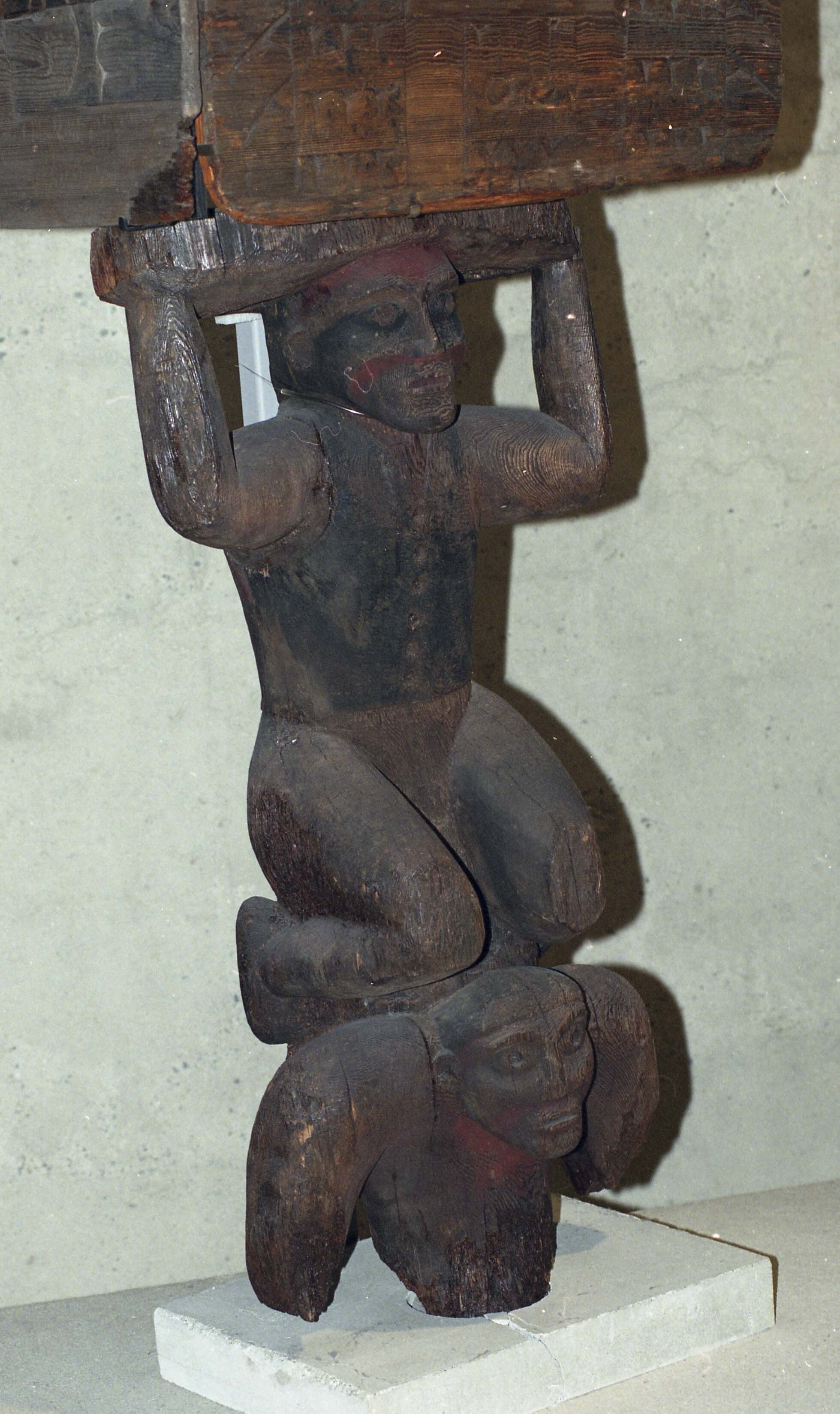
Photograph of an Indigenous artifact called Tsartlip (West Saanich) on display at the Museum of Anthropology at the University of British Columbia in Vancouver, Canada.
Central Coast Salish families held memorial services, like second funerals, a year or more after the death of a loved one. At this time they often commissioned an elaborately decorated casket or effigy to honour respected leaders. These memorials were placed at family mortuary sites. This memorial artifact is both an effigy of the deceased and a casket. The monument illustrates two distinctive Central Coast Salish sculptural styles: realistic sculpture in the round (human figures); and highly stylized engraving on the surface of the box (fish).
The museum is committed to promoting awareness and understanding of culturally diverse ways of knowing the world through challenging and innovative programs and partnerships with Indigenous, local and global communities. It is renowned for its extensive collection of First Nations art and cultural artifacts, particularly from the Pacific Northwest.
Central Coast Salish families held memorial services, like second funerals, a year or more after the death of a loved one. At this time they often commissioned an elaborately decorated casket or effigy to honour respected leaders. These memorials were placed at family mortuary sites. This memorial artifact is both an effigy of the deceased and a casket. The monument illustrates two distinctive Central Coast Salish sculptural styles: realistic sculpture in the round (human figures); and highly stylized engraving on the surface of the box (fish).
The museum is committed to promoting awareness and understanding of culturally diverse ways of knowing the world through challenging and innovative programs and partnerships with Indigenous, local and global communities. It is renowned for its extensive collection of First Nations art and cultural artifacts, particularly from the Pacific Northwest.
Member of
Creator: Chandra Bodalia
Description
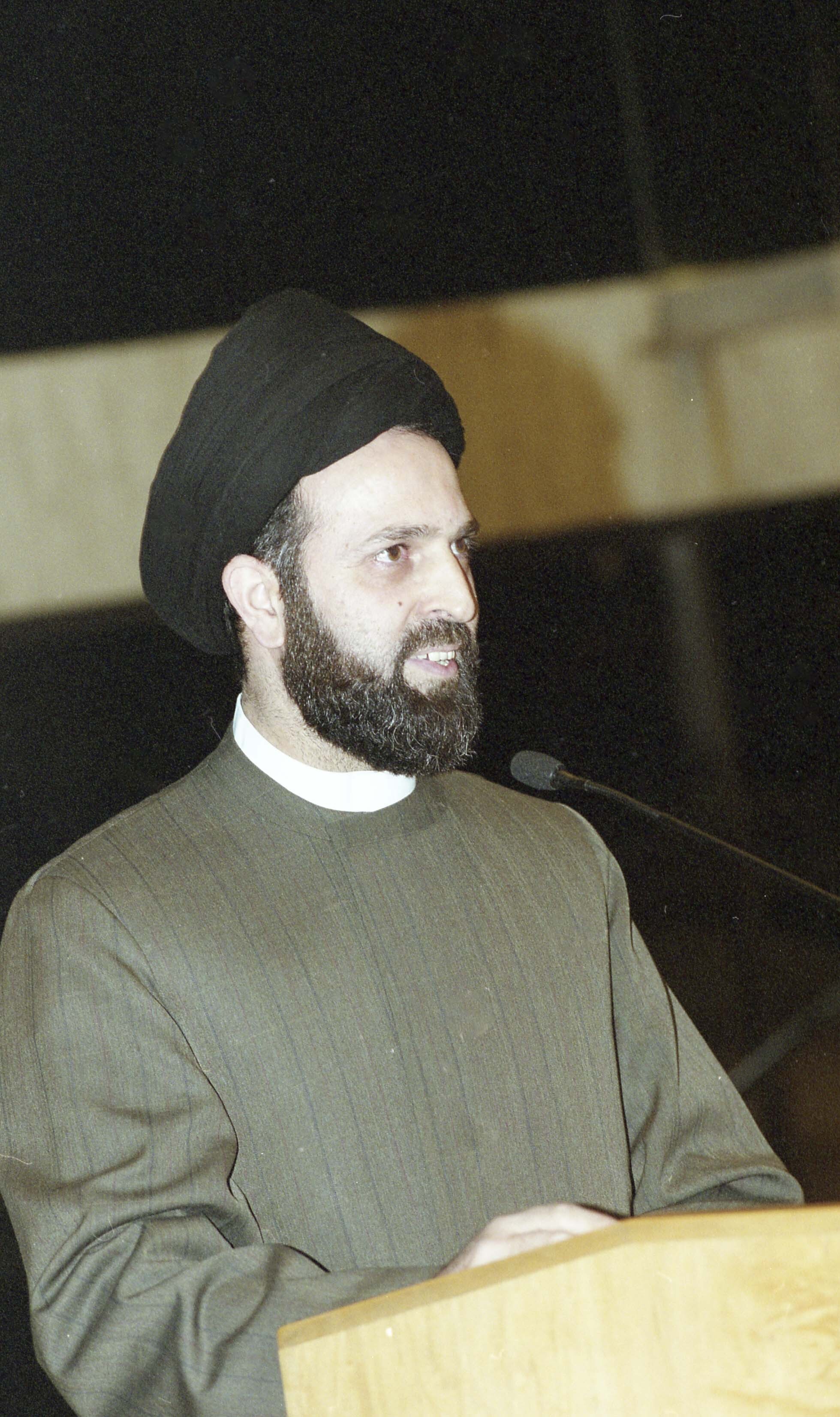
Photograph of an unidentified religious speaker wearing black turban addressing the audience at the public celebration of Eid-ul-Adha on February 19, 2004, co-hosted by UBC Museum of Anthropology and the Committee for Racial Justice (CRJ) in Vancouver, British Columbia.
Eid al-Adha is the second most important celebration of Islam, (the first being Eid-ul-Fitr). It takes place on the tenth day of the twelfth and last month (Zulhijjah) of the Islamic calendar. In 2004, this celebration began on the morning of the 1st of February. Eid-ul-Adha celebrates the occasion when Abraham was willing to sacrifice his son to show his obedience to Allah (God). Muslims all around the world celebrate this day, although it has particular significance for pilgrims who complete a pilgrimage (Hajj) to Mecca.
The Museum of Anthropology (MOA) at the University of British Columbia is committed to promoting awareness and understanding of culturally diverse ways of knowing the world through challenging and innovative programs and partnerships with Indigenous, local and global communities.
The MOA and the CRJ first co-hosted an event in December 2003. Following its success, they created a year-long series of public events that offer cultural communities opportunities to share their cultural practices with a wider public. The idea is to create opportunities for people to come together in common purpose to share and celebrate their differences.
Eid al-Adha is the second most important celebration of Islam, (the first being Eid-ul-Fitr). It takes place on the tenth day of the twelfth and last month (Zulhijjah) of the Islamic calendar. In 2004, this celebration began on the morning of the 1st of February. Eid-ul-Adha celebrates the occasion when Abraham was willing to sacrifice his son to show his obedience to Allah (God). Muslims all around the world celebrate this day, although it has particular significance for pilgrims who complete a pilgrimage (Hajj) to Mecca.
The Museum of Anthropology (MOA) at the University of British Columbia is committed to promoting awareness and understanding of culturally diverse ways of knowing the world through challenging and innovative programs and partnerships with Indigenous, local and global communities.
The MOA and the CRJ first co-hosted an event in December 2003. Following its success, they created a year-long series of public events that offer cultural communities opportunities to share their cultural practices with a wider public. The idea is to create opportunities for people to come together in common purpose to share and celebrate their differences.
Member of
Creator: Chandra Bodalia
Description
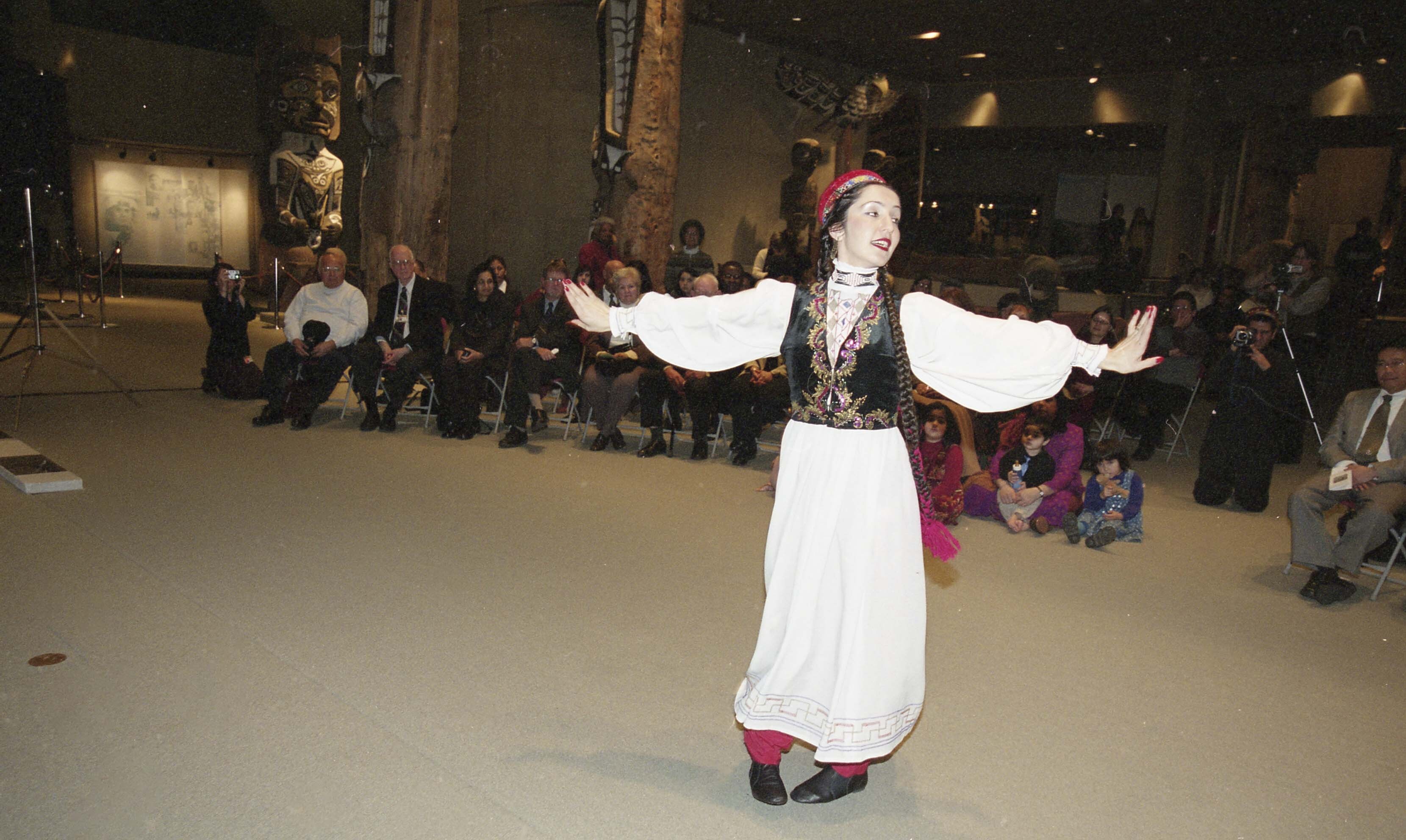
Photograph of an unidentified woman performing a traditional Pamiri folk dance, "Rapo", at the public celebration of Eid-ul-Adha on February 19, 2004, co-hosted by UBC Museum of Anthropology and the Committee for Racial Justice (CRJ) in Vancouver, British Columbia.
A traditional Pamiri folk dance from the Pamir mountains of Gorno Badakhshan, Tajikistan, 'rapo' is performed with empathic feet movement. Rapo is the soul of Pamiri dance. It is used as a signature piece on any auspicious occasion. A graceful dance, 'rapo' features a distinct beat from the valleys of the mountains.
Eid al-Adha is the second most important celebration of Islam, (the first being Eid-ul-Fitr). It takes place on the tenth day of the twelfth and last month (Zulhijjah) of the Islamic calendar. In 2004, this celebration began on the morning of the 1st of February. Eid-ul-Adha celebrates the occasion when Abraham was willing to sacrifice his son to show his obedience to Allah (God). Muslims all around the world celebrate this day, although it has particular significance for pilgrims who complete a pilgrimage (Hajj) to Mecca.
The Museum of Anthropology (MOA) at the University of British Columbia is committed to promoting awareness and understanding of culturally diverse ways of knowing the world through challenging and innovative programs and partnerships with Indigenous, local and global communities.
The MOA and the CRJ first co-hosted an event in December 2003. Following its success, they created a year-long series of public events that offer cultural communities opportunities to share their cultural practices with a wider public. The idea is to create opportunities for people to come together in common purpose to share and celebrate their differences.
A traditional Pamiri folk dance from the Pamir mountains of Gorno Badakhshan, Tajikistan, 'rapo' is performed with empathic feet movement. Rapo is the soul of Pamiri dance. It is used as a signature piece on any auspicious occasion. A graceful dance, 'rapo' features a distinct beat from the valleys of the mountains.
Eid al-Adha is the second most important celebration of Islam, (the first being Eid-ul-Fitr). It takes place on the tenth day of the twelfth and last month (Zulhijjah) of the Islamic calendar. In 2004, this celebration began on the morning of the 1st of February. Eid-ul-Adha celebrates the occasion when Abraham was willing to sacrifice his son to show his obedience to Allah (God). Muslims all around the world celebrate this day, although it has particular significance for pilgrims who complete a pilgrimage (Hajj) to Mecca.
The Museum of Anthropology (MOA) at the University of British Columbia is committed to promoting awareness and understanding of culturally diverse ways of knowing the world through challenging and innovative programs and partnerships with Indigenous, local and global communities.
The MOA and the CRJ first co-hosted an event in December 2003. Following its success, they created a year-long series of public events that offer cultural communities opportunities to share their cultural practices with a wider public. The idea is to create opportunities for people to come together in common purpose to share and celebrate their differences.
Member of
Creator: Chandra Bodalia
Description
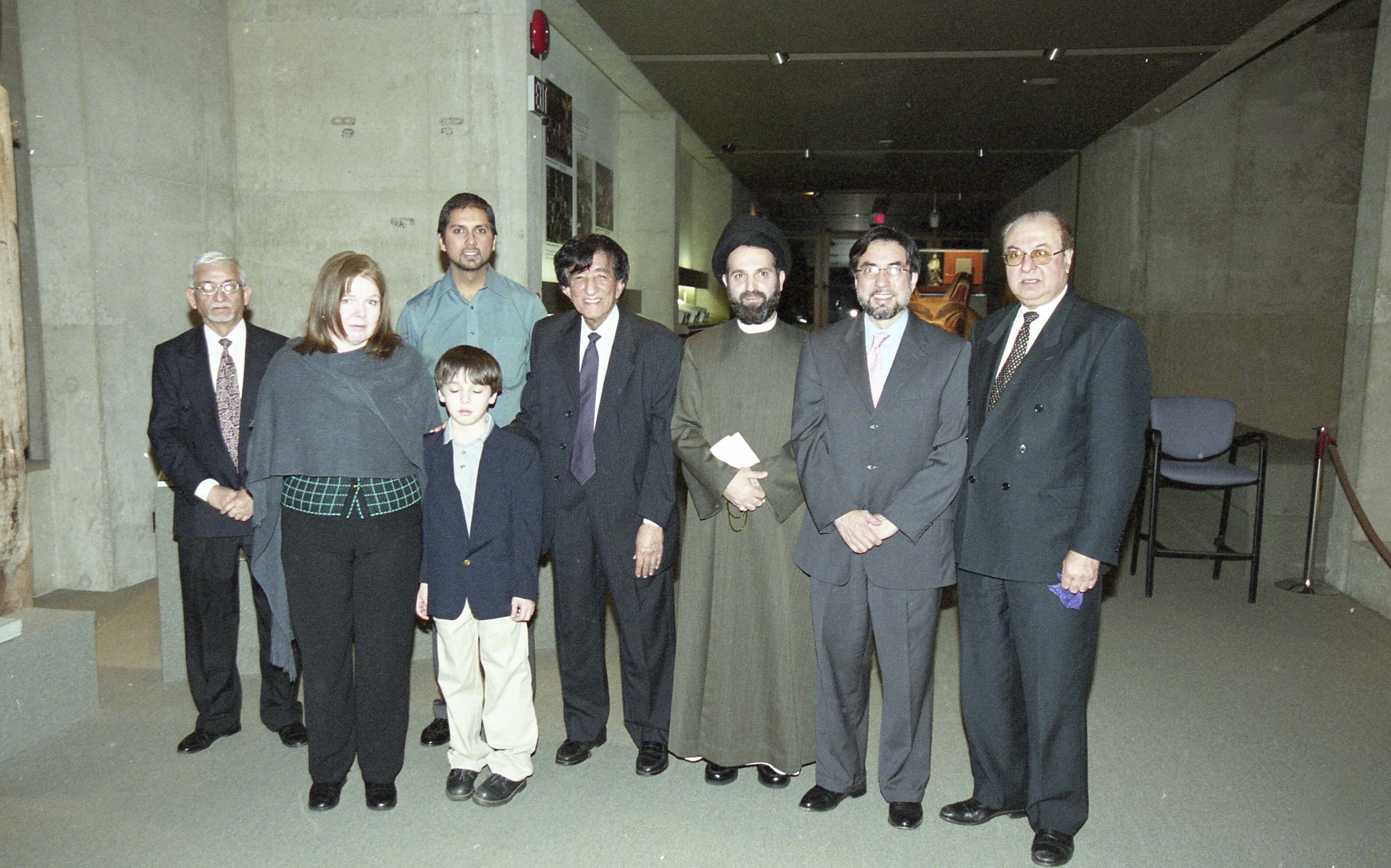
Group photograph of Aziz Khaki along with other unidentified guests at the public celebration of Eid-ul-Adha on February 19, 2004, co-hosted by UBC Museum of Anthropology and the Committee for Racial Justice (CRJ) in Vancouver, British Columbia.
Dr. Abdulaziz 'Aziz' Khaki was an activist and leader in the Canadian Muslim community. He served as vice-president of the Canadian Muslim Federation and the Council of Muslim Communities of Canada. Dr. Khaki was a strong advocate for human rights, interfaith dialogue, and the integration of Muslim communities into Canadian society.
Eid al-Adha is the second most important celebration of Islam, (the first being Eid-ul-Fitr). It takes place on the tenth day of the twelfth and last month (Zulhijjah) of the Islamic calendar. In 2004, this celebration began on the morning of the 1st of February. Eid-ul-Adha celebrates the occasion when Abraham was willing to sacrifice his son to show his obedience to Allah (God). Muslims all around the world celebrate this day, although it has particular significance for pilgrims who complete a pilgrimage (Hajj) to Mecca.
The Museum of Anthropology (MOA) at the University of British Columbia is committed to promoting awareness and understanding of culturally diverse ways of knowing the world through challenging and innovative programs and partnerships with Indigenous, local and global communities.
The MOA and the CRJ first co-hosted an event in December 2003. Following its success, they created a year-long series of public events that offer cultural communities opportunities to share their cultural practices with a wider public. The idea is to create opportunities for people to come together in common purpose to share and celebrate their differences.
Dr. Abdulaziz 'Aziz' Khaki was an activist and leader in the Canadian Muslim community. He served as vice-president of the Canadian Muslim Federation and the Council of Muslim Communities of Canada. Dr. Khaki was a strong advocate for human rights, interfaith dialogue, and the integration of Muslim communities into Canadian society.
Eid al-Adha is the second most important celebration of Islam, (the first being Eid-ul-Fitr). It takes place on the tenth day of the twelfth and last month (Zulhijjah) of the Islamic calendar. In 2004, this celebration began on the morning of the 1st of February. Eid-ul-Adha celebrates the occasion when Abraham was willing to sacrifice his son to show his obedience to Allah (God). Muslims all around the world celebrate this day, although it has particular significance for pilgrims who complete a pilgrimage (Hajj) to Mecca.
The Museum of Anthropology (MOA) at the University of British Columbia is committed to promoting awareness and understanding of culturally diverse ways of knowing the world through challenging and innovative programs and partnerships with Indigenous, local and global communities.
The MOA and the CRJ first co-hosted an event in December 2003. Following its success, they created a year-long series of public events that offer cultural communities opportunities to share their cultural practices with a wider public. The idea is to create opportunities for people to come together in common purpose to share and celebrate their differences.