
Audiences
Member of
Creator: Chandra Bodalia
Description
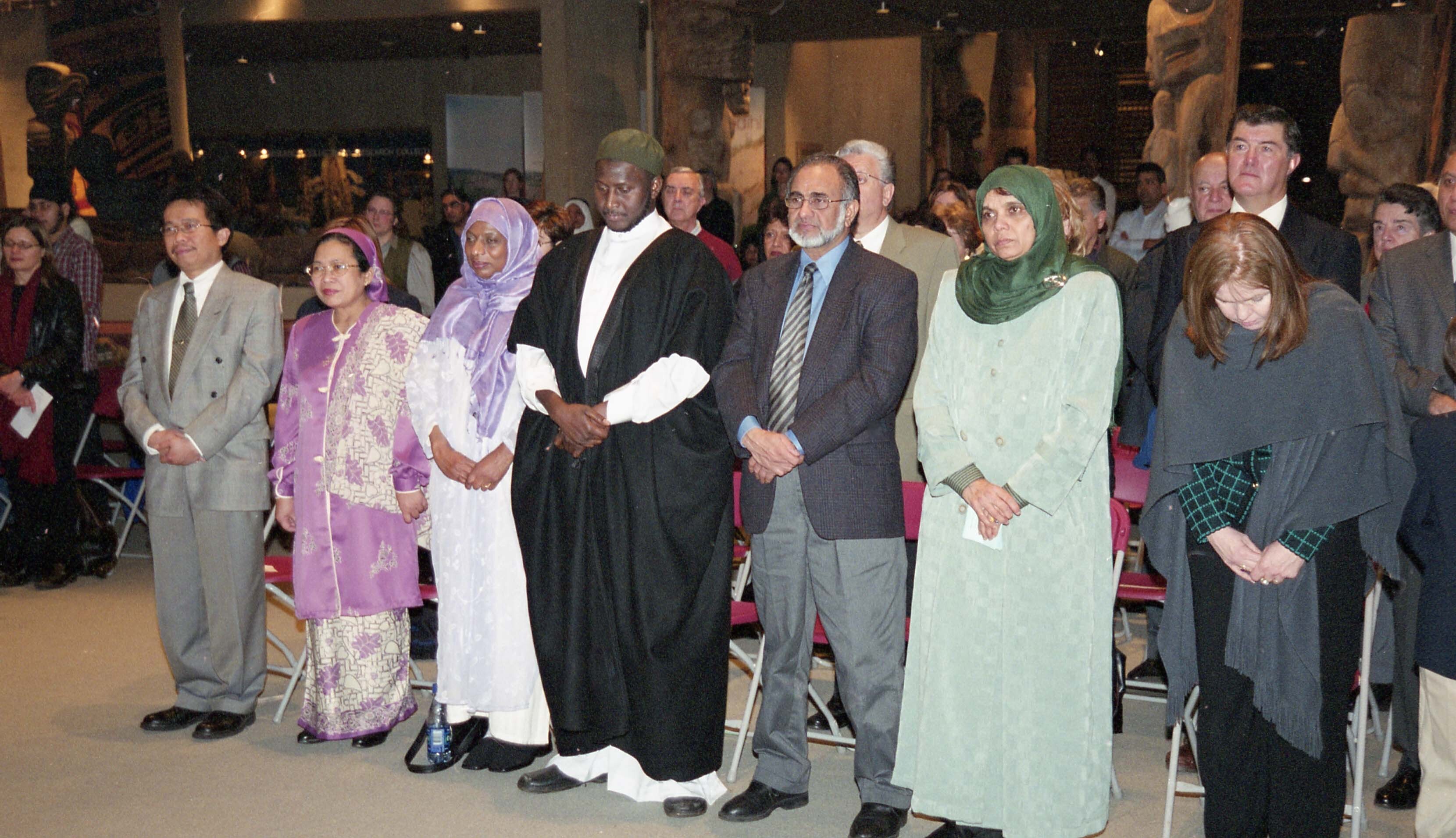
Photograph of the attendees standing at the public celebration of Eid-ul-Adha on February 19, 2004, co-hosted by UBC Museum of Anthropology and the Committee for Racial Justice (CRJ) in Vancouver, British Columbia.
Eid al-Adha is the second most important celebration of Islam, (the first being Eid-ul-Fitr). It takes place on the tenth day of the twelfth and last month (Zulhijjah) of the Islamic calendar. In 2004, this celebration began on the morning of the 1st of February. Eid-ul-Adha celebrates the occasion when Abraham was willing to sacrifice his son to show his obedience to Allah (God). Muslims all around the world celebrate this day, although it has particular significance for pilgrims who complete a pilgrimage (Hajj) to Mecca.
The Museum of Anthropology (MOA) at the University of British Columbia is committed to promoting awareness and understanding of culturally diverse ways of knowing the world through challenging and innovative programs and partnerships with Indigenous, local and global communities.
The MOA and the CRJ first co-hosted an event in December 2003. Following its success, they created a year-long series of public events that offer cultural communities opportunities to share their cultural practices with a wider public. The idea is to create opportunities for people to come together in common purpose to share and celebrate their differences.
Eid al-Adha is the second most important celebration of Islam, (the first being Eid-ul-Fitr). It takes place on the tenth day of the twelfth and last month (Zulhijjah) of the Islamic calendar. In 2004, this celebration began on the morning of the 1st of February. Eid-ul-Adha celebrates the occasion when Abraham was willing to sacrifice his son to show his obedience to Allah (God). Muslims all around the world celebrate this day, although it has particular significance for pilgrims who complete a pilgrimage (Hajj) to Mecca.
The Museum of Anthropology (MOA) at the University of British Columbia is committed to promoting awareness and understanding of culturally diverse ways of knowing the world through challenging and innovative programs and partnerships with Indigenous, local and global communities.
The MOA and the CRJ first co-hosted an event in December 2003. Following its success, they created a year-long series of public events that offer cultural communities opportunities to share their cultural practices with a wider public. The idea is to create opportunities for people to come together in common purpose to share and celebrate their differences.
Member of
Creator: Chandra Bodalia
Description
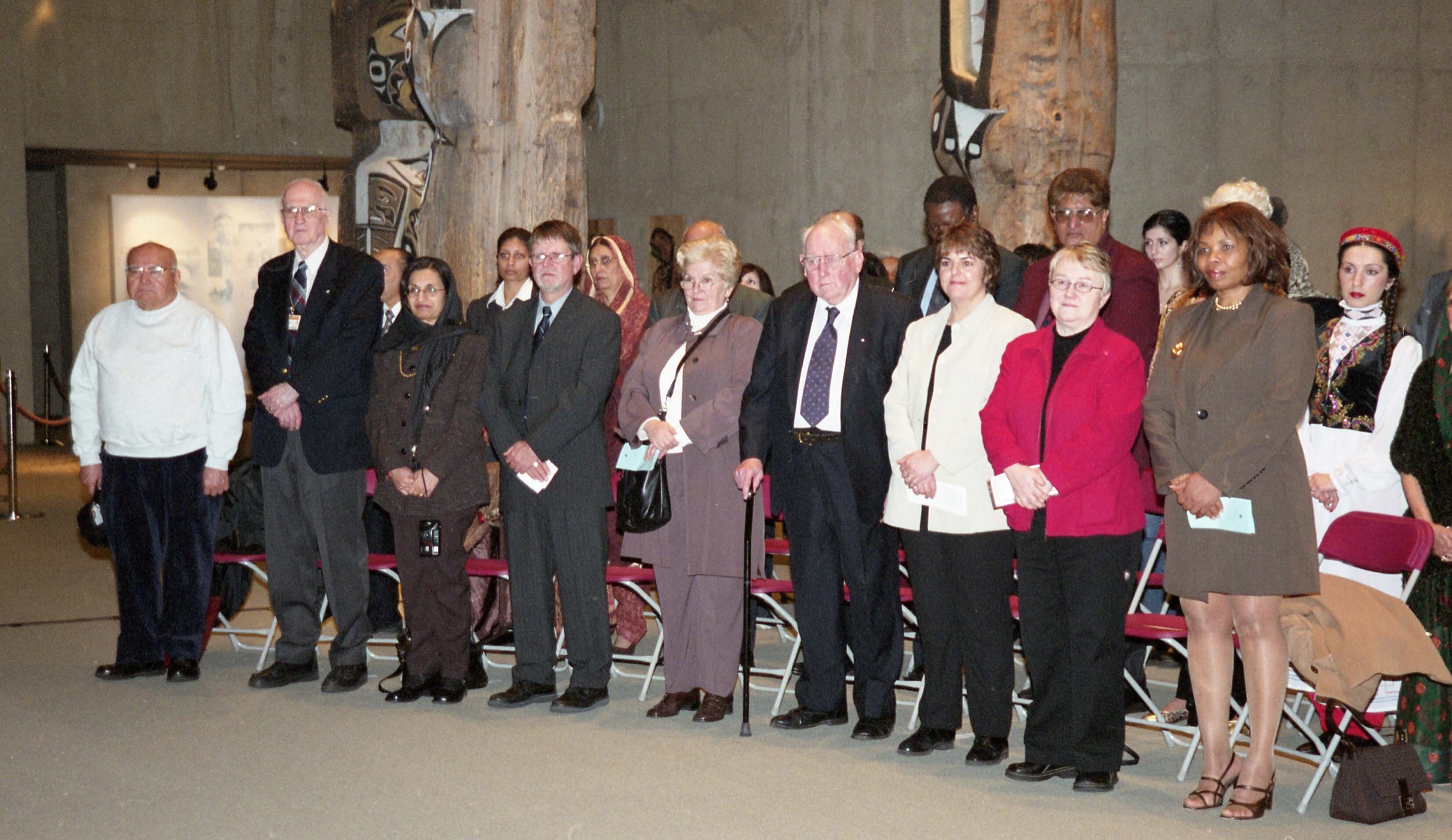
Photograph of the attendees standing at the public celebration of Eid-ul-Adha on February 19, 2004, co-hosted by UBC Museum of Anthropology and the Committee for Racial Justice (CRJ) in Vancouver, British Columbia.
Eid al-Adha is the second most important celebration of Islam, (the first being Eid-ul-Fitr). It takes place on the tenth day of the twelfth and last month (Zulhijjah) of the Islamic calendar. In 2004, this celebration began on the morning of the 1st of February. Eid-ul-Adha celebrates the occasion when Abraham was willing to sacrifice his son to show his obedience to Allah (God). Muslims all around the world celebrate this day, although it has particular significance for pilgrims who complete a pilgrimage (Hajj) to Mecca.
The Museum of Anthropology (MOA) at the University of British Columbia is committed to promoting awareness and understanding of culturally diverse ways of knowing the world through challenging and innovative programs and partnerships with Indigenous, local and global communities.
The MOA and the CRJ first co-hosted an event in December 2003. Following its success, they created a year-long series of public events that offer cultural communities opportunities to share their cultural practices with a wider public. The idea is to create opportunities for people to come together in common purpose to share and celebrate their differences.
Eid al-Adha is the second most important celebration of Islam, (the first being Eid-ul-Fitr). It takes place on the tenth day of the twelfth and last month (Zulhijjah) of the Islamic calendar. In 2004, this celebration began on the morning of the 1st of February. Eid-ul-Adha celebrates the occasion when Abraham was willing to sacrifice his son to show his obedience to Allah (God). Muslims all around the world celebrate this day, although it has particular significance for pilgrims who complete a pilgrimage (Hajj) to Mecca.
The Museum of Anthropology (MOA) at the University of British Columbia is committed to promoting awareness and understanding of culturally diverse ways of knowing the world through challenging and innovative programs and partnerships with Indigenous, local and global communities.
The MOA and the CRJ first co-hosted an event in December 2003. Following its success, they created a year-long series of public events that offer cultural communities opportunities to share their cultural practices with a wider public. The idea is to create opportunities for people to come together in common purpose to share and celebrate their differences.
Member of
Creator: Chandra Bodalia
Description
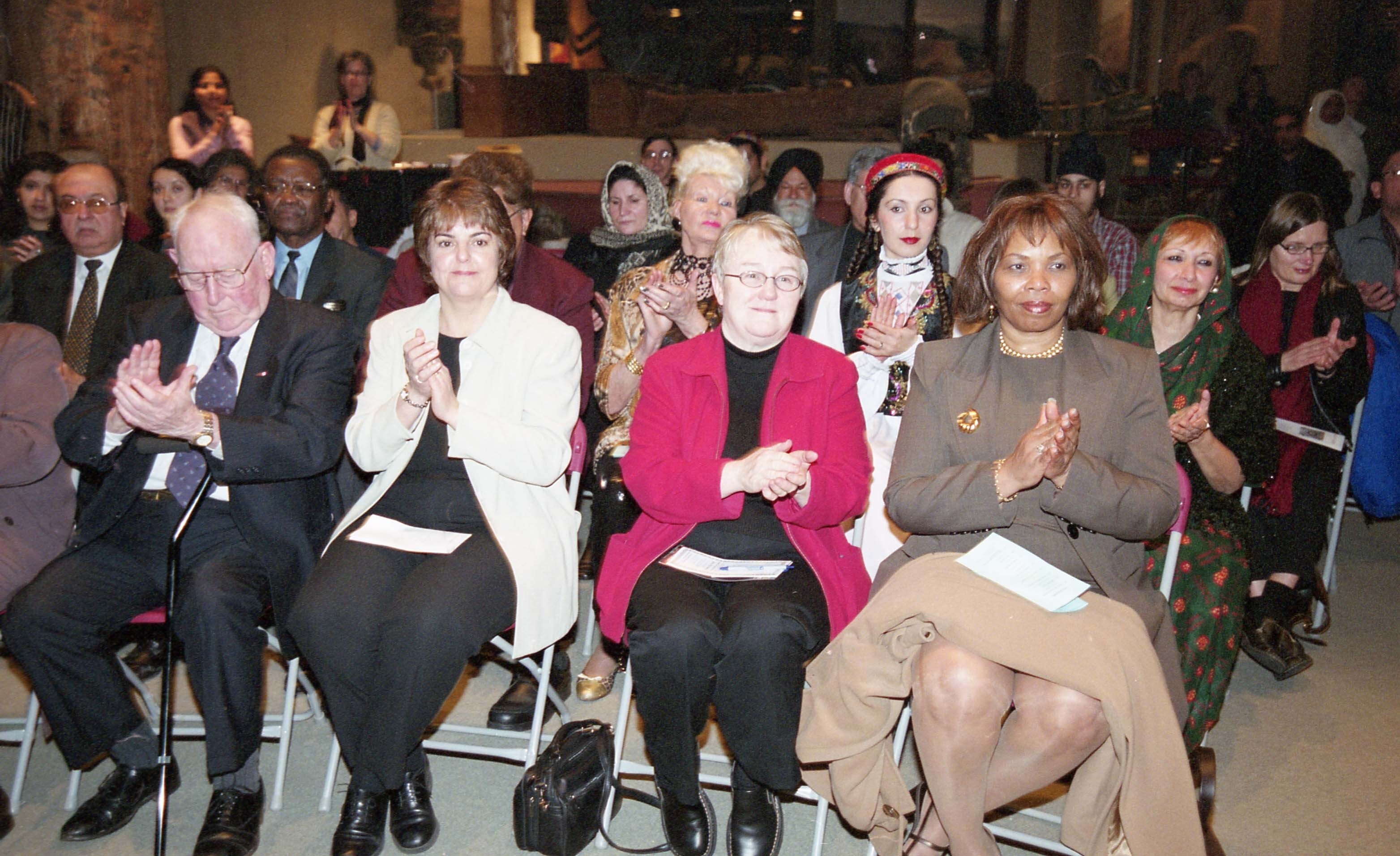
Photograph of the attendees applauding at the public celebration of Eid-ul-Adha on February 19, 2004, co-hosted by UBC Museum of Anthropology and the Committee for Racial Justice (CRJ) in Vancouver, British Columbia.
Eid al-Adha is the second most important celebration of Islam, (the first being Eid-ul-Fitr). It takes place on the tenth day of the twelfth and last month (Zulhijjah) of the Islamic calendar. In 2004, this celebration began on the morning of the 1st of February. Eid-ul-Adha celebrates the occasion when Abraham was willing to sacrifice his son to show his obedience to Allah (God). Muslims all around the world celebrate this day, although it has particular significance for pilgrims who complete a pilgrimage (Hajj) to Mecca.
The Museum of Anthropology (MOA) at the University of British Columbia is committed to promoting awareness and understanding of culturally diverse ways of knowing the world through challenging and innovative programs and partnerships with Indigenous, local and global communities.
The MOA and the CRJ first co-hosted an event in December 2003. Following its success, they created a year-long series of public events that offer cultural communities opportunities to share their cultural practices with a wider public. The idea is to create opportunities for people to come together in common purpose to share and celebrate their differences.
Eid al-Adha is the second most important celebration of Islam, (the first being Eid-ul-Fitr). It takes place on the tenth day of the twelfth and last month (Zulhijjah) of the Islamic calendar. In 2004, this celebration began on the morning of the 1st of February. Eid-ul-Adha celebrates the occasion when Abraham was willing to sacrifice his son to show his obedience to Allah (God). Muslims all around the world celebrate this day, although it has particular significance for pilgrims who complete a pilgrimage (Hajj) to Mecca.
The Museum of Anthropology (MOA) at the University of British Columbia is committed to promoting awareness and understanding of culturally diverse ways of knowing the world through challenging and innovative programs and partnerships with Indigenous, local and global communities.
The MOA and the CRJ first co-hosted an event in December 2003. Following its success, they created a year-long series of public events that offer cultural communities opportunities to share their cultural practices with a wider public. The idea is to create opportunities for people to come together in common purpose to share and celebrate their differences.
Member of
Creator: Chandra Bodalia
Description
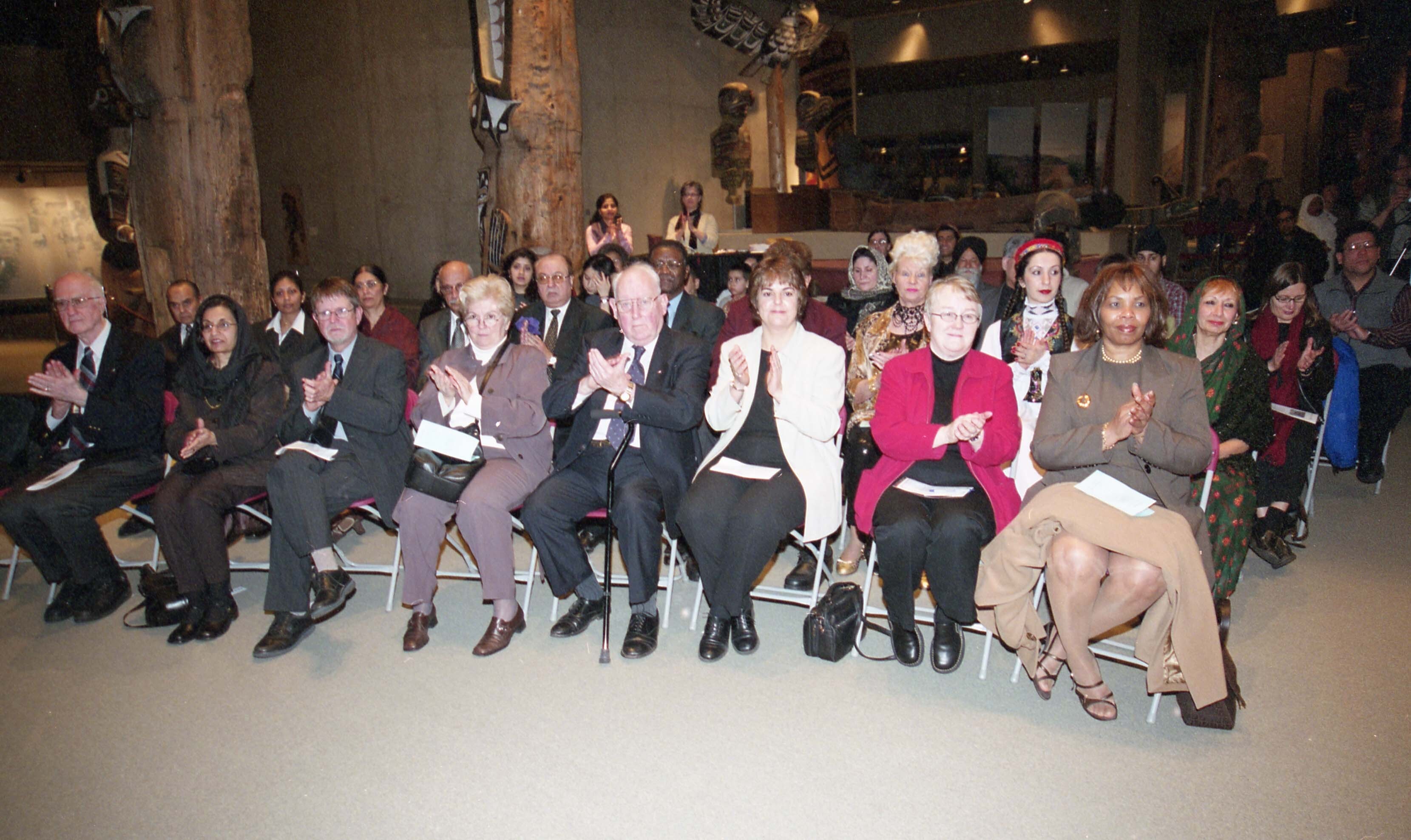
Photograph of the attendees applauding at the public celebration of Eid-ul-Adha on February 19, 2004, co-hosted by UBC Museum of Anthropology and the Committee for Racial Justice (CRJ) in Vancouver, British Columbia.
Eid al-Adha is the second most important celebration of Islam, (the first being Eid-ul-Fitr). It takes place on the tenth day of the twelfth and last month (Zulhijjah) of the Islamic calendar. In 2004, this celebration began on the morning of the 1st of February. Eid-ul-Adha celebrates the occasion when Abraham was willing to sacrifice his son to show his obedience to Allah (God). Muslims all around the world celebrate this day, although it has particular significance for pilgrims who complete a pilgrimage (Hajj) to Mecca.
The Museum of Anthropology (MOA) at the University of British Columbia is committed to promoting awareness and understanding of culturally diverse ways of knowing the world through challenging and innovative programs and partnerships with Indigenous, local and global communities.
The MOA and the CRJ first co-hosted an event in December 2003. Following its success, they created a year-long series of public events that offer cultural communities opportunities to share their cultural practices with a wider public. The idea is to create opportunities for people to come together in common purpose to share and celebrate their differences.
Eid al-Adha is the second most important celebration of Islam, (the first being Eid-ul-Fitr). It takes place on the tenth day of the twelfth and last month (Zulhijjah) of the Islamic calendar. In 2004, this celebration began on the morning of the 1st of February. Eid-ul-Adha celebrates the occasion when Abraham was willing to sacrifice his son to show his obedience to Allah (God). Muslims all around the world celebrate this day, although it has particular significance for pilgrims who complete a pilgrimage (Hajj) to Mecca.
The Museum of Anthropology (MOA) at the University of British Columbia is committed to promoting awareness and understanding of culturally diverse ways of knowing the world through challenging and innovative programs and partnerships with Indigenous, local and global communities.
The MOA and the CRJ first co-hosted an event in December 2003. Following its success, they created a year-long series of public events that offer cultural communities opportunities to share their cultural practices with a wider public. The idea is to create opportunities for people to come together in common purpose to share and celebrate their differences.
Creator: Chandra Bodalia
Description
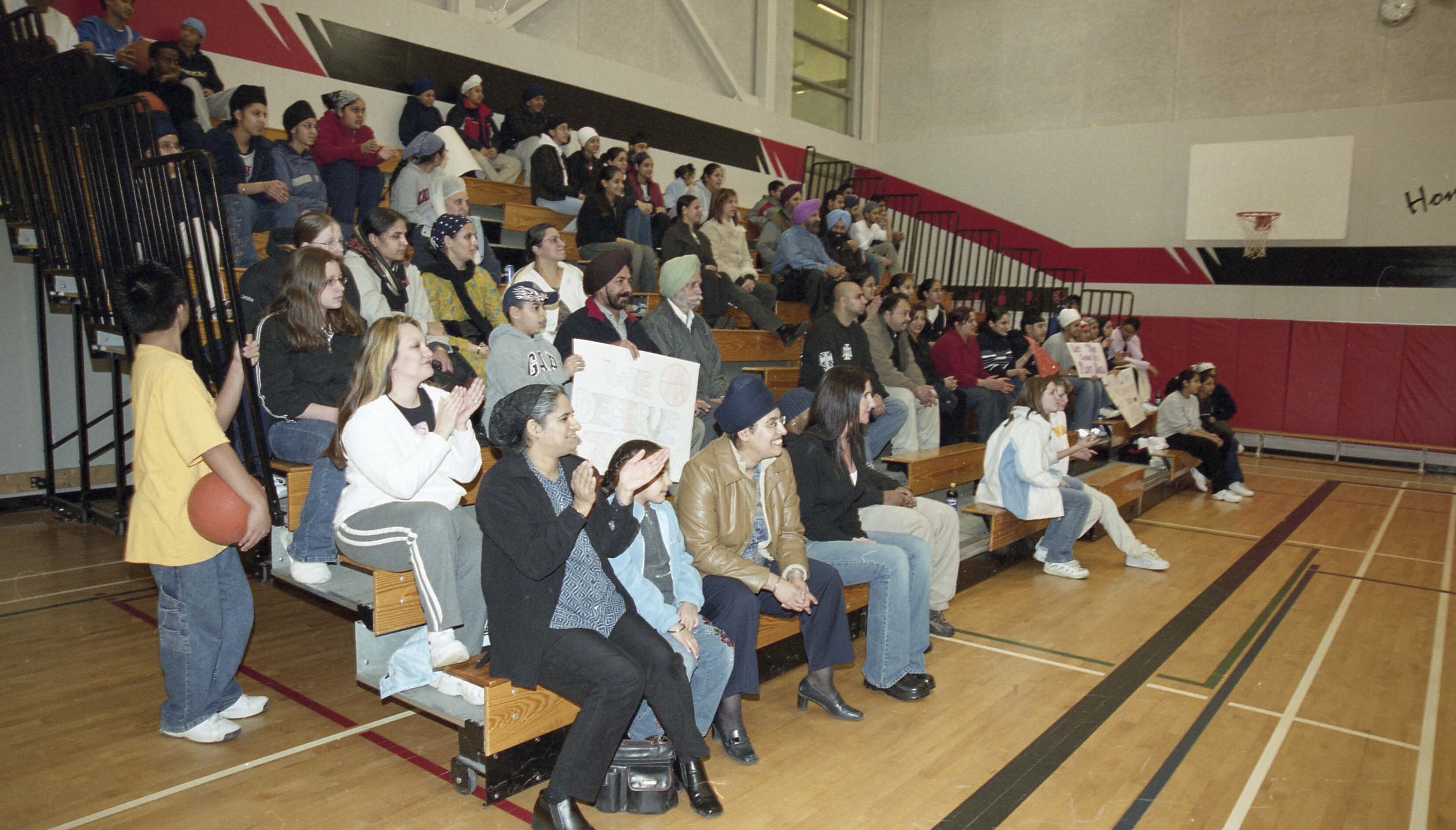
Photograph of cheering audience members holding banners during Lions basketball indoor match at the Princess Margaret Secondary School. The audience is enthusiastically supporting the team, with banners showing support and advocacy for the team and its players.
Princess Margaret Secondary School is a public school located in Surrey, British Columbia, as part of the Surrey School District. Formed in 1906, the Surrey School District serves the cities of Surrey and White Rock and the rural area of Barnston Island. Princess Margaret Secondary School was initially built in 1949-50. The school was named after H.R.H. Princess Margaret, second daughter of Queen Elizabeth and King George VI, and opened on December 4, 1950. In 1999, a new Princess Margaret Secondary School was built on what had been the running track, and the site of the old school became the parking lot for the new one.
Princess Margaret Secondary School is a public school located in Surrey, British Columbia, as part of the Surrey School District. Formed in 1906, the Surrey School District serves the cities of Surrey and White Rock and the rural area of Barnston Island. Princess Margaret Secondary School was initially built in 1949-50. The school was named after H.R.H. Princess Margaret, second daughter of Queen Elizabeth and King George VI, and opened on December 4, 1950. In 1999, a new Princess Margaret Secondary School was built on what had been the running track, and the site of the old school became the parking lot for the new one.
Creator: Chandra Bodalia
Description
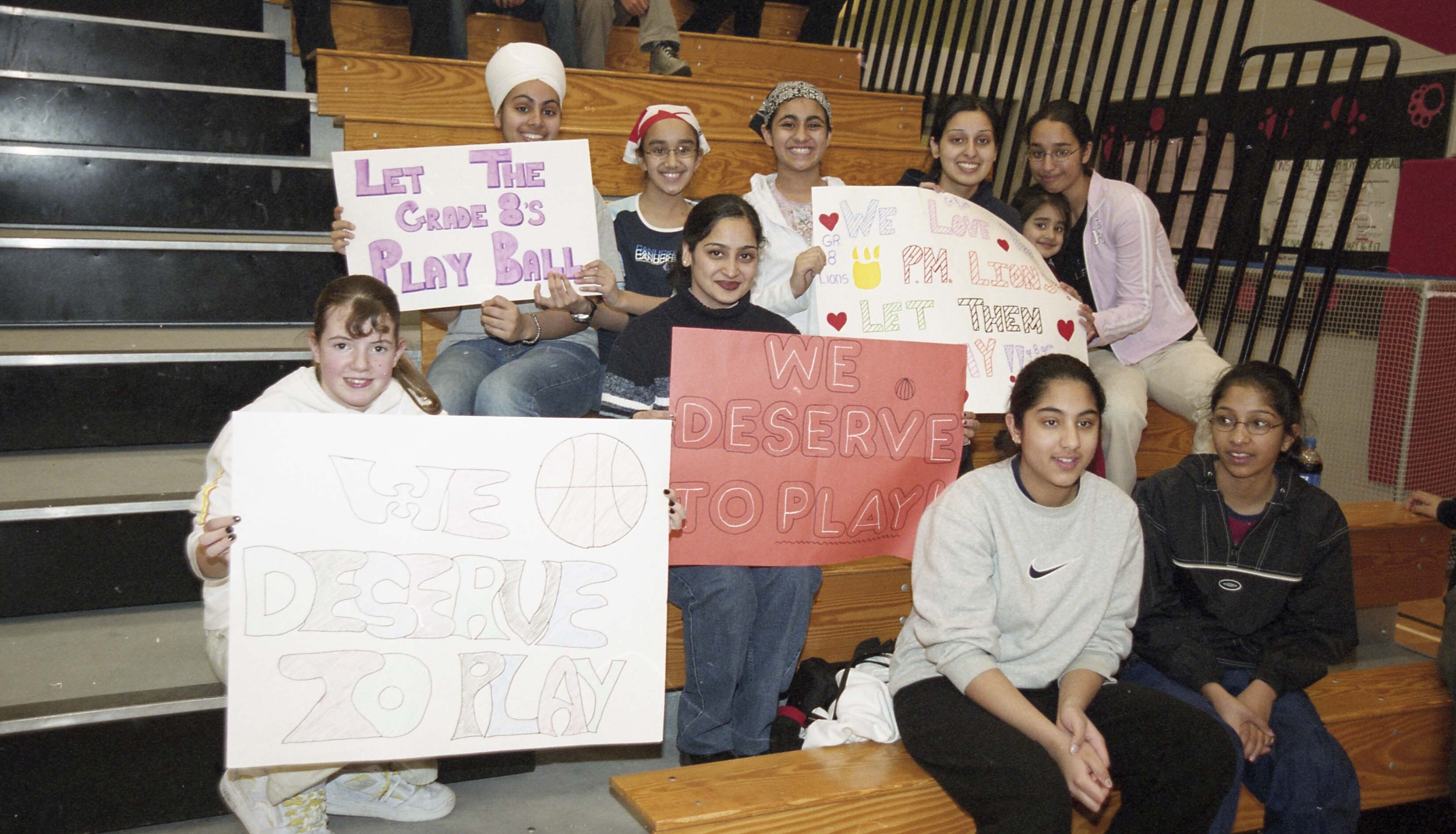
Photograph of cheering audience members holding banners during Lions basketball indoor match at the Princess Margaret Secondary School. The banners show support and advocacy for the team and its players, in an effort to secure the team's opportunity to play.
Princess Margaret Secondary School is a public school located in Surrey, British Columbia, as part of the Surrey School District. Formed in 1906, the Surrey School District serves the cities of Surrey and White Rock and the rural area of Barnston Island. Princess Margaret Secondary School was initially built in 1949-50. The school was named after H.R.H. Princess Margaret, second daughter of Queen Elizabeth and King George VI, and opened on December 4, 1950. In 1999, a new Princess Margaret Secondary School was built on what had been the running track, and the site of the old school became the parking lot for the new one.
Princess Margaret Secondary School is a public school located in Surrey, British Columbia, as part of the Surrey School District. Formed in 1906, the Surrey School District serves the cities of Surrey and White Rock and the rural area of Barnston Island. Princess Margaret Secondary School was initially built in 1949-50. The school was named after H.R.H. Princess Margaret, second daughter of Queen Elizabeth and King George VI, and opened on December 4, 1950. In 1999, a new Princess Margaret Secondary School was built on what had been the running track, and the site of the old school became the parking lot for the new one.
Creator: Chandra Bodalia
Description
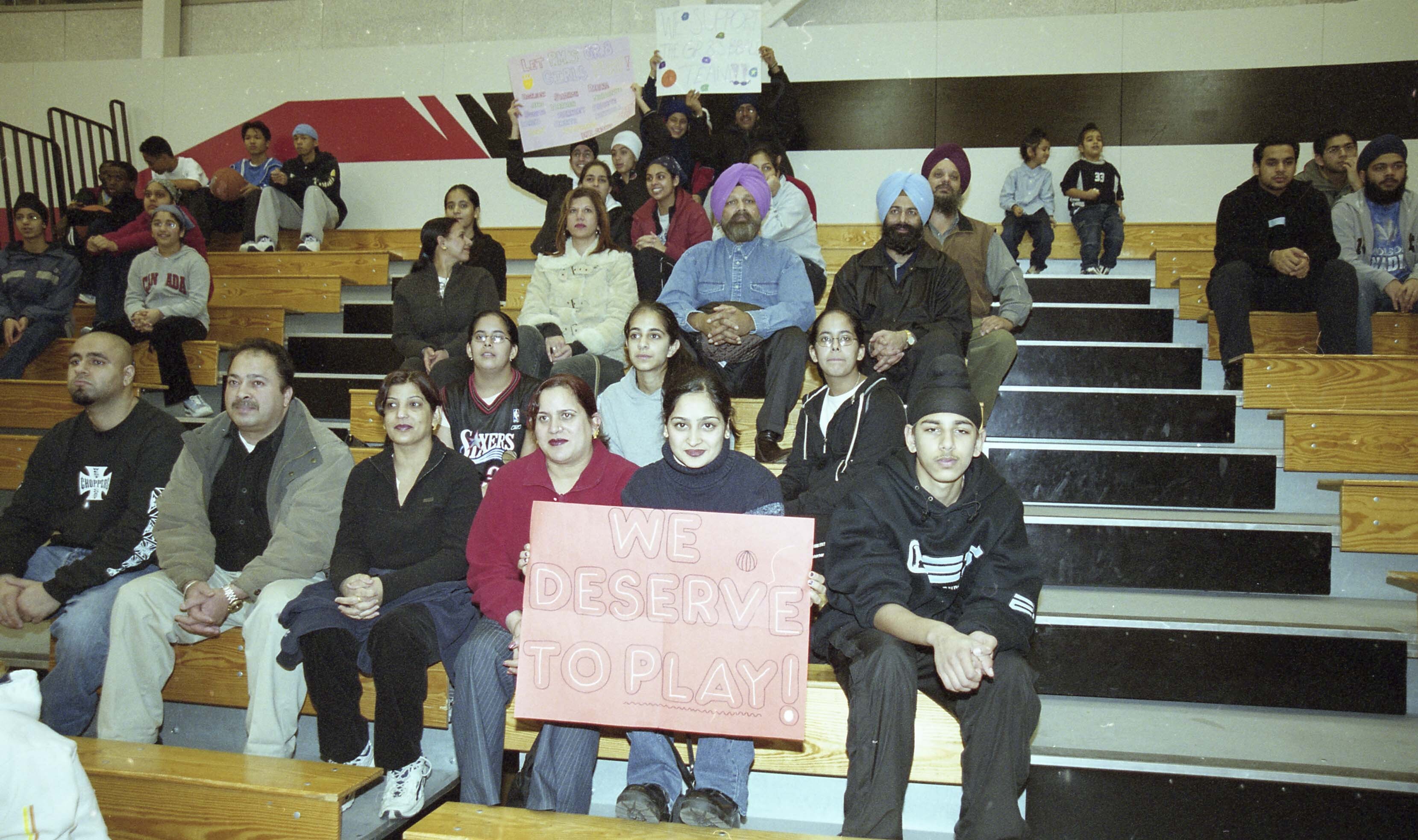
Photograph of cheering audience members holding banners during Lions basketball indoor match at the Princess Margaret Secondary School. The individuals in focus are enthusiastically supporting the team, with banners reading, "We Deserve to Play", showing support and advocacy for the team and its players.
Princess Margaret Secondary School is a public school located in Surrey, British Columbia, as part of the Surrey School District. Formed in 1906, the Surrey School District serves the cities of Surrey and White Rock and the rural area of Barnston Island. Princess Margaret Secondary School was initially built in 1949-50. The school was named after H.R.H. Princess Margaret, second daughter of Queen Elizabeth and King George VI, and opened on December 4, 1950. In 1999, a new Princess Margaret Secondary School was built on what had been the running track, and the site of the old school became the parking lot for the new one.
Princess Margaret Secondary School is a public school located in Surrey, British Columbia, as part of the Surrey School District. Formed in 1906, the Surrey School District serves the cities of Surrey and White Rock and the rural area of Barnston Island. Princess Margaret Secondary School was initially built in 1949-50. The school was named after H.R.H. Princess Margaret, second daughter of Queen Elizabeth and King George VI, and opened on December 4, 1950. In 1999, a new Princess Margaret Secondary School was built on what had been the running track, and the site of the old school became the parking lot for the new one.
Creator: Chandra Bodalia
Description
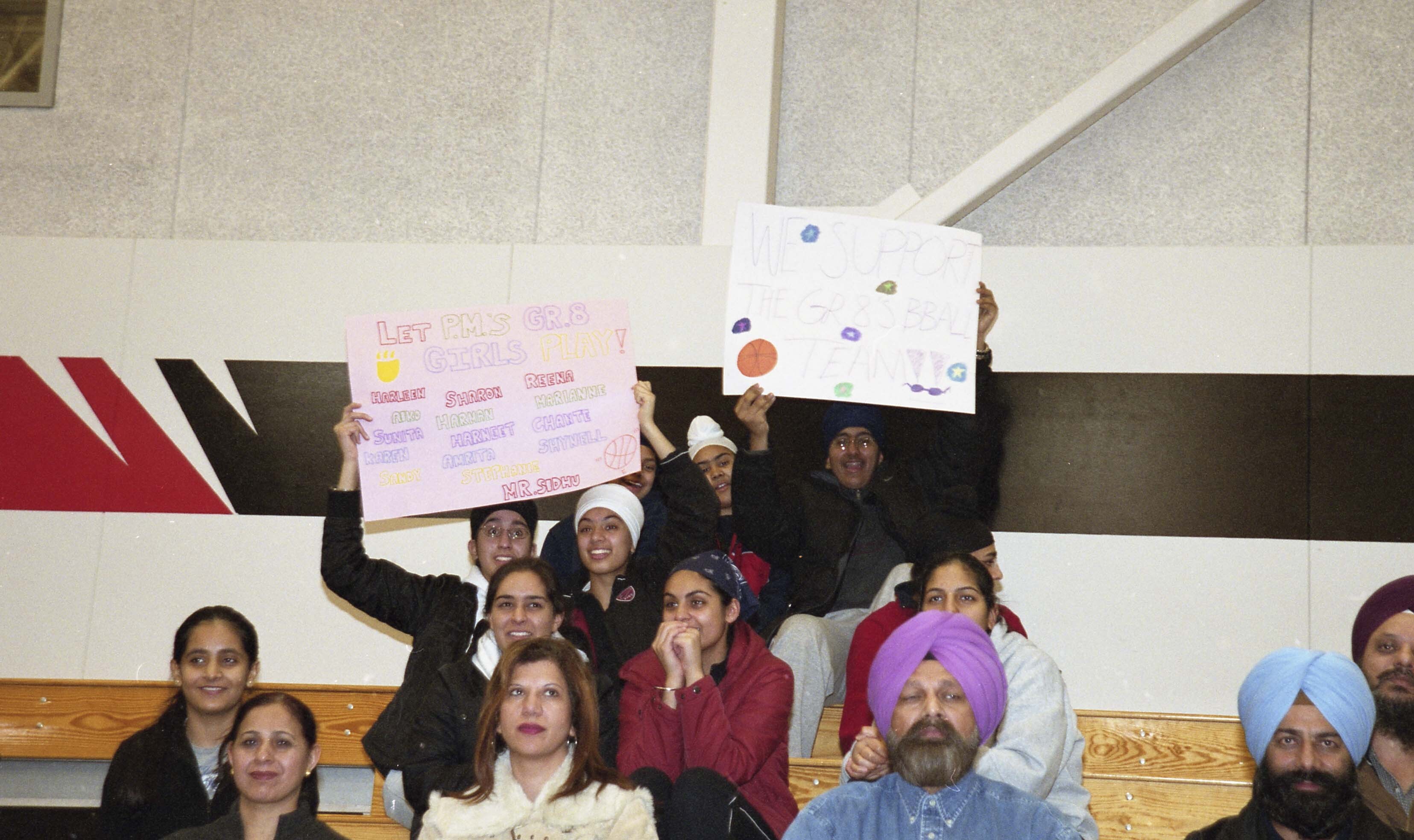
Photograph of cheering audience members holding banners during Lions basketball indoor match at the Princess Margaret Secondary School. The individuals in focus are enthusiastically supporting the team, with banners showing support and advocacy for the team and its players.
Princess Margaret Secondary School is a public school located in Surrey, British Columbia, as part of the Surrey School District. Formed in 1906, the Surrey School District serves the cities of Surrey and White Rock and the rural area of Barnston Island. Princess Margaret Secondary School was initially built in 1949-50. The school was named after H.R.H. Princess Margaret, second daughter of Queen Elizabeth and King George VI, and opened on December 4, 1950. In 1999, a new Princess Margaret Secondary School was built on what had been the running track, and the site of the old school became the parking lot for the new one.
Princess Margaret Secondary School is a public school located in Surrey, British Columbia, as part of the Surrey School District. Formed in 1906, the Surrey School District serves the cities of Surrey and White Rock and the rural area of Barnston Island. Princess Margaret Secondary School was initially built in 1949-50. The school was named after H.R.H. Princess Margaret, second daughter of Queen Elizabeth and King George VI, and opened on December 4, 1950. In 1999, a new Princess Margaret Secondary School was built on what had been the running track, and the site of the old school became the parking lot for the new one.
Creator: Chandra Bodalia
Description
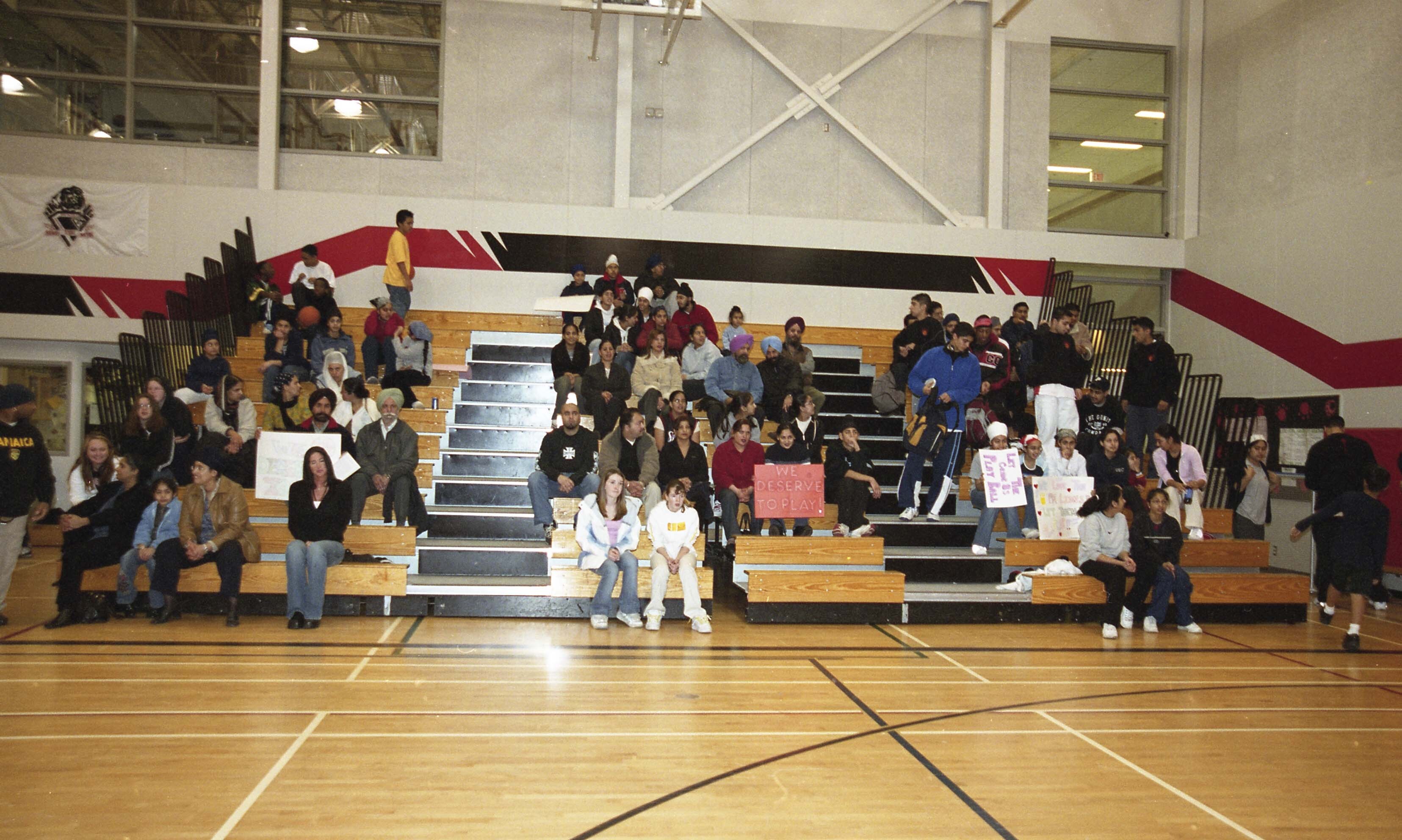
Photograph of the audience on the bleachers during Lions basketball indoor match at the Princess Margaret Secondary School. Some individuals are holding banners that read, "We Deserve to Play," showing their support and advocacy for the players.
Princess Margaret Secondary School is a public school located in Surrey, British Columbia, as part of the Surrey School District. Formed in 1906, the Surrey School District serves the cities of Surrey and White Rock and the rural area of Barnston Island. Princess Margaret Secondary School was initially built in 1949-50. The school was named after H.R.H. Princess Margaret, second daughter of Queen Elizabeth and King George VI, and opened on December 4, 1950. In 1999, a new Princess Margaret Secondary School was built on what had been the running track, and the site of the old school became the parking lot for the new one.
Princess Margaret Secondary School is a public school located in Surrey, British Columbia, as part of the Surrey School District. Formed in 1906, the Surrey School District serves the cities of Surrey and White Rock and the rural area of Barnston Island. Princess Margaret Secondary School was initially built in 1949-50. The school was named after H.R.H. Princess Margaret, second daughter of Queen Elizabeth and King George VI, and opened on December 4, 1950. In 1999, a new Princess Margaret Secondary School was built on what had been the running track, and the site of the old school became the parking lot for the new one.
Member of
Creator: Chandra Bodalia
Description
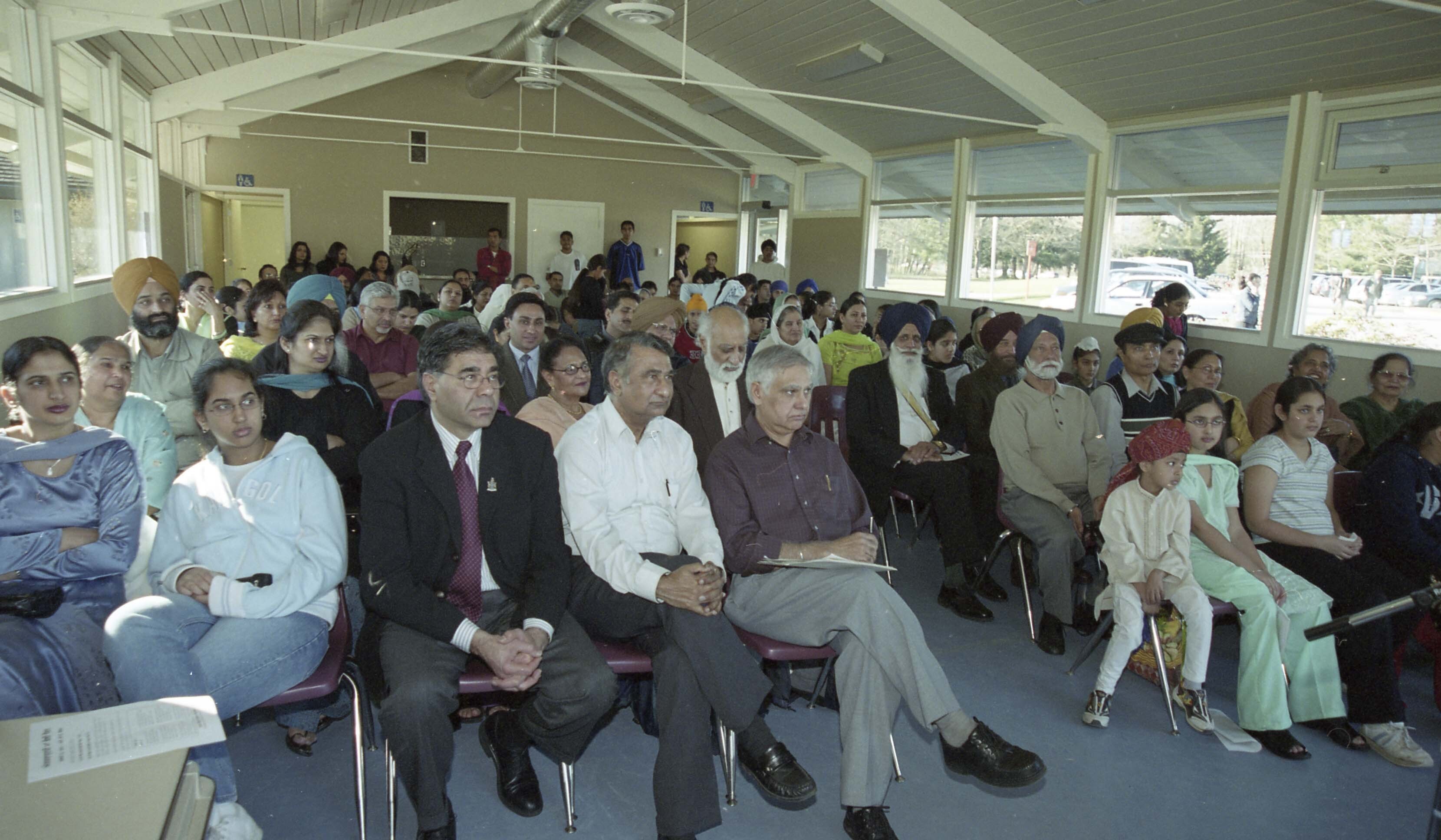
Photograph of unidentified individuals from the Panjabi community in the audience at the International Mother Language Day event organized by the Punjabi Language Education Association (PLEA) on February 22, 2004, in Bear Creek, Surrey, British Columbia (B.C.). Balwant Sanghera, the organization's president, is visible among the audience.
International Mother Language Day (IMLD) is observed globally on February 21, following UNESCO's declaration on November 17, 1999, after advocacy led by Bangladesh and other nations. This day is celebrated worldwide to honor linguistic heritage and promote the preservation of mother languages.
The Punjabi Language Education Association (PLEA) is a community-based organization dedicated to raising awareness about the challenges faced by the Punjabi language and advocating for its inclusion in British Columbia's educational institutions. Since 2002, PLEA has organized annual IMLD celebrations, along with various events aimed at promoting Punjabi language and culture.
Balwant Sanghera immigrated to Canada in 1966, starting his teaching career in Northern B.C. before earning a Master of Education from the University of British Columbia and becoming a school psychologist. He developed innovative programs for youth with mental health challenges and played a key role in mentoring and expanding similar initiatives across the province. He has held leadership positions in Richmond's multicultural and community organizations, including being president of the Richmond Multicultural Concerns Society and the Punjabi Language Education Association of British Columbia, chair of Richmond's Intercultural Advisory Committee, President of the East Richmond Community Association and an organizer of Multi-Fest, a summer festival to celebrate Richmond's diversity. His contributions to education and public service have earned him the Order of British Columbia and multiple Jubilee Medals, including the Queen's Golden, Diamond and Platinum Jubilee Medals.
International Mother Language Day (IMLD) is observed globally on February 21, following UNESCO's declaration on November 17, 1999, after advocacy led by Bangladesh and other nations. This day is celebrated worldwide to honor linguistic heritage and promote the preservation of mother languages.
The Punjabi Language Education Association (PLEA) is a community-based organization dedicated to raising awareness about the challenges faced by the Punjabi language and advocating for its inclusion in British Columbia's educational institutions. Since 2002, PLEA has organized annual IMLD celebrations, along with various events aimed at promoting Punjabi language and culture.
Balwant Sanghera immigrated to Canada in 1966, starting his teaching career in Northern B.C. before earning a Master of Education from the University of British Columbia and becoming a school psychologist. He developed innovative programs for youth with mental health challenges and played a key role in mentoring and expanding similar initiatives across the province. He has held leadership positions in Richmond's multicultural and community organizations, including being president of the Richmond Multicultural Concerns Society and the Punjabi Language Education Association of British Columbia, chair of Richmond's Intercultural Advisory Committee, President of the East Richmond Community Association and an organizer of Multi-Fest, a summer festival to celebrate Richmond's diversity. His contributions to education and public service have earned him the Order of British Columbia and multiple Jubilee Medals, including the Queen's Golden, Diamond and Platinum Jubilee Medals.