
Human Rights Day
Creator: Chandra Bodalia
Description
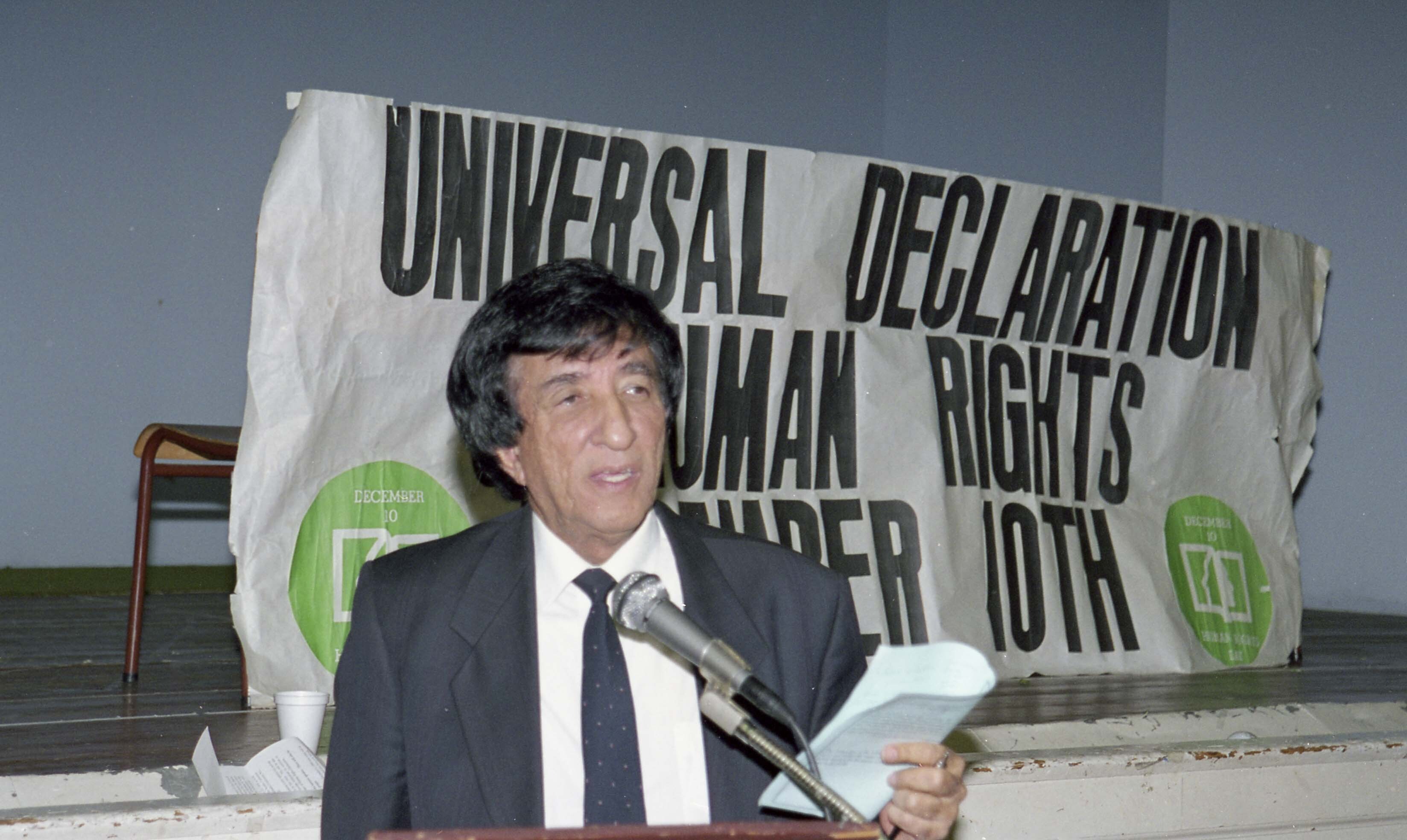
Photograph of Aziz Khaki addressing the audience at the Universal Declaration of Human Rights event in Vancouver, British Columbia (B.C.).
Dr. Abdulaziz 'Aziz' Khaki was an activist and leader in the Canadian Muslim community. He served as vice-president of the Canadian Muslim Federation and the Council of Muslim Communities of Canada. Dr. Khaki was a strong advocate for human rights, interfaith dialogue, and the integration of Muslim communities into Canadian society.
The Universal Declaration of Human Rights (UDHR) is a milestone document in the history of human rights. Drafted by representatives with different legal and cultural backgrounds from all regions of the world, the Declaration was proclaimed by the United Nations General Assembly in Paris on 10 December 1948 (General Assembly resolution 217 A) as a common standard of achievements for all peoples and all nations. It sets out, for the first time, fundamental human rights to be universally protected and it has been translated into over 500 languages. The UDHR is widely recognized as having inspired, and paved the way for, the adoption of more than seventy human rights treaties, applied today on a permanent basis at global and regional levels (all containing references to it in their preambles).
Dr. Abdulaziz 'Aziz' Khaki was an activist and leader in the Canadian Muslim community. He served as vice-president of the Canadian Muslim Federation and the Council of Muslim Communities of Canada. Dr. Khaki was a strong advocate for human rights, interfaith dialogue, and the integration of Muslim communities into Canadian society.
The Universal Declaration of Human Rights (UDHR) is a milestone document in the history of human rights. Drafted by representatives with different legal and cultural backgrounds from all regions of the world, the Declaration was proclaimed by the United Nations General Assembly in Paris on 10 December 1948 (General Assembly resolution 217 A) as a common standard of achievements for all peoples and all nations. It sets out, for the first time, fundamental human rights to be universally protected and it has been translated into over 500 languages. The UDHR is widely recognized as having inspired, and paved the way for, the adoption of more than seventy human rights treaties, applied today on a permanent basis at global and regional levels (all containing references to it in their preambles).
Creator: Chandra Bodalia
Description
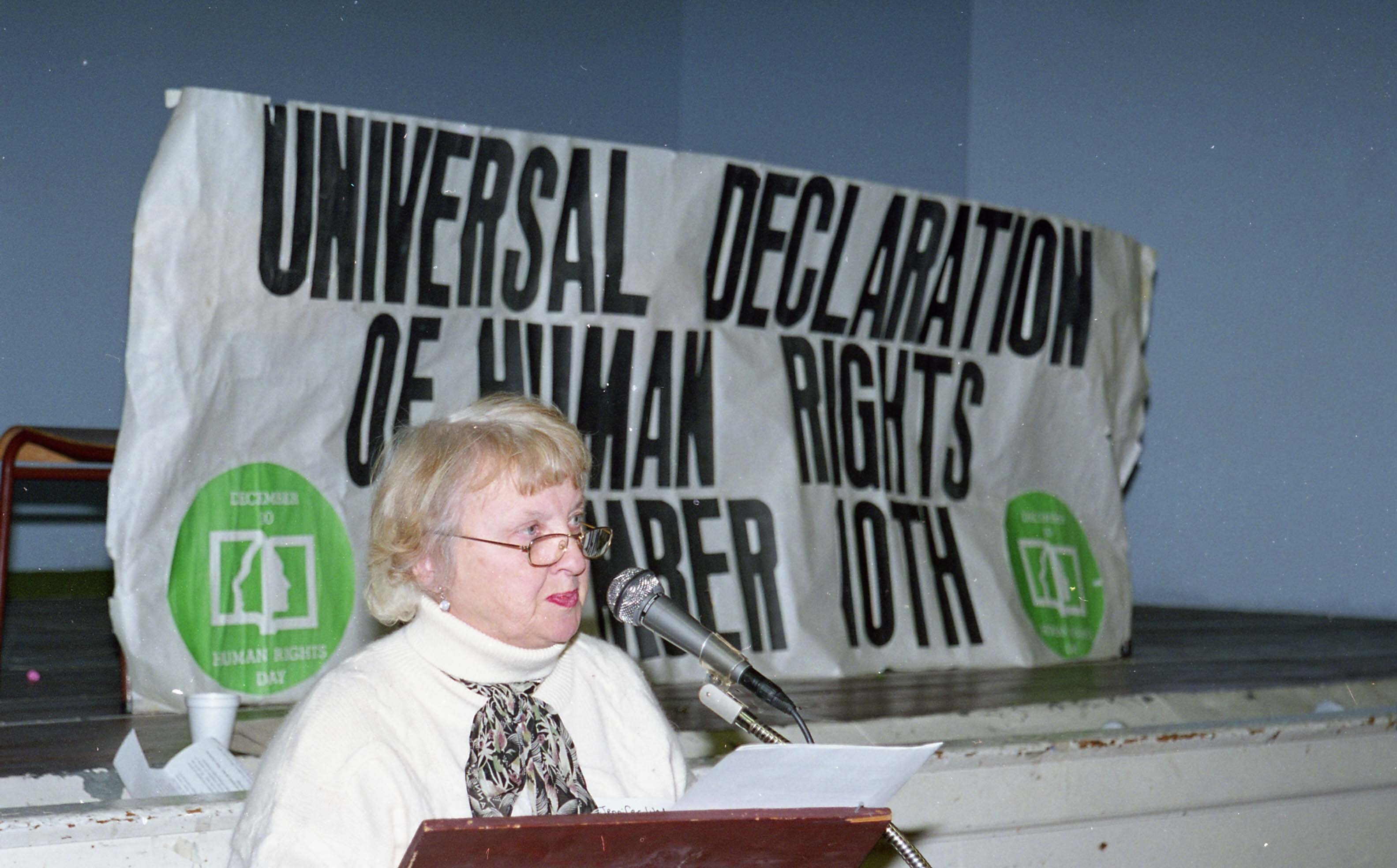
Photograph of an unidentified speaker addressing the audience at the Universal Declaration of Human Rights event in Vancouver, British Columbia (B.C.).
The Universal Declaration of Human Rights (UDHR) is a milestone document in the history of human rights. Drafted by representatives with different legal and cultural backgrounds from all regions of the world, the Declaration was proclaimed by the United Nations General Assembly in Paris on 10 December 1948 (General Assembly resolution 217 A) as a common standard of achievements for all peoples and all nations. It sets out, for the first time, fundamental human rights to be universally protected and it has been translated into over 500 languages. The UDHR is widely recognized as having inspired, and paved the way for, the adoption of more than seventy human rights treaties, applied today on a permanent basis at global and regional levels (all containing references to it in their preambles).
The Universal Declaration of Human Rights (UDHR) is a milestone document in the history of human rights. Drafted by representatives with different legal and cultural backgrounds from all regions of the world, the Declaration was proclaimed by the United Nations General Assembly in Paris on 10 December 1948 (General Assembly resolution 217 A) as a common standard of achievements for all peoples and all nations. It sets out, for the first time, fundamental human rights to be universally protected and it has been translated into over 500 languages. The UDHR is widely recognized as having inspired, and paved the way for, the adoption of more than seventy human rights treaties, applied today on a permanent basis at global and regional levels (all containing references to it in their preambles).
Creator: Chandra Bodalia
Description
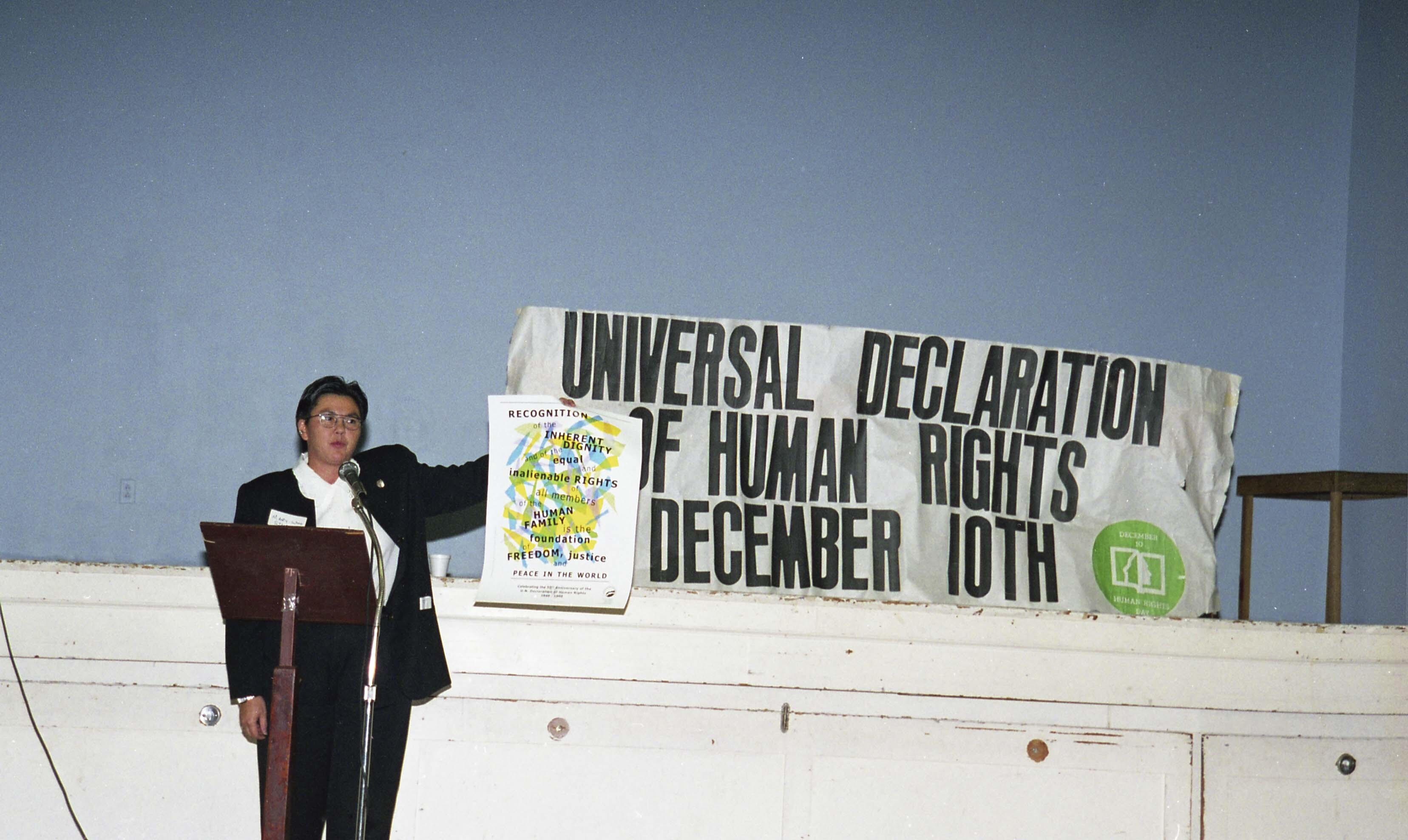
Photograph of Mary-Woo Sims addressing the audience at the Universal Declaration of Human Rights event in Vancouver, British Columbia (B.C.).
Mary Woo Sims was born in Hong Kong and became a Canadian citizen in 1978. Sims is a social justice activist, politician, and the former chief commissioner of the British Columbia Human Rights Commission from 1997 to 2001. As the chief human rights commissioner, she helped found the Women Against Violence Against Women (WAVAW) Rape Crisis Centre in Vancouver and recommended to expand the Human Rights Code to include gender identity. Sims was also a candidate for the New Democratic Party in the Port Moody – Westwood – Port Coquitlam district in the 2006 federal election. As an advocate of LGBTQ rights, same-sex spousal rights, employment equity, and co-chair of the Campaign for Equal Families, Sims' community work has been recognized through awards such as the Chinese National Council's 'Chinese Canadian Pioneer' Award, Metropolitan Community Church of Toronto's ˜Honoring Heroes' award, and awards from the Gay Asians of Toronto.
The Universal Declaration of Human Rights (UDHR) is a milestone document in the history of human rights. Drafted by representatives with different legal and cultural backgrounds from all regions of the world, the Declaration was proclaimed by the United Nations General Assembly in Paris on 10 December 1948 (General Assembly resolution 217 A) as a common standard of achievements for all peoples and all nations. It sets out, for the first time, fundamental human rights to be universally protected and it has been translated into over 500 languages. The UDHR is widely recognized as having inspired, and paved the way for, the adoption of more than seventy human rights treaties, applied today on a permanent basis at global and regional levels (all containing references to it in their preambles).
Mary Woo Sims was born in Hong Kong and became a Canadian citizen in 1978. Sims is a social justice activist, politician, and the former chief commissioner of the British Columbia Human Rights Commission from 1997 to 2001. As the chief human rights commissioner, she helped found the Women Against Violence Against Women (WAVAW) Rape Crisis Centre in Vancouver and recommended to expand the Human Rights Code to include gender identity. Sims was also a candidate for the New Democratic Party in the Port Moody – Westwood – Port Coquitlam district in the 2006 federal election. As an advocate of LGBTQ rights, same-sex spousal rights, employment equity, and co-chair of the Campaign for Equal Families, Sims' community work has been recognized through awards such as the Chinese National Council's 'Chinese Canadian Pioneer' Award, Metropolitan Community Church of Toronto's ˜Honoring Heroes' award, and awards from the Gay Asians of Toronto.
The Universal Declaration of Human Rights (UDHR) is a milestone document in the history of human rights. Drafted by representatives with different legal and cultural backgrounds from all regions of the world, the Declaration was proclaimed by the United Nations General Assembly in Paris on 10 December 1948 (General Assembly resolution 217 A) as a common standard of achievements for all peoples and all nations. It sets out, for the first time, fundamental human rights to be universally protected and it has been translated into over 500 languages. The UDHR is widely recognized as having inspired, and paved the way for, the adoption of more than seventy human rights treaties, applied today on a permanent basis at global and regional levels (all containing references to it in their preambles).
Creator: Chandra Bodalia
Description
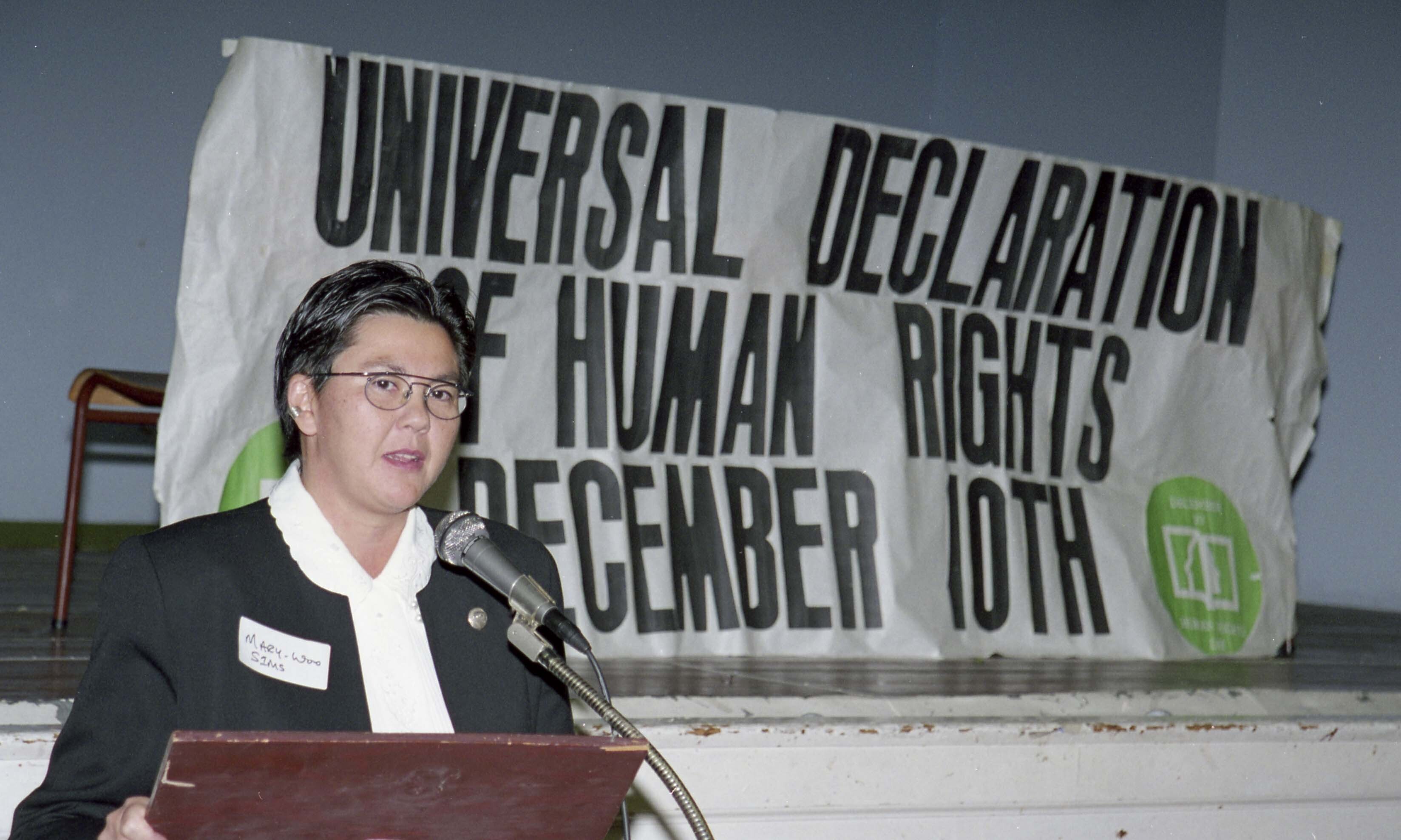
Photograph of Mary-Woo Sims addressing the audience at the Universal Declaration of Human Rights event in Vancouver, British Columbia (B.C.).
Mary Woo Sims was born in Hong Kong and became a Canadian citizen in 1978. Sims is a social justice activist, politician, and the former chief commissioner of the British Columbia Human Rights Commission from 1997 to 2001. As the chief human rights commissioner, she helped found the Women Against Violence Against Women (WAVAW) Rape Crisis Centre in Vancouver and recommended to expand the Human Rights Code to include gender identity. Sims was also a candidate for the New Democratic Party in the Port Moody – Westwood – Port Coquitlam district in the 2006 federal election. As an advocate of LGBTQ rights, same-sex spousal rights, employment equity, and co-chair of the Campaign for Equal Families, Sims' community work has been recognized through awards such as the Chinese National Council's 'Chinese Canadian Pioneer' Award, Metropolitan Community Church of Toronto's ˜Honoring Heroes' award, and awards from the Gay Asians of Toronto.
The Universal Declaration of Human Rights (UDHR) is a milestone document in the history of human rights. Drafted by representatives with different legal and cultural backgrounds from all regions of the world, the Declaration was proclaimed by the United Nations General Assembly in Paris on 10 December 1948 (General Assembly resolution 217 A) as a common standard of achievements for all peoples and all nations. It sets out, for the first time, fundamental human rights to be universally protected and it has been translated into over 500 languages. The UDHR is widely recognized as having inspired, and paved the way for, the adoption of more than seventy human rights treaties, applied today on a permanent basis at global and regional levels (all containing references to it in their preambles).
Mary Woo Sims was born in Hong Kong and became a Canadian citizen in 1978. Sims is a social justice activist, politician, and the former chief commissioner of the British Columbia Human Rights Commission from 1997 to 2001. As the chief human rights commissioner, she helped found the Women Against Violence Against Women (WAVAW) Rape Crisis Centre in Vancouver and recommended to expand the Human Rights Code to include gender identity. Sims was also a candidate for the New Democratic Party in the Port Moody – Westwood – Port Coquitlam district in the 2006 federal election. As an advocate of LGBTQ rights, same-sex spousal rights, employment equity, and co-chair of the Campaign for Equal Families, Sims' community work has been recognized through awards such as the Chinese National Council's 'Chinese Canadian Pioneer' Award, Metropolitan Community Church of Toronto's ˜Honoring Heroes' award, and awards from the Gay Asians of Toronto.
The Universal Declaration of Human Rights (UDHR) is a milestone document in the history of human rights. Drafted by representatives with different legal and cultural backgrounds from all regions of the world, the Declaration was proclaimed by the United Nations General Assembly in Paris on 10 December 1948 (General Assembly resolution 217 A) as a common standard of achievements for all peoples and all nations. It sets out, for the first time, fundamental human rights to be universally protected and it has been translated into over 500 languages. The UDHR is widely recognized as having inspired, and paved the way for, the adoption of more than seventy human rights treaties, applied today on a permanent basis at global and regional levels (all containing references to it in their preambles).