
burnaby_bc
Creator: Chandra Bodalia
Description
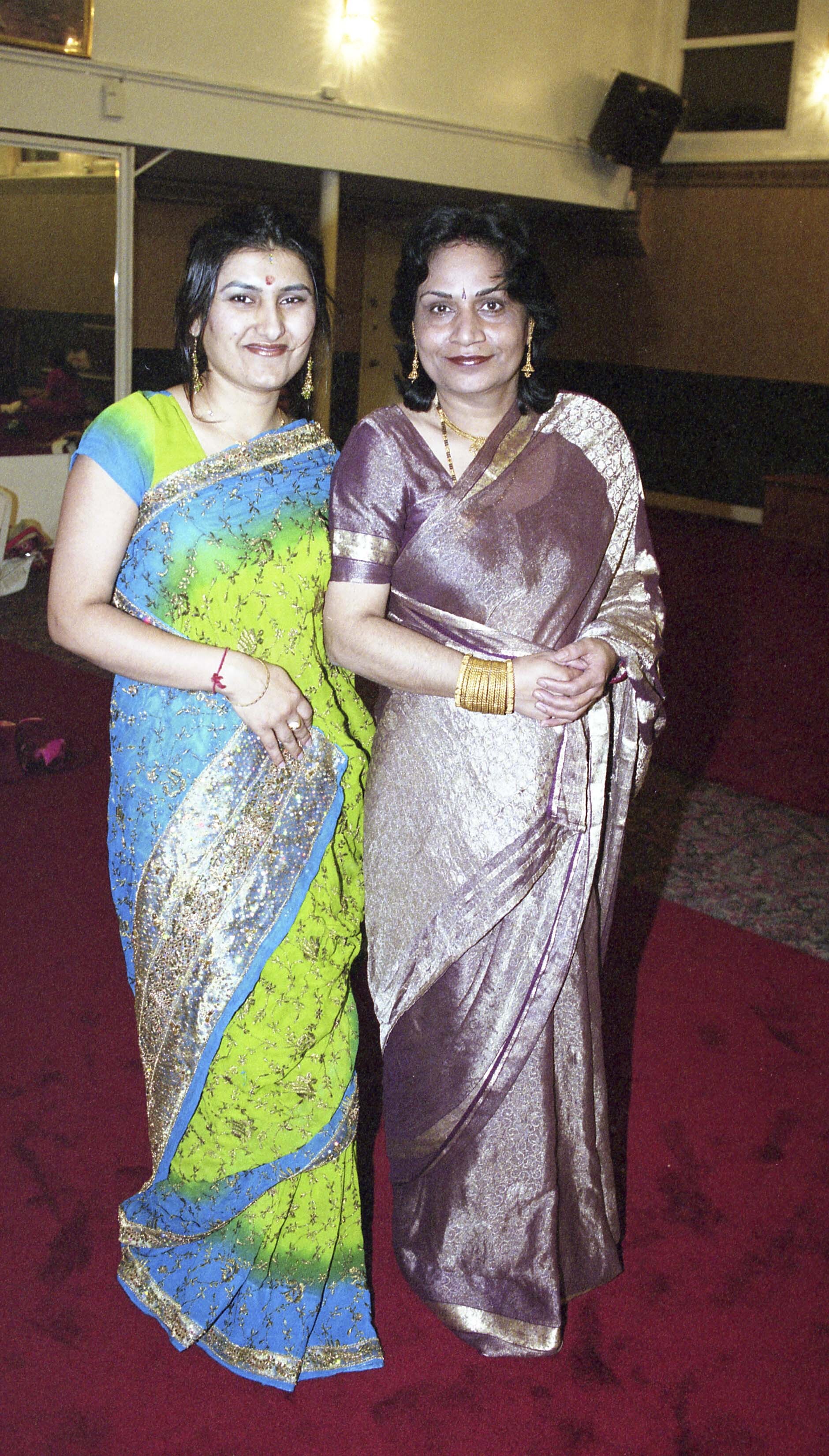
Group portrait of two unidentified women celebrating Karvachauth at the Hindu Cultural Society and Community Centre of B.C. in Burnaby, B.C.
Typical celebrated in Nepal, Northern India, and Western India, Karvachauth is a beloved one-day Hindu festival where married women fast (vrata) from sunrise to moonrise for the safety and longevity of their husbands. The festival fall on the fourth day of the full moon during the Kartika month. Before sunrise, the married woman eat sargi, which is a meal consisting of vermicelli (kheer), milk, and dry fruit. Upon moonrise, the fasting woman views the moon through a sieve, and then turns to look at her husband through the same sieve. The ceremony is completed when the husband presents their fasting wife with water and food.
Officially registered as the Hindu Cultural Society and Community Centre of B.C., the Hindu Temple of Burnaby, previously known as Vishva Hindu Parishad temple, stands as one of Canada's oldest and largest Hindu temples. It was founded on May 15, 1972 as a small prayer hall in North Burnaby, dedicated to preserving and promoting Hindu culture and traditions.
Typical celebrated in Nepal, Northern India, and Western India, Karvachauth is a beloved one-day Hindu festival where married women fast (vrata) from sunrise to moonrise for the safety and longevity of their husbands. The festival fall on the fourth day of the full moon during the Kartika month. Before sunrise, the married woman eat sargi, which is a meal consisting of vermicelli (kheer), milk, and dry fruit. Upon moonrise, the fasting woman views the moon through a sieve, and then turns to look at her husband through the same sieve. The ceremony is completed when the husband presents their fasting wife with water and food.
Officially registered as the Hindu Cultural Society and Community Centre of B.C., the Hindu Temple of Burnaby, previously known as Vishva Hindu Parishad temple, stands as one of Canada's oldest and largest Hindu temples. It was founded on May 15, 1972 as a small prayer hall in North Burnaby, dedicated to preserving and promoting Hindu culture and traditions.
Creator: Chandra Bodalia
Description
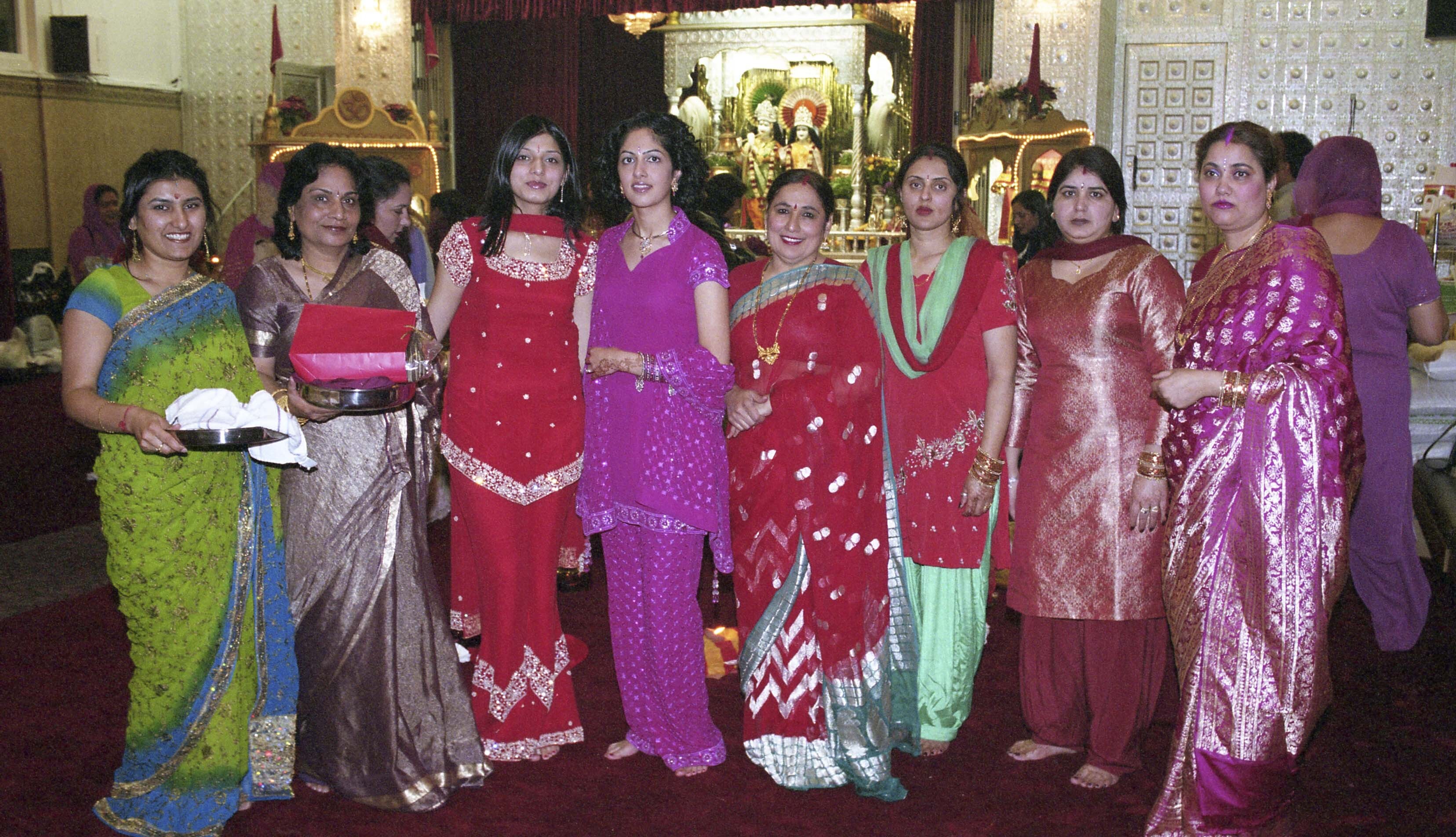
Group portrait of unidentified women celebrating Karvachauth at the Hindu Cultural Society and Community Centre of B.C. in Burnaby, B.C.
Typical celebrated in Nepal, Northern India, and Western India, Karvachauth is a beloved one-day Hindu festival where married women fast (vrata) from sunrise to moonrise for the safety and longevity of their husbands. The festival fall on the fourth day of the full moon during the Kartika month. Before sunrise, the married woman eat sargi, which is a meal consisting of vermicelli (kheer), milk, and dry fruit. Upon moonrise, the fasting woman views the moon through a sieve, and then turns to look at her husband through the same sieve. The ceremony is completed when the husband presents their fasting wife with water and food.
Officially registered as the Hindu Cultural Society and Community Centre of B.C., the Hindu Temple of Burnaby, previously known as Vishva Hindu Parishad temple, stands as one of Canada's oldest and largest Hindu temples. It was founded on May 15, 1972 as a small prayer hall in North Burnaby, dedicated to preserving and promoting Hindu culture and traditions.
Typical celebrated in Nepal, Northern India, and Western India, Karvachauth is a beloved one-day Hindu festival where married women fast (vrata) from sunrise to moonrise for the safety and longevity of their husbands. The festival fall on the fourth day of the full moon during the Kartika month. Before sunrise, the married woman eat sargi, which is a meal consisting of vermicelli (kheer), milk, and dry fruit. Upon moonrise, the fasting woman views the moon through a sieve, and then turns to look at her husband through the same sieve. The ceremony is completed when the husband presents their fasting wife with water and food.
Officially registered as the Hindu Cultural Society and Community Centre of B.C., the Hindu Temple of Burnaby, previously known as Vishva Hindu Parishad temple, stands as one of Canada's oldest and largest Hindu temples. It was founded on May 15, 1972 as a small prayer hall in North Burnaby, dedicated to preserving and promoting Hindu culture and traditions.
Creator: Chandra Bodalia
Description
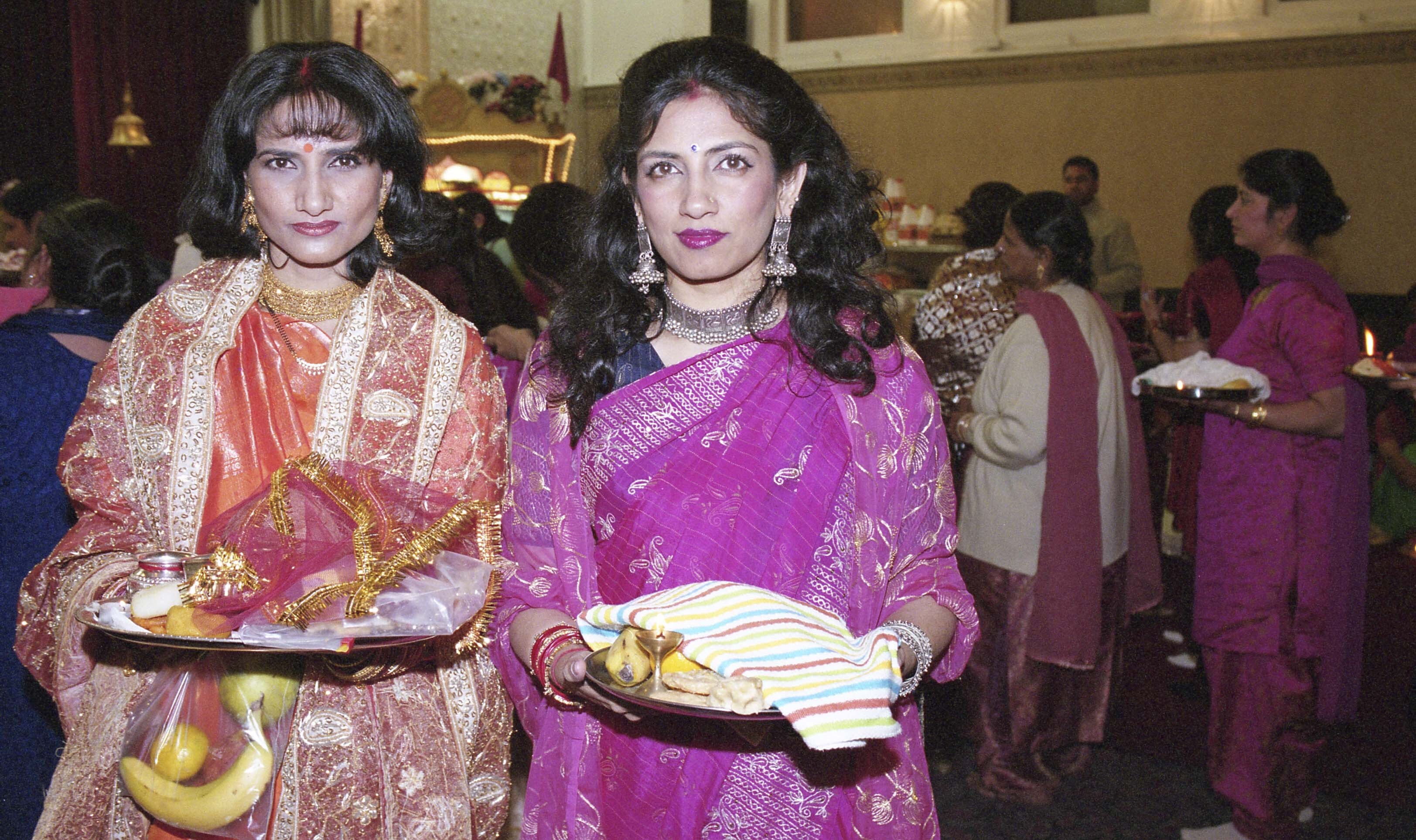
Group portrait of two unidentified women celebrating Karvachauth at the Hindu Cultural Society and Community Centre of B.C. in Burnaby, B.C.
Typical celebrated in Nepal, Northern India, and Western India, Karvachauth is a beloved one-day Hindu festival where married women fast (vrata) from sunrise to moonrise for the safety and longevity of their husbands. The festival fall on the fourth day of the full moon during the Kartika month. Before sunrise, the married woman eat sargi, which is a meal consisting of vermicelli (kheer), milk, and dry fruit. Upon moonrise, the fasting woman views the moon through a sieve, and then turns to look at her husband through the same sieve. The ceremony is completed when the husband presents their fasting wife with water and food.
Officially registered as the Hindu Cultural Society and Community Centre of B.C., the Hindu Temple of Burnaby, previously known as Vishva Hindu Parishad temple, stands as one of Canada's oldest and largest Hindu temples. It was founded on May 15, 1972 as a small prayer hall in North Burnaby, dedicated to preserving and promoting Hindu culture and traditions.
Typical celebrated in Nepal, Northern India, and Western India, Karvachauth is a beloved one-day Hindu festival where married women fast (vrata) from sunrise to moonrise for the safety and longevity of their husbands. The festival fall on the fourth day of the full moon during the Kartika month. Before sunrise, the married woman eat sargi, which is a meal consisting of vermicelli (kheer), milk, and dry fruit. Upon moonrise, the fasting woman views the moon through a sieve, and then turns to look at her husband through the same sieve. The ceremony is completed when the husband presents their fasting wife with water and food.
Officially registered as the Hindu Cultural Society and Community Centre of B.C., the Hindu Temple of Burnaby, previously known as Vishva Hindu Parishad temple, stands as one of Canada's oldest and largest Hindu temples. It was founded on May 15, 1972 as a small prayer hall in North Burnaby, dedicated to preserving and promoting Hindu culture and traditions.
Creator: Chandra Bodalia
Description
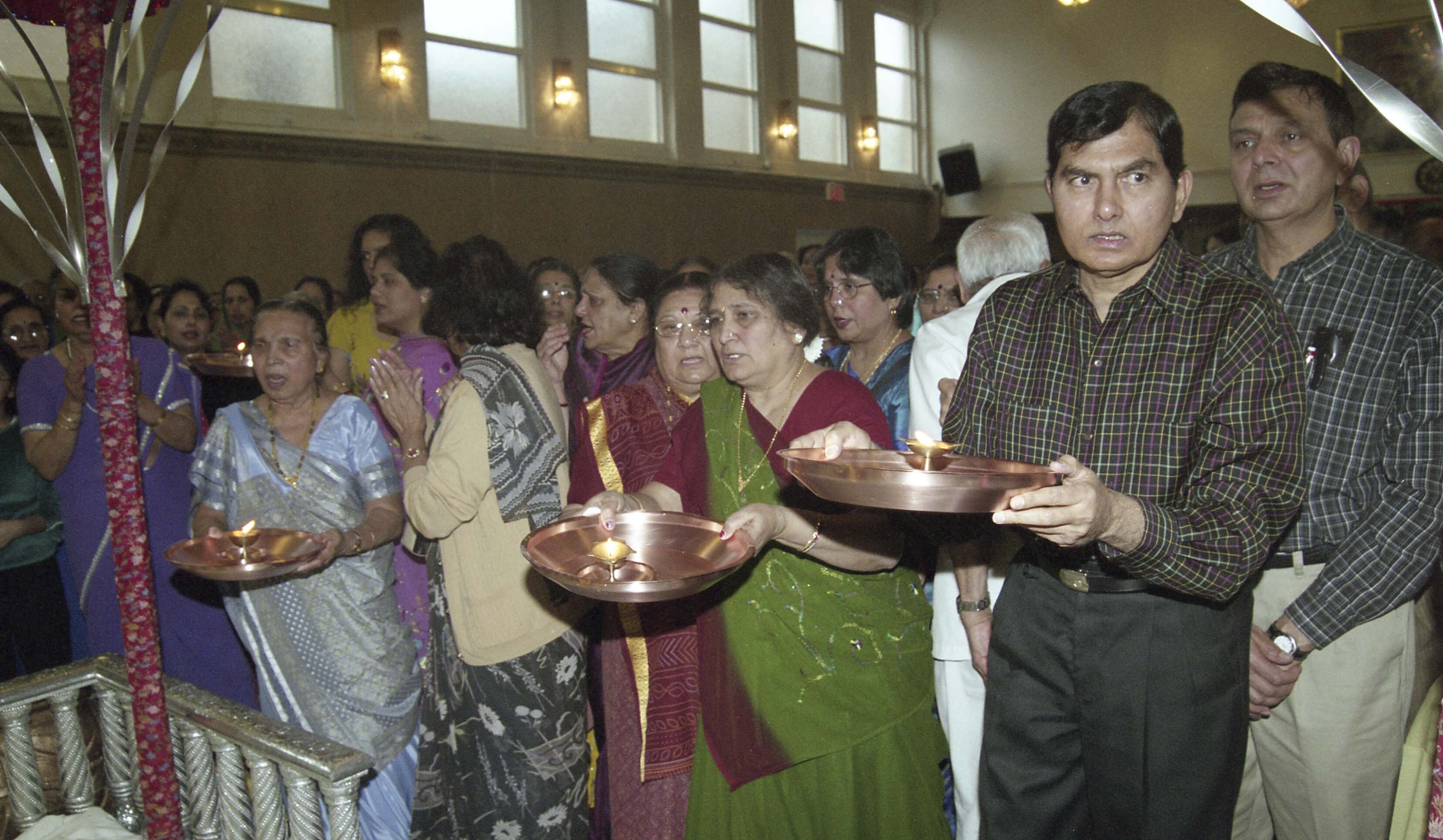
Photograph of people performing puja for a Tulsi Vivah celebration at the Hindu Cultural Society and Community Centre of B.C. in Burnaby, B.C.
Tulsi Vivah is a Hindu ritual of the symbolic marriage between a tulasi plant, the personification of Goddess Lakshmi), and shaligrama, the personification of Lord Vishnu). Taking place in the month of Kartika, the ceremony signifies the end of the Chaturmas, a sacred four-month periods where Lord Vishnu is in dive sleep, and the beginning of the auspicious wedding season.
Officially registered as the Hindu Cultural Society and Community Centre of B.C., the Hindu Temple of Burnaby, previously known as Vishva Hindu Parishad temple, stands as one of Canada's oldest and largest Hindu temples. It was founded on May 15, 1972 as a small prayer hall in North Burnaby, dedicated to preserving and promoting Hindu culture and traditions.
Tulsi Vivah is a Hindu ritual of the symbolic marriage between a tulasi plant, the personification of Goddess Lakshmi), and shaligrama, the personification of Lord Vishnu). Taking place in the month of Kartika, the ceremony signifies the end of the Chaturmas, a sacred four-month periods where Lord Vishnu is in dive sleep, and the beginning of the auspicious wedding season.
Officially registered as the Hindu Cultural Society and Community Centre of B.C., the Hindu Temple of Burnaby, previously known as Vishva Hindu Parishad temple, stands as one of Canada's oldest and largest Hindu temples. It was founded on May 15, 1972 as a small prayer hall in North Burnaby, dedicated to preserving and promoting Hindu culture and traditions.
Creator: Chandra Bodalia
Description
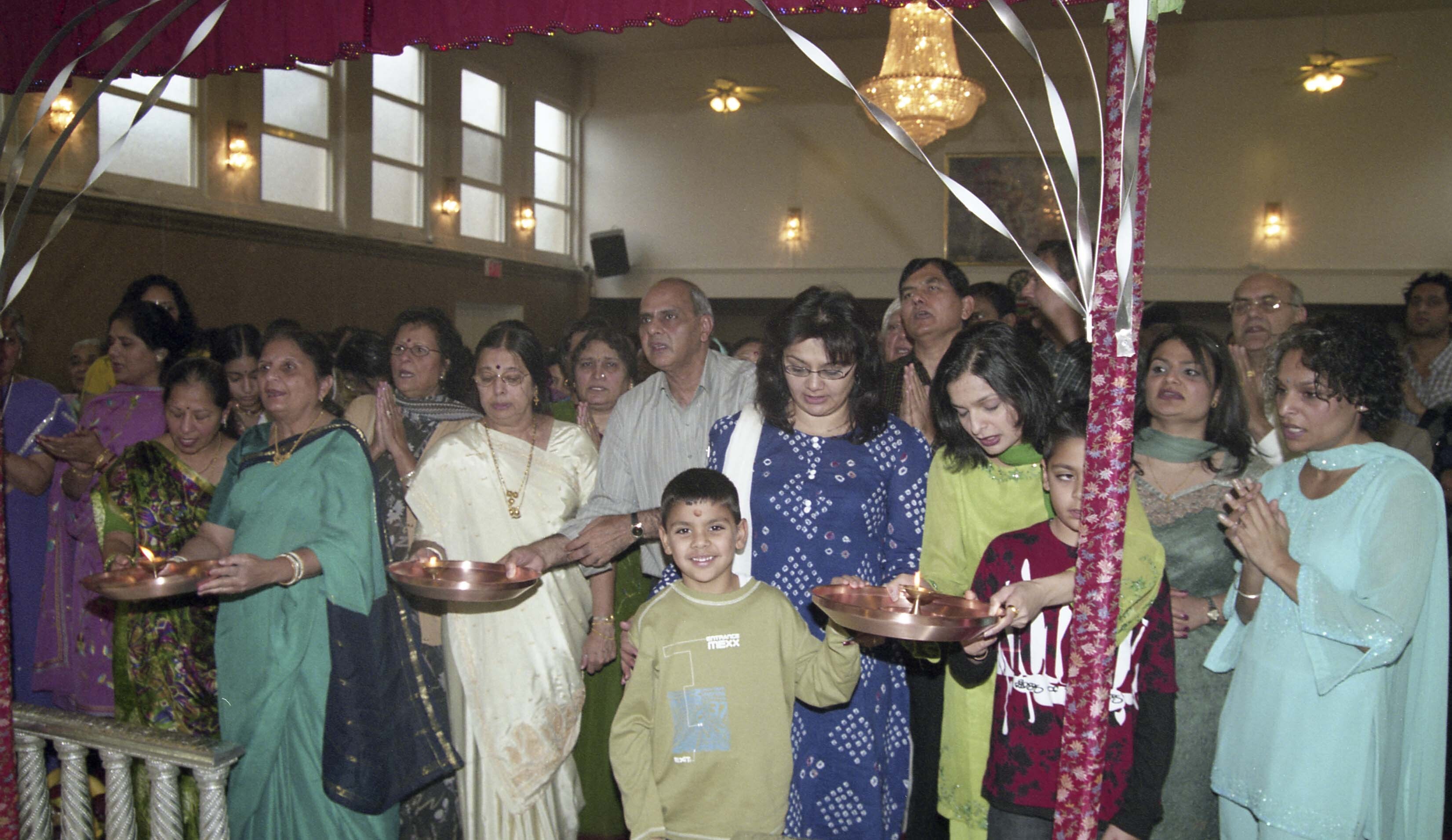
Photograph of people performing puja for a Tulsi Vivah celebration at the Hindu Cultural Society and Community Centre of B.C. in Burnaby, B.C.
Tulsi Vivah is a Hindu ritual of the symbolic marriage between a tulasi plant, the personification of Goddess Lakshmi), and shaligrama, the personification of Lord Vishnu). Taking place in the month of Kartika, the ceremony signifies the end of the Chaturmas, a sacred four-month periods where Lord Vishnu is in dive sleep, and the beginning of the auspicious wedding season.
Officially registered as the Hindu Cultural Society and Community Centre of B.C., the Hindu Temple of Burnaby, previously known as Vishva Hindu Parishad temple, stands as one of Canada's oldest and largest Hindu temples. It was founded on May 15, 1972 as a small prayer hall in North Burnaby, dedicated to preserving and promoting Hindu culture and traditions.
Tulsi Vivah is a Hindu ritual of the symbolic marriage between a tulasi plant, the personification of Goddess Lakshmi), and shaligrama, the personification of Lord Vishnu). Taking place in the month of Kartika, the ceremony signifies the end of the Chaturmas, a sacred four-month periods where Lord Vishnu is in dive sleep, and the beginning of the auspicious wedding season.
Officially registered as the Hindu Cultural Society and Community Centre of B.C., the Hindu Temple of Burnaby, previously known as Vishva Hindu Parishad temple, stands as one of Canada's oldest and largest Hindu temples. It was founded on May 15, 1972 as a small prayer hall in North Burnaby, dedicated to preserving and promoting Hindu culture and traditions.
Creator: Chandra Bodalia
Description
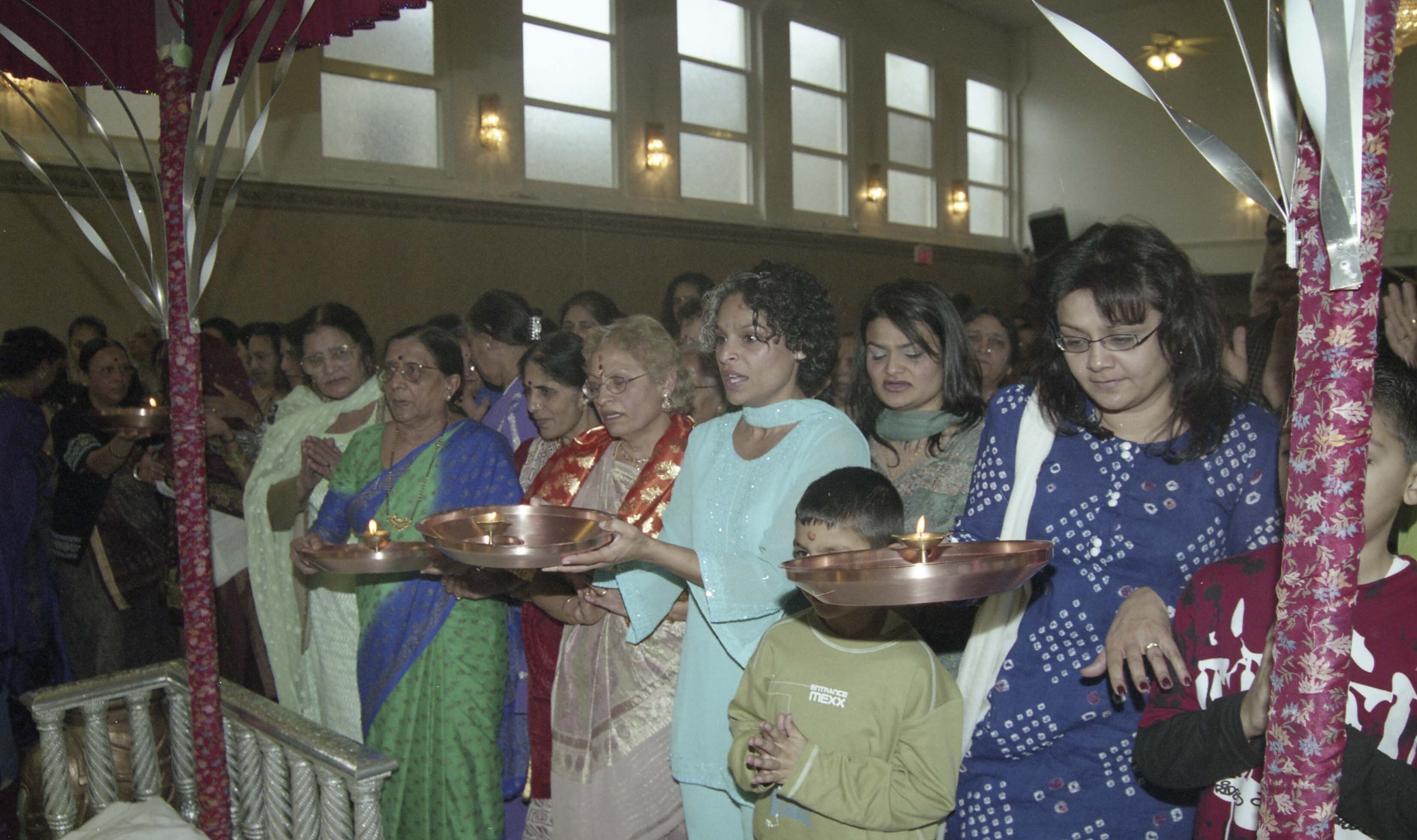
Photograph of people performing puja for a Tulsi Vivah celebration at the Hindu Cultural Society and Community Centre of B.C. in Burnaby, B.C.
Tulsi Vivah is a Hindu ritual of the symbolic marriage between a tulasi plant, the personification of Goddess Lakshmi), and shaligrama, the personification of Lord Vishnu). Taking place in the month of Kartika, the ceremony signifies the end of the Chaturmas, a sacred four-month periods where Lord Vishnu is in dive sleep, and the beginning of the auspicious wedding season.
Officially registered as the Hindu Cultural Society and Community Centre of B.C., the Hindu Temple of Burnaby, previously known as Vishva Hindu Parishad temple, stands as one of Canada's oldest and largest Hindu temples. It was founded on May 15, 1972 as a small prayer hall in North Burnaby, dedicated to preserving and promoting Hindu culture and traditions.
Tulsi Vivah is a Hindu ritual of the symbolic marriage between a tulasi plant, the personification of Goddess Lakshmi), and shaligrama, the personification of Lord Vishnu). Taking place in the month of Kartika, the ceremony signifies the end of the Chaturmas, a sacred four-month periods where Lord Vishnu is in dive sleep, and the beginning of the auspicious wedding season.
Officially registered as the Hindu Cultural Society and Community Centre of B.C., the Hindu Temple of Burnaby, previously known as Vishva Hindu Parishad temple, stands as one of Canada's oldest and largest Hindu temples. It was founded on May 15, 1972 as a small prayer hall in North Burnaby, dedicated to preserving and promoting Hindu culture and traditions.
Creator: Chandra Bodalia
Description
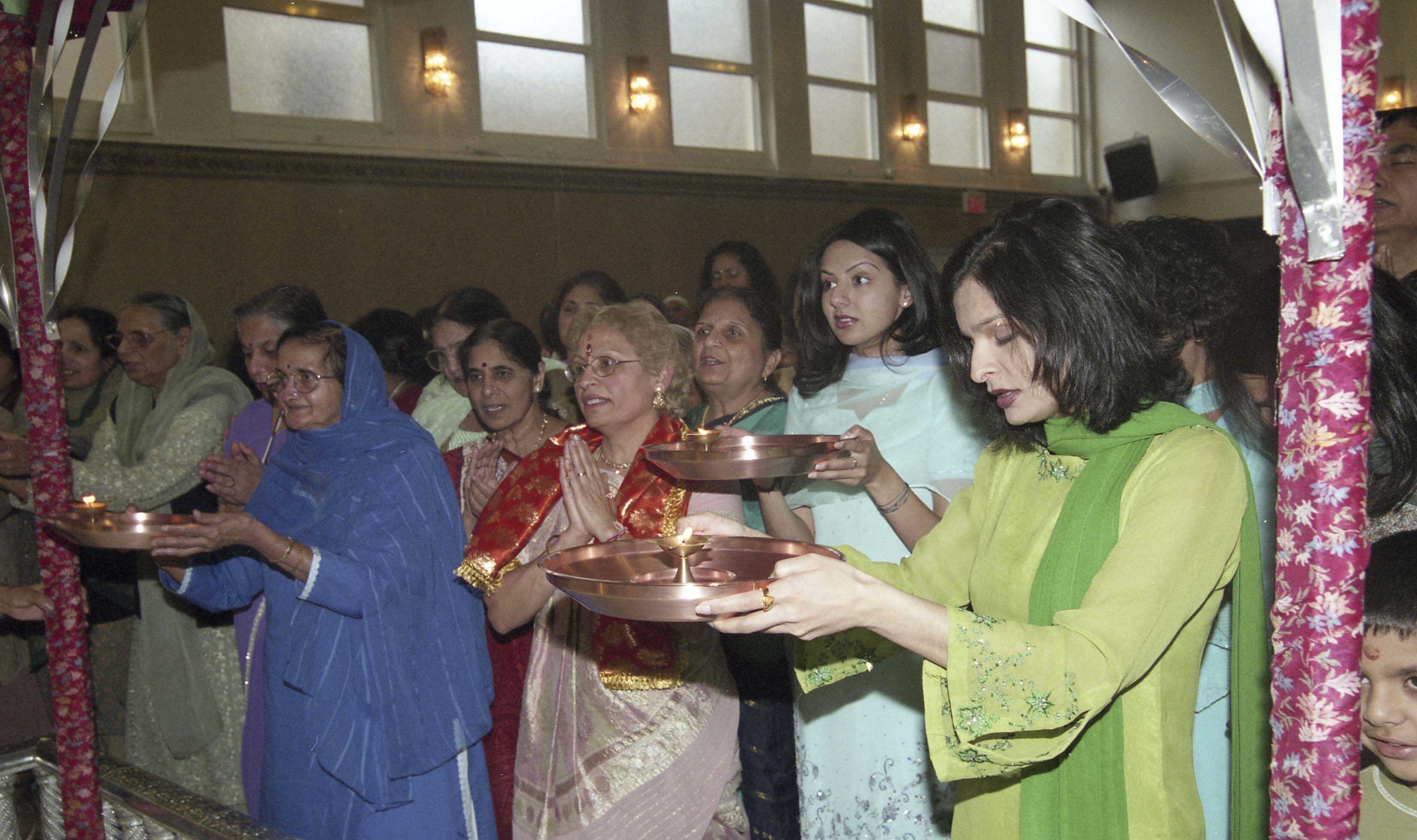
Photograph of people performing puja for a Tulsi Vivah celebration at the Hindu Cultural Society and Community Centre of B.C. in Burnaby, B.C.
Tulsi Vivah is a Hindu ritual of the symbolic marriage between a tulasi plant, the personification of Goddess Lakshmi), and shaligrama, the personification of Lord Vishnu). Taking place in the month of Kartika, the ceremony signifies the end of the Chaturmas, a sacred four-month periods where Lord Vishnu is in dive sleep, and the beginning of the auspicious wedding season.
Officially registered as the Hindu Cultural Society and Community Centre of B.C., the Hindu Temple of Burnaby, previously known as Vishva Hindu Parishad temple, stands as one of Canada's oldest and largest Hindu temples. It was founded on May 15, 1972 as a small prayer hall in North Burnaby, dedicated to preserving and promoting Hindu culture and traditions.
Tulsi Vivah is a Hindu ritual of the symbolic marriage between a tulasi plant, the personification of Goddess Lakshmi), and shaligrama, the personification of Lord Vishnu). Taking place in the month of Kartika, the ceremony signifies the end of the Chaturmas, a sacred four-month periods where Lord Vishnu is in dive sleep, and the beginning of the auspicious wedding season.
Officially registered as the Hindu Cultural Society and Community Centre of B.C., the Hindu Temple of Burnaby, previously known as Vishva Hindu Parishad temple, stands as one of Canada's oldest and largest Hindu temples. It was founded on May 15, 1972 as a small prayer hall in North Burnaby, dedicated to preserving and promoting Hindu culture and traditions.
Creator: Chandra Bodalia
Description
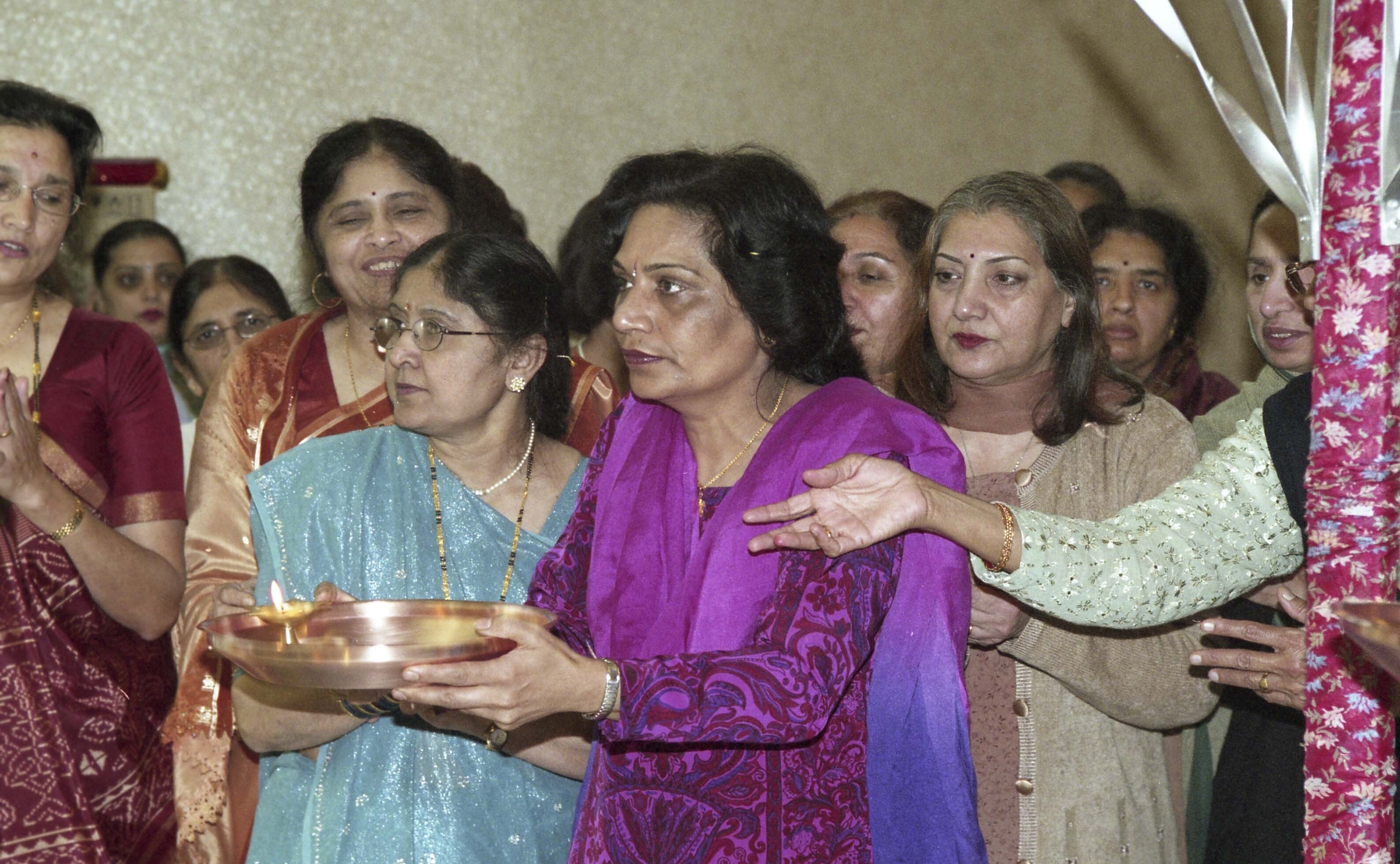
Photograph of people performing puja for a Tulsi Vivah celebration at the Hindu Cultural Society and Community Centre of B.C. in Burnaby, B.C.
Tulsi Vivah is a Hindu ritual of the symbolic marriage between a tulasi plant, the personification of Goddess Lakshmi), and shaligrama, the personification of Lord Vishnu). Taking place in the month of Kartika, the ceremony signifies the end of the Chaturmas, a sacred four-month periods where Lord Vishnu is in dive sleep, and the beginning of the auspicious wedding season.
Officially registered as the Hindu Cultural Society and Community Centre of B.C., the Hindu Temple of Burnaby, previously known as Vishva Hindu Parishad temple, stands as one of Canada's oldest and largest Hindu temples. It was founded on May 15, 1972 as a small prayer hall in North Burnaby, dedicated to preserving and promoting Hindu culture and traditions.
Tulsi Vivah is a Hindu ritual of the symbolic marriage between a tulasi plant, the personification of Goddess Lakshmi), and shaligrama, the personification of Lord Vishnu). Taking place in the month of Kartika, the ceremony signifies the end of the Chaturmas, a sacred four-month periods where Lord Vishnu is in dive sleep, and the beginning of the auspicious wedding season.
Officially registered as the Hindu Cultural Society and Community Centre of B.C., the Hindu Temple of Burnaby, previously known as Vishva Hindu Parishad temple, stands as one of Canada's oldest and largest Hindu temples. It was founded on May 15, 1972 as a small prayer hall in North Burnaby, dedicated to preserving and promoting Hindu culture and traditions.
Creator: Chandra Bodalia
Description
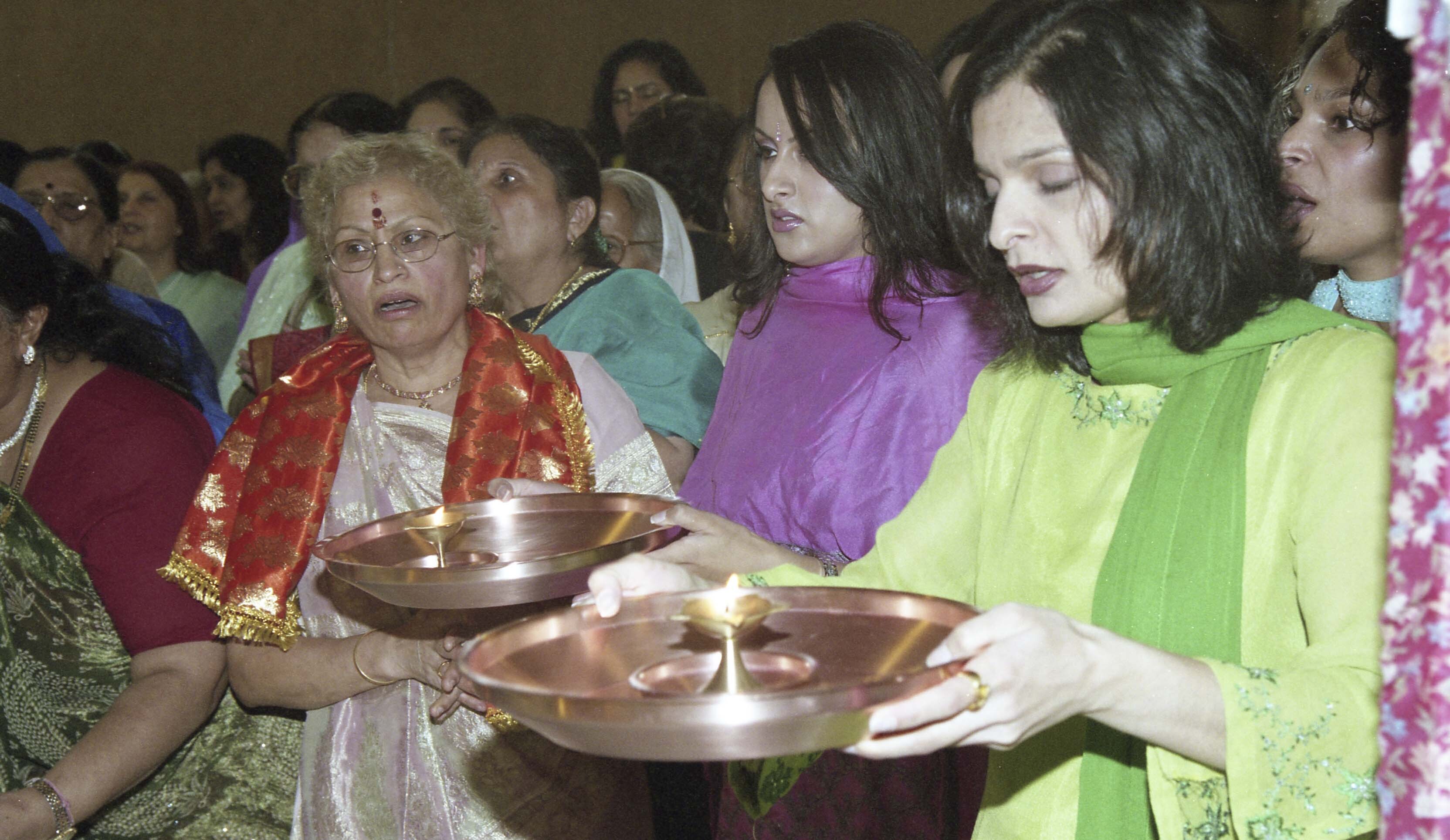
Photograph of people performing puja for a Tulsi Vivah celebration at the Hindu Cultural Society and Community Centre of B.C. in Burnaby, B.C.
Tulsi Vivah is a Hindu ritual of the symbolic marriage between a tulasi plant, the personification of Goddess Lakshmi), and shaligrama, the personification of Lord Vishnu). Taking place in the month of Kartika, the ceremony signifies the end of the Chaturmas, a sacred four-month periods where Lord Vishnu is in dive sleep, and the beginning of the auspicious wedding season.
Officially registered as the Hindu Cultural Society and Community Centre of B.C., the Hindu Temple of Burnaby, previously known as Vishva Hindu Parishad temple, stands as one of Canada's oldest and largest Hindu temples. It was founded on May 15, 1972 as a small prayer hall in North Burnaby, dedicated to preserving and promoting Hindu culture and traditions.
Tulsi Vivah is a Hindu ritual of the symbolic marriage between a tulasi plant, the personification of Goddess Lakshmi), and shaligrama, the personification of Lord Vishnu). Taking place in the month of Kartika, the ceremony signifies the end of the Chaturmas, a sacred four-month periods where Lord Vishnu is in dive sleep, and the beginning of the auspicious wedding season.
Officially registered as the Hindu Cultural Society and Community Centre of B.C., the Hindu Temple of Burnaby, previously known as Vishva Hindu Parishad temple, stands as one of Canada's oldest and largest Hindu temples. It was founded on May 15, 1972 as a small prayer hall in North Burnaby, dedicated to preserving and promoting Hindu culture and traditions.
Creator: Chandra Bodalia
Description
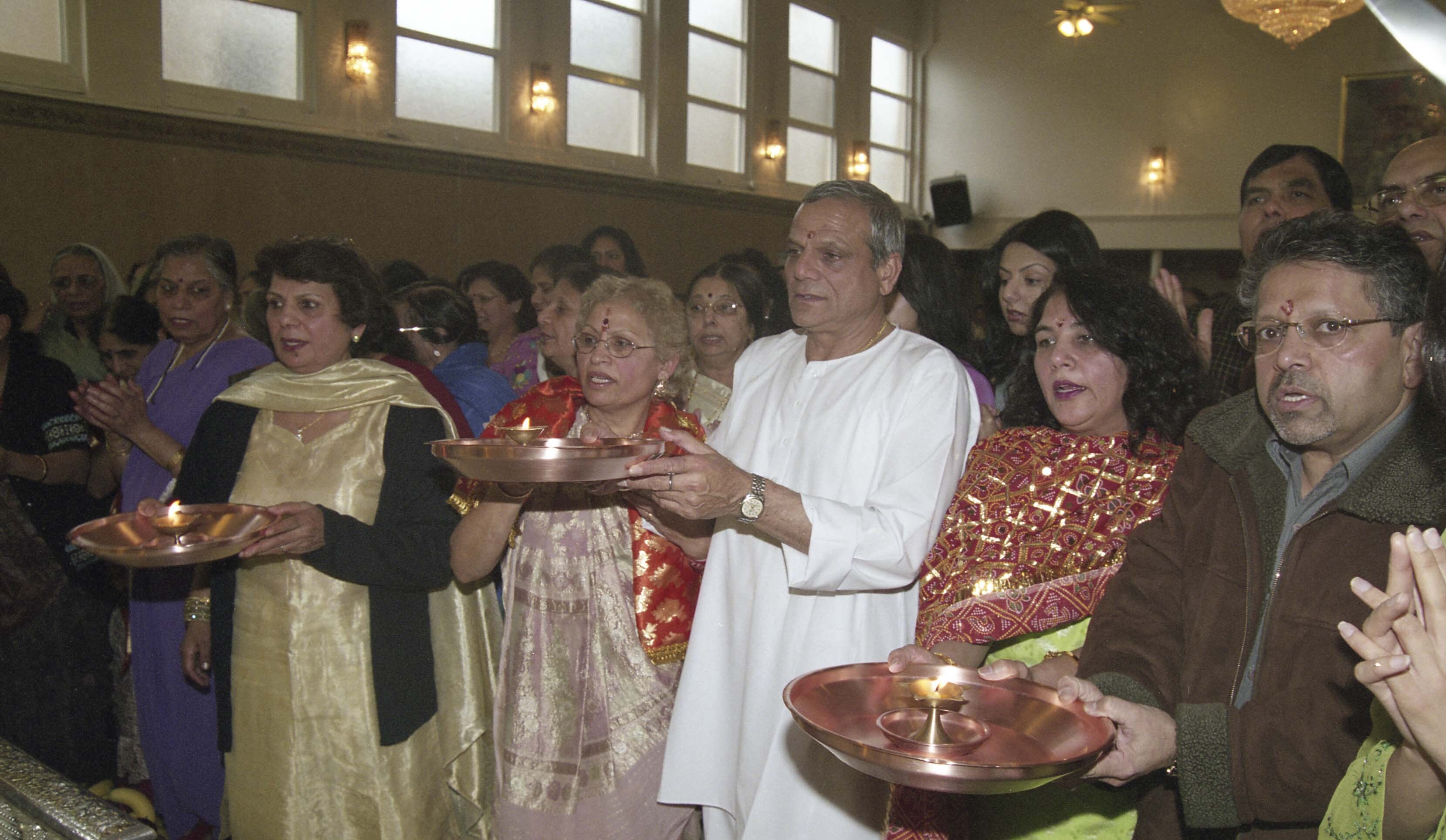
Photograph of people performing puja for a Tulsi Vivah celebration at the Hindu Cultural Society and Community Centre of B.C. in Burnaby, B.C.
Tulsi Vivah is a Hindu ritual of the symbolic marriage between a tulasi plant, the personification of Goddess Lakshmi), and shaligrama, the personification of Lord Vishnu). Taking place in the month of Kartika, the ceremony signifies the end of the Chaturmas, a sacred four-month periods where Lord Vishnu is in dive sleep, and the beginning of the auspicious wedding season.
Officially registered as the Hindu Cultural Society and Community Centre of B.C., the Hindu Temple of Burnaby, previously known as Vishva Hindu Parishad temple, stands as one of Canada's oldest and largest Hindu temples. It was founded on May 15, 1972 as a small prayer hall in North Burnaby, dedicated to preserving and promoting Hindu culture and traditions.
Tulsi Vivah is a Hindu ritual of the symbolic marriage between a tulasi plant, the personification of Goddess Lakshmi), and shaligrama, the personification of Lord Vishnu). Taking place in the month of Kartika, the ceremony signifies the end of the Chaturmas, a sacred four-month periods where Lord Vishnu is in dive sleep, and the beginning of the auspicious wedding season.
Officially registered as the Hindu Cultural Society and Community Centre of B.C., the Hindu Temple of Burnaby, previously known as Vishva Hindu Parishad temple, stands as one of Canada's oldest and largest Hindu temples. It was founded on May 15, 1972 as a small prayer hall in North Burnaby, dedicated to preserving and promoting Hindu culture and traditions.