
Chambers, Bruce
Creator: Chandra Bodalia
Description
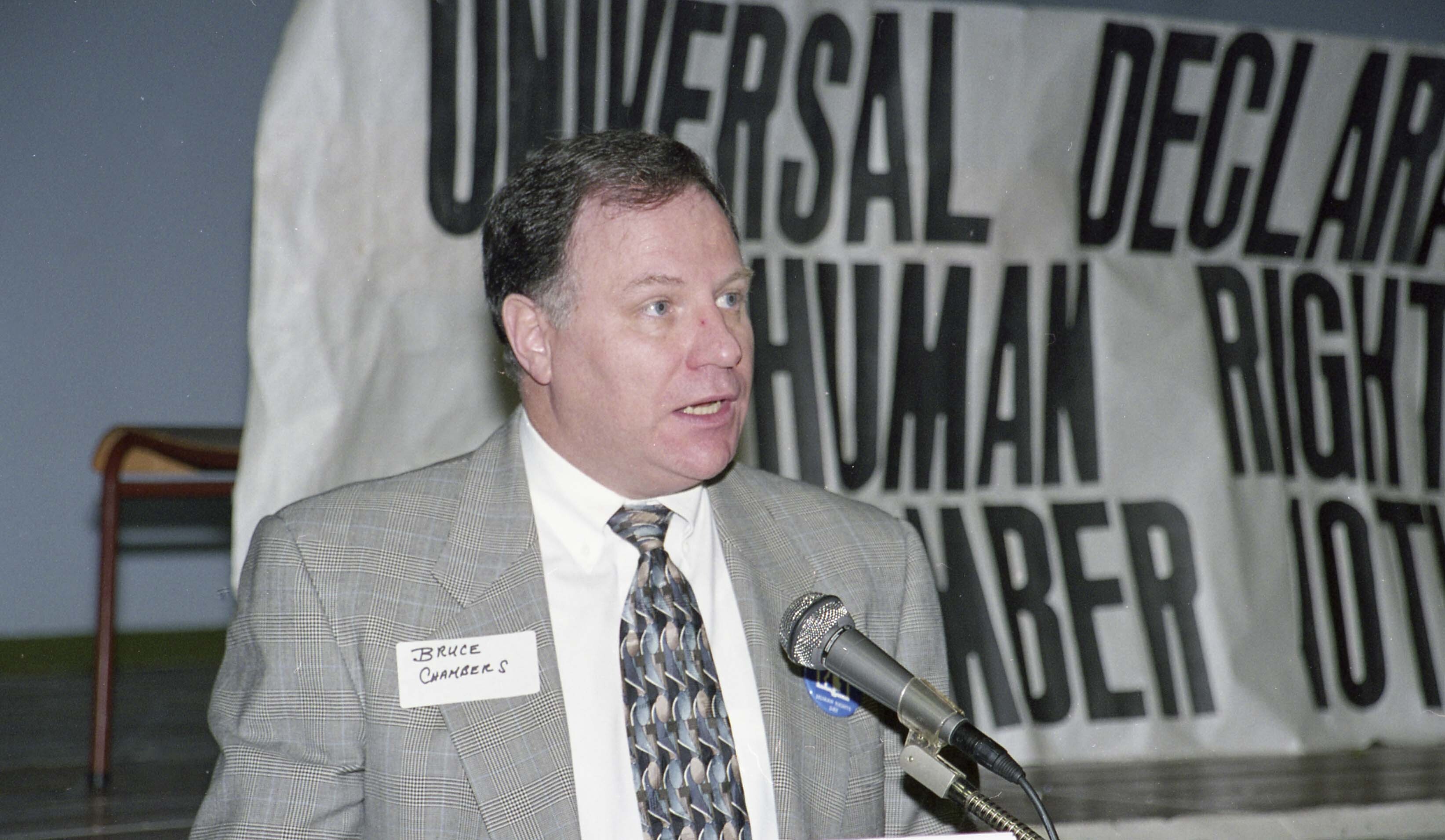
Photograph of Bruce Chambers addressing the audience at the Universal Declaration of Human Rights event in Vancouver, British Columbia (B.C.).
The Universal Declaration of Human Rights (UDHR) is a milestone document in the history of human rights. Drafted by representatives with different legal and cultural backgrounds from all regions of the world, the Declaration was proclaimed by the United Nations General Assembly in Paris on 10 December 1948 (General Assembly resolution 217 A) as a common standard of achievements for all peoples and all nations. It sets out, for the first time, fundamental human rights to be universally protected and it has been translated into over 500 languages. The UDHR is widely recognized as having inspired, and paved the way for, the adoption of more than seventy human rights treaties, applied today on a permanent basis at global and regional levels (all containing references to it in their preambles).
The Universal Declaration of Human Rights (UDHR) is a milestone document in the history of human rights. Drafted by representatives with different legal and cultural backgrounds from all regions of the world, the Declaration was proclaimed by the United Nations General Assembly in Paris on 10 December 1948 (General Assembly resolution 217 A) as a common standard of achievements for all peoples and all nations. It sets out, for the first time, fundamental human rights to be universally protected and it has been translated into over 500 languages. The UDHR is widely recognized as having inspired, and paved the way for, the adoption of more than seventy human rights treaties, applied today on a permanent basis at global and regional levels (all containing references to it in their preambles).
Creator: Chandra Bodalia
Description
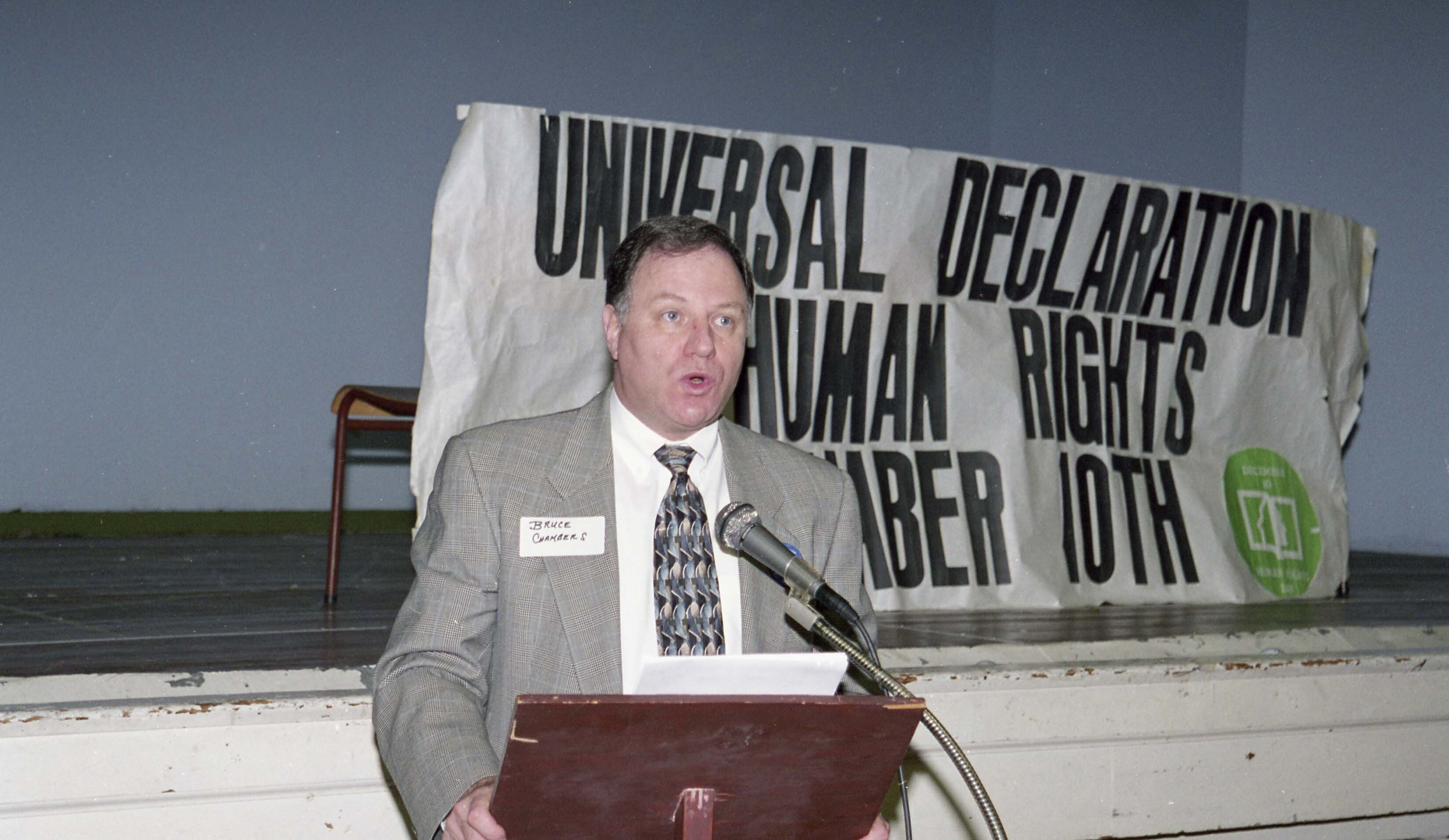
Photograph of Bruce Chambers addressing the audience at the Universal Declaration of Human Rights event in Vancouver, British Columbia (B.C.).
The Universal Declaration of Human Rights (UDHR) is a milestone document in the history of human rights. Drafted by representatives with different legal and cultural backgrounds from all regions of the world, the Declaration was proclaimed by the United Nations General Assembly in Paris on 10 December 1948 (General Assembly resolution 217 A) as a common standard of achievements for all peoples and all nations. It sets out, for the first time, fundamental human rights to be universally protected and it has been translated into over 500 languages. The UDHR is widely recognized as having inspired, and paved the way for, the adoption of more than seventy human rights treaties, applied today on a permanent basis at global and regional levels (all containing references to it in their preambles).
The Universal Declaration of Human Rights (UDHR) is a milestone document in the history of human rights. Drafted by representatives with different legal and cultural backgrounds from all regions of the world, the Declaration was proclaimed by the United Nations General Assembly in Paris on 10 December 1948 (General Assembly resolution 217 A) as a common standard of achievements for all peoples and all nations. It sets out, for the first time, fundamental human rights to be universally protected and it has been translated into over 500 languages. The UDHR is widely recognized as having inspired, and paved the way for, the adoption of more than seventy human rights treaties, applied today on a permanent basis at global and regional levels (all containing references to it in their preambles).
Creator: Chandra Bodalia
Description
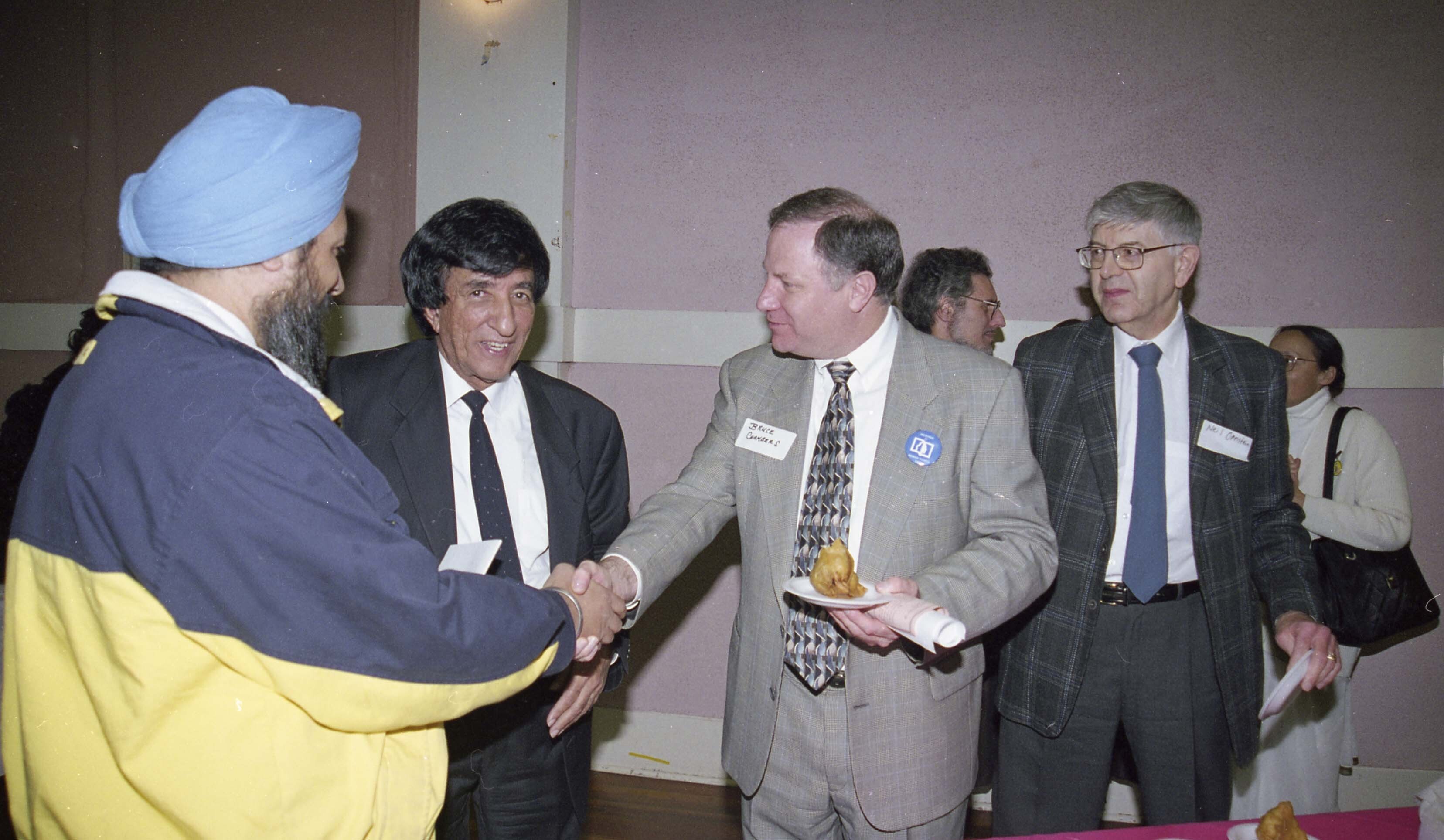
Photograph of Aziz Khaki and Bruce Chambers with a few unidentified individuals at the Universal Declaration of Human Rights event in Vancouver, British Columbia (B.C.).
Dr. Abdulaziz 'Aziz' Khaki was an activist and leader in the Canadian Muslim community. He served as vice-president of the Canadian Muslim Federation and the Council of Muslim Communities of Canada. Dr. Khaki was a strong advocate for human rights, interfaith dialogue, and the integration of Muslim communities into Canadian society.
The Universal Declaration of Human Rights (UDHR) is a milestone document in the history of human rights. Drafted by representatives with different legal and cultural backgrounds from all regions of the world, the Declaration was proclaimed by the United Nations General Assembly in Paris on 10 December 1948 (General Assembly resolution 217 A) as a common standard of achievements for all peoples and all nations. It sets out, for the first time, fundamental human rights to be universally protected and it has been translated into over 500 languages. The UDHR is widely recognized as having inspired, and paved the way for, the adoption of more than seventy human rights treaties, applied today on a permanent basis at global and regional levels (all containing references to it in their preambles).
Dr. Abdulaziz 'Aziz' Khaki was an activist and leader in the Canadian Muslim community. He served as vice-president of the Canadian Muslim Federation and the Council of Muslim Communities of Canada. Dr. Khaki was a strong advocate for human rights, interfaith dialogue, and the integration of Muslim communities into Canadian society.
The Universal Declaration of Human Rights (UDHR) is a milestone document in the history of human rights. Drafted by representatives with different legal and cultural backgrounds from all regions of the world, the Declaration was proclaimed by the United Nations General Assembly in Paris on 10 December 1948 (General Assembly resolution 217 A) as a common standard of achievements for all peoples and all nations. It sets out, for the first time, fundamental human rights to be universally protected and it has been translated into over 500 languages. The UDHR is widely recognized as having inspired, and paved the way for, the adoption of more than seventy human rights treaties, applied today on a permanent basis at global and regional levels (all containing references to it in their preambles).
Creator: Chandra Bodalia
Description
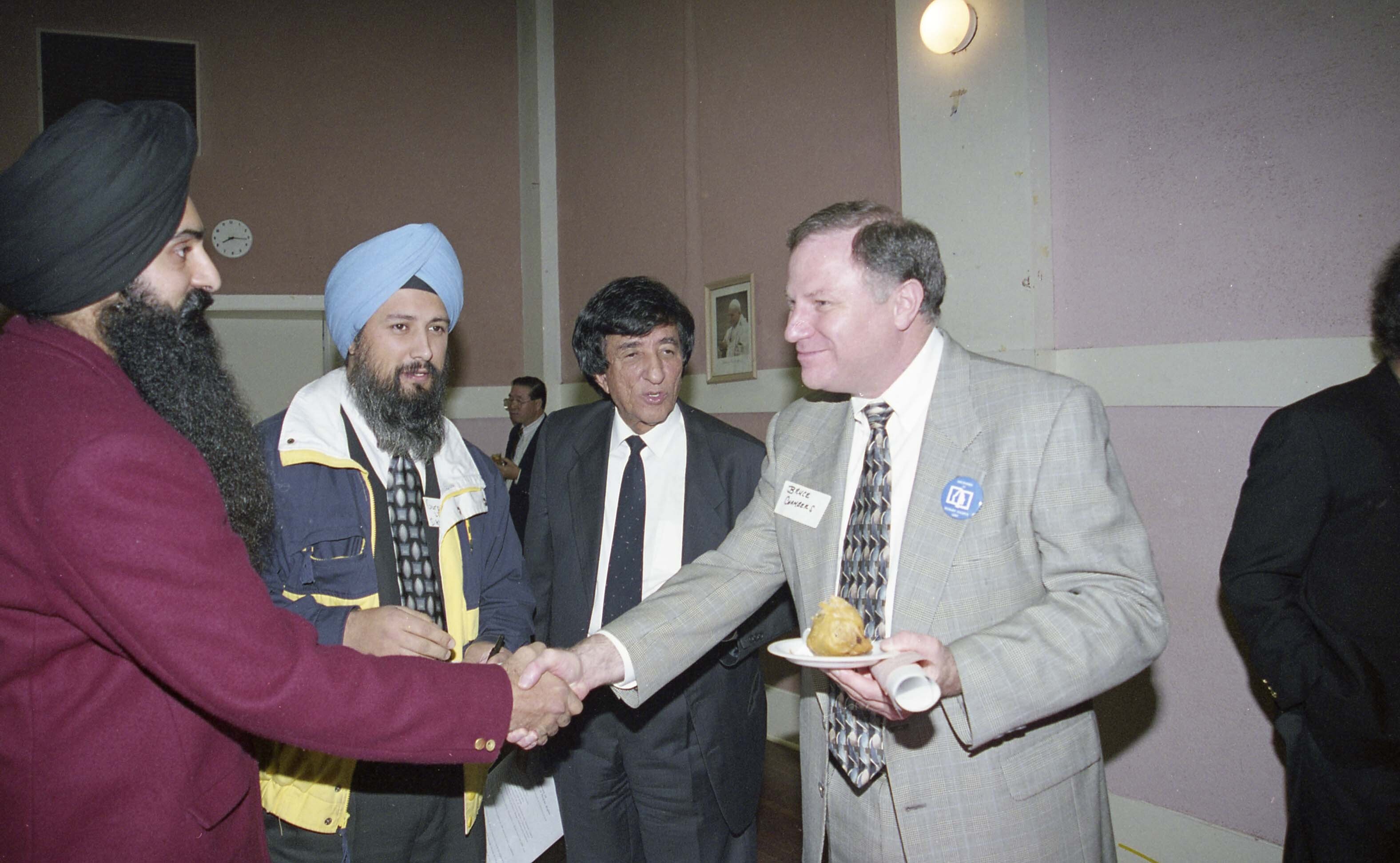
Photograph of Aziz Khaki and Bruce Chambers with a few unidentified individuals at the Universal Declaration of Human Rights event in Vancouver, British Columbia (B.C.).
Dr. Abdulaziz 'Aziz' Khaki was an activist and leader in the Canadian Muslim community. He served as vice-president of the Canadian Muslim Federation and the Council of Muslim Communities of Canada. Dr. Khaki was a strong advocate for human rights, interfaith dialogue, and the integration of Muslim communities into Canadian society.
The Universal Declaration of Human Rights (UDHR) is a milestone document in the history of human rights. Drafted by representatives with different legal and cultural backgrounds from all regions of the world, the Declaration was proclaimed by the United Nations General Assembly in Paris on 10 December 1948 (General Assembly resolution 217 A) as a common standard of achievements for all peoples and all nations. It sets out, for the first time, fundamental human rights to be universally protected and it has been translated into over 500 languages. The UDHR is widely recognized as having inspired, and paved the way for, the adoption of more than seventy human rights treaties, applied today on a permanent basis at global and regional levels (all containing references to it in their preambles).
Dr. Abdulaziz 'Aziz' Khaki was an activist and leader in the Canadian Muslim community. He served as vice-president of the Canadian Muslim Federation and the Council of Muslim Communities of Canada. Dr. Khaki was a strong advocate for human rights, interfaith dialogue, and the integration of Muslim communities into Canadian society.
The Universal Declaration of Human Rights (UDHR) is a milestone document in the history of human rights. Drafted by representatives with different legal and cultural backgrounds from all regions of the world, the Declaration was proclaimed by the United Nations General Assembly in Paris on 10 December 1948 (General Assembly resolution 217 A) as a common standard of achievements for all peoples and all nations. It sets out, for the first time, fundamental human rights to be universally protected and it has been translated into over 500 languages. The UDHR is widely recognized as having inspired, and paved the way for, the adoption of more than seventy human rights treaties, applied today on a permanent basis at global and regional levels (all containing references to it in their preambles).
Member of
Creator: Bodalia, Chandra
Description
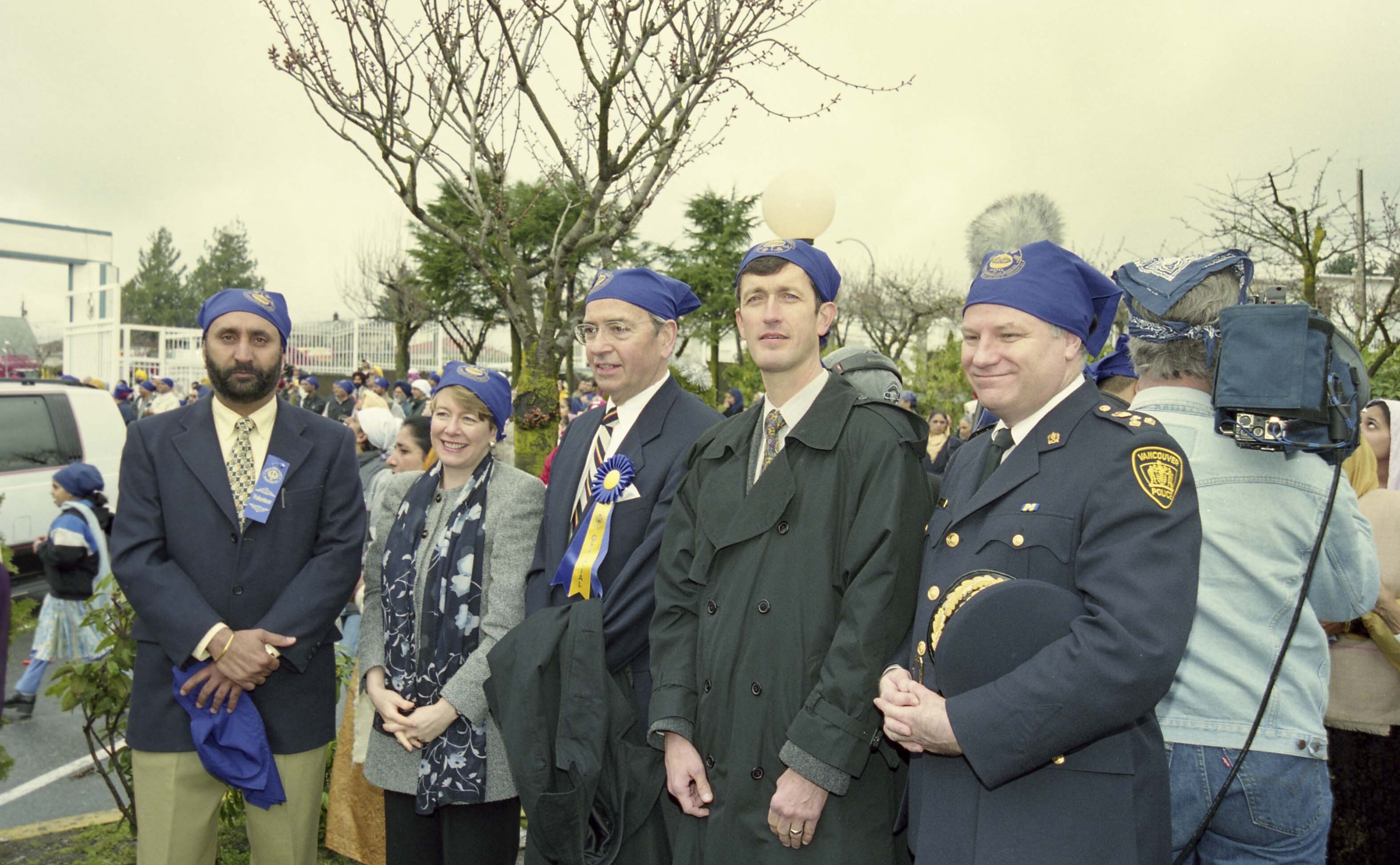
Photograph of a group of unidentified individuals at the Vaisakhi Nagar Kirtan held in Vancouver, British Columbia (B.C.). Among the group are Bruce Chambers and Philip Owen.
Bruce Chambers was born in St. Catherines, Ontario, and began his policing career at 18 with the Niagara Regional Police in 1967. After two years as the Chief of the Thunder Bay police, he became the chief constable of the Vancouver Police Department in 1997. During his time as chief, property crime declined by 43%, commercial break-ins by 43%, and residential break-ins by 22%. The city hosted the Asian Pacific Economic Conference, which became the largest security operation of its kind in Canada. In 1997, Chief Chambers became the first police chief in Canada to walk in a Pride Parade. Chambers came to the VPD with a bachelor of arts degree and a BA in business administration from Brock University, and a master's in business administration from the University of Toronto. Relations between the Chief and senior members of the VPD deteriorated over many different issues, including his leadership style. In June of 1999, the Vancouver Police Board did not renew Chief Chamber's contract.
Philip Owen (1933 - 2021) was a former City of Vancouver Mayor, City Councillor, Park Board Commissioner, and entrepreneur. Philip Owen was Vancouver's 36th mayor from 1993 to 2002, making him one of the city's longest serving mayors. Born and raised in Vancouver, he completed his education at Prince of Wales Secondary School and later New York University. Before entering Vancouver politics, he was the manager at Eaton's West Vancouver department store in his 20s' and by his 30s' he was an independent entrepreneur with a fabric business in Vancouver, Victoria, and New York. During his tenure as mayor, Owen was most noted for his championing of drug policy reform. Owen led the implementation of the "Four Pillars" drug strategy during the peak of the HIV epidemic and overdose crisis in the 1990s, a novel strategy pioneered in Switzerland representing a tectonic shift from treating substance use as a criminal justice issue towards a public health approach. His efforts helped lead to the establishment of Insite, North America's first sanctioned safe injection site.
Vaisakhi is one of the most important festivals in Sikhi, marking the formation of the Khalsa in 1699 by the tenth guru, Guru Gobind Singh Ji. It is a time of renewal, gratitude, and unity, celebrated with processions, prayers, and acts of service. Beyond its significance in Sikh history, Vaisakhi is also a harvest festival in Punjab, observed with joy and thanksgiving. Additionally, Vaisakhi holds special significance for Hindus, as it marks the beginning of the solar new year and is celebrated in various regions of India under different names, such as Pohela Boishakh in Bengal and Puthandu in Tamil Nadu.
The Khalsa Diwan Society of Vancouver oversees the Vaisakhi celebrations in Vancouver. The Khalsa Diwan Society is a pioneer Sikh society, one of the oldest in Vancouver, formed on July 22, 1902 in British Columbia, Canada, formally established in 1906. In 1908, the Society purchased and built the first Sikh temple in Vancouver, which was located on West 2nd Avenue. This is believed to be the first Sikh temple in the whole of the American continent. This temple served the Sikh community until a new temple was occupied on April 25, 1970. The original temple was sold to build a bigger (present) temple located on Ross Street. The Khalsa Diwan Society has been a pioneer in raising Sikhi related issues and getting recognition for Sikhs in Canada. It continues to build a strong community based on Sikh values and principles. Every year the society organizes sports activities, including soccer and wrestling tournaments.
Bruce Chambers was born in St. Catherines, Ontario, and began his policing career at 18 with the Niagara Regional Police in 1967. After two years as the Chief of the Thunder Bay police, he became the chief constable of the Vancouver Police Department in 1997. During his time as chief, property crime declined by 43%, commercial break-ins by 43%, and residential break-ins by 22%. The city hosted the Asian Pacific Economic Conference, which became the largest security operation of its kind in Canada. In 1997, Chief Chambers became the first police chief in Canada to walk in a Pride Parade. Chambers came to the VPD with a bachelor of arts degree and a BA in business administration from Brock University, and a master's in business administration from the University of Toronto. Relations between the Chief and senior members of the VPD deteriorated over many different issues, including his leadership style. In June of 1999, the Vancouver Police Board did not renew Chief Chamber's contract.
Philip Owen (1933 - 2021) was a former City of Vancouver Mayor, City Councillor, Park Board Commissioner, and entrepreneur. Philip Owen was Vancouver's 36th mayor from 1993 to 2002, making him one of the city's longest serving mayors. Born and raised in Vancouver, he completed his education at Prince of Wales Secondary School and later New York University. Before entering Vancouver politics, he was the manager at Eaton's West Vancouver department store in his 20s' and by his 30s' he was an independent entrepreneur with a fabric business in Vancouver, Victoria, and New York. During his tenure as mayor, Owen was most noted for his championing of drug policy reform. Owen led the implementation of the "Four Pillars" drug strategy during the peak of the HIV epidemic and overdose crisis in the 1990s, a novel strategy pioneered in Switzerland representing a tectonic shift from treating substance use as a criminal justice issue towards a public health approach. His efforts helped lead to the establishment of Insite, North America's first sanctioned safe injection site.
Vaisakhi is one of the most important festivals in Sikhi, marking the formation of the Khalsa in 1699 by the tenth guru, Guru Gobind Singh Ji. It is a time of renewal, gratitude, and unity, celebrated with processions, prayers, and acts of service. Beyond its significance in Sikh history, Vaisakhi is also a harvest festival in Punjab, observed with joy and thanksgiving. Additionally, Vaisakhi holds special significance for Hindus, as it marks the beginning of the solar new year and is celebrated in various regions of India under different names, such as Pohela Boishakh in Bengal and Puthandu in Tamil Nadu.
The Khalsa Diwan Society of Vancouver oversees the Vaisakhi celebrations in Vancouver. The Khalsa Diwan Society is a pioneer Sikh society, one of the oldest in Vancouver, formed on July 22, 1902 in British Columbia, Canada, formally established in 1906. In 1908, the Society purchased and built the first Sikh temple in Vancouver, which was located on West 2nd Avenue. This is believed to be the first Sikh temple in the whole of the American continent. This temple served the Sikh community until a new temple was occupied on April 25, 1970. The original temple was sold to build a bigger (present) temple located on Ross Street. The Khalsa Diwan Society has been a pioneer in raising Sikhi related issues and getting recognition for Sikhs in Canada. It continues to build a strong community based on Sikh values and principles. Every year the society organizes sports activities, including soccer and wrestling tournaments.
Member of
Creator: Bodalia, Chandra
Description
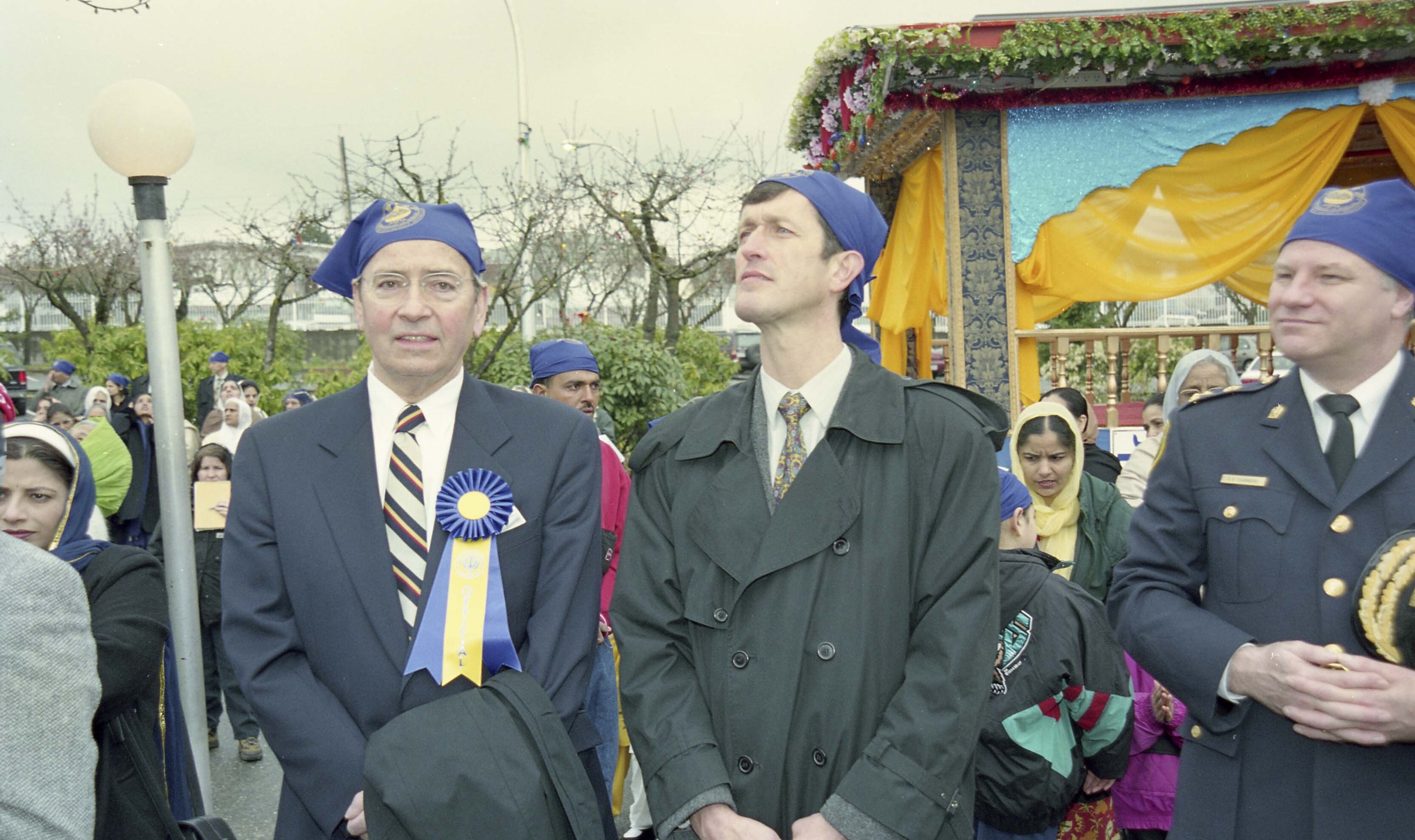
Photograph of a group of unidentified individuals at the Vaisakhi Nagar Kirtan held in Vancouver, British Columbia (B.C.). Among the group are Bruce Chambers and Philip Owen.
Bruce Chambers was born in St. Catherines, Ontario, and began his policing career at 18 with the Niagara Regional Police in 1967. After two years as the Chief of the Thunder Bay police, he became the chief constable of the Vancouver Police Department in 1997. During his time as chief, property crime declined by 43%, commercial break-ins by 43%, and residential break-ins by 22%. The city hosted the Asian Pacific Economic Conference, which became the largest security operation of its kind in Canada. In 1997, Chief Chambers became the first police chief in Canada to walk in a Pride Parade. Chambers came to the VPD with a bachelor of arts degree and a BA in business administration from Brock University, and a master's in business administration from the University of Toronto. Relations between the Chief and senior members of the VPD deteriorated over many different issues, including his leadership style. In June of 1999, the Vancouver Police Board did not renew Chief Chamber's contract.
Philip Owen (1933 - 2021) was a former City of Vancouver Mayor, City Councillor, Park Board Commissioner, and entrepreneur. Philip Owen was Vancouver's 36th mayor from 1993 to 2002, making him one of the city's longest serving mayors. Born and raised in Vancouver, he completed his education at Prince of Wales Secondary School and later New York University. Before entering Vancouver politics, he was the manager at Eaton's West Vancouver department store in his 20s' and by his 30s' he was an independent entrepreneur with a fabric business in Vancouver, Victoria, and New York. During his tenure as mayor, Owen was most noted for his championing of drug policy reform. Owen led the implementation of the "Four Pillars" drug strategy during the peak of the HIV epidemic and overdose crisis in the 1990s, a novel strategy pioneered in Switzerland representing a tectonic shift from treating substance use as a criminal justice issue towards a public health approach. His efforts helped lead to the establishment of Insite, North America's first sanctioned safe injection site.
Vaisakhi is one of the most important festivals in Sikhi, marking the formation of the Khalsa in 1699 by the tenth guru, Guru Gobind Singh Ji. It is a time of renewal, gratitude, and unity, celebrated with processions, prayers, and acts of service. Beyond its significance in Sikh history, Vaisakhi is also a harvest festival in Punjab, observed with joy and thanksgiving. Additionally, Vaisakhi holds special significance for Hindus, as it marks the beginning of the solar new year and is celebrated in various regions of India under different names, such as Pohela Boishakh in Bengal and Puthandu in Tamil Nadu.
The Khalsa Diwan Society of Vancouver oversees the Vaisakhi celebrations in Vancouver. The Khalsa Diwan Society is a pioneer Sikh society, one of the oldest in Vancouver, formed on July 22, 1902 in British Columbia, Canada, formally established in 1906. In 1908, the Society purchased and built the first Sikh temple in Vancouver, which was located on West 2nd Avenue. This is believed to be the first Sikh temple in the whole of the American continent. This temple served the Sikh community until a new temple was occupied on April 25, 1970. The original temple was sold to build a bigger (present) temple located on Ross Street. The Khalsa Diwan Society has been a pioneer in raising Sikhi related issues and getting recognition for Sikhs in Canada. It continues to build a strong community based on Sikh values and principles. Every year the society organizes sports activities, including soccer and wrestling tournaments.
Bruce Chambers was born in St. Catherines, Ontario, and began his policing career at 18 with the Niagara Regional Police in 1967. After two years as the Chief of the Thunder Bay police, he became the chief constable of the Vancouver Police Department in 1997. During his time as chief, property crime declined by 43%, commercial break-ins by 43%, and residential break-ins by 22%. The city hosted the Asian Pacific Economic Conference, which became the largest security operation of its kind in Canada. In 1997, Chief Chambers became the first police chief in Canada to walk in a Pride Parade. Chambers came to the VPD with a bachelor of arts degree and a BA in business administration from Brock University, and a master's in business administration from the University of Toronto. Relations between the Chief and senior members of the VPD deteriorated over many different issues, including his leadership style. In June of 1999, the Vancouver Police Board did not renew Chief Chamber's contract.
Philip Owen (1933 - 2021) was a former City of Vancouver Mayor, City Councillor, Park Board Commissioner, and entrepreneur. Philip Owen was Vancouver's 36th mayor from 1993 to 2002, making him one of the city's longest serving mayors. Born and raised in Vancouver, he completed his education at Prince of Wales Secondary School and later New York University. Before entering Vancouver politics, he was the manager at Eaton's West Vancouver department store in his 20s' and by his 30s' he was an independent entrepreneur with a fabric business in Vancouver, Victoria, and New York. During his tenure as mayor, Owen was most noted for his championing of drug policy reform. Owen led the implementation of the "Four Pillars" drug strategy during the peak of the HIV epidemic and overdose crisis in the 1990s, a novel strategy pioneered in Switzerland representing a tectonic shift from treating substance use as a criminal justice issue towards a public health approach. His efforts helped lead to the establishment of Insite, North America's first sanctioned safe injection site.
Vaisakhi is one of the most important festivals in Sikhi, marking the formation of the Khalsa in 1699 by the tenth guru, Guru Gobind Singh Ji. It is a time of renewal, gratitude, and unity, celebrated with processions, prayers, and acts of service. Beyond its significance in Sikh history, Vaisakhi is also a harvest festival in Punjab, observed with joy and thanksgiving. Additionally, Vaisakhi holds special significance for Hindus, as it marks the beginning of the solar new year and is celebrated in various regions of India under different names, such as Pohela Boishakh in Bengal and Puthandu in Tamil Nadu.
The Khalsa Diwan Society of Vancouver oversees the Vaisakhi celebrations in Vancouver. The Khalsa Diwan Society is a pioneer Sikh society, one of the oldest in Vancouver, formed on July 22, 1902 in British Columbia, Canada, formally established in 1906. In 1908, the Society purchased and built the first Sikh temple in Vancouver, which was located on West 2nd Avenue. This is believed to be the first Sikh temple in the whole of the American continent. This temple served the Sikh community until a new temple was occupied on April 25, 1970. The original temple was sold to build a bigger (present) temple located on Ross Street. The Khalsa Diwan Society has been a pioneer in raising Sikhi related issues and getting recognition for Sikhs in Canada. It continues to build a strong community based on Sikh values and principles. Every year the society organizes sports activities, including soccer and wrestling tournaments.

Member of
Creator: Bodalia, Chandra
Description
Photograph of a group of unidentified individuals at the Vaisakhi Nagar Kirtan held in Vancouver, British Columbia (B.C.). Among the group are Bruce Chambers and Philip Owen.
Bruce Chambers was born in St. Catherines, Ontario, and began his policing career at 18 with the Niagara Regional Police in 1967. After two years as the Chief of the Thunder Bay police, he became the chief constable of the Vancouver Police Department in 1997. During his time as chief, property crime declined by 43%, commercial break-ins by 43%, and residential break-ins by 22%. The city hosted the Asian Pacific Economic Conference, which became the largest security operation of its kind in Canada. In 1997, Chief Chambers became the first police chief in Canada to walk in a Pride Parade. Chambers came to the VPD with a bachelor of arts degree and a BA in business administration from Brock University, and a master's in business administration from the University of Toronto. Relations between the Chief and senior members of the VPD deteriorated over many different issues, including his leadership style. In June of 1999, the Vancouver Police Board did not renew Chief Chamber's contract.
Philip Owen (1933 - 2021) was a former City of Vancouver Mayor, City Councillor, Park Board Commissioner, and entrepreneur. Philip Owen was Vancouver's 36th mayor from 1993 to 2002, making him one of the city's longest serving mayors. Born and raised in Vancouver, he completed his education at Prince of Wales Secondary School and later New York University. Before entering Vancouver politics, he was the manager at Eaton's West Vancouver department store in his 20s' and by his 30s' he was an independent entrepreneur with a fabric business in Vancouver, Victoria, and New York. During his tenure as mayor, Owen was most noted for his championing of drug policy reform. Owen led the implementation of the "Four Pillars" drug strategy during the peak of the HIV epidemic and overdose crisis in the 1990s, a novel strategy pioneered in Switzerland representing a tectonic shift from treating substance use as a criminal justice issue towards a public health approach. His efforts helped lead to the establishment of Insite, North America's first sanctioned safe injection site.
Vaisakhi is one of the most important festivals in Sikhi, marking the formation of the Khalsa in 1699 by the tenth guru, Guru Gobind Singh Ji. It is a time of renewal, gratitude, and unity, celebrated with processions, prayers, and acts of service. Beyond its significance in Sikh history, Vaisakhi is also a harvest festival in Punjab, observed with joy and thanksgiving. Additionally, Vaisakhi holds special significance for Hindus, as it marks the beginning of the solar new year and is celebrated in various regions of India under different names, such as Pohela Boishakh in Bengal and Puthandu in Tamil Nadu.
The Khalsa Diwan Society of Vancouver oversees the Vaisakhi celebrations in Vancouver. The Khalsa Diwan Society is a pioneer Sikh society, one of the oldest in Vancouver, formed on July 22, 1902 in British Columbia, Canada, formally established in 1906. In 1908, the Society purchased and built the first Sikh temple in Vancouver, which was located on West 2nd Avenue. This is believed to be the first Sikh temple in the whole of the American continent. This temple served the Sikh community until a new temple was occupied on April 25, 1970. The original temple was sold to build a bigger (present) temple located on Ross Street. The Khalsa Diwan Society has been a pioneer in raising Sikhi related issues and getting recognition for Sikhs in Canada. It continues to build a strong community based on Sikh values and principles. Every year the society organizes sports activities, including soccer and wrestling tournaments.
Bruce Chambers was born in St. Catherines, Ontario, and began his policing career at 18 with the Niagara Regional Police in 1967. After two years as the Chief of the Thunder Bay police, he became the chief constable of the Vancouver Police Department in 1997. During his time as chief, property crime declined by 43%, commercial break-ins by 43%, and residential break-ins by 22%. The city hosted the Asian Pacific Economic Conference, which became the largest security operation of its kind in Canada. In 1997, Chief Chambers became the first police chief in Canada to walk in a Pride Parade. Chambers came to the VPD with a bachelor of arts degree and a BA in business administration from Brock University, and a master's in business administration from the University of Toronto. Relations between the Chief and senior members of the VPD deteriorated over many different issues, including his leadership style. In June of 1999, the Vancouver Police Board did not renew Chief Chamber's contract.
Philip Owen (1933 - 2021) was a former City of Vancouver Mayor, City Councillor, Park Board Commissioner, and entrepreneur. Philip Owen was Vancouver's 36th mayor from 1993 to 2002, making him one of the city's longest serving mayors. Born and raised in Vancouver, he completed his education at Prince of Wales Secondary School and later New York University. Before entering Vancouver politics, he was the manager at Eaton's West Vancouver department store in his 20s' and by his 30s' he was an independent entrepreneur with a fabric business in Vancouver, Victoria, and New York. During his tenure as mayor, Owen was most noted for his championing of drug policy reform. Owen led the implementation of the "Four Pillars" drug strategy during the peak of the HIV epidemic and overdose crisis in the 1990s, a novel strategy pioneered in Switzerland representing a tectonic shift from treating substance use as a criminal justice issue towards a public health approach. His efforts helped lead to the establishment of Insite, North America's first sanctioned safe injection site.
Vaisakhi is one of the most important festivals in Sikhi, marking the formation of the Khalsa in 1699 by the tenth guru, Guru Gobind Singh Ji. It is a time of renewal, gratitude, and unity, celebrated with processions, prayers, and acts of service. Beyond its significance in Sikh history, Vaisakhi is also a harvest festival in Punjab, observed with joy and thanksgiving. Additionally, Vaisakhi holds special significance for Hindus, as it marks the beginning of the solar new year and is celebrated in various regions of India under different names, such as Pohela Boishakh in Bengal and Puthandu in Tamil Nadu.
The Khalsa Diwan Society of Vancouver oversees the Vaisakhi celebrations in Vancouver. The Khalsa Diwan Society is a pioneer Sikh society, one of the oldest in Vancouver, formed on July 22, 1902 in British Columbia, Canada, formally established in 1906. In 1908, the Society purchased and built the first Sikh temple in Vancouver, which was located on West 2nd Avenue. This is believed to be the first Sikh temple in the whole of the American continent. This temple served the Sikh community until a new temple was occupied on April 25, 1970. The original temple was sold to build a bigger (present) temple located on Ross Street. The Khalsa Diwan Society has been a pioneer in raising Sikhi related issues and getting recognition for Sikhs in Canada. It continues to build a strong community based on Sikh values and principles. Every year the society organizes sports activities, including soccer and wrestling tournaments.
Member of
Creator: Bodalia, Chandra
Description
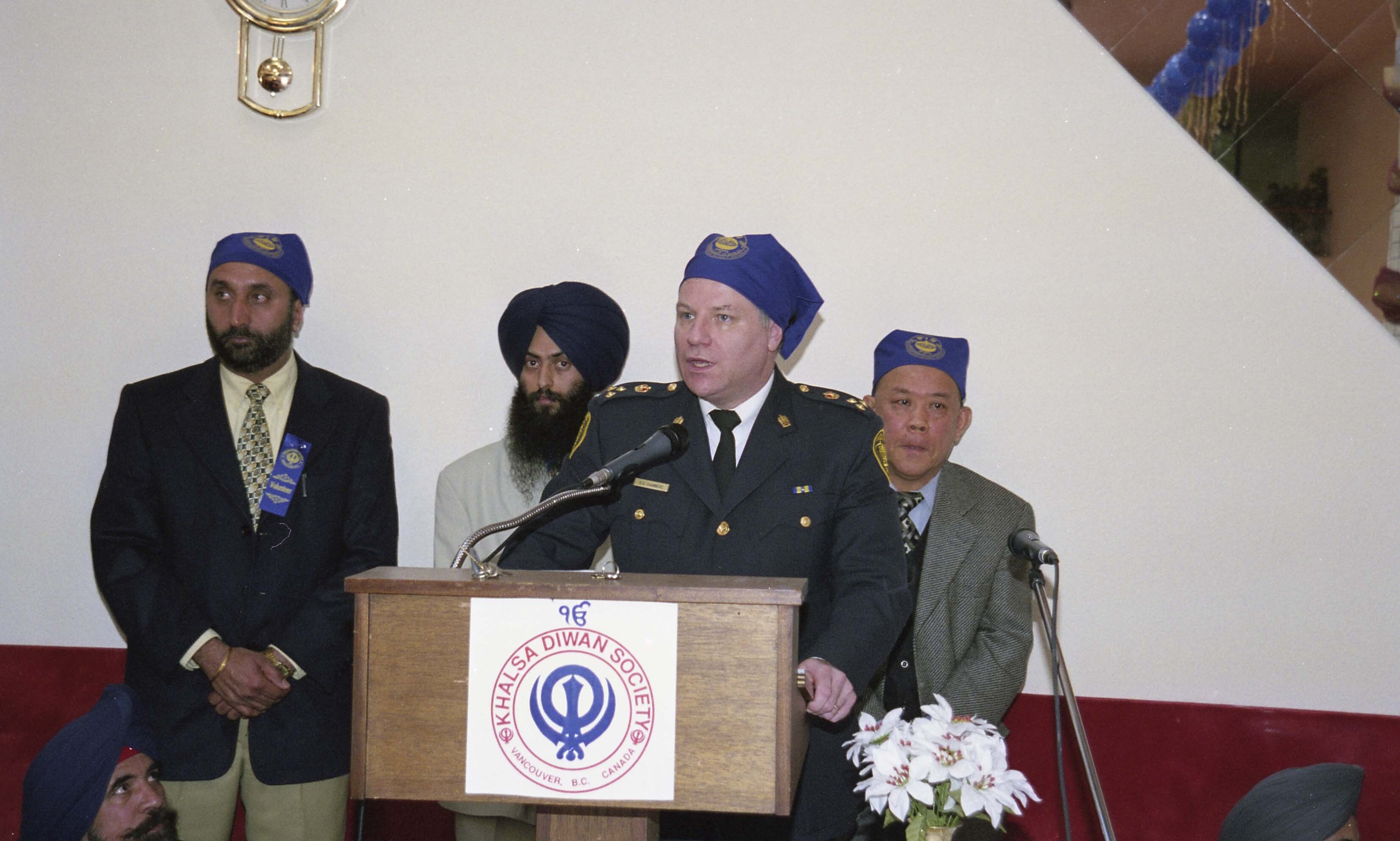
Photograph of Bruce Chambers addressing the audience at the Sikh Temple (gurdwara) located in Vancouver, British Columbia (B.C.). Individuals had gathered at the Sikh Temple for the Vaisakhi Nagar Kirtan, an annual event hosted and organized by the Khalsa Diwan Society in Vancouver.
Bruce Chambers was born in St. Catherines, Ontario, and began his policing career at 18 with the Niagara Regional Police in 1967. After two years as the Chief of the Thunder Bay police, he became the chief constable of the Vancouver Police Department in 1997. During his time as chief, property crime declined by 43%, commercial break-ins by 43%, and residential break-ins by 22%. The city hosted the Asian Pacific Economic Conference, which became the largest security operation of its kind in Canada. In 1997, Chief Chambers became the first police chief in Canada to walk in a Pride Parade. Chambers came to the VPD with a bachelor of arts degree and a BA in business administration from Brock University, and a master's in business administration from the University of Toronto. Relations between the Chief and senior members of the VPD deteriorated over many different issues, including his leadership style. In June of 1999, the Vancouver Police Board did not renew Chief Chamber's contract.
Vaisakhi is one of the most important festivals in Sikhi, marking the formation of the Khalsa in 1699 by the tenth guru, Guru Gobind Singh Ji. It is a time of renewal, gratitude, and unity, celebrated with processions, prayers, and acts of service. Beyond its significance in Sikh history, Vaisakhi is also a harvest festival in Punjab, observed with joy and thanksgiving. Additionally, Vaisakhi holds special significance for Hindus, as it marks the beginning of the solar new year and is celebrated in various regions of India under different names, such as Pohela Boishakh in Bengal and Puthandu in Tamil Nadu.
The Khalsa Diwan Society of Vancouver oversees the Vaisakhi celebrations in Vancouver. The Khalsa Diwan Society is a pioneer Sikh society, one of the oldest in Vancouver, formed on July 22, 1902 in British Columbia, Canada, formally established in 1906. In 1908, the Society purchased and built the first Sikh temple in Vancouver, which was located on West 2nd Avenue. This is believed to be the first Sikh temple in the whole of the American continent. This temple served the Sikh community until a new temple was occupied on April 25, 1970. The original temple was sold to build a bigger (present) temple located on Ross Street. The Khalsa Diwan Society has been a pioneer in raising Sikhi related issues and getting recognition for Sikhs in Canada. It continues to build a strong community based on Sikh values and principles. Every year the society organizes sports activities, including soccer and wrestling tournaments.
Bruce Chambers was born in St. Catherines, Ontario, and began his policing career at 18 with the Niagara Regional Police in 1967. After two years as the Chief of the Thunder Bay police, he became the chief constable of the Vancouver Police Department in 1997. During his time as chief, property crime declined by 43%, commercial break-ins by 43%, and residential break-ins by 22%. The city hosted the Asian Pacific Economic Conference, which became the largest security operation of its kind in Canada. In 1997, Chief Chambers became the first police chief in Canada to walk in a Pride Parade. Chambers came to the VPD with a bachelor of arts degree and a BA in business administration from Brock University, and a master's in business administration from the University of Toronto. Relations between the Chief and senior members of the VPD deteriorated over many different issues, including his leadership style. In June of 1999, the Vancouver Police Board did not renew Chief Chamber's contract.
Vaisakhi is one of the most important festivals in Sikhi, marking the formation of the Khalsa in 1699 by the tenth guru, Guru Gobind Singh Ji. It is a time of renewal, gratitude, and unity, celebrated with processions, prayers, and acts of service. Beyond its significance in Sikh history, Vaisakhi is also a harvest festival in Punjab, observed with joy and thanksgiving. Additionally, Vaisakhi holds special significance for Hindus, as it marks the beginning of the solar new year and is celebrated in various regions of India under different names, such as Pohela Boishakh in Bengal and Puthandu in Tamil Nadu.
The Khalsa Diwan Society of Vancouver oversees the Vaisakhi celebrations in Vancouver. The Khalsa Diwan Society is a pioneer Sikh society, one of the oldest in Vancouver, formed on July 22, 1902 in British Columbia, Canada, formally established in 1906. In 1908, the Society purchased and built the first Sikh temple in Vancouver, which was located on West 2nd Avenue. This is believed to be the first Sikh temple in the whole of the American continent. This temple served the Sikh community until a new temple was occupied on April 25, 1970. The original temple was sold to build a bigger (present) temple located on Ross Street. The Khalsa Diwan Society has been a pioneer in raising Sikhi related issues and getting recognition for Sikhs in Canada. It continues to build a strong community based on Sikh values and principles. Every year the society organizes sports activities, including soccer and wrestling tournaments.
Member of
Creator: Bodalia, Chandra
Description
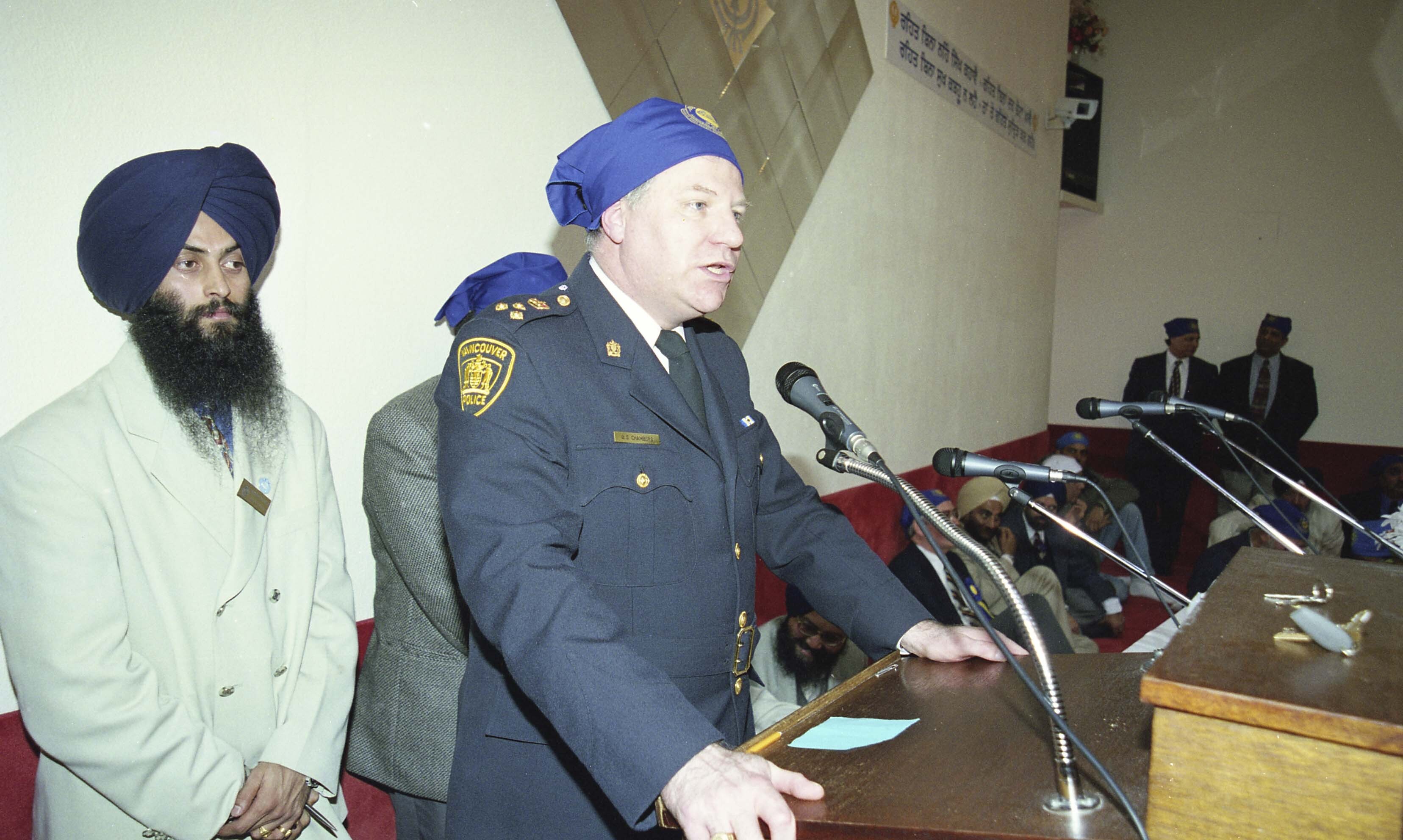
Photograph of Bruce Chambers addressing the audience at the Sikh Temple (gurdwara) located in Vancouver, British Columbia (B.C.). Individuals had gathered at the Sikh Temple for the Vaisakhi Nagar Kirtan, an annual event hosted and organized by the Khalsa Diwan Society in Vancouver.
Bruce Chambers was born in St. Catherines, Ontario, and began his policing career at 18 with the Niagara Regional Police in 1967. After two years as the Chief of the Thunder Bay police, he became the chief constable of the Vancouver Police Department in 1997. During his time as chief, property crime declined by 43%, commercial break-ins by 43%, and residential break-ins by 22%. The city hosted the Asian Pacific Economic Conference, which became the largest security operation of its kind in Canada. In 1997, Chief Chambers became the first police chief in Canada to walk in a Pride Parade. Chambers came to the VPD with a bachelor of arts degree and a BA in business administration from Brock University, and a master's in business administration from the University of Toronto. Relations between the Chief and senior members of the VPD deteriorated over many different issues, including his leadership style. In June of 1999, the Vancouver Police Board did not renew Chief Chamber's contract.
Vaisakhi is one of the most important festivals in Sikhi, marking the formation of the Khalsa in 1699 by the tenth guru, Guru Gobind Singh Ji. It is a time of renewal, gratitude, and unity, celebrated with processions, prayers, and acts of service. Beyond its significance in Sikh history, Vaisakhi is also a harvest festival in Punjab, observed with joy and thanksgiving. Additionally, Vaisakhi holds special significance for Hindus, as it marks the beginning of the solar new year and is celebrated in various regions of India under different names, such as Pohela Boishakh in Bengal and Puthandu in Tamil Nadu.
The Khalsa Diwan Society of Vancouver oversees the Vaisakhi celebrations in Vancouver. The Khalsa Diwan Society is a pioneer Sikh society, one of the oldest in Vancouver, formed on July 22, 1902 in British Columbia, Canada, formally established in 1906. In 1908, the Society purchased and built the first Sikh temple in Vancouver, which was located on West 2nd Avenue. This is believed to be the first Sikh temple in the whole of the American continent. This temple served the Sikh community until a new temple was occupied on April 25, 1970. The original temple was sold to build a bigger (present) temple located on Ross Street. The Khalsa Diwan Society has been a pioneer in raising Sikhi related issues and getting recognition for Sikhs in Canada. It continues to build a strong community based on Sikh values and principles. Every year the society organizes sports activities, including soccer and wrestling tournaments.
Bruce Chambers was born in St. Catherines, Ontario, and began his policing career at 18 with the Niagara Regional Police in 1967. After two years as the Chief of the Thunder Bay police, he became the chief constable of the Vancouver Police Department in 1997. During his time as chief, property crime declined by 43%, commercial break-ins by 43%, and residential break-ins by 22%. The city hosted the Asian Pacific Economic Conference, which became the largest security operation of its kind in Canada. In 1997, Chief Chambers became the first police chief in Canada to walk in a Pride Parade. Chambers came to the VPD with a bachelor of arts degree and a BA in business administration from Brock University, and a master's in business administration from the University of Toronto. Relations between the Chief and senior members of the VPD deteriorated over many different issues, including his leadership style. In June of 1999, the Vancouver Police Board did not renew Chief Chamber's contract.
Vaisakhi is one of the most important festivals in Sikhi, marking the formation of the Khalsa in 1699 by the tenth guru, Guru Gobind Singh Ji. It is a time of renewal, gratitude, and unity, celebrated with processions, prayers, and acts of service. Beyond its significance in Sikh history, Vaisakhi is also a harvest festival in Punjab, observed with joy and thanksgiving. Additionally, Vaisakhi holds special significance for Hindus, as it marks the beginning of the solar new year and is celebrated in various regions of India under different names, such as Pohela Boishakh in Bengal and Puthandu in Tamil Nadu.
The Khalsa Diwan Society of Vancouver oversees the Vaisakhi celebrations in Vancouver. The Khalsa Diwan Society is a pioneer Sikh society, one of the oldest in Vancouver, formed on July 22, 1902 in British Columbia, Canada, formally established in 1906. In 1908, the Society purchased and built the first Sikh temple in Vancouver, which was located on West 2nd Avenue. This is believed to be the first Sikh temple in the whole of the American continent. This temple served the Sikh community until a new temple was occupied on April 25, 1970. The original temple was sold to build a bigger (present) temple located on Ross Street. The Khalsa Diwan Society has been a pioneer in raising Sikhi related issues and getting recognition for Sikhs in Canada. It continues to build a strong community based on Sikh values and principles. Every year the society organizes sports activities, including soccer and wrestling tournaments.