
Gatka
Member of
Creator: Bodalia, Chandra
Description
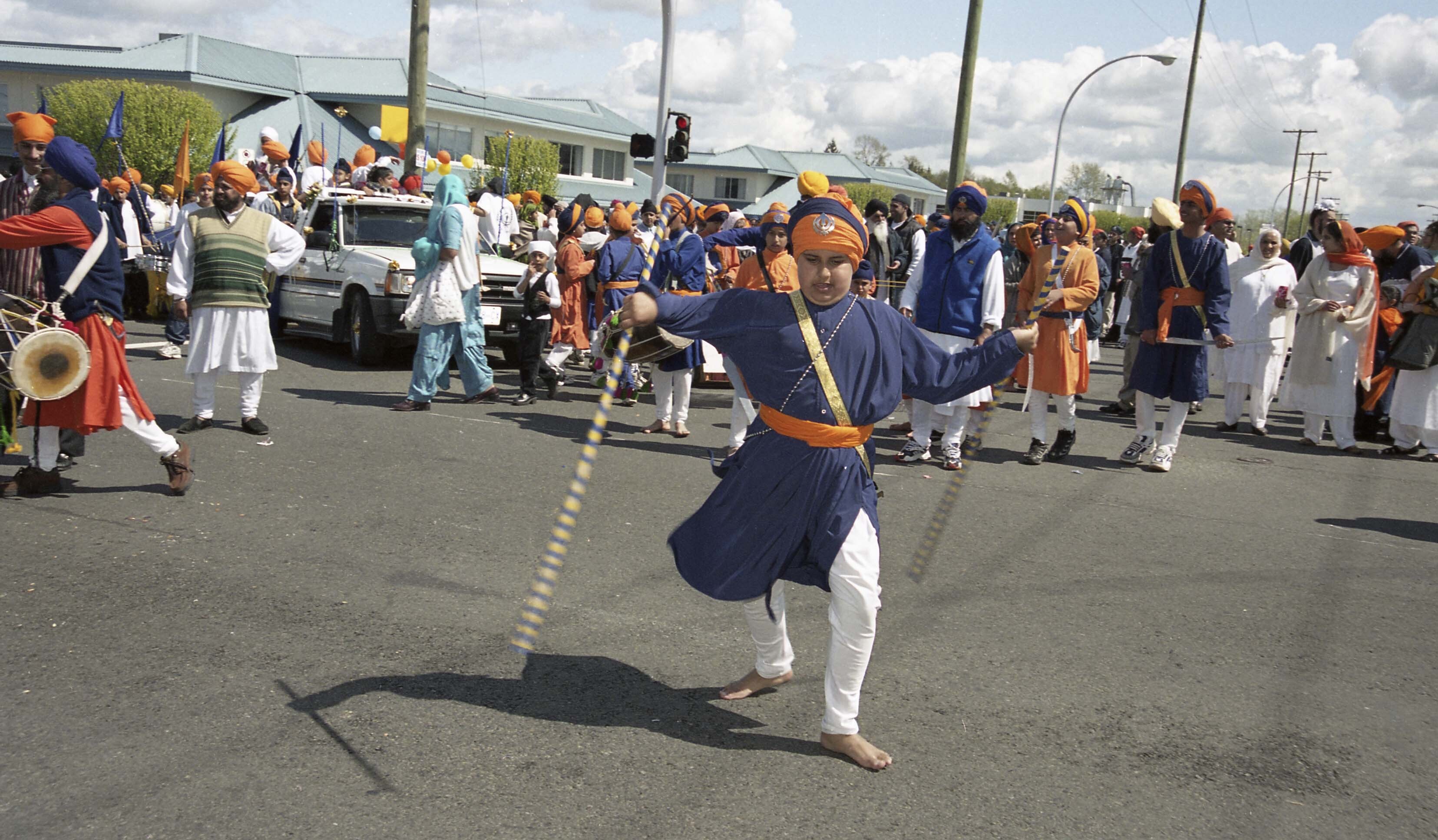
Photograph of an unidentified individual performing gatka at the Vaisakhi Nagar Kirtan held in Surrey, British Columbia (B.C.).
Gatka is a traditional form of Sikh martial arts. It involves the use of various weapons, including swords, spears, shields, and sticks, and is practiced as a means of physical, mental, and spiritual training. Today, gatka is practiced as a form of physical exercise and spiritual discipline, as well as a way to preserve Sikh heritage and culture. It is often performed during festivals and other cultural events.
Vaisakhi is one of the most important festivals in Sikhi, marking the formation of the Khalsa in 1699 by the tenth guru, Guru Gobind Singh Ji. It is a time of renewal, gratitude, and unity, celebrated with processions, prayers, and acts of service. Beyond its significance in Sikh history, Vaisakhi is also a harvest festival in Punjab, observed with joy and thanksgiving. Additionally, Vaisakhi holds special significance for Hindus, as it marks the beginning of the solar new year and is celebrated in various regions of India under different names, such as Pohela Boishakh in Bengal and Puthandu in Tamil Nadu.
Gatka is a traditional form of Sikh martial arts. It involves the use of various weapons, including swords, spears, shields, and sticks, and is practiced as a means of physical, mental, and spiritual training. Today, gatka is practiced as a form of physical exercise and spiritual discipline, as well as a way to preserve Sikh heritage and culture. It is often performed during festivals and other cultural events.
Vaisakhi is one of the most important festivals in Sikhi, marking the formation of the Khalsa in 1699 by the tenth guru, Guru Gobind Singh Ji. It is a time of renewal, gratitude, and unity, celebrated with processions, prayers, and acts of service. Beyond its significance in Sikh history, Vaisakhi is also a harvest festival in Punjab, observed with joy and thanksgiving. Additionally, Vaisakhi holds special significance for Hindus, as it marks the beginning of the solar new year and is celebrated in various regions of India under different names, such as Pohela Boishakh in Bengal and Puthandu in Tamil Nadu.
Member of
Creator: Bodalia, Chandra
Description
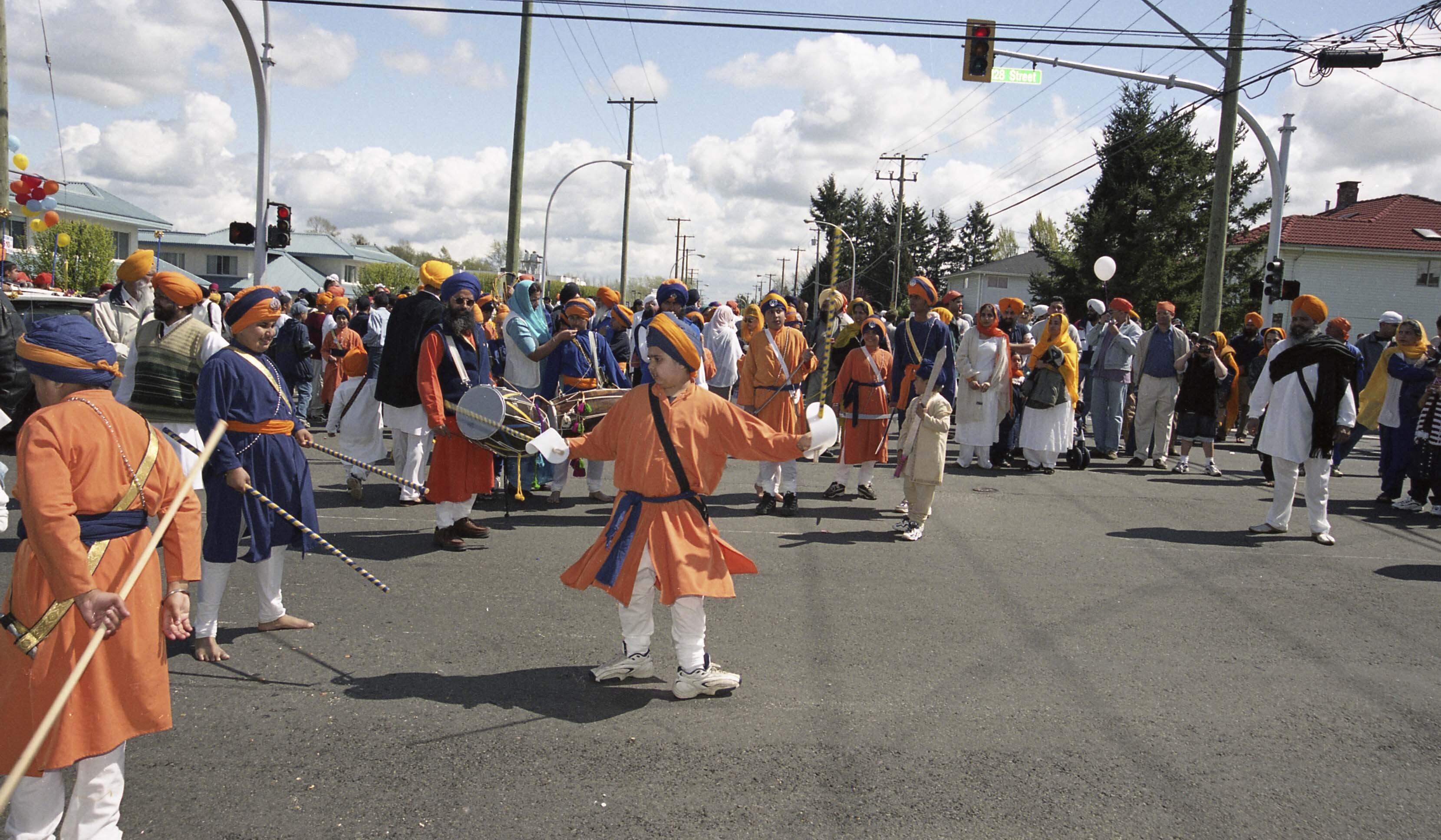
Photograph of unidentified individuals performing gatka at the Vaisakhi Nagar Kirtan held in Surrey, British Columbia (B.C.).
Gatka is a traditional form of Sikh martial arts. It involves the use of various weapons, including swords, spears, shields, and sticks, and is practiced as a means of physical, mental, and spiritual training. Today, gatka is practiced as a form of physical exercise and spiritual discipline, as well as a way to preserve Sikh heritage and culture. It is often performed during festivals and other cultural events.
Vaisakhi is one of the most important festivals in Sikhi, marking the formation of the Khalsa in 1699 by the tenth guru, Guru Gobind Singh Ji. It is a time of renewal, gratitude, and unity, celebrated with processions, prayers, and acts of service. Beyond its significance in Sikh history, Vaisakhi is also a harvest festival in Punjab, observed with joy and thanksgiving. Additionally, Vaisakhi holds special significance for Hindus, as it marks the beginning of the solar new year and is celebrated in various regions of India under different names, such as Pohela Boishakh in Bengal and Puthandu in Tamil Nadu.
Gatka is a traditional form of Sikh martial arts. It involves the use of various weapons, including swords, spears, shields, and sticks, and is practiced as a means of physical, mental, and spiritual training. Today, gatka is practiced as a form of physical exercise and spiritual discipline, as well as a way to preserve Sikh heritage and culture. It is often performed during festivals and other cultural events.
Vaisakhi is one of the most important festivals in Sikhi, marking the formation of the Khalsa in 1699 by the tenth guru, Guru Gobind Singh Ji. It is a time of renewal, gratitude, and unity, celebrated with processions, prayers, and acts of service. Beyond its significance in Sikh history, Vaisakhi is also a harvest festival in Punjab, observed with joy and thanksgiving. Additionally, Vaisakhi holds special significance for Hindus, as it marks the beginning of the solar new year and is celebrated in various regions of India under different names, such as Pohela Boishakh in Bengal and Puthandu in Tamil Nadu.
Member of
Creator: Bodalia, Chandra
Description
Photograph of an unidentified individual performing gatka at the Vaisakhi Nagar Kirtan which took place in Vancouver, British Columbia (B.C.). The Vaisakhi Nagar Kirtan is an annual event which takes place in Vancouver and is organized by the Khalsa Diwan Society of Vancouver.
Gatka is a traditional form of Sikh martial arts. It involves the use of various weapons, including swords, spears, shields, and sticks, and is practiced as a means of physical, mental, and spiritual training. Today, gatka is practiced as a form of physical exercise and spiritual discipline, as well as a way to preserve Sikh heritage and culture. It is often performed during festivals and other cultural events.
Vaisakhi is one of the most important festivals in Sikhi, marking the formation of the Khalsa in 1699 by the tenth guru, Guru Gobind Singh Ji. It is a time of renewal, gratitude, and unity, celebrated with processions, prayers, and acts of service. Beyond its significance in Sikh history, Vaisakhi is also a harvest festival in Punjab, observed with joy and thanksgiving. Additionally, Vaisakhi holds special significance for Hindus, as it marks the beginning of the solar new year and is celebrated in various regions of India under different names, such as Pohela Boishakh in Bengal and Puthandu in Tamil Nadu.
The Khalsa Diwan Society of Vancouver oversees the Vaisakhi celebrations in Vancouver. The Khalsa Diwan Society is a pioneer Sikh society, one of the oldest in Vancouver, formed on July 22, 1902 in British Columbia, Canada, formally established in 1906. In 1908, the Society purchased and built the first Sikh temple in Vancouver, which was located on West 2nd Avenue. This is believed to be the first Sikh temple in the whole of the American continent. This temple served the Sikh community until a new temple was occupied on April 25, 1970. The original temple was sold to build a bigger (present) temple located on Ross Street. The Khalsa Diwan Society has been a pioneer in raising Sikhi related issues and getting recognition for Sikhs in Canada. It continues to build a strong community based on Sikh values and principles. Every year the society organizes sports activities, including soccer and wrestling tournaments.
Gatka is a traditional form of Sikh martial arts. It involves the use of various weapons, including swords, spears, shields, and sticks, and is practiced as a means of physical, mental, and spiritual training. Today, gatka is practiced as a form of physical exercise and spiritual discipline, as well as a way to preserve Sikh heritage and culture. It is often performed during festivals and other cultural events.
Vaisakhi is one of the most important festivals in Sikhi, marking the formation of the Khalsa in 1699 by the tenth guru, Guru Gobind Singh Ji. It is a time of renewal, gratitude, and unity, celebrated with processions, prayers, and acts of service. Beyond its significance in Sikh history, Vaisakhi is also a harvest festival in Punjab, observed with joy and thanksgiving. Additionally, Vaisakhi holds special significance for Hindus, as it marks the beginning of the solar new year and is celebrated in various regions of India under different names, such as Pohela Boishakh in Bengal and Puthandu in Tamil Nadu.
The Khalsa Diwan Society of Vancouver oversees the Vaisakhi celebrations in Vancouver. The Khalsa Diwan Society is a pioneer Sikh society, one of the oldest in Vancouver, formed on July 22, 1902 in British Columbia, Canada, formally established in 1906. In 1908, the Society purchased and built the first Sikh temple in Vancouver, which was located on West 2nd Avenue. This is believed to be the first Sikh temple in the whole of the American continent. This temple served the Sikh community until a new temple was occupied on April 25, 1970. The original temple was sold to build a bigger (present) temple located on Ross Street. The Khalsa Diwan Society has been a pioneer in raising Sikhi related issues and getting recognition for Sikhs in Canada. It continues to build a strong community based on Sikh values and principles. Every year the society organizes sports activities, including soccer and wrestling tournaments.
Member of
Creator: Bodalia, Chandra
Description
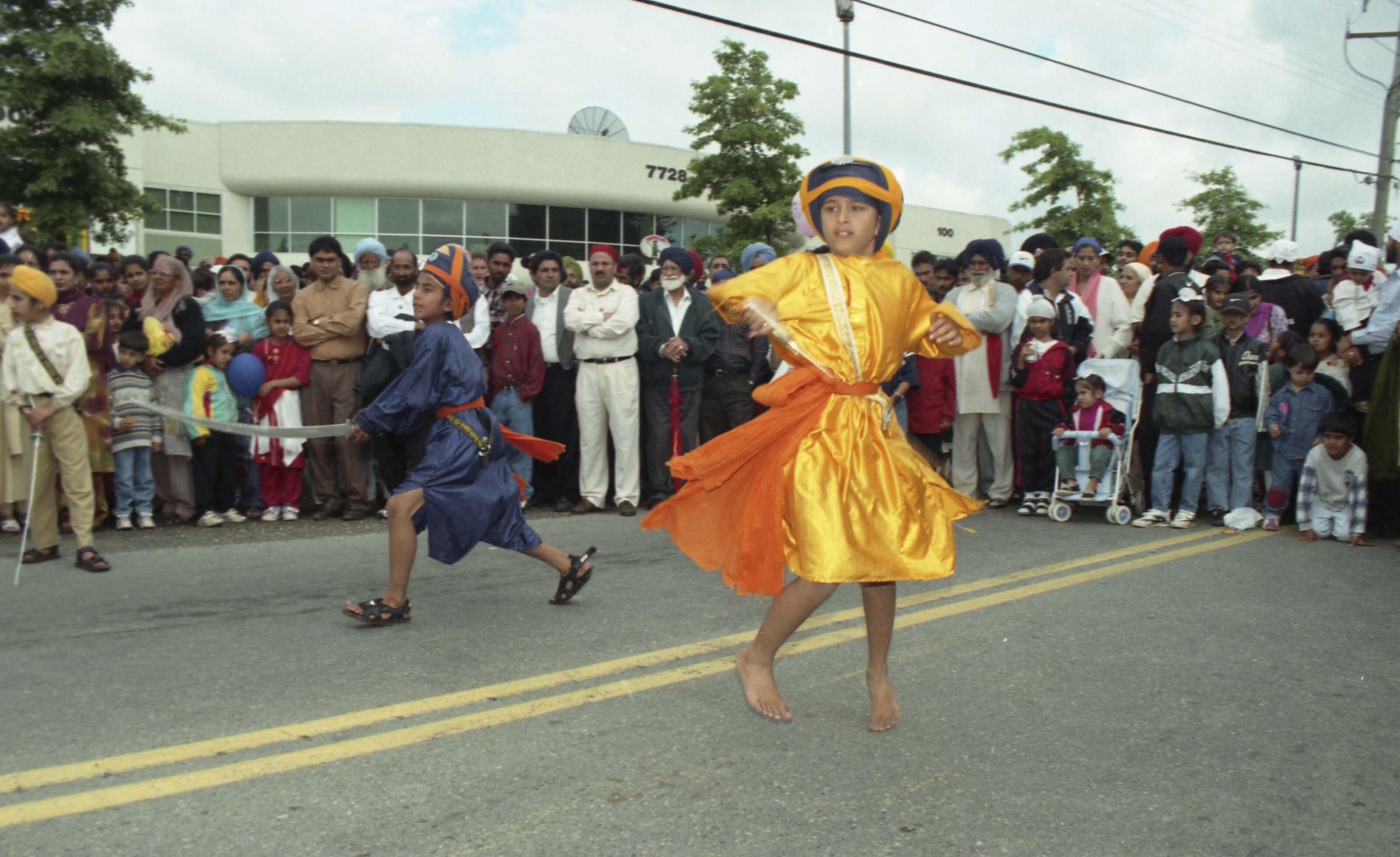
Photograph of unidentified individuals performing gatka at the Miri Piri Nagar Kirtan which took place in Surrey, British Columbia (B.C.). The Miri Piri Nagar Kirtan is an annual event which takes place in Surrey and is organized by the Guru Nanak Sikh Gurdwara (Temple).
Gatka is a traditional form of Sikh martial arts. It involves the use of various weapons, including swords, spears, shields, and sticks, and is practiced as a means of physical, mental, and spiritual training. Today, gatka is practiced as a form of physical exercise and spiritual discipline, as well as a way to preserve Sikh heritage and culture. It is often performed during festivals and other cultural events.
The concept of Miri Piri, introduced by the sixth Sikh Guru, Guru Hargobind Sahib, represents the union of political (Miri) and spiritual (Piri) authority, symbolized by two swords.The Sikh community commemorates Guru Hargobind Sahib's legacy with parades, where participants carry signs reflecting his teachings. Individuals along the route serve food, embodying the Sikh principles of service and community.
The Guru Nanak Sikh Gurdwara (Temple) was established in the early 1970s, one of the oldest gurdwaras in North America. The gurdwara (temple) is located in Surrey, B.C., and provides a wide range of programs, including, Sikh religious programs, social, sports, women's and children's programs. The Gurdwara has a Panjabi language school as well as a television show and regularly undertakes Sikh youth seminars and workshops.
Gatka is a traditional form of Sikh martial arts. It involves the use of various weapons, including swords, spears, shields, and sticks, and is practiced as a means of physical, mental, and spiritual training. Today, gatka is practiced as a form of physical exercise and spiritual discipline, as well as a way to preserve Sikh heritage and culture. It is often performed during festivals and other cultural events.
The concept of Miri Piri, introduced by the sixth Sikh Guru, Guru Hargobind Sahib, represents the union of political (Miri) and spiritual (Piri) authority, symbolized by two swords.The Sikh community commemorates Guru Hargobind Sahib's legacy with parades, where participants carry signs reflecting his teachings. Individuals along the route serve food, embodying the Sikh principles of service and community.
The Guru Nanak Sikh Gurdwara (Temple) was established in the early 1970s, one of the oldest gurdwaras in North America. The gurdwara (temple) is located in Surrey, B.C., and provides a wide range of programs, including, Sikh religious programs, social, sports, women's and children's programs. The Gurdwara has a Panjabi language school as well as a television show and regularly undertakes Sikh youth seminars and workshops.
Member of
Creator: Bodalia, Chandra
Description
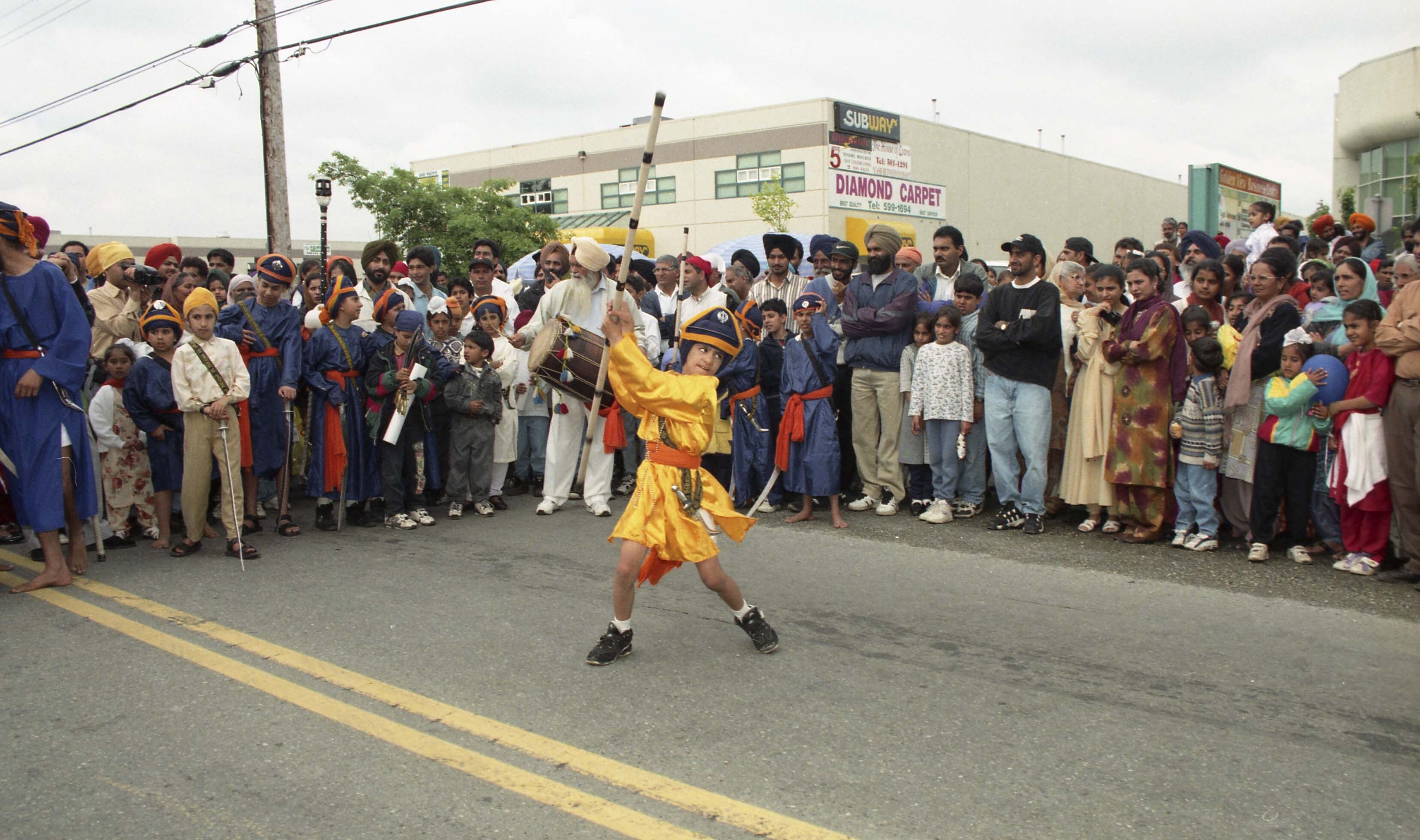
Photograph of an unidentified individual performing gatka at the Miri Piri Nagar Kirtan which took place in Surrey, British Columbia (B.C.). The Miri Piri Nagar Kirtan is an annual event which takes place in Surrey and is organized by the Guru Nanak Sikh Gurdwara (Temple).
Gatka is a traditional form of Sikh martial arts. It involves the use of various weapons, including swords, spears, shields, and sticks, and is practiced as a means of physical, mental, and spiritual training. Today, gatka is practiced as a form of physical exercise and spiritual discipline, as well as a way to preserve Sikh heritage and culture. It is often performed during festivals and other cultural events.
The concept of Miri Piri, introduced by the sixth Sikh Guru, Guru Hargobind Sahib, represents the union of political (Miri) and spiritual (Piri) authority, symbolized by two swords.The Sikh community commemorates Guru Hargobind Sahib's legacy with parades, where participants carry signs reflecting his teachings. Individuals along the route serve food, embodying the Sikh principles of service and community.
The Guru Nanak Sikh Gurdwara (Temple) was established in the early 1970s, one of the oldest gurdwaras in North America. The gurdwara (temple) is located in Surrey, B.C., and provides a wide range of programs, including, Sikh religious programs, social, sports, women's and children's programs. The Gurdwara has a Panjabi language school as well as a television show and regularly undertakes Sikh youth seminars and workshops.
Gatka is a traditional form of Sikh martial arts. It involves the use of various weapons, including swords, spears, shields, and sticks, and is practiced as a means of physical, mental, and spiritual training. Today, gatka is practiced as a form of physical exercise and spiritual discipline, as well as a way to preserve Sikh heritage and culture. It is often performed during festivals and other cultural events.
The concept of Miri Piri, introduced by the sixth Sikh Guru, Guru Hargobind Sahib, represents the union of political (Miri) and spiritual (Piri) authority, symbolized by two swords.The Sikh community commemorates Guru Hargobind Sahib's legacy with parades, where participants carry signs reflecting his teachings. Individuals along the route serve food, embodying the Sikh principles of service and community.
The Guru Nanak Sikh Gurdwara (Temple) was established in the early 1970s, one of the oldest gurdwaras in North America. The gurdwara (temple) is located in Surrey, B.C., and provides a wide range of programs, including, Sikh religious programs, social, sports, women's and children's programs. The Gurdwara has a Panjabi language school as well as a television show and regularly undertakes Sikh youth seminars and workshops.
Member of
Creator: Bodalia, Chandra
Description
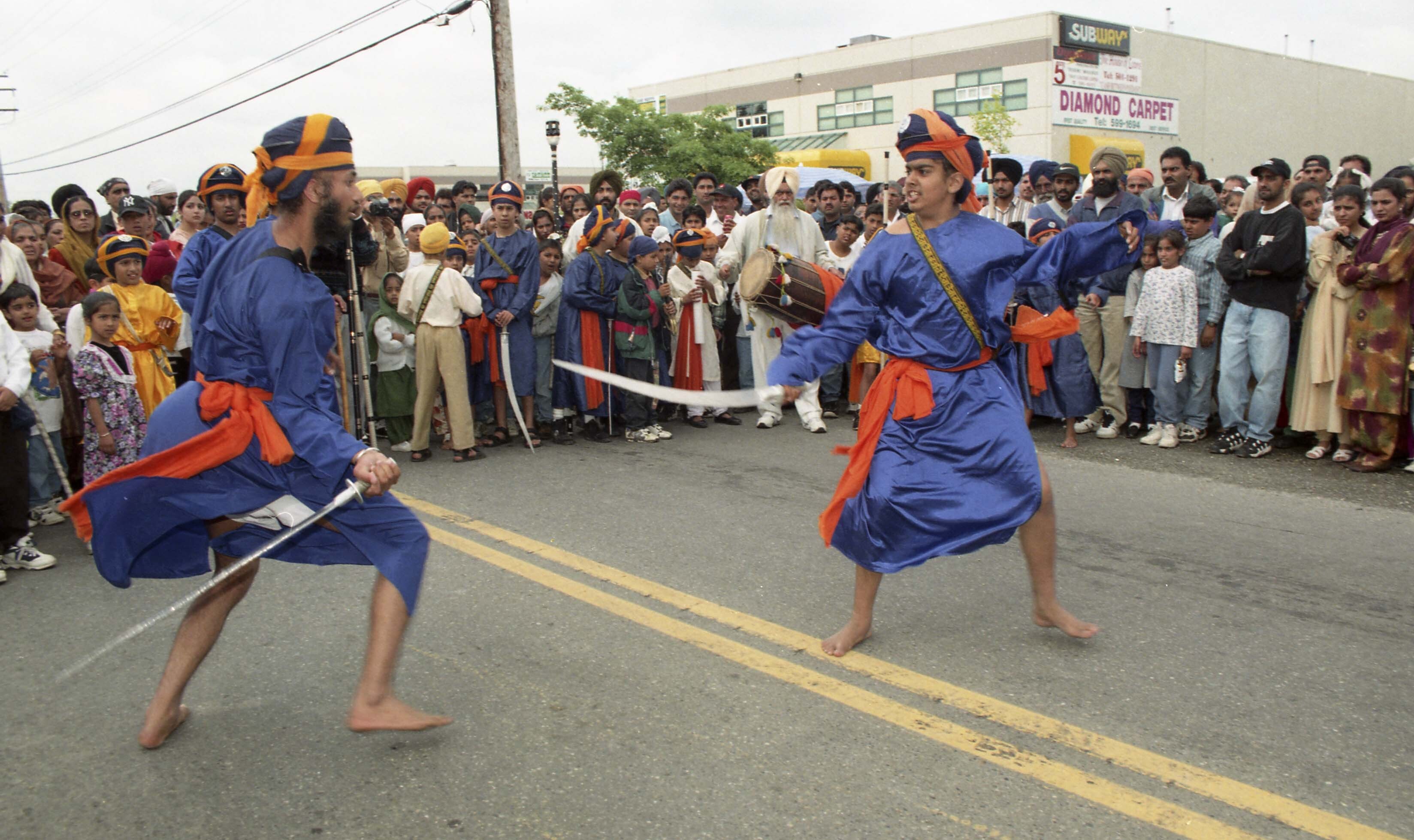
Photograph of unidentified individuals performing gatka at the Miri Piri Nagar Kirtan which took place in Surrey, British Columbia (B.C.). The Miri Piri Nagar Kirtan is an annual event which takes place in Surrey and is organized by the Guru Nanak Sikh Gurdwara (Temple).
Gatka is a traditional form of Sikh martial arts. It involves the use of various weapons, including swords, spears, shields, and sticks, and is practiced as a means of physical, mental, and spiritual training. Today, gatka is practiced as a form of physical exercise and spiritual discipline, as well as a way to preserve Sikh heritage and culture. It is often performed during festivals and other cultural events.
The concept of Miri Piri, introduced by the sixth Sikh Guru, Guru Hargobind Sahib, represents the union of political (Miri) and spiritual (Piri) authority, symbolized by two swords.The Sikh community commemorates Guru Hargobind Sahib's legacy with parades, where participants carry signs reflecting his teachings. Individuals along the route serve food, embodying the Sikh principles of service and community.
The Guru Nanak Sikh Gurdwara (Temple) was established in the early 1970s, one of the oldest gurdwaras in North America. The gurdwara (temple) is located in Surrey, B.C., and provides a wide range of programs, including, Sikh religious programs, social, sports, women's and children's programs. The Gurdwara has a Panjabi language school as well as a television show and regularly undertakes Sikh youth seminars and workshops.
Gatka is a traditional form of Sikh martial arts. It involves the use of various weapons, including swords, spears, shields, and sticks, and is practiced as a means of physical, mental, and spiritual training. Today, gatka is practiced as a form of physical exercise and spiritual discipline, as well as a way to preserve Sikh heritage and culture. It is often performed during festivals and other cultural events.
The concept of Miri Piri, introduced by the sixth Sikh Guru, Guru Hargobind Sahib, represents the union of political (Miri) and spiritual (Piri) authority, symbolized by two swords.The Sikh community commemorates Guru Hargobind Sahib's legacy with parades, where participants carry signs reflecting his teachings. Individuals along the route serve food, embodying the Sikh principles of service and community.
The Guru Nanak Sikh Gurdwara (Temple) was established in the early 1970s, one of the oldest gurdwaras in North America. The gurdwara (temple) is located in Surrey, B.C., and provides a wide range of programs, including, Sikh religious programs, social, sports, women's and children's programs. The Gurdwara has a Panjabi language school as well as a television show and regularly undertakes Sikh youth seminars and workshops.
Member of
Creator: Bodalia, Chandra
Description
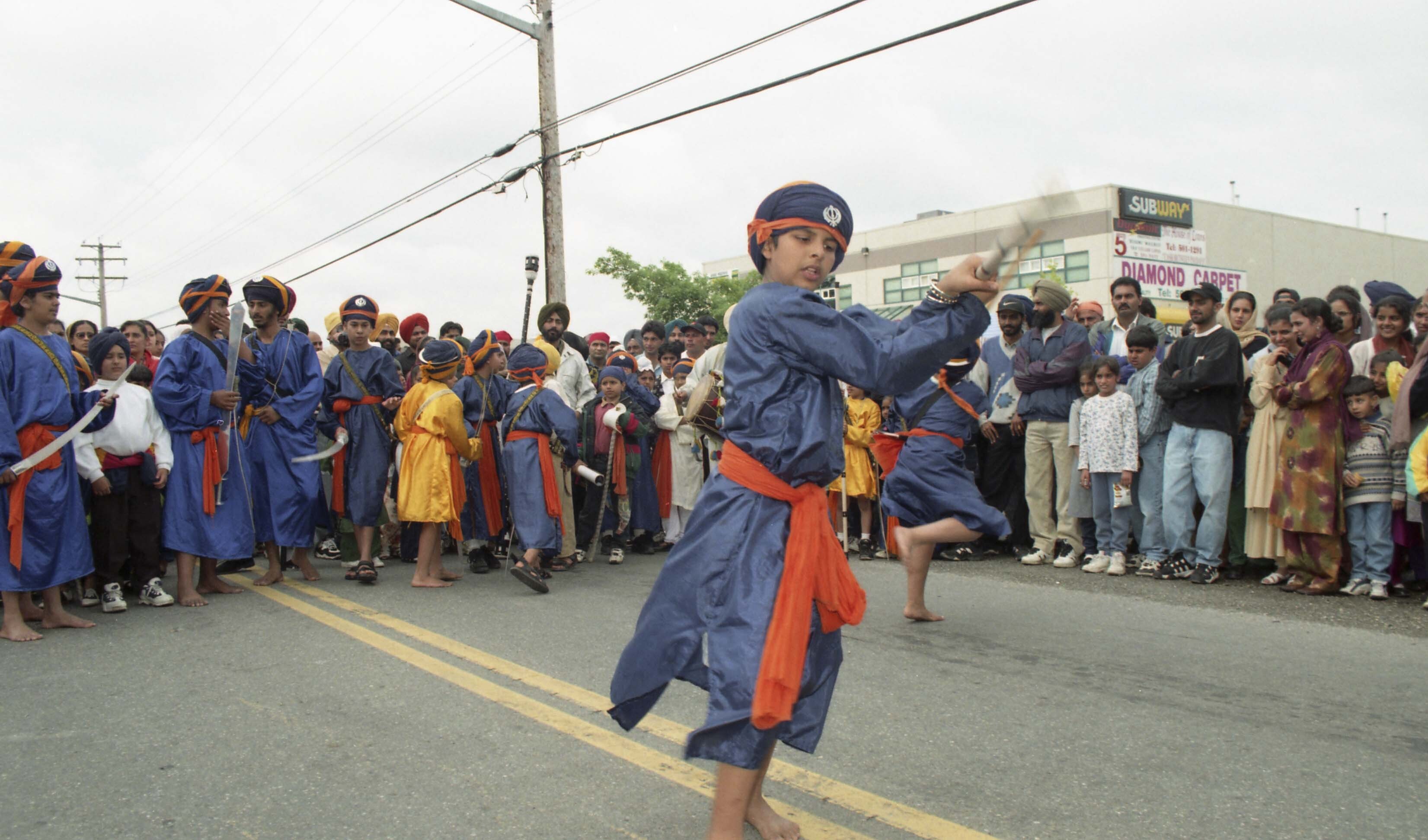
Photograph of an unidentified individual performing gatka at the Miri Piri Nagar Kirtan which took place in Surrey, British Columbia (B.C.). The Miri Piri Nagar Kirtan is an annual event which takes place in Surrey and is organized by the Guru Nanak Sikh Gurdwara (Temple).
Gatka is a traditional form of Sikh martial arts. It involves the use of various weapons, including swords, spears, shields, and sticks, and is practiced as a means of physical, mental, and spiritual training. Today, gatka is practiced as a form of physical exercise and spiritual discipline, as well as a way to preserve Sikh heritage and culture. It is often performed during festivals and other cultural events.
The concept of Miri Piri, introduced by the sixth Sikh Guru, Guru Hargobind Sahib, represents the union of political (Miri) and spiritual (Piri) authority, symbolized by two swords.The Sikh community commemorates Guru Hargobind Sahib's legacy with parades, where participants carry signs reflecting his teachings. Individuals along the route serve food, embodying the Sikh principles of service and community.
The Guru Nanak Sikh Gurdwara (Temple) was established in the early 1970s, one of the oldest gurdwaras in North America. The gurdwara (temple) is located in Surrey, B.C., and provides a wide range of programs, including, Sikh religious programs, social, sports, women's and children's programs. The Gurdwara has a Panjabi language school as well as a television show and regularly undertakes Sikh youth seminars and workshops.
Gatka is a traditional form of Sikh martial arts. It involves the use of various weapons, including swords, spears, shields, and sticks, and is practiced as a means of physical, mental, and spiritual training. Today, gatka is practiced as a form of physical exercise and spiritual discipline, as well as a way to preserve Sikh heritage and culture. It is often performed during festivals and other cultural events.
The concept of Miri Piri, introduced by the sixth Sikh Guru, Guru Hargobind Sahib, represents the union of political (Miri) and spiritual (Piri) authority, symbolized by two swords.The Sikh community commemorates Guru Hargobind Sahib's legacy with parades, where participants carry signs reflecting his teachings. Individuals along the route serve food, embodying the Sikh principles of service and community.
The Guru Nanak Sikh Gurdwara (Temple) was established in the early 1970s, one of the oldest gurdwaras in North America. The gurdwara (temple) is located in Surrey, B.C., and provides a wide range of programs, including, Sikh religious programs, social, sports, women's and children's programs. The Gurdwara has a Panjabi language school as well as a television show and regularly undertakes Sikh youth seminars and workshops.
Member of
Creator: Bodalia, Chandra
Description
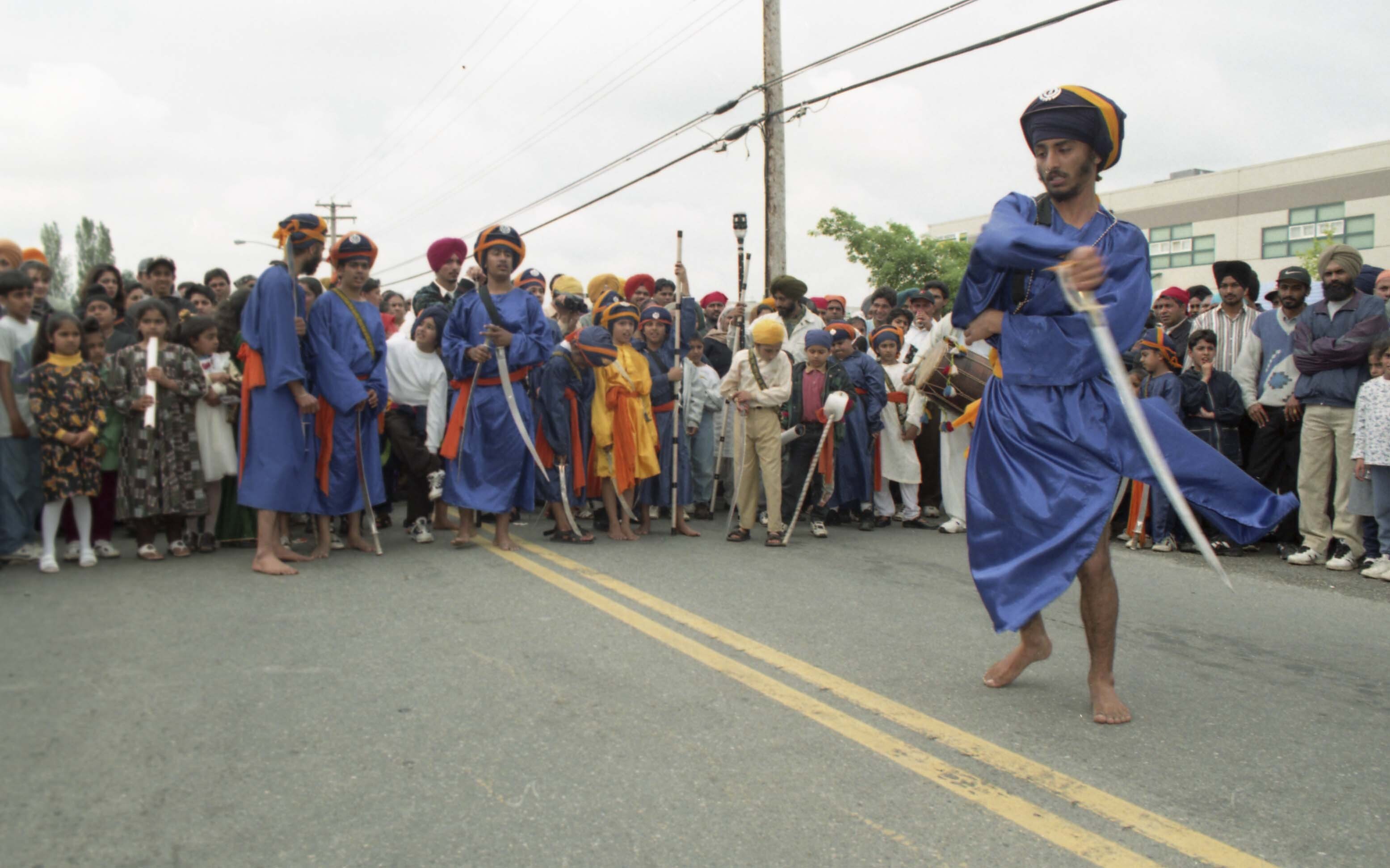
Photograph of an unidentified individual performing gatka at the Miri Piri Nagar Kirtan which took place in Surrey, British Columbia (B.C.). The Miri Piri Nagar Kirtan is an annual event which takes place in Surrey and is organized by the Guru Nanak Sikh Gurdwara (Temple).
Gatka is a traditional form of Sikh martial arts. It involves the use of various weapons, including swords, spears, shields, and sticks, and is practiced as a means of physical, mental, and spiritual training. Today, gatka is practiced as a form of physical exercise and spiritual discipline, as well as a way to preserve Sikh heritage and culture. It is often performed during festivals and other cultural events.
The concept of Miri Piri, introduced by the sixth Sikh Guru, Guru Hargobind Sahib, represents the union of political (Miri) and spiritual (Piri) authority, symbolized by two swords.The Sikh community commemorates Guru Hargobind Sahib's legacy with parades, where participants carry signs reflecting his teachings. Individuals along the route serve food, embodying the Sikh principles of service and community.
The Guru Nanak Sikh Gurdwara (Temple) was established in the early 1970s, one of the oldest gurdwaras in North America. The gurdwara (temple) is located in Surrey, B.C., and provides a wide range of programs, including, Sikh religious programs, social, sports, women's and children's programs. The Gurdwara has a Panjabi language school as well as a television show and regularly undertakes Sikh youth seminars and workshops.
Gatka is a traditional form of Sikh martial arts. It involves the use of various weapons, including swords, spears, shields, and sticks, and is practiced as a means of physical, mental, and spiritual training. Today, gatka is practiced as a form of physical exercise and spiritual discipline, as well as a way to preserve Sikh heritage and culture. It is often performed during festivals and other cultural events.
The concept of Miri Piri, introduced by the sixth Sikh Guru, Guru Hargobind Sahib, represents the union of political (Miri) and spiritual (Piri) authority, symbolized by two swords.The Sikh community commemorates Guru Hargobind Sahib's legacy with parades, where participants carry signs reflecting his teachings. Individuals along the route serve food, embodying the Sikh principles of service and community.
The Guru Nanak Sikh Gurdwara (Temple) was established in the early 1970s, one of the oldest gurdwaras in North America. The gurdwara (temple) is located in Surrey, B.C., and provides a wide range of programs, including, Sikh religious programs, social, sports, women's and children's programs. The Gurdwara has a Panjabi language school as well as a television show and regularly undertakes Sikh youth seminars and workshops.
Member of
Creator: Bodalia, Chandra
Description
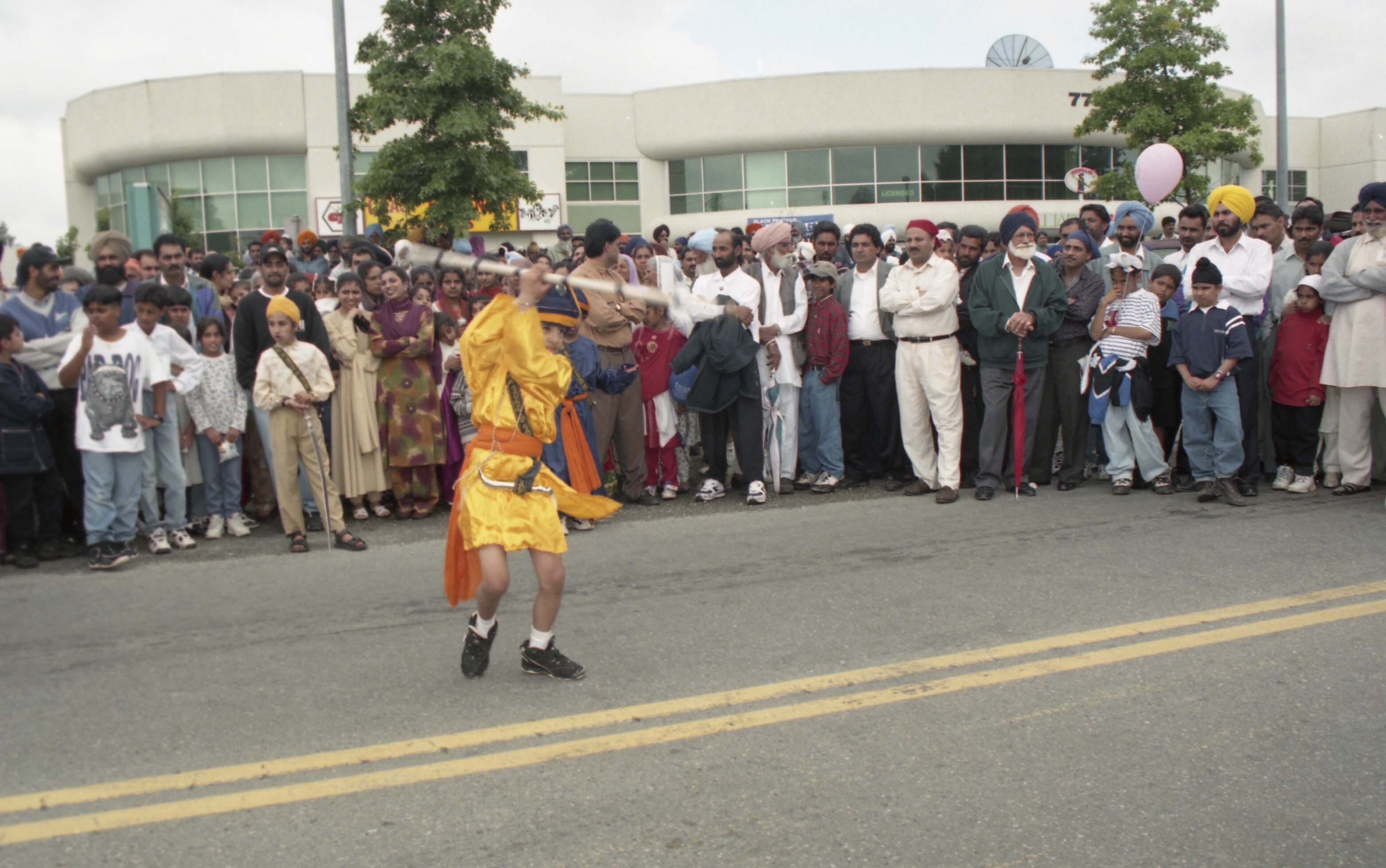
Photograph of an unidentified individual performing gatka at the Miri Piri Nagar Kirtan which took place in Surrey, British Columbia (B.C.). The Miri Piri Nagar Kirtan is an annual event which takes place in Surrey and is organized by the Guru Nanak Sikh Gurdwara (Temple).
Gatka is a traditional form of Sikh martial arts. It involves the use of various weapons, including swords, spears, shields, and sticks, and is practiced as a means of physical, mental, and spiritual training. Today, gatka is practiced as a form of physical exercise and spiritual discipline, as well as a way to preserve Sikh heritage and culture. It is often performed during festivals and other cultural events.
The concept of Miri Piri, introduced by the sixth Sikh Guru, Guru Hargobind Sahib, represents the union of political (Miri) and spiritual (Piri) authority, symbolized by two swords.The Sikh community commemorates Guru Hargobind Sahib's legacy with parades, where participants carry signs reflecting his teachings. Individuals along the route serve food, embodying the Sikh principles of service and community.
The Guru Nanak Sikh Gurdwara (Temple) was established in the early 1970s, one of the oldest gurdwaras in North America. The gurdwara (temple) is located in Surrey, B.C., and provides a wide range of programs, including, Sikh religious programs, social, sports, women's and children's programs. The Gurdwara has a Panjabi language school as well as a television show and regularly undertakes Sikh youth seminars and workshops.
Gatka is a traditional form of Sikh martial arts. It involves the use of various weapons, including swords, spears, shields, and sticks, and is practiced as a means of physical, mental, and spiritual training. Today, gatka is practiced as a form of physical exercise and spiritual discipline, as well as a way to preserve Sikh heritage and culture. It is often performed during festivals and other cultural events.
The concept of Miri Piri, introduced by the sixth Sikh Guru, Guru Hargobind Sahib, represents the union of political (Miri) and spiritual (Piri) authority, symbolized by two swords.The Sikh community commemorates Guru Hargobind Sahib's legacy with parades, where participants carry signs reflecting his teachings. Individuals along the route serve food, embodying the Sikh principles of service and community.
The Guru Nanak Sikh Gurdwara (Temple) was established in the early 1970s, one of the oldest gurdwaras in North America. The gurdwara (temple) is located in Surrey, B.C., and provides a wide range of programs, including, Sikh religious programs, social, sports, women's and children's programs. The Gurdwara has a Panjabi language school as well as a television show and regularly undertakes Sikh youth seminars and workshops.
Member of
Creator: Bodalia, Chandra
Description
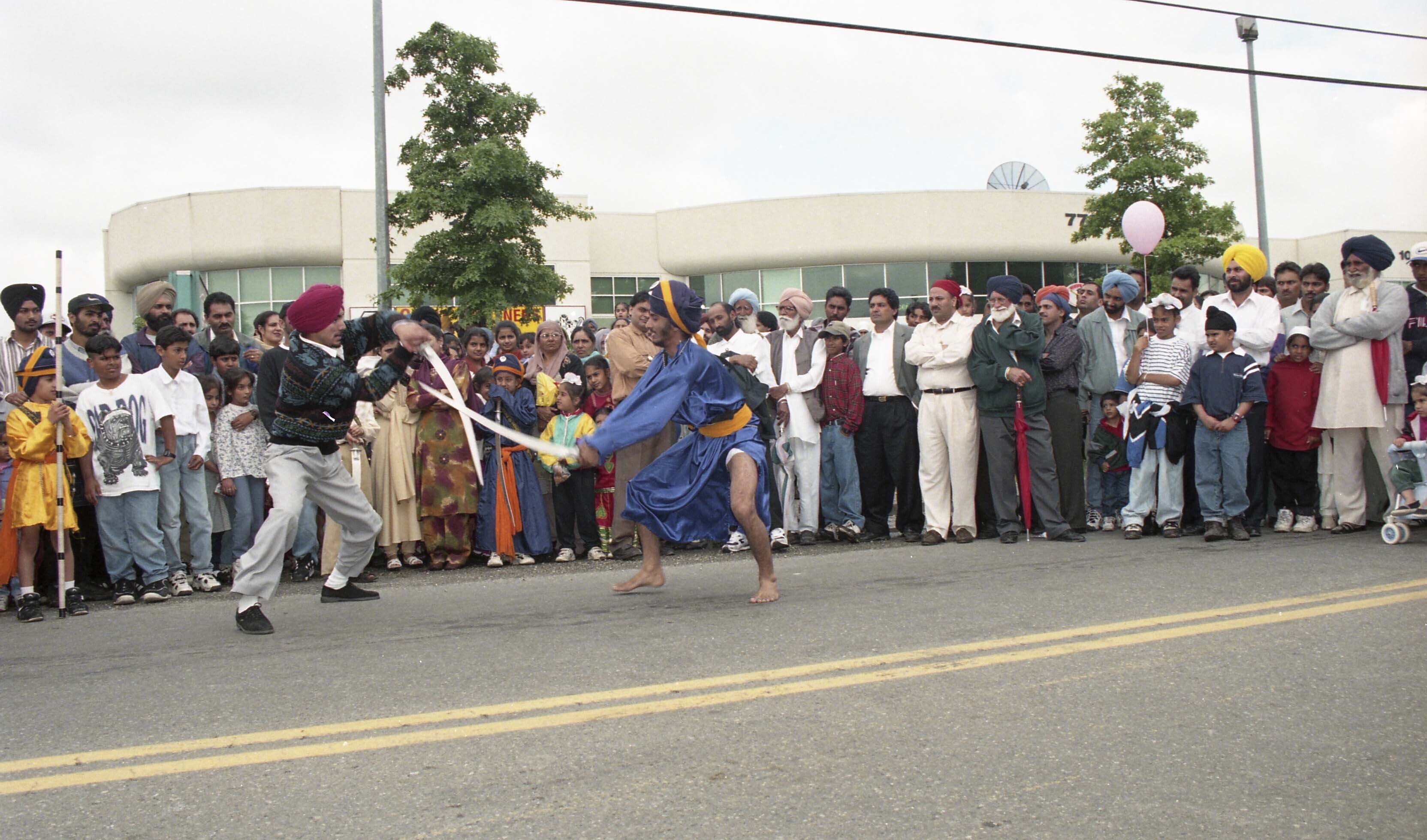
Photograph of unidentified individuals performing gatka at the Miri Piri Nagar Kirtan which took place in Surrey, British Columbia (B.C.). The Miri Piri Nagar Kirtan is an annual event which takes place in Surrey and is organized by the Guru Nanak Sikh Gurdwara (Temple).
Gatka is a traditional form of Sikh martial arts. It involves the use of various weapons, including swords, spears, shields, and sticks, and is practiced as a means of physical, mental, and spiritual training. Today, gatka is practiced as a form of physical exercise and spiritual discipline, as well as a way to preserve Sikh heritage and culture. It is often performed during festivals and other cultural events.
The concept of Miri Piri, introduced by the sixth Sikh Guru, Guru Hargobind Sahib, represents the union of political (Miri) and spiritual (Piri) authority, symbolized by two swords.The Sikh community commemorates Guru Hargobind Sahib's legacy with parades, where participants carry signs reflecting his teachings. Individuals along the route serve food, embodying the Sikh principles of service and community.
The Guru Nanak Sikh Gurdwara (Temple) was established in the early 1970s, one of the oldest gurdwaras in North America. The gurdwara (temple) is located in Surrey, B.C., and provides a wide range of programs, including, Sikh religious programs, social, sports, women's and children's programs. The Gurdwara has a Panjabi language school as well as a television show and regularly undertakes Sikh youth seminars and workshops.
Gatka is a traditional form of Sikh martial arts. It involves the use of various weapons, including swords, spears, shields, and sticks, and is practiced as a means of physical, mental, and spiritual training. Today, gatka is practiced as a form of physical exercise and spiritual discipline, as well as a way to preserve Sikh heritage and culture. It is often performed during festivals and other cultural events.
The concept of Miri Piri, introduced by the sixth Sikh Guru, Guru Hargobind Sahib, represents the union of political (Miri) and spiritual (Piri) authority, symbolized by two swords.The Sikh community commemorates Guru Hargobind Sahib's legacy with parades, where participants carry signs reflecting his teachings. Individuals along the route serve food, embodying the Sikh principles of service and community.
The Guru Nanak Sikh Gurdwara (Temple) was established in the early 1970s, one of the oldest gurdwaras in North America. The gurdwara (temple) is located in Surrey, B.C., and provides a wide range of programs, including, Sikh religious programs, social, sports, women's and children's programs. The Gurdwara has a Panjabi language school as well as a television show and regularly undertakes Sikh youth seminars and workshops.