
Nagar Kirtan
Member of
Creator: Bodalia, Chandra
Description
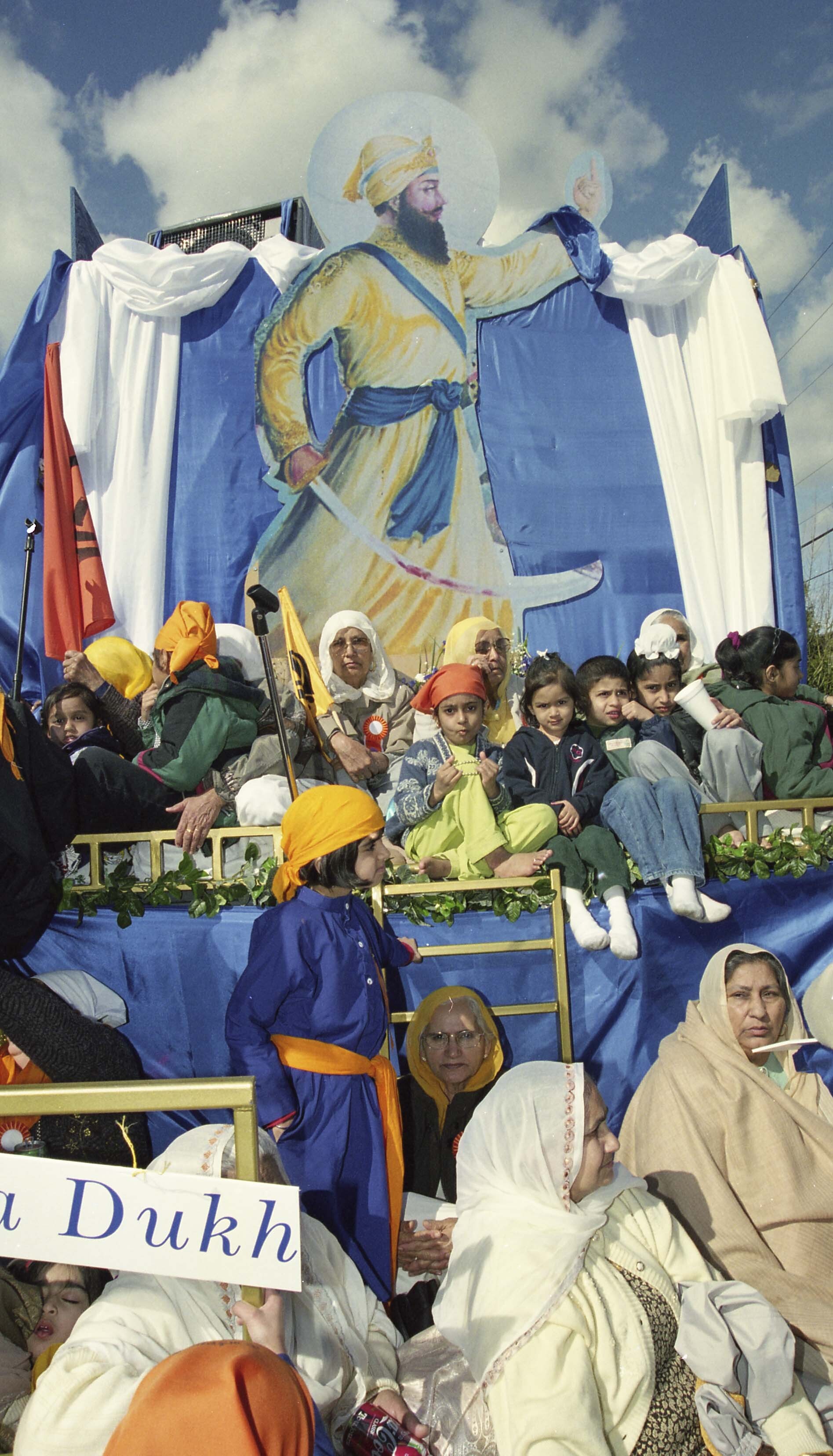
Photograph of a decorated float and a group of unidentified individuals at the Vaisakhi Nagar Kirtan held in Surrey, British Columbia (B.C.).
Vaisakhi is one of the most important festivals in Sikhi, marking the formation of the Khalsa in 1699 by the tenth guru, Guru Gobind Singh Ji. It is a time of renewal, gratitude, and unity, celebrated with processions, prayers, and acts of service. Beyond its significance in Sikh history, Vaisakhi is also a harvest festival in Punjab, observed with joy and thanksgiving. Additionally, Vaisakhi holds special significance for Hindus, as it marks the beginning of the solar new year and is celebrated in various regions of India under different names, such as Pohela Boishakh in Bengal and Puthandu in Tamil Nadu.
Vaisakhi is one of the most important festivals in Sikhi, marking the formation of the Khalsa in 1699 by the tenth guru, Guru Gobind Singh Ji. It is a time of renewal, gratitude, and unity, celebrated with processions, prayers, and acts of service. Beyond its significance in Sikh history, Vaisakhi is also a harvest festival in Punjab, observed with joy and thanksgiving. Additionally, Vaisakhi holds special significance for Hindus, as it marks the beginning of the solar new year and is celebrated in various regions of India under different names, such as Pohela Boishakh in Bengal and Puthandu in Tamil Nadu.
Member of
Creator: Bodalia, Chandra
Description
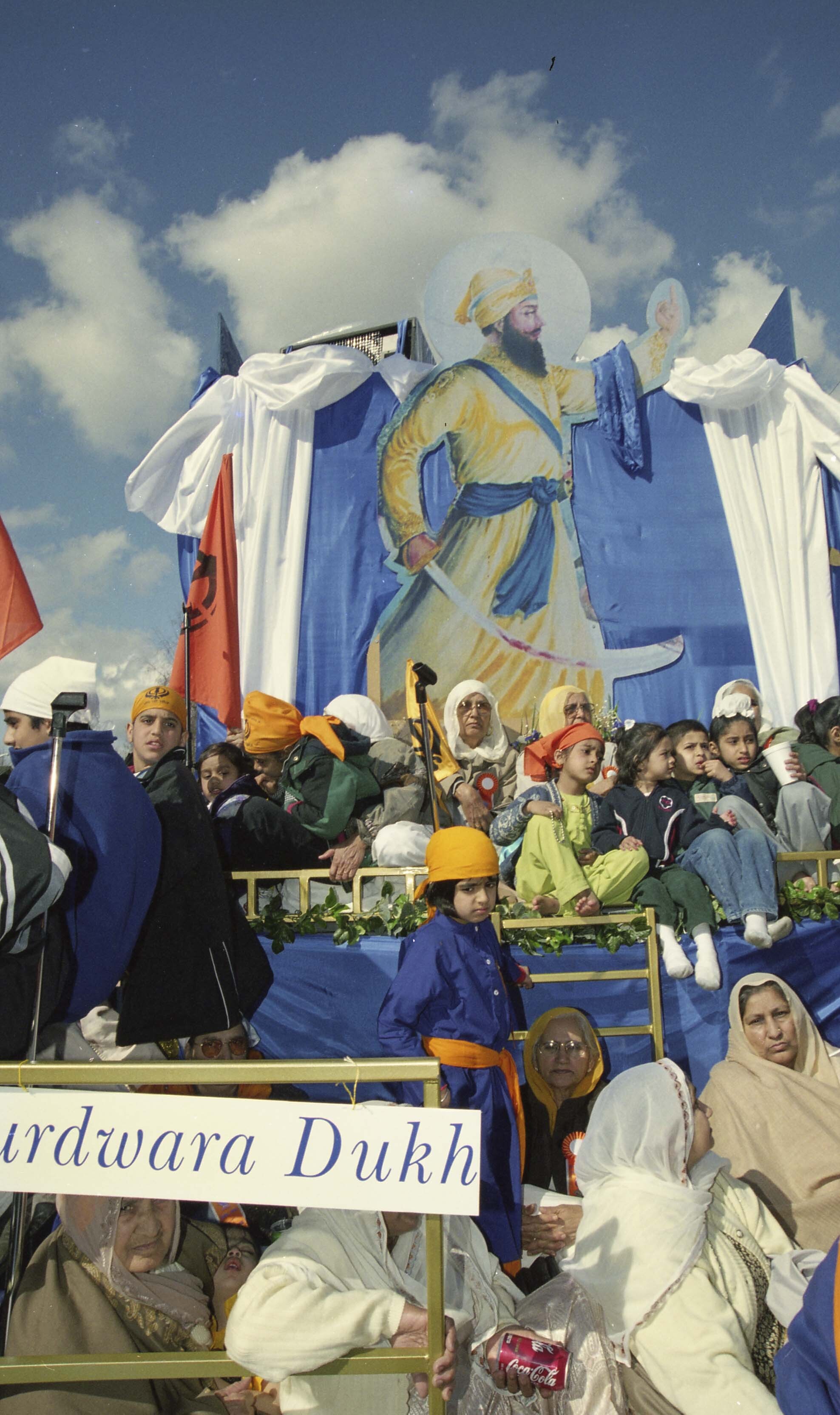
Photograph of a decorated float and a group of unidentified individuals at the Vaisakhi Nagar Kirtan held in Surrey, British Columbia (B.C.).
Vaisakhi is one of the most important festivals in Sikhi, marking the formation of the Khalsa in 1699 by the tenth guru, Guru Gobind Singh Ji. It is a time of renewal, gratitude, and unity, celebrated with processions, prayers, and acts of service. Beyond its significance in Sikh history, Vaisakhi is also a harvest festival in Punjab, observed with joy and thanksgiving. Additionally, Vaisakhi holds special significance for Hindus, as it marks the beginning of the solar new year and is celebrated in various regions of India under different names, such as Pohela Boishakh in Bengal and Puthandu in Tamil Nadu.
Vaisakhi is one of the most important festivals in Sikhi, marking the formation of the Khalsa in 1699 by the tenth guru, Guru Gobind Singh Ji. It is a time of renewal, gratitude, and unity, celebrated with processions, prayers, and acts of service. Beyond its significance in Sikh history, Vaisakhi is also a harvest festival in Punjab, observed with joy and thanksgiving. Additionally, Vaisakhi holds special significance for Hindus, as it marks the beginning of the solar new year and is celebrated in various regions of India under different names, such as Pohela Boishakh in Bengal and Puthandu in Tamil Nadu.
Member of
Creator: Bodalia, Chandra
Description
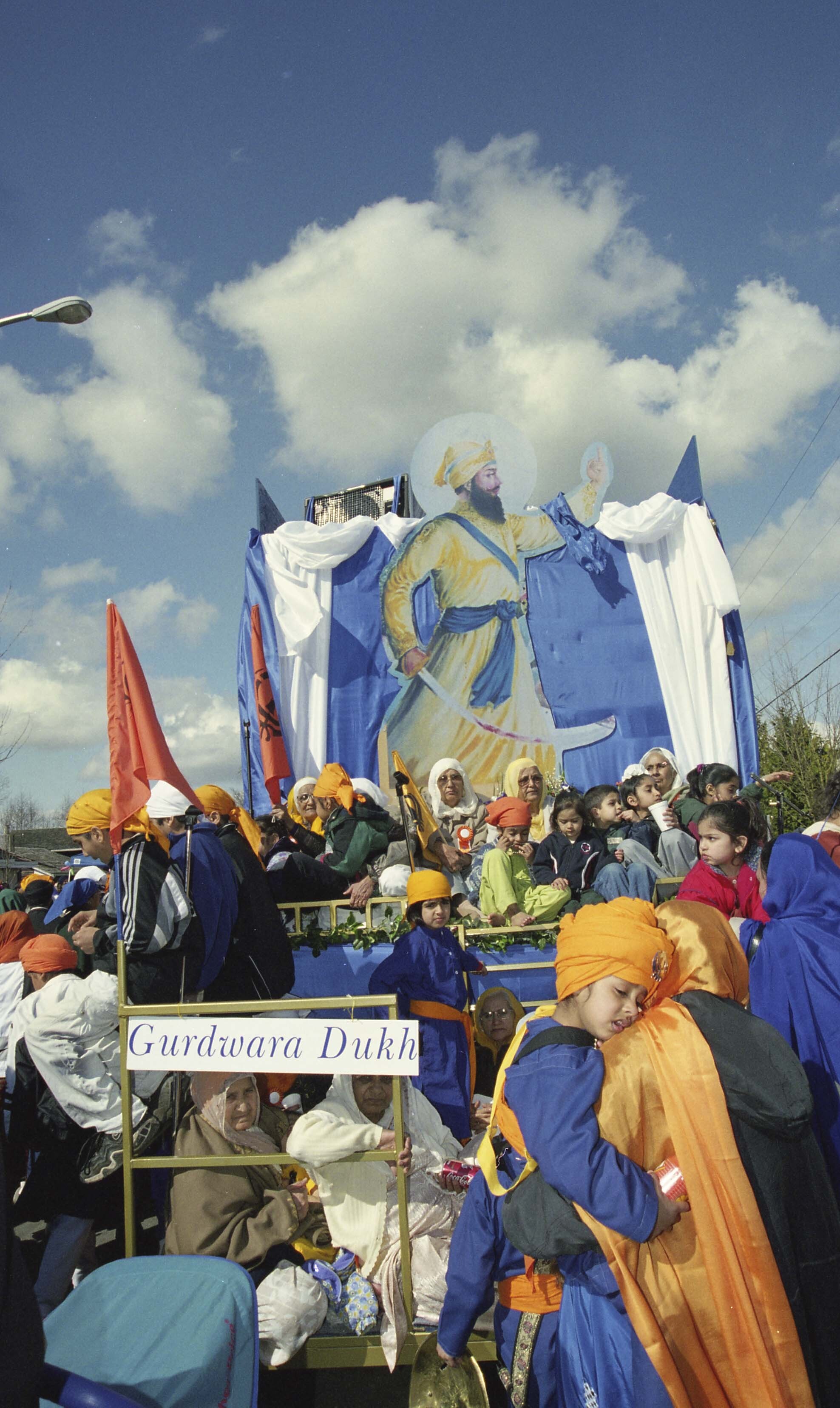
Photograph of a decorated float and a group of unidentified individuals at the Vaisakhi Nagar Kirtan held in Surrey, British Columbia (B.C.).
Vaisakhi is one of the most important festivals in Sikhi, marking the formation of the Khalsa in 1699 by the tenth guru, Guru Gobind Singh Ji. It is a time of renewal, gratitude, and unity, celebrated with processions, prayers, and acts of service. Beyond its significance in Sikh history, Vaisakhi is also a harvest festival in Punjab, observed with joy and thanksgiving. Additionally, Vaisakhi holds special significance for Hindus, as it marks the beginning of the solar new year and is celebrated in various regions of India under different names, such as Pohela Boishakh in Bengal and Puthandu in Tamil Nadu.
Vaisakhi is one of the most important festivals in Sikhi, marking the formation of the Khalsa in 1699 by the tenth guru, Guru Gobind Singh Ji. It is a time of renewal, gratitude, and unity, celebrated with processions, prayers, and acts of service. Beyond its significance in Sikh history, Vaisakhi is also a harvest festival in Punjab, observed with joy and thanksgiving. Additionally, Vaisakhi holds special significance for Hindus, as it marks the beginning of the solar new year and is celebrated in various regions of India under different names, such as Pohela Boishakh in Bengal and Puthandu in Tamil Nadu.
Member of
Creator: Bodalia, Chandra
Description
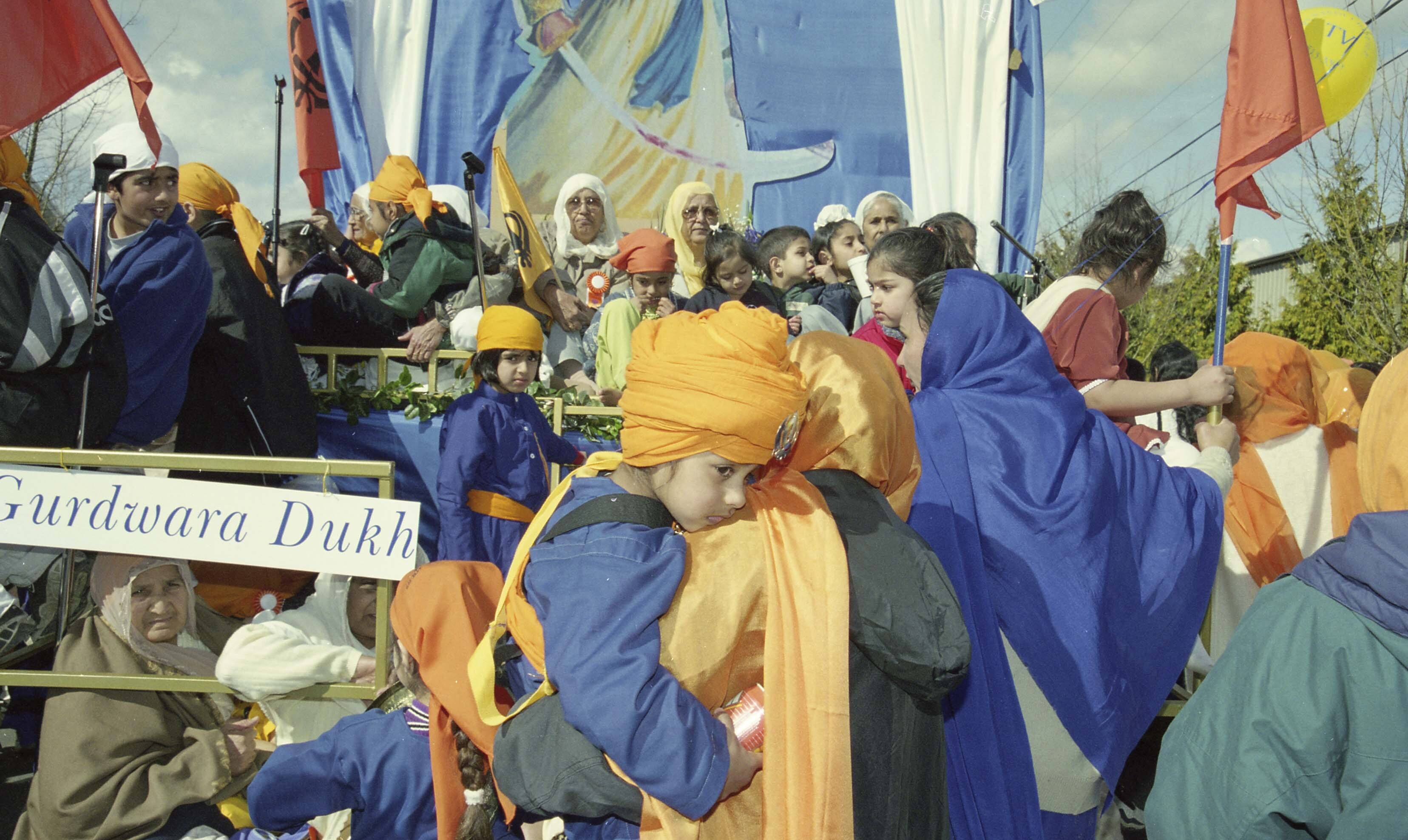
Photograph of a group of unidentified individuals at the Vaisakhi Nagar Kirtan held in Surrey, British Columbia (B.C.).
Vaisakhi is one of the most important festivals in Sikhi, marking the formation of the Khalsa in 1699 by the tenth guru, Guru Gobind Singh Ji. It is a time of renewal, gratitude, and unity, celebrated with processions, prayers, and acts of service. Beyond its significance in Sikh history, Vaisakhi is also a harvest festival in Punjab, observed with joy and thanksgiving. Additionally, Vaisakhi holds special significance for Hindus, as it marks the beginning of the solar new year and is celebrated in various regions of India under different names, such as Pohela Boishakh in Bengal and Puthandu in Tamil Nadu.
Vaisakhi is one of the most important festivals in Sikhi, marking the formation of the Khalsa in 1699 by the tenth guru, Guru Gobind Singh Ji. It is a time of renewal, gratitude, and unity, celebrated with processions, prayers, and acts of service. Beyond its significance in Sikh history, Vaisakhi is also a harvest festival in Punjab, observed with joy and thanksgiving. Additionally, Vaisakhi holds special significance for Hindus, as it marks the beginning of the solar new year and is celebrated in various regions of India under different names, such as Pohela Boishakh in Bengal and Puthandu in Tamil Nadu.
Member of
Creator: Bodalia, Chandra
Description
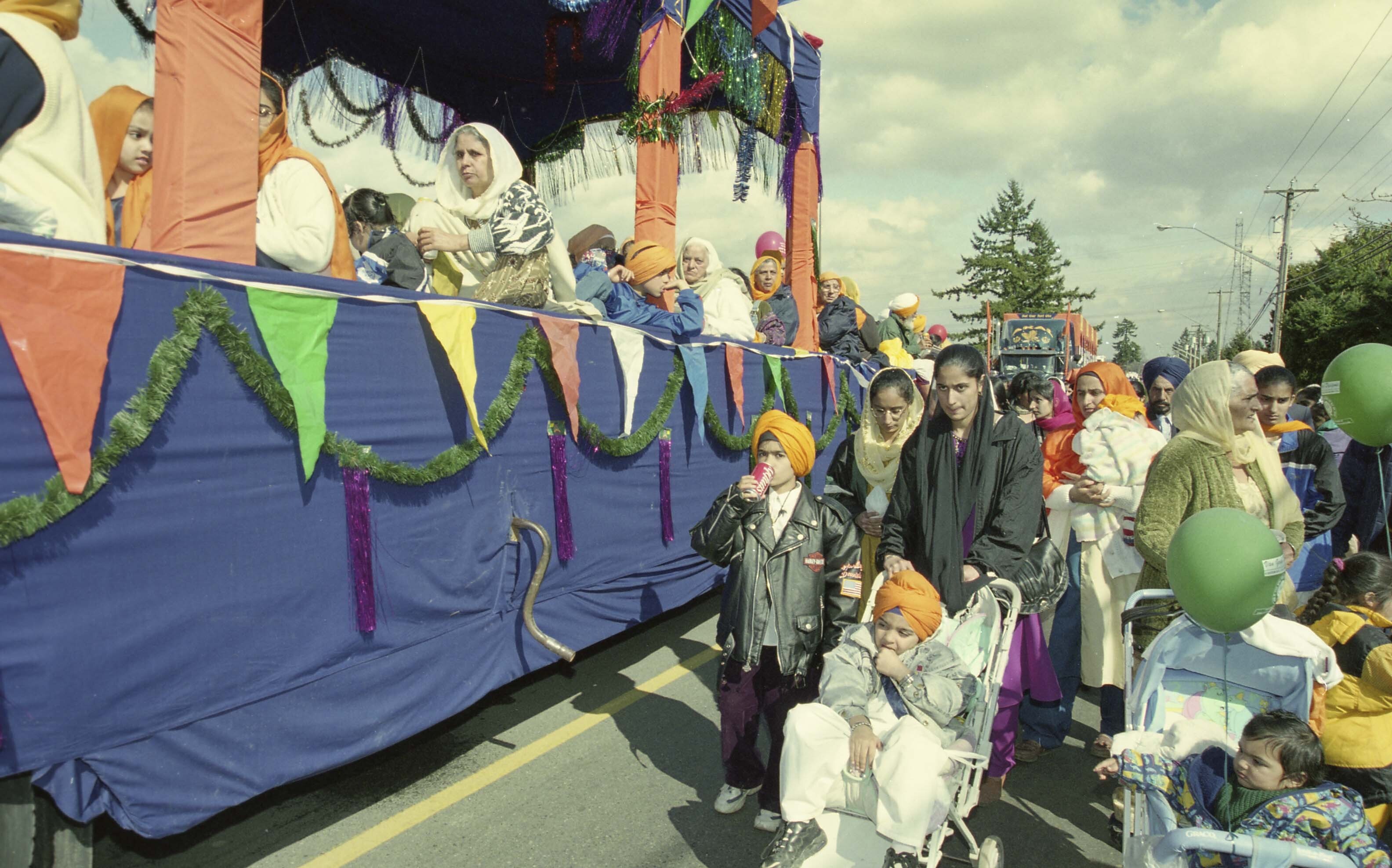
Photograph of a group of unidentified individuals at the Vaisakhi Nagar Kirtan held in Surrey, British Columbia (B.C.).
Vaisakhi is one of the most important festivals in Sikhi, marking the formation of the Khalsa in 1699 by the tenth guru, Guru Gobind Singh Ji. It is a time of renewal, gratitude, and unity, celebrated with processions, prayers, and acts of service. Beyond its significance in Sikh history, Vaisakhi is also a harvest festival in Punjab, observed with joy and thanksgiving. Additionally, Vaisakhi holds special significance for Hindus, as it marks the beginning of the solar new year and is celebrated in various regions of India under different names, such as Pohela Boishakh in Bengal and Puthandu in Tamil Nadu.
Vaisakhi is one of the most important festivals in Sikhi, marking the formation of the Khalsa in 1699 by the tenth guru, Guru Gobind Singh Ji. It is a time of renewal, gratitude, and unity, celebrated with processions, prayers, and acts of service. Beyond its significance in Sikh history, Vaisakhi is also a harvest festival in Punjab, observed with joy and thanksgiving. Additionally, Vaisakhi holds special significance for Hindus, as it marks the beginning of the solar new year and is celebrated in various regions of India under different names, such as Pohela Boishakh in Bengal and Puthandu in Tamil Nadu.
Member of
Creator: Bodalia, Chandra
Description
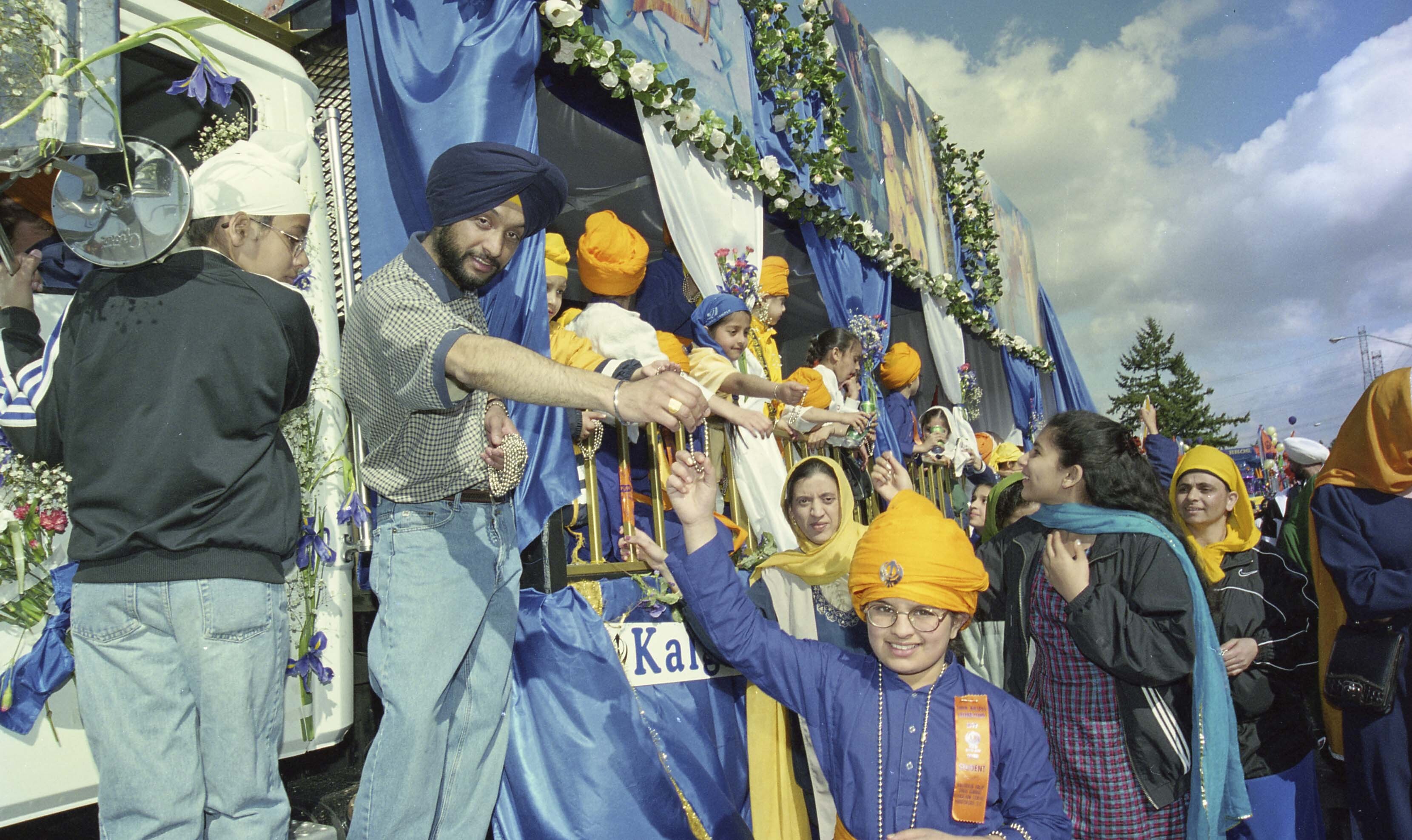
Photograph of a group of unidentified individuals at the Vaisakhi Nagar Kirtan held in Surrey, British Columbia (B.C.).
Vaisakhi is one of the most important festivals in Sikhi, marking the formation of the Khalsa in 1699 by the tenth guru, Guru Gobind Singh Ji. It is a time of renewal, gratitude, and unity, celebrated with processions, prayers, and acts of service. Beyond its significance in Sikh history, Vaisakhi is also a harvest festival in Punjab, observed with joy and thanksgiving. Additionally, Vaisakhi holds special significance for Hindus, as it marks the beginning of the solar new year and is celebrated in various regions of India under different names, such as Pohela Boishakh in Bengal and Puthandu in Tamil Nadu.
Vaisakhi is one of the most important festivals in Sikhi, marking the formation of the Khalsa in 1699 by the tenth guru, Guru Gobind Singh Ji. It is a time of renewal, gratitude, and unity, celebrated with processions, prayers, and acts of service. Beyond its significance in Sikh history, Vaisakhi is also a harvest festival in Punjab, observed with joy and thanksgiving. Additionally, Vaisakhi holds special significance for Hindus, as it marks the beginning of the solar new year and is celebrated in various regions of India under different names, such as Pohela Boishakh in Bengal and Puthandu in Tamil Nadu.
Member of
Creator: Bodalia, Chandra
Description
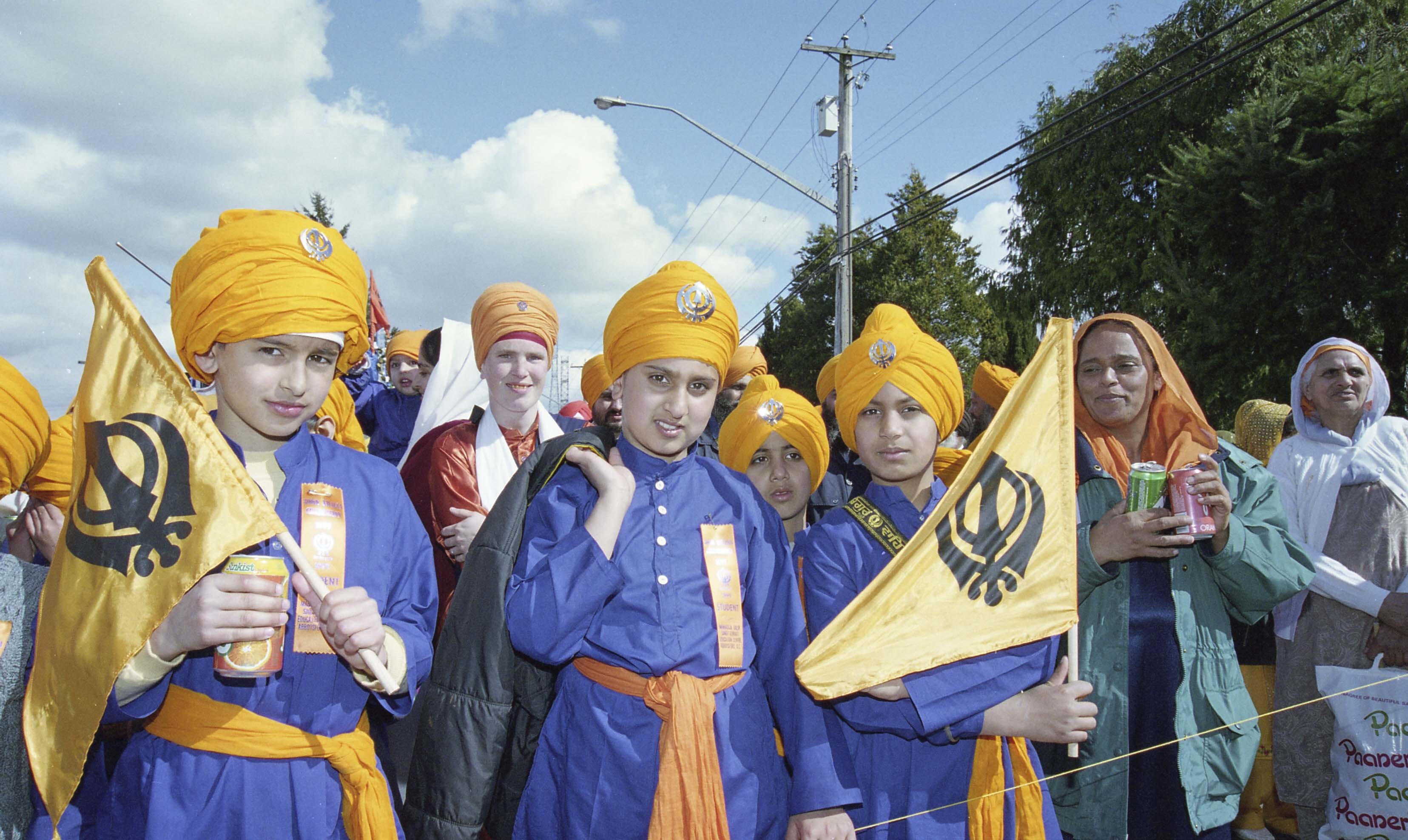
Photograph of a group of unidentified individuals, with a few individuals holding flags, at the Vaisakhi Nagar Kirtan held in Surrey, British Columbia (B.C.).
The Nishan Sahib is a Sikh holy triangular flag made of cotton or silk cloth, with a tassel at its end. The word, Nishan means symbol, and the flag is hoisted on a tall flagpole, outside most Gurdwaras (temples). The flagpole itself is covered with fabric, and ends with a two-edged dagger (khanda) on top. The emblem on the flag, which depicts a double-edged sword called a khanda (☬) in the centre, a chakkar which is circular, and flanked by two single-edged swords, or kirpans. A traditional symbol of the Khalsa Panth, the Nishan Sahib can be seen from far away, signifying the presence of Khalsa in the neighbourhood.
Vaisakhi is one of the most important festivals in Sikhi, marking the formation of the Khalsa in 1699 by the tenth guru, Guru Gobind Singh Ji. It is a time of renewal, gratitude, and unity, celebrated with processions, prayers, and acts of service. Beyond its significance in Sikh history, Vaisakhi is also a harvest festival in Punjab, observed with joy and thanksgiving. Additionally, Vaisakhi holds special significance for Hindus, as it marks the beginning of the solar new year and is celebrated in various regions of India under different names, such as Pohela Boishakh in Bengal and Puthandu in Tamil Nadu.
The Nishan Sahib is a Sikh holy triangular flag made of cotton or silk cloth, with a tassel at its end. The word, Nishan means symbol, and the flag is hoisted on a tall flagpole, outside most Gurdwaras (temples). The flagpole itself is covered with fabric, and ends with a two-edged dagger (khanda) on top. The emblem on the flag, which depicts a double-edged sword called a khanda (☬) in the centre, a chakkar which is circular, and flanked by two single-edged swords, or kirpans. A traditional symbol of the Khalsa Panth, the Nishan Sahib can be seen from far away, signifying the presence of Khalsa in the neighbourhood.
Vaisakhi is one of the most important festivals in Sikhi, marking the formation of the Khalsa in 1699 by the tenth guru, Guru Gobind Singh Ji. It is a time of renewal, gratitude, and unity, celebrated with processions, prayers, and acts of service. Beyond its significance in Sikh history, Vaisakhi is also a harvest festival in Punjab, observed with joy and thanksgiving. Additionally, Vaisakhi holds special significance for Hindus, as it marks the beginning of the solar new year and is celebrated in various regions of India under different names, such as Pohela Boishakh in Bengal and Puthandu in Tamil Nadu.

Member of
Creator: Bodalia, Chandra
Description
Photograph of a group of unidentified individuals at the Vaisakhi Nagar Kirtan held in Surrey, British Columbia (B.C.).
Vaisakhi is one of the most important festivals in Sikhi, marking the formation of the Khalsa in 1699 by the tenth guru, Guru Gobind Singh Ji. It is a time of renewal, gratitude, and unity, celebrated with processions, prayers, and acts of service. Beyond its significance in Sikh history, Vaisakhi is also a harvest festival in Punjab, observed with joy and thanksgiving. Additionally, Vaisakhi holds special significance for Hindus, as it marks the beginning of the solar new year and is celebrated in various regions of India under different names, such as Pohela Boishakh in Bengal and Puthandu in Tamil Nadu.
Vaisakhi is one of the most important festivals in Sikhi, marking the formation of the Khalsa in 1699 by the tenth guru, Guru Gobind Singh Ji. It is a time of renewal, gratitude, and unity, celebrated with processions, prayers, and acts of service. Beyond its significance in Sikh history, Vaisakhi is also a harvest festival in Punjab, observed with joy and thanksgiving. Additionally, Vaisakhi holds special significance for Hindus, as it marks the beginning of the solar new year and is celebrated in various regions of India under different names, such as Pohela Boishakh in Bengal and Puthandu in Tamil Nadu.
Member of
Creator: Bodalia, Chandra
Description
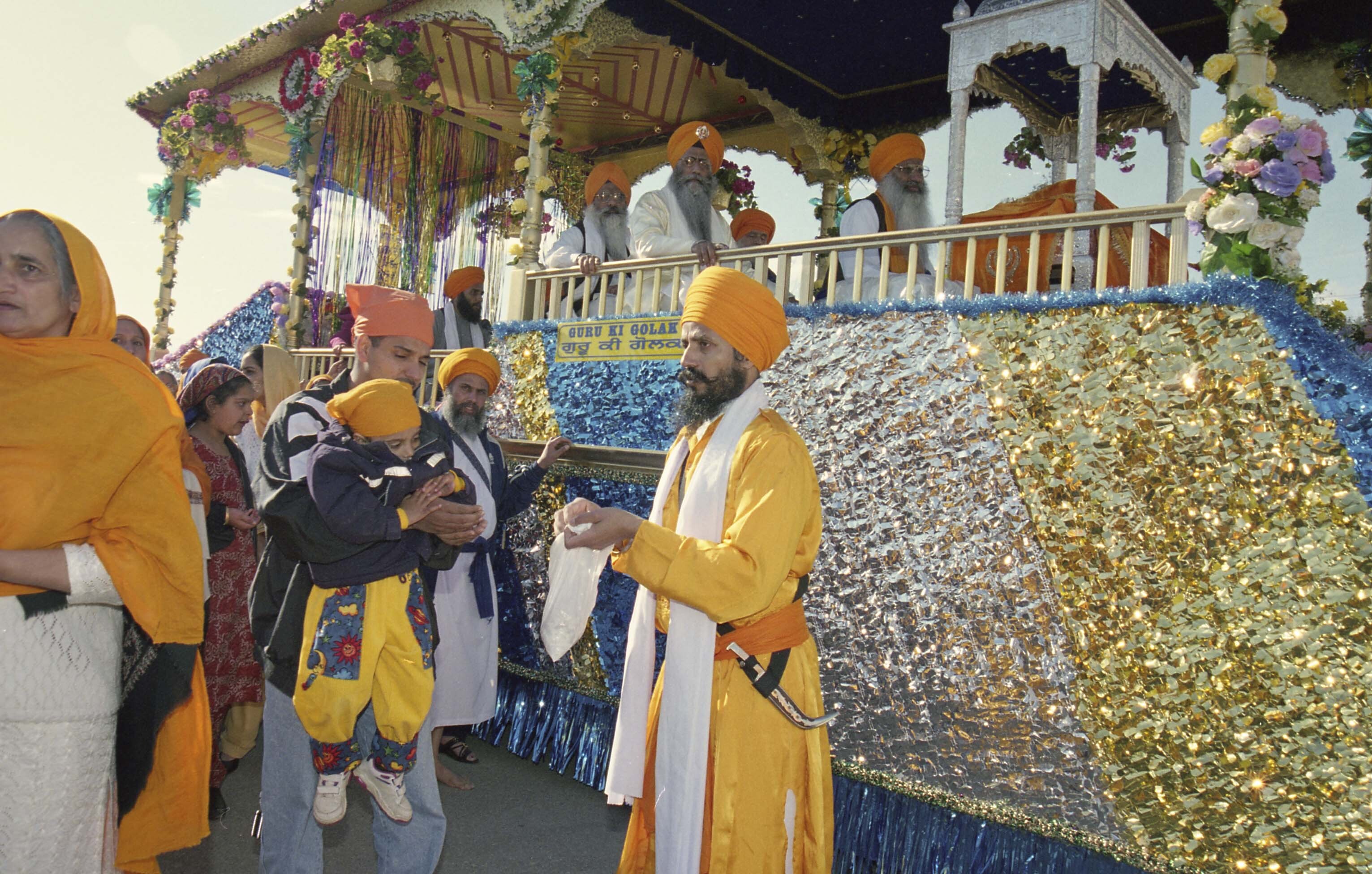
Photograph of a decorated float and a group of unidentified individuals at the Vaisakhi Nagar Kirtan held in Surrey, British Columbia (B.C.).
Vaisakhi is one of the most important festivals in Sikhi, marking the formation of the Khalsa in 1699 by the tenth guru, Guru Gobind Singh Ji. It is a time of renewal, gratitude, and unity, celebrated with processions, prayers, and acts of service. Beyond its significance in Sikh history, Vaisakhi is also a harvest festival in Punjab, observed with joy and thanksgiving. Additionally, Vaisakhi holds special significance for Hindus, as it marks the beginning of the solar new year and is celebrated in various regions of India under different names, such as Pohela Boishakh in Bengal and Puthandu in Tamil Nadu.
Vaisakhi is one of the most important festivals in Sikhi, marking the formation of the Khalsa in 1699 by the tenth guru, Guru Gobind Singh Ji. It is a time of renewal, gratitude, and unity, celebrated with processions, prayers, and acts of service. Beyond its significance in Sikh history, Vaisakhi is also a harvest festival in Punjab, observed with joy and thanksgiving. Additionally, Vaisakhi holds special significance for Hindus, as it marks the beginning of the solar new year and is celebrated in various regions of India under different names, such as Pohela Boishakh in Bengal and Puthandu in Tamil Nadu.
Member of
Creator: Bodalia, Chandra
Description
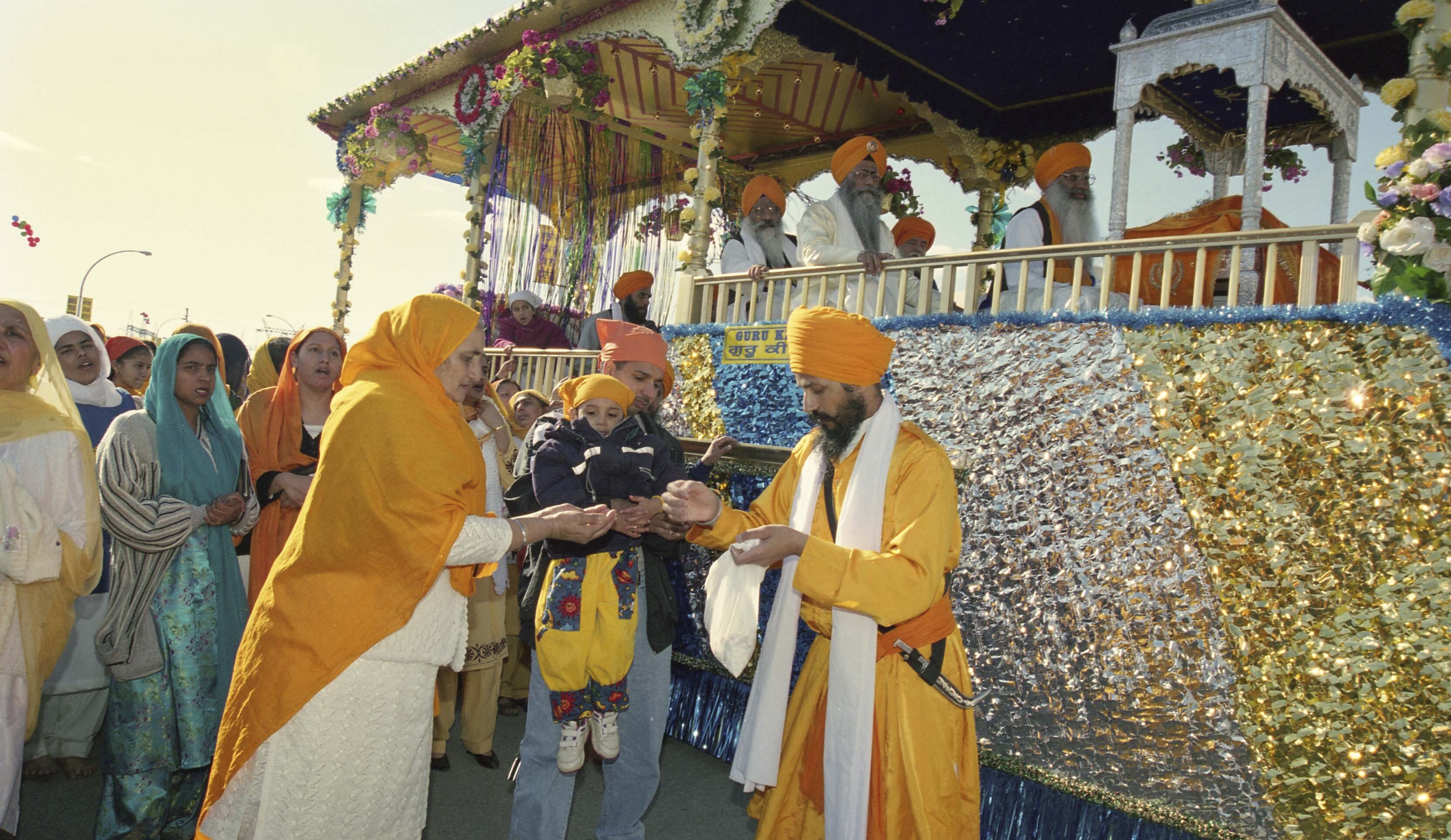
Photograph of a decorated float and a group of unidentified individuals at the Vaisakhi Nagar Kirtan held in Surrey, British Columbia (B.C.).
Vaisakhi is one of the most important festivals in Sikhi, marking the formation of the Khalsa in 1699 by the tenth guru, Guru Gobind Singh Ji. It is a time of renewal, gratitude, and unity, celebrated with processions, prayers, and acts of service. Beyond its significance in Sikh history, Vaisakhi is also a harvest festival in Punjab, observed with joy and thanksgiving. Additionally, Vaisakhi holds special significance for Hindus, as it marks the beginning of the solar new year and is celebrated in various regions of India under different names, such as Pohela Boishakh in Bengal and Puthandu in Tamil Nadu.
Vaisakhi is one of the most important festivals in Sikhi, marking the formation of the Khalsa in 1699 by the tenth guru, Guru Gobind Singh Ji. It is a time of renewal, gratitude, and unity, celebrated with processions, prayers, and acts of service. Beyond its significance in Sikh history, Vaisakhi is also a harvest festival in Punjab, observed with joy and thanksgiving. Additionally, Vaisakhi holds special significance for Hindus, as it marks the beginning of the solar new year and is celebrated in various regions of India under different names, such as Pohela Boishakh in Bengal and Puthandu in Tamil Nadu.