
Giddhā (Dance)
Creator: Bodalia, Chandra
Description
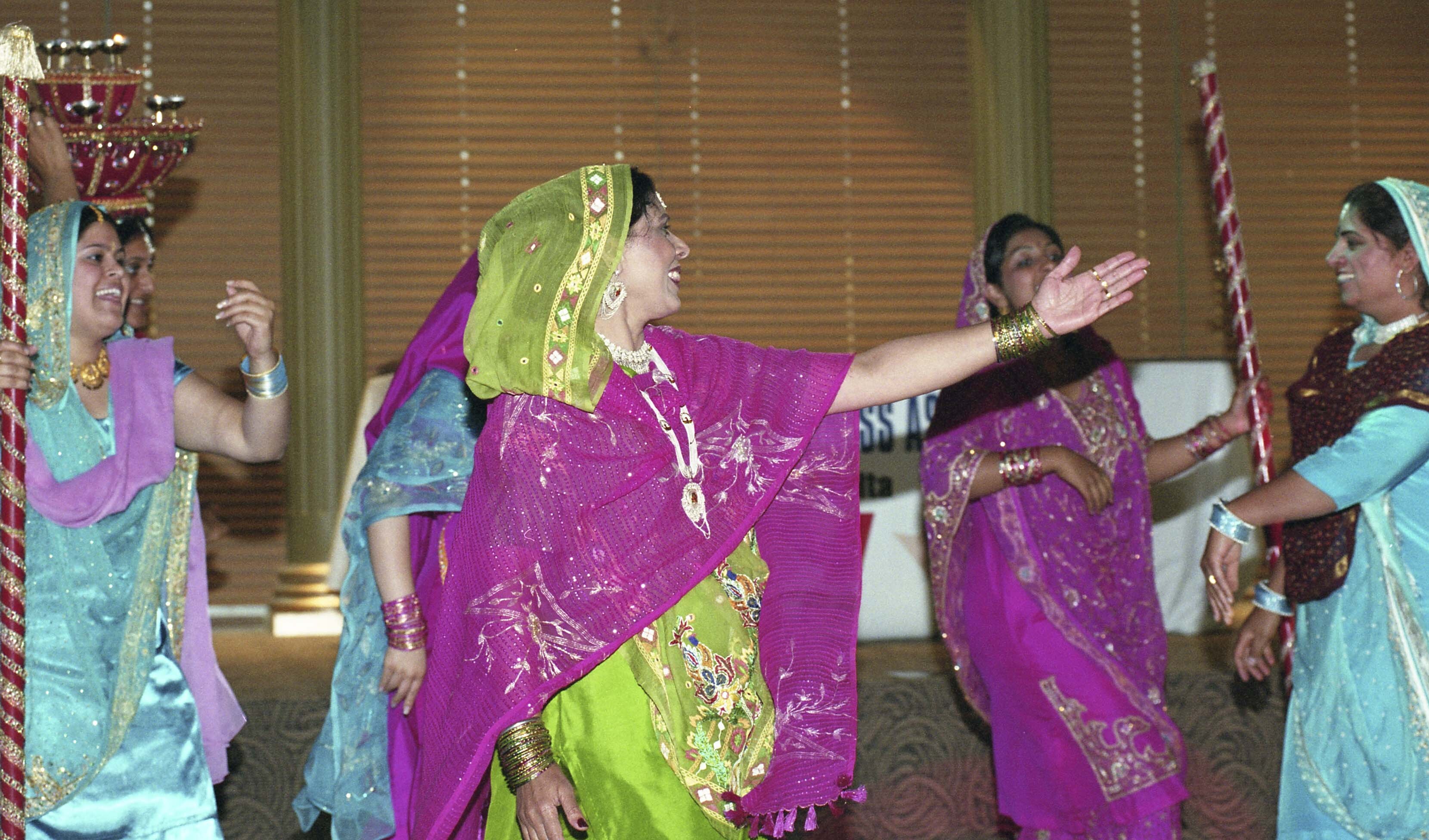
Photograph of a group of unidentified individuals performing giddha and jaggo at the 7th annual Indo-Canadian Business Association (ICBA) Achievement Awards. The event took place at the Crystal at York banquet hall in Surrey, British Columbia (B.C.).
Giddha is a traditional pastoral Panjabi folk dance performed by women at festival times and at the sowing and reaping of the harvest. Patterned on a circle, it is notable for the bodily grace of the women's movements (especially of the arms and hands) and for the charming melody that accompanies it.
Jaggo is a traditional celebratory ritual that involves singing, dancing, and carrying a decorated earthen pot (jago) on the head.
In 1997, ICBA started the scholarship program known as the Achievement Awards. To date, the association has raised and distributed over $300,000 in scholarship funds. The Indo-Canadian Business Association of B.C. (ICBABC) has been supporting and promoting the Indo-Canadian business community since 1992. As a registered society, ICBABC organizes scholarships, networking events, and charity initiatives, including the achievement awards and annual golf tournaments. The association remains committed to fostering business growth, community engagement, and philanthropic efforts in Surrey and Delta.
Giddha is a traditional pastoral Panjabi folk dance performed by women at festival times and at the sowing and reaping of the harvest. Patterned on a circle, it is notable for the bodily grace of the women's movements (especially of the arms and hands) and for the charming melody that accompanies it.
Jaggo is a traditional celebratory ritual that involves singing, dancing, and carrying a decorated earthen pot (jago) on the head.
In 1997, ICBA started the scholarship program known as the Achievement Awards. To date, the association has raised and distributed over $300,000 in scholarship funds. The Indo-Canadian Business Association of B.C. (ICBABC) has been supporting and promoting the Indo-Canadian business community since 1992. As a registered society, ICBABC organizes scholarships, networking events, and charity initiatives, including the achievement awards and annual golf tournaments. The association remains committed to fostering business growth, community engagement, and philanthropic efforts in Surrey and Delta.
Member of
Creator: Bodalia, Chandra
Description
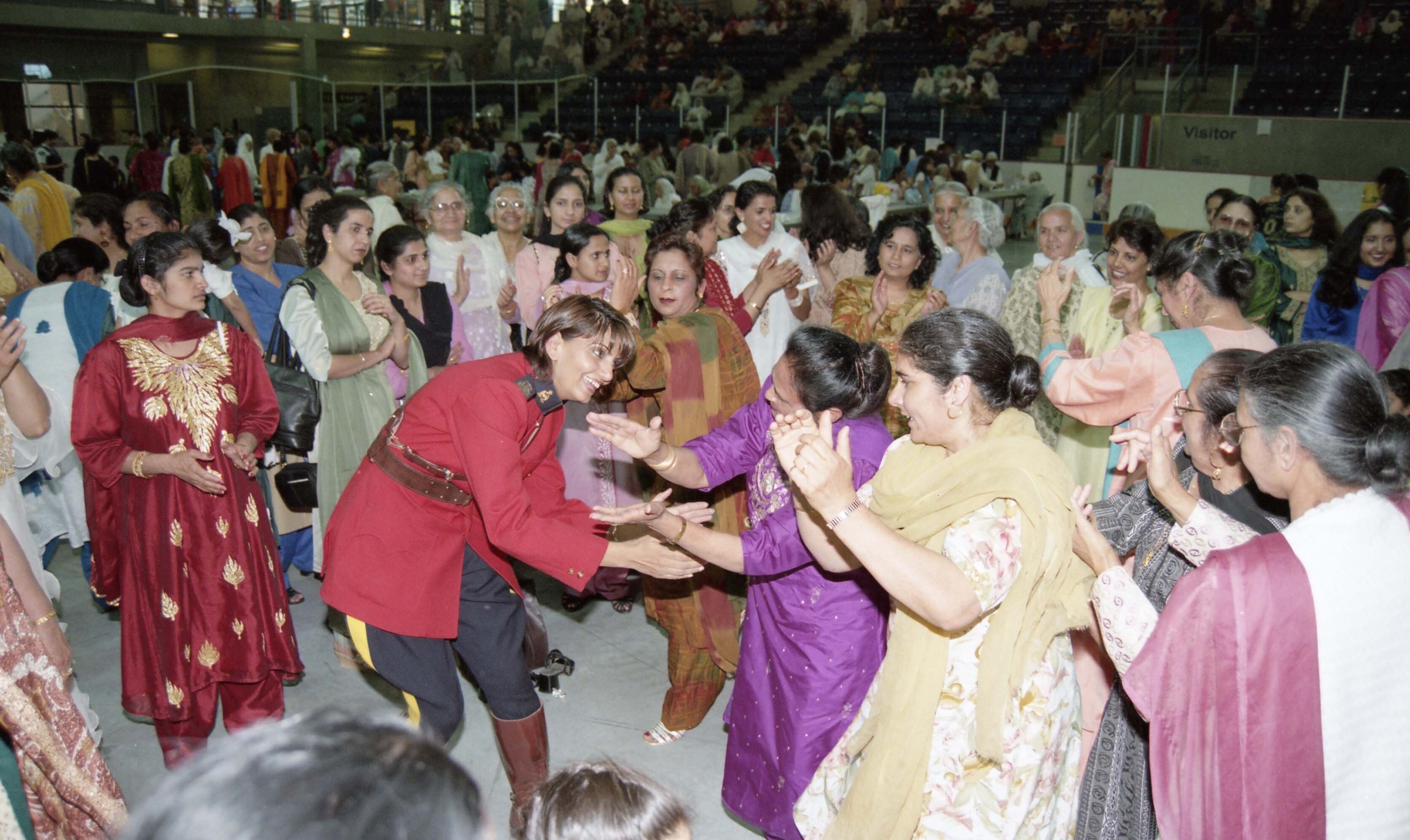
Photograph of a group of unidentified individuals performing folk songs and dancing during giddha [?] at a Teeyan (Teej) festival celebration hosted by the India Mahila Association[?] on August 2, 1998[?]. The event was held in Cloverdale, in Surrey, British Columbia (B.C.).
Teeyan, also known as Teej, is a festival observed primarily by women in the northern regions of India, including Punjab, Rajasthan, Uttar Pradesh, Bihar, Odisha, and Madhya Pradesh. It takes place annually during the months of July or August, marking the beginning of the monsoon season. The festival is associated with religious observance and social gathering, particularly among newly married and unmarried women. Participants celebrate by adorning themselves in traditional attire and taking part in rituals dedicated to Goddess Parvati. The festival involves prayers for the well-being and longevity of husbands or future spouses and includes regional customs that vary by state.
The India Mahila Association (IMA) is a non-profit, volunteer-driven organization established in 1973 to support and empower women of South Asian descent in Canada. Open to women of all backgrounds, IMA focuses on advocacy, education, and community engagement while addressing issues such as gender equality, violence, and discrimination. The organization operates without external funding and has created an endowment fund with the Vancouver Foundation to sustain its mission. For over 50 years, IMA has provided support, resources, and a platform for women to connect and uplift one another.
Giddha is a traditional folk dance performed by women in Punjab during festive occasions, including the Teej festival celebrated in the month of Sawan (July). As part of the Teej celebrations, women gather for twelve consecutive days to perform Giddha, which involves rhythmic clapping, singing of short couplets called boliyan, and expressive movements.
Teeyan, also known as Teej, is a festival observed primarily by women in the northern regions of India, including Punjab, Rajasthan, Uttar Pradesh, Bihar, Odisha, and Madhya Pradesh. It takes place annually during the months of July or August, marking the beginning of the monsoon season. The festival is associated with religious observance and social gathering, particularly among newly married and unmarried women. Participants celebrate by adorning themselves in traditional attire and taking part in rituals dedicated to Goddess Parvati. The festival involves prayers for the well-being and longevity of husbands or future spouses and includes regional customs that vary by state.
The India Mahila Association (IMA) is a non-profit, volunteer-driven organization established in 1973 to support and empower women of South Asian descent in Canada. Open to women of all backgrounds, IMA focuses on advocacy, education, and community engagement while addressing issues such as gender equality, violence, and discrimination. The organization operates without external funding and has created an endowment fund with the Vancouver Foundation to sustain its mission. For over 50 years, IMA has provided support, resources, and a platform for women to connect and uplift one another.
Giddha is a traditional folk dance performed by women in Punjab during festive occasions, including the Teej festival celebrated in the month of Sawan (July). As part of the Teej celebrations, women gather for twelve consecutive days to perform Giddha, which involves rhythmic clapping, singing of short couplets called boliyan, and expressive movements.
Member of
Creator: Bodalia, Chandra
Description
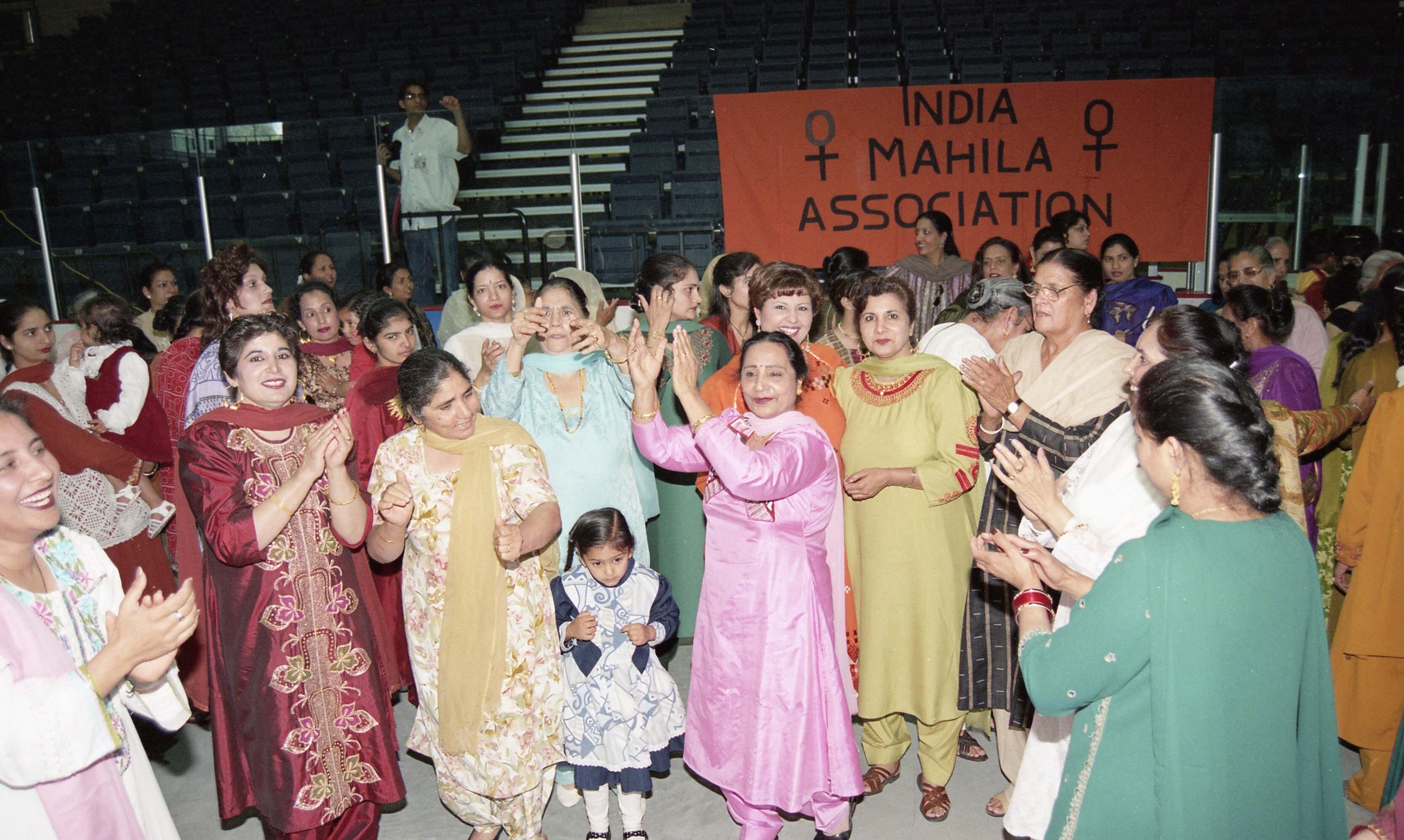
Photograph of a group of unidentified individuals performing folk songs and dancing during giddha [?] at a Teeyan (Teej) festival celebration hosted by the India Mahila Association[?] on August 2, 1998[?]. The event was held in Cloverdale, in Surrey, British Columbia (B.C.).
Teeyan, also known as Teej, is a festival observed primarily by women in the northern regions of India, including Punjab, Rajasthan, Uttar Pradesh, Bihar, Odisha, and Madhya Pradesh. It takes place annually during the months of July or August, marking the beginning of the monsoon season. The festival is associated with religious observance and social gathering, particularly among newly married and unmarried women. Participants celebrate by adorning themselves in traditional attire and taking part in rituals dedicated to Goddess Parvati. The festival involves prayers for the well-being and longevity of husbands or future spouses and includes regional customs that vary by state.
The India Mahila Association (IMA) is a non-profit, volunteer-driven organization established in 1973 to support and empower women of South Asian descent in Canada. Open to women of all backgrounds, IMA focuses on advocacy, education, and community engagement while addressing issues such as gender equality, violence, and discrimination. The organization operates without external funding and has created an endowment fund with the Vancouver Foundation to sustain its mission. For over 50 years, IMA has provided support, resources, and a platform for women to connect and uplift one another.
Giddha is a traditional folk dance performed by women in Punjab during festive occasions, including the Teej festival celebrated in the month of Sawan (July). As part of the Teej celebrations, women gather for twelve consecutive days to perform Giddha, which involves rhythmic clapping, singing of short couplets called boliyan, and expressive movements.
Teeyan, also known as Teej, is a festival observed primarily by women in the northern regions of India, including Punjab, Rajasthan, Uttar Pradesh, Bihar, Odisha, and Madhya Pradesh. It takes place annually during the months of July or August, marking the beginning of the monsoon season. The festival is associated with religious observance and social gathering, particularly among newly married and unmarried women. Participants celebrate by adorning themselves in traditional attire and taking part in rituals dedicated to Goddess Parvati. The festival involves prayers for the well-being and longevity of husbands or future spouses and includes regional customs that vary by state.
The India Mahila Association (IMA) is a non-profit, volunteer-driven organization established in 1973 to support and empower women of South Asian descent in Canada. Open to women of all backgrounds, IMA focuses on advocacy, education, and community engagement while addressing issues such as gender equality, violence, and discrimination. The organization operates without external funding and has created an endowment fund with the Vancouver Foundation to sustain its mission. For over 50 years, IMA has provided support, resources, and a platform for women to connect and uplift one another.
Giddha is a traditional folk dance performed by women in Punjab during festive occasions, including the Teej festival celebrated in the month of Sawan (July). As part of the Teej celebrations, women gather for twelve consecutive days to perform Giddha, which involves rhythmic clapping, singing of short couplets called boliyan, and expressive movements.
Member of
Creator: Bodalia, Chandra
Description
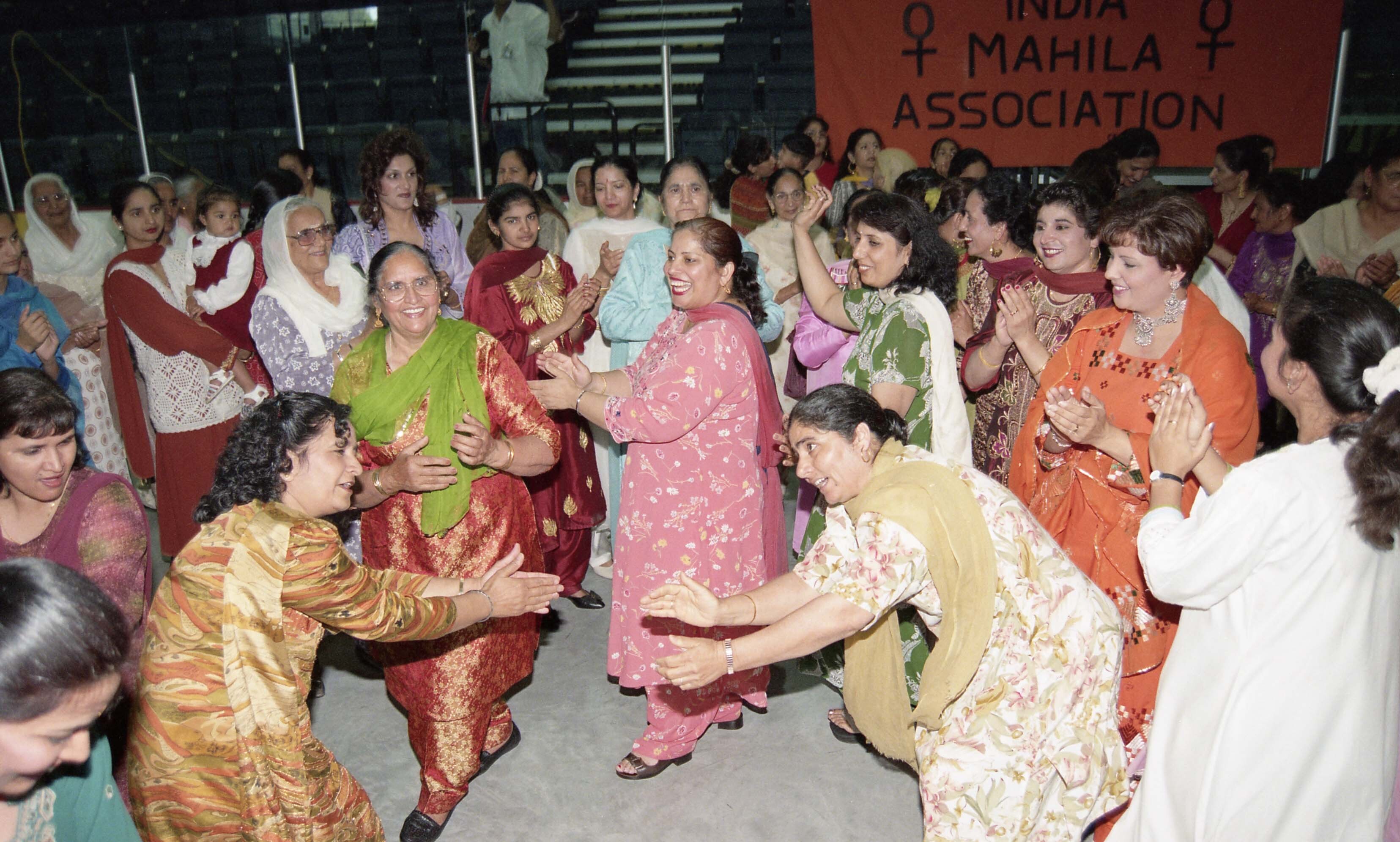
Photograph of a group of unidentified individuals performing folk songs and dancing during giddha [?] at a Teeyan (Teej) festival celebration hosted by the India Mahila Association[?] on August 2, 1998[?]. The event was held in Cloverdale, in Surrey, British Columbia (B.C.).
Teeyan, also known as Teej, is a festival observed primarily by women in the northern regions of India, including Punjab, Rajasthan, Uttar Pradesh, Bihar, Odisha, and Madhya Pradesh. It takes place annually during the months of July or August, marking the beginning of the monsoon season. The festival is associated with religious observance and social gathering, particularly among newly married and unmarried women. Participants celebrate by adorning themselves in traditional attire and taking part in rituals dedicated to Goddess Parvati. The festival involves prayers for the well-being and longevity of husbands or future spouses and includes regional customs that vary by state.
The India Mahila Association (IMA) is a non-profit, volunteer-driven organization established in 1973 to support and empower women of South Asian descent in Canada. Open to women of all backgrounds, IMA focuses on advocacy, education, and community engagement while addressing issues such as gender equality, violence, and discrimination. The organization operates without external funding and has created an endowment fund with the Vancouver Foundation to sustain its mission. For over 50 years, IMA has provided support, resources, and a platform for women to connect and uplift one another.
Giddha is a traditional folk dance performed by women in Punjab during festive occasions, including the Teej festival celebrated in the month of Sawan (July). As part of the Teej celebrations, women gather for twelve consecutive days to perform Giddha, which involves rhythmic clapping, singing of short couplets called boliyan, and expressive movements.
Teeyan, also known as Teej, is a festival observed primarily by women in the northern regions of India, including Punjab, Rajasthan, Uttar Pradesh, Bihar, Odisha, and Madhya Pradesh. It takes place annually during the months of July or August, marking the beginning of the monsoon season. The festival is associated with religious observance and social gathering, particularly among newly married and unmarried women. Participants celebrate by adorning themselves in traditional attire and taking part in rituals dedicated to Goddess Parvati. The festival involves prayers for the well-being and longevity of husbands or future spouses and includes regional customs that vary by state.
The India Mahila Association (IMA) is a non-profit, volunteer-driven organization established in 1973 to support and empower women of South Asian descent in Canada. Open to women of all backgrounds, IMA focuses on advocacy, education, and community engagement while addressing issues such as gender equality, violence, and discrimination. The organization operates without external funding and has created an endowment fund with the Vancouver Foundation to sustain its mission. For over 50 years, IMA has provided support, resources, and a platform for women to connect and uplift one another.
Giddha is a traditional folk dance performed by women in Punjab during festive occasions, including the Teej festival celebrated in the month of Sawan (July). As part of the Teej celebrations, women gather for twelve consecutive days to perform Giddha, which involves rhythmic clapping, singing of short couplets called boliyan, and expressive movements.
Member of
Creator: Bodalia, Chandra
Description
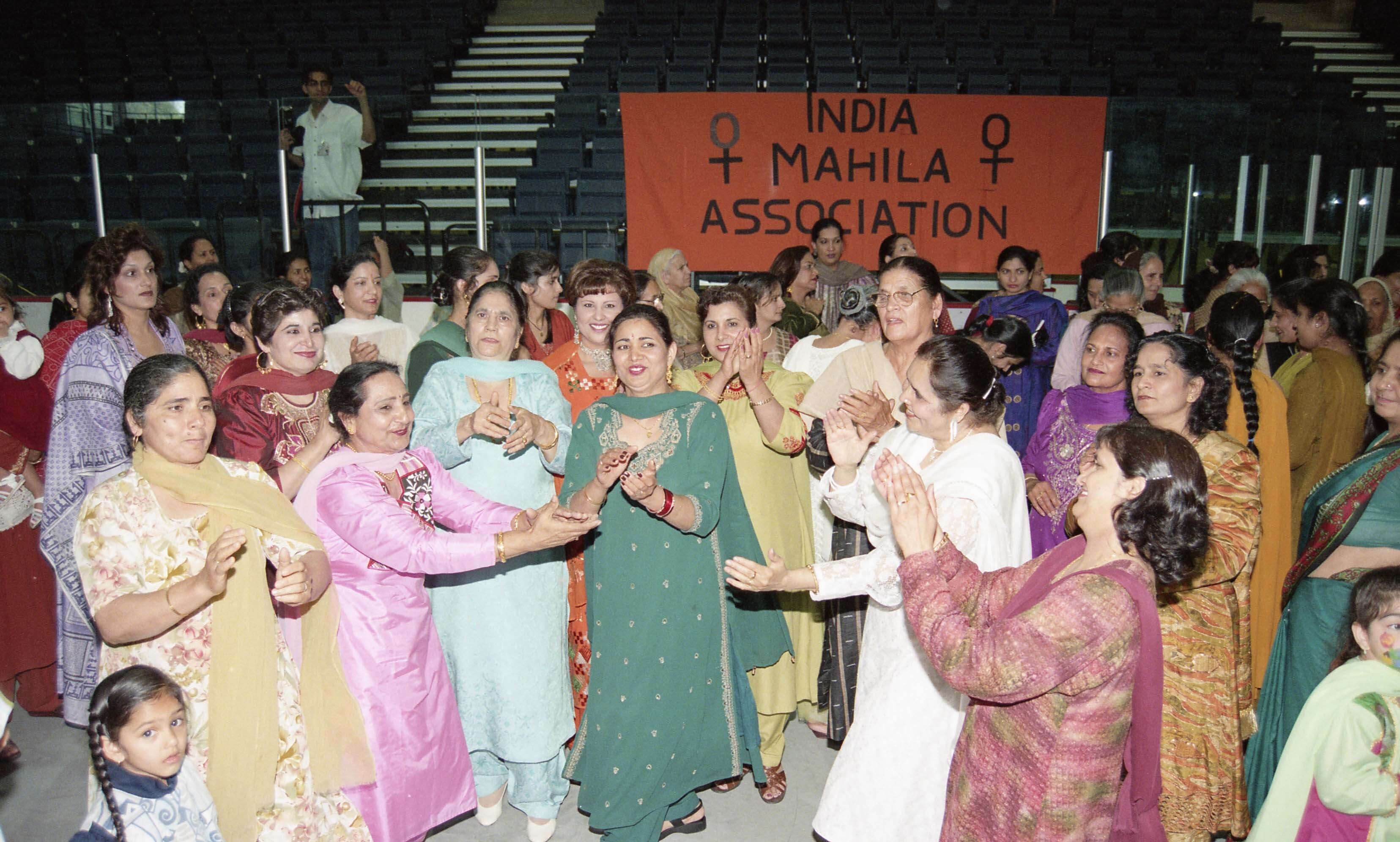
Photograph of a group of unidentified individuals performing folk songs and dancing during giddha [?] at a Teeyan (Teej) festival celebration hosted by the India Mahila Association[?] on August 2, 1998[?]. The event was held in Cloverdale, in Surrey, British Columbia (B.C.).
Teeyan, also known as Teej, is a festival observed primarily by women in the northern regions of India, including Punjab, Rajasthan, Uttar Pradesh, Bihar, Odisha, and Madhya Pradesh. It takes place annually during the months of July or August, marking the beginning of the monsoon season. The festival is associated with religious observance and social gathering, particularly among newly married and unmarried women. Participants celebrate by adorning themselves in traditional attire and taking part in rituals dedicated to Goddess Parvati. The festival involves prayers for the well-being and longevity of husbands or future spouses and includes regional customs that vary by state.
The India Mahila Association (IMA) is a non-profit, volunteer-driven organization established in 1973 to support and empower women of South Asian descent in Canada. Open to women of all backgrounds, IMA focuses on advocacy, education, and community engagement while addressing issues such as gender equality, violence, and discrimination. The organization operates without external funding and has created an endowment fund with the Vancouver Foundation to sustain its mission. For over 50 years, IMA has provided support, resources, and a platform for women to connect and uplift one another.
Giddha is a traditional folk dance performed by women in Punjab during festive occasions, including the Teej festival celebrated in the month of Sawan (July). As part of the Teej celebrations, women gather for twelve consecutive days to perform Giddha, which involves rhythmic clapping, singing of short couplets called boliyan, and expressive movements.
Teeyan, also known as Teej, is a festival observed primarily by women in the northern regions of India, including Punjab, Rajasthan, Uttar Pradesh, Bihar, Odisha, and Madhya Pradesh. It takes place annually during the months of July or August, marking the beginning of the monsoon season. The festival is associated with religious observance and social gathering, particularly among newly married and unmarried women. Participants celebrate by adorning themselves in traditional attire and taking part in rituals dedicated to Goddess Parvati. The festival involves prayers for the well-being and longevity of husbands or future spouses and includes regional customs that vary by state.
The India Mahila Association (IMA) is a non-profit, volunteer-driven organization established in 1973 to support and empower women of South Asian descent in Canada. Open to women of all backgrounds, IMA focuses on advocacy, education, and community engagement while addressing issues such as gender equality, violence, and discrimination. The organization operates without external funding and has created an endowment fund with the Vancouver Foundation to sustain its mission. For over 50 years, IMA has provided support, resources, and a platform for women to connect and uplift one another.
Giddha is a traditional folk dance performed by women in Punjab during festive occasions, including the Teej festival celebrated in the month of Sawan (July). As part of the Teej celebrations, women gather for twelve consecutive days to perform Giddha, which involves rhythmic clapping, singing of short couplets called boliyan, and expressive movements.
Member of
Creator: Bodalia, Chandra
Description
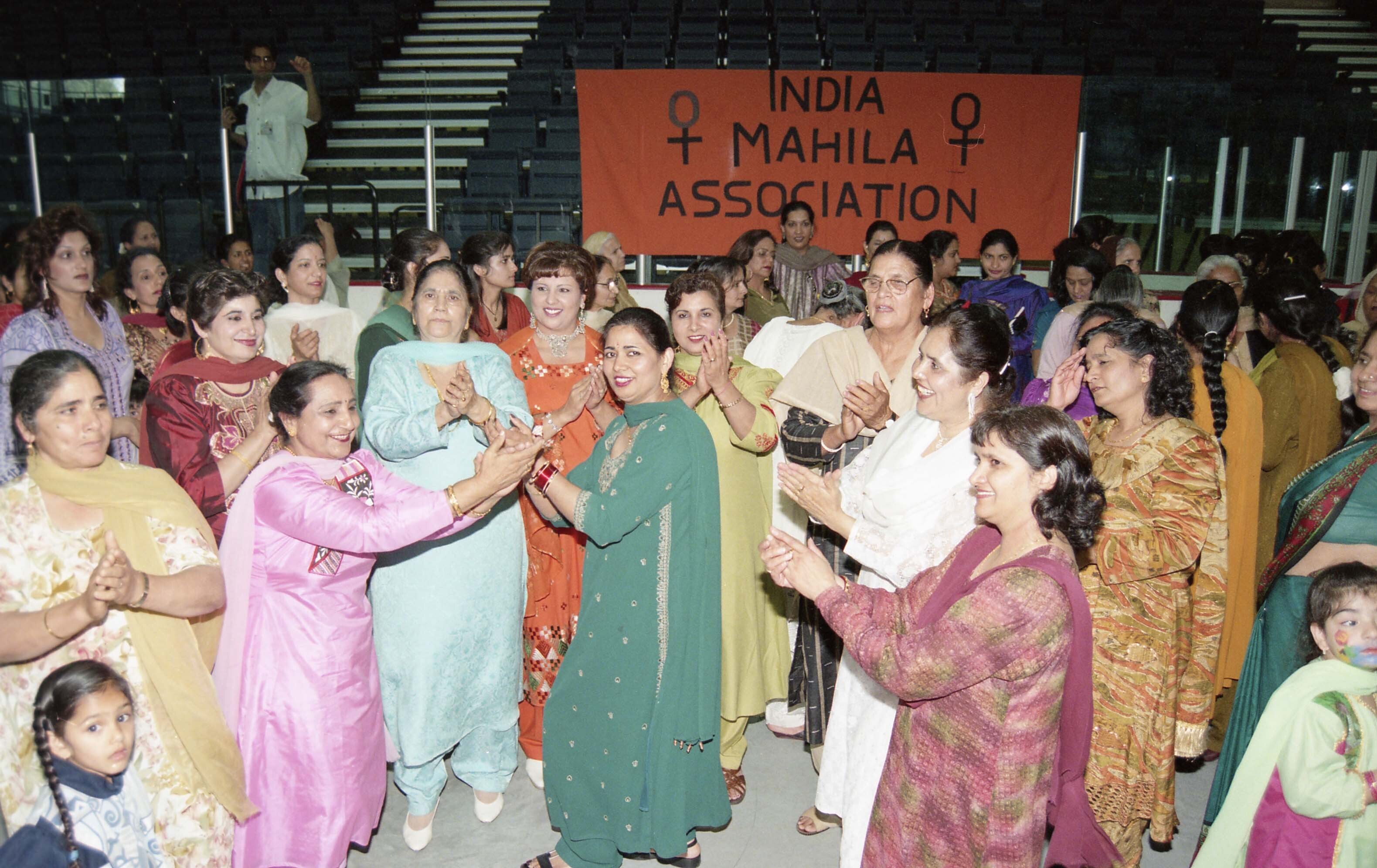
Photograph of a group of unidentified individuals performing folk songs and dancing during giddha [?] at a Teeyan (Teej) festival celebration hosted by the India Mahila Association[?] on August 2, 1998[?]. The event was held in Cloverdale, in Surrey, British Columbia (B.C.).
Teeyan, also known as Teej, is a festival observed primarily by women in the northern regions of India, including Punjab, Rajasthan, Uttar Pradesh, Bihar, Odisha, and Madhya Pradesh. It takes place annually during the months of July or August, marking the beginning of the monsoon season. The festival is associated with religious observance and social gathering, particularly among newly married and unmarried women. Participants celebrate by adorning themselves in traditional attire and taking part in rituals dedicated to Goddess Parvati. The festival involves prayers for the well-being and longevity of husbands or future spouses and includes regional customs that vary by state.
The India Mahila Association (IMA) is a non-profit, volunteer-driven organization established in 1973 to support and empower women of South Asian descent in Canada. Open to women of all backgrounds, IMA focuses on advocacy, education, and community engagement while addressing issues such as gender equality, violence, and discrimination. The organization operates without external funding and has created an endowment fund with the Vancouver Foundation to sustain its mission. For over 50 years, IMA has provided support, resources, and a platform for women to connect and uplift one another.
Giddha is a traditional folk dance performed by women in Punjab during festive occasions, including the Teej festival celebrated in the month of Sawan (July). As part of the Teej celebrations, women gather for twelve consecutive days to perform Giddha, which involves rhythmic clapping, singing of short couplets called boliyan, and expressive movements.
Teeyan, also known as Teej, is a festival observed primarily by women in the northern regions of India, including Punjab, Rajasthan, Uttar Pradesh, Bihar, Odisha, and Madhya Pradesh. It takes place annually during the months of July or August, marking the beginning of the monsoon season. The festival is associated with religious observance and social gathering, particularly among newly married and unmarried women. Participants celebrate by adorning themselves in traditional attire and taking part in rituals dedicated to Goddess Parvati. The festival involves prayers for the well-being and longevity of husbands or future spouses and includes regional customs that vary by state.
The India Mahila Association (IMA) is a non-profit, volunteer-driven organization established in 1973 to support and empower women of South Asian descent in Canada. Open to women of all backgrounds, IMA focuses on advocacy, education, and community engagement while addressing issues such as gender equality, violence, and discrimination. The organization operates without external funding and has created an endowment fund with the Vancouver Foundation to sustain its mission. For over 50 years, IMA has provided support, resources, and a platform for women to connect and uplift one another.
Giddha is a traditional folk dance performed by women in Punjab during festive occasions, including the Teej festival celebrated in the month of Sawan (July). As part of the Teej celebrations, women gather for twelve consecutive days to perform Giddha, which involves rhythmic clapping, singing of short couplets called boliyan, and expressive movements.
Member of
Creator: Bodalia, Chandra
Description
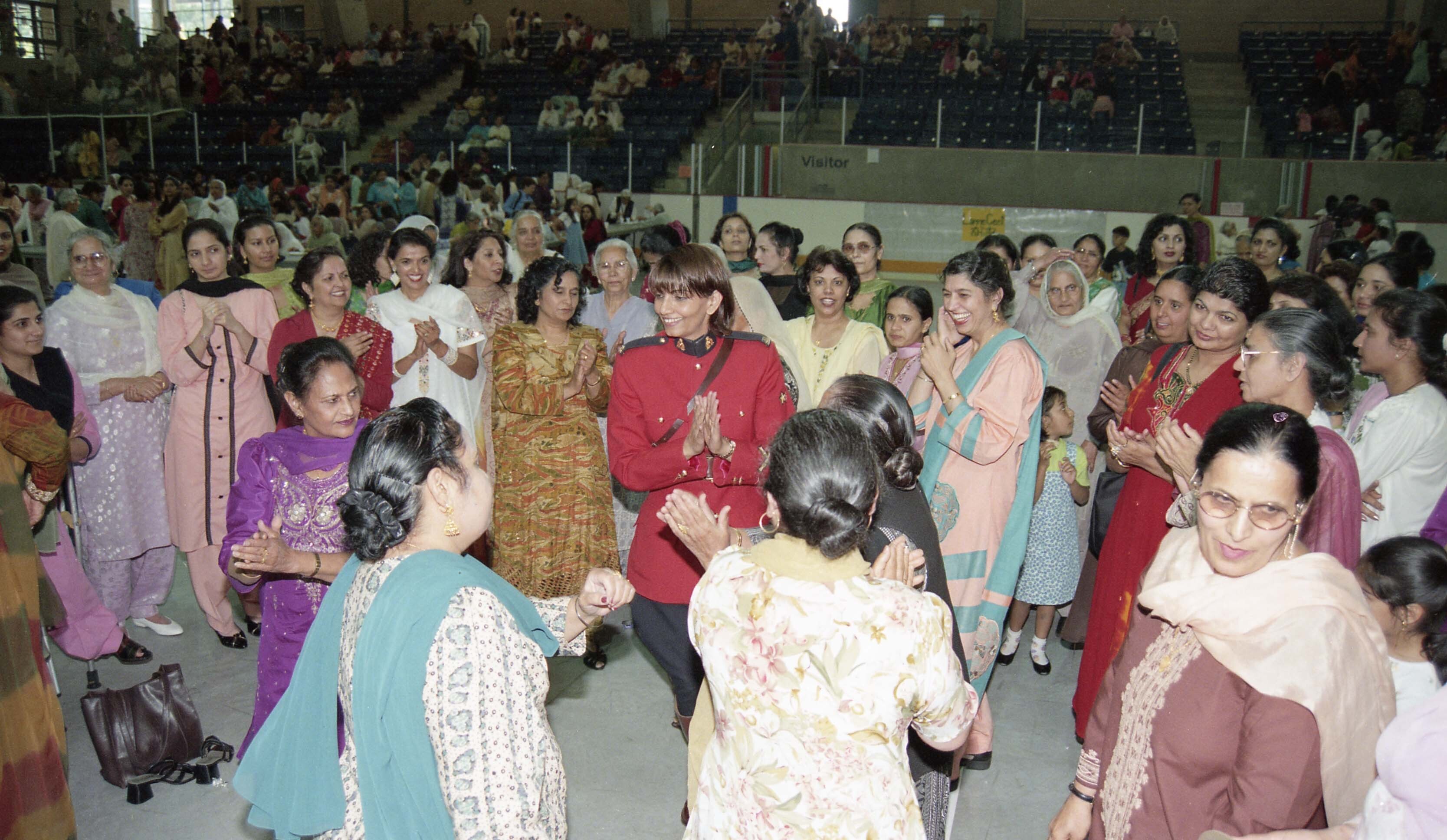
Photograph of a group of unidentified individuals performing folk songs and dancing during giddha [?] at a Teeyan (Teej) festival celebration hosted by the India Mahila Association[?] on August 2, 1998[?]. The event was held in Cloverdale, in Surrey, British Columbia (B.C.).
Teeyan, also known as Teej, is a festival observed primarily by women in the northern regions of India, including Punjab, Rajasthan, Uttar Pradesh, Bihar, Odisha, and Madhya Pradesh. It takes place annually during the months of July or August, marking the beginning of the monsoon season. The festival is associated with religious observance and social gathering, particularly among newly married and unmarried women. Participants celebrate by adorning themselves in traditional attire and taking part in rituals dedicated to Goddess Parvati. The festival involves prayers for the well-being and longevity of husbands or future spouses and includes regional customs that vary by state.
The India Mahila Association (IMA) is a non-profit, volunteer-driven organization established in 1973 to support and empower women of South Asian descent in Canada. Open to women of all backgrounds, IMA focuses on advocacy, education, and community engagement while addressing issues such as gender equality, violence, and discrimination. The organization operates without external funding and has created an endowment fund with the Vancouver Foundation to sustain its mission. For over 50 years, IMA has provided support, resources, and a platform for women to connect and uplift one another.
Giddha is a traditional folk dance performed by women in Punjab during festive occasions, including the Teej festival celebrated in the month of Sawan (July). As part of the Teej celebrations, women gather for twelve consecutive days to perform Giddha, which involves rhythmic clapping, singing of short couplets called boliyan, and expressive movements.
Teeyan, also known as Teej, is a festival observed primarily by women in the northern regions of India, including Punjab, Rajasthan, Uttar Pradesh, Bihar, Odisha, and Madhya Pradesh. It takes place annually during the months of July or August, marking the beginning of the monsoon season. The festival is associated with religious observance and social gathering, particularly among newly married and unmarried women. Participants celebrate by adorning themselves in traditional attire and taking part in rituals dedicated to Goddess Parvati. The festival involves prayers for the well-being and longevity of husbands or future spouses and includes regional customs that vary by state.
The India Mahila Association (IMA) is a non-profit, volunteer-driven organization established in 1973 to support and empower women of South Asian descent in Canada. Open to women of all backgrounds, IMA focuses on advocacy, education, and community engagement while addressing issues such as gender equality, violence, and discrimination. The organization operates without external funding and has created an endowment fund with the Vancouver Foundation to sustain its mission. For over 50 years, IMA has provided support, resources, and a platform for women to connect and uplift one another.
Giddha is a traditional folk dance performed by women in Punjab during festive occasions, including the Teej festival celebrated in the month of Sawan (July). As part of the Teej celebrations, women gather for twelve consecutive days to perform Giddha, which involves rhythmic clapping, singing of short couplets called boliyan, and expressive movements.
Member of
Creator: Bodalia, Chandra
Description
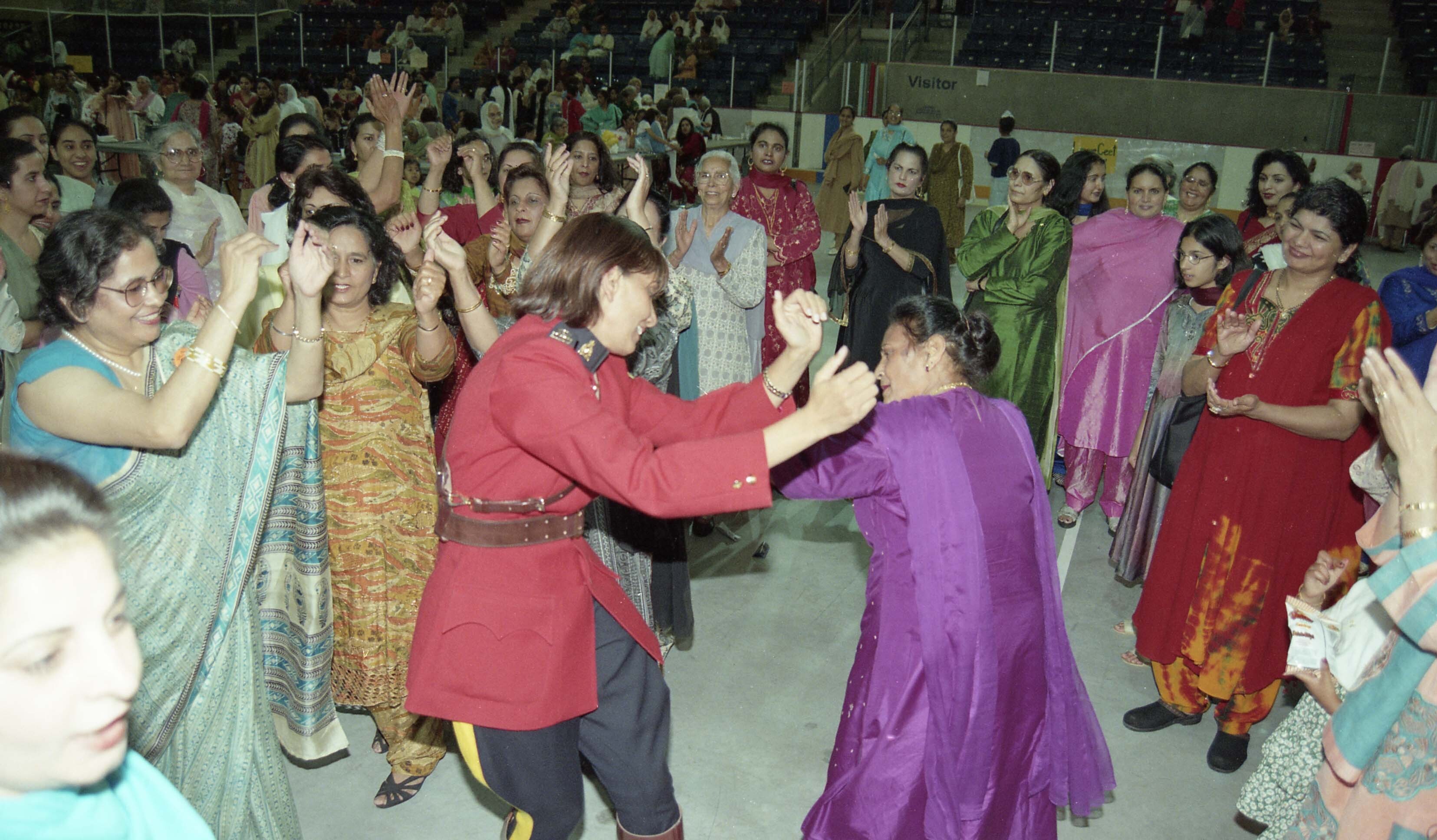
Photograph of a group of unidentified individuals performing folk songs and dancing during giddha [?] at a Teeyan (Teej) festival celebration hosted by the India Mahila Association[?] on August 2, 1998[?]. The event was held in Cloverdale, in Surrey, British Columbia (B.C.).
Teeyan, also known as Teej, is a festival observed primarily by women in the northern regions of India, including Punjab, Rajasthan, Uttar Pradesh, Bihar, Odisha, and Madhya Pradesh. It takes place annually during the months of July or August, marking the beginning of the monsoon season. The festival is associated with religious observance and social gathering, particularly among newly married and unmarried women. Participants celebrate by adorning themselves in traditional attire and taking part in rituals dedicated to Goddess Parvati. The festival involves prayers for the well-being and longevity of husbands or future spouses and includes regional customs that vary by state.
The India Mahila Association (IMA) is a non-profit, volunteer-driven organization established in 1973 to support and empower women of South Asian descent in Canada. Open to women of all backgrounds, IMA focuses on advocacy, education, and community engagement while addressing issues such as gender equality, violence, and discrimination. The organization operates without external funding and has created an endowment fund with the Vancouver Foundation to sustain its mission. For over 50 years, IMA has provided support, resources, and a platform for women to connect and uplift one another.
Giddha is a traditional folk dance performed by women in Punjab during festive occasions, including the Teej festival celebrated in the month of Sawan (July). As part of the Teej celebrations, women gather for twelve consecutive days to perform Giddha, which involves rhythmic clapping, singing of short couplets called boliyan, and expressive movements.
Teeyan, also known as Teej, is a festival observed primarily by women in the northern regions of India, including Punjab, Rajasthan, Uttar Pradesh, Bihar, Odisha, and Madhya Pradesh. It takes place annually during the months of July or August, marking the beginning of the monsoon season. The festival is associated with religious observance and social gathering, particularly among newly married and unmarried women. Participants celebrate by adorning themselves in traditional attire and taking part in rituals dedicated to Goddess Parvati. The festival involves prayers for the well-being and longevity of husbands or future spouses and includes regional customs that vary by state.
The India Mahila Association (IMA) is a non-profit, volunteer-driven organization established in 1973 to support and empower women of South Asian descent in Canada. Open to women of all backgrounds, IMA focuses on advocacy, education, and community engagement while addressing issues such as gender equality, violence, and discrimination. The organization operates without external funding and has created an endowment fund with the Vancouver Foundation to sustain its mission. For over 50 years, IMA has provided support, resources, and a platform for women to connect and uplift one another.
Giddha is a traditional folk dance performed by women in Punjab during festive occasions, including the Teej festival celebrated in the month of Sawan (July). As part of the Teej celebrations, women gather for twelve consecutive days to perform Giddha, which involves rhythmic clapping, singing of short couplets called boliyan, and expressive movements.
Member of
Creator: Bodalia, Chandra
Description
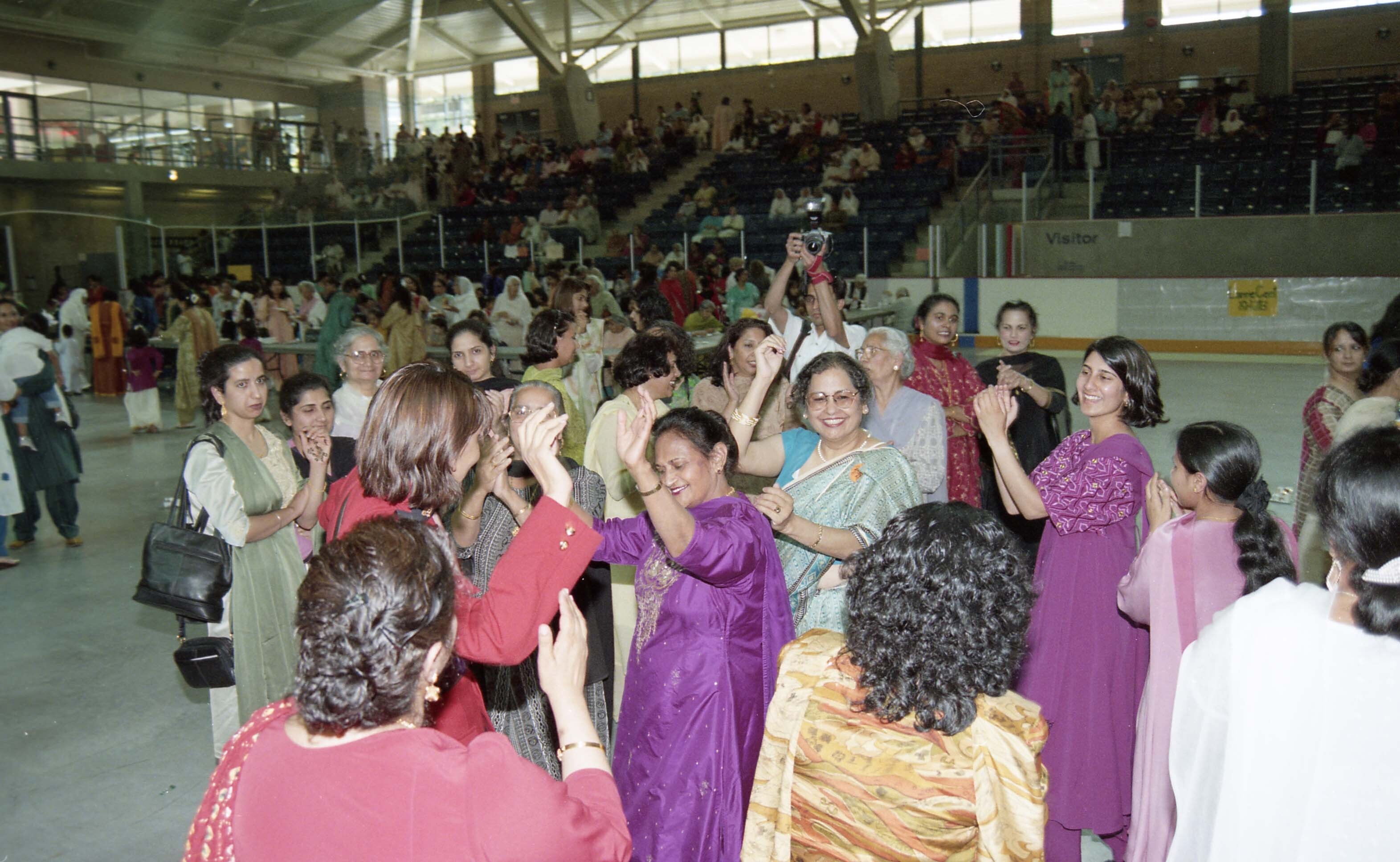
Photograph of a group of unidentified individuals performing folk songs and dancing during giddha [?] at a Teeyan (Teej) festival celebration hosted by the India Mahila Association[?] on August 2, 1998[?]. The event was held in Cloverdale, in Surrey, British Columbia (B.C.).
Teeyan, also known as Teej, is a festival observed primarily by women in the northern regions of India, including Punjab, Rajasthan, Uttar Pradesh, Bihar, Odisha, and Madhya Pradesh. It takes place annually during the months of July or August, marking the beginning of the monsoon season. The festival is associated with religious observance and social gathering, particularly among newly married and unmarried women. Participants celebrate by adorning themselves in traditional attire and taking part in rituals dedicated to Goddess Parvati. The festival involves prayers for the well-being and longevity of husbands or future spouses and includes regional customs that vary by state.
The India Mahila Association (IMA) is a non-profit, volunteer-driven organization established in 1973 to support and empower women of South Asian descent in Canada. Open to women of all backgrounds, IMA focuses on advocacy, education, and community engagement while addressing issues such as gender equality, violence, and discrimination. The organization operates without external funding and has created an endowment fund with the Vancouver Foundation to sustain its mission. For over 50 years, IMA has provided support, resources, and a platform for women to connect and uplift one another.
Giddha is a traditional folk dance performed by women in Punjab during festive occasions, including the Teej festival celebrated in the month of Sawan (July). As part of the Teej celebrations, women gather for twelve consecutive days to perform Giddha, which involves rhythmic clapping, singing of short couplets called boliyan, and expressive movements.
Teeyan, also known as Teej, is a festival observed primarily by women in the northern regions of India, including Punjab, Rajasthan, Uttar Pradesh, Bihar, Odisha, and Madhya Pradesh. It takes place annually during the months of July or August, marking the beginning of the monsoon season. The festival is associated with religious observance and social gathering, particularly among newly married and unmarried women. Participants celebrate by adorning themselves in traditional attire and taking part in rituals dedicated to Goddess Parvati. The festival involves prayers for the well-being and longevity of husbands or future spouses and includes regional customs that vary by state.
The India Mahila Association (IMA) is a non-profit, volunteer-driven organization established in 1973 to support and empower women of South Asian descent in Canada. Open to women of all backgrounds, IMA focuses on advocacy, education, and community engagement while addressing issues such as gender equality, violence, and discrimination. The organization operates without external funding and has created an endowment fund with the Vancouver Foundation to sustain its mission. For over 50 years, IMA has provided support, resources, and a platform for women to connect and uplift one another.
Giddha is a traditional folk dance performed by women in Punjab during festive occasions, including the Teej festival celebrated in the month of Sawan (July). As part of the Teej celebrations, women gather for twelve consecutive days to perform Giddha, which involves rhythmic clapping, singing of short couplets called boliyan, and expressive movements.
Member of
Creator: Bodalia, Chandra
Description
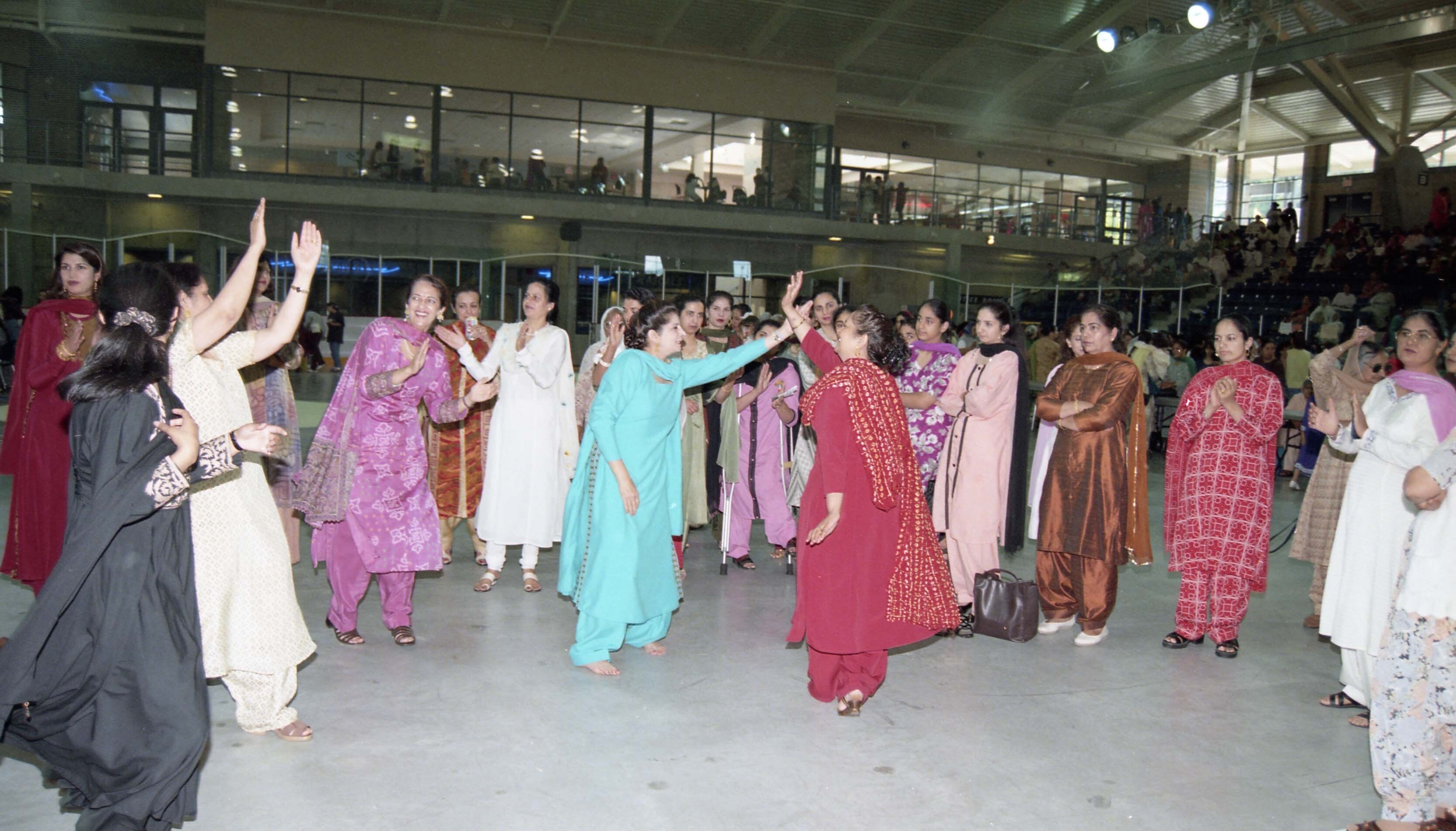
Photograph of a group of unidentified individuals performing folk songs and dancing during giddha [?] at a Teeyan (Teej) festival celebration hosted by the India Mahila Association[?] on August 2, 1998[?]. The event was held in Cloverdale, in Surrey, British Columbia (B.C.).
Teeyan, also known as Teej, is a festival observed primarily by women in the northern regions of India, including Punjab, Rajasthan, Uttar Pradesh, Bihar, Odisha, and Madhya Pradesh. It takes place annually during the months of July or August, marking the beginning of the monsoon season. The festival is associated with religious observance and social gathering, particularly among newly married and unmarried women. Participants celebrate by adorning themselves in traditional attire and taking part in rituals dedicated to Goddess Parvati. The festival involves prayers for the well-being and longevity of husbands or future spouses and includes regional customs that vary by state.
The India Mahila Association (IMA) is a non-profit, volunteer-driven organization established in 1973 to support and empower women of South Asian descent in Canada. Open to women of all backgrounds, IMA focuses on advocacy, education, and community engagement while addressing issues such as gender equality, violence, and discrimination. The organization operates without external funding and has created an endowment fund with the Vancouver Foundation to sustain its mission. For over 50 years, IMA has provided support, resources, and a platform for women to connect and uplift one another.
Giddha is a traditional folk dance performed by women in Punjab during festive occasions, including the Teej festival celebrated in the month of Sawan (July). As part of the Teej celebrations, women gather for twelve consecutive days to perform Giddha, which involves rhythmic clapping, singing of short couplets called boliyan, and expressive movements.
Teeyan, also known as Teej, is a festival observed primarily by women in the northern regions of India, including Punjab, Rajasthan, Uttar Pradesh, Bihar, Odisha, and Madhya Pradesh. It takes place annually during the months of July or August, marking the beginning of the monsoon season. The festival is associated with religious observance and social gathering, particularly among newly married and unmarried women. Participants celebrate by adorning themselves in traditional attire and taking part in rituals dedicated to Goddess Parvati. The festival involves prayers for the well-being and longevity of husbands or future spouses and includes regional customs that vary by state.
The India Mahila Association (IMA) is a non-profit, volunteer-driven organization established in 1973 to support and empower women of South Asian descent in Canada. Open to women of all backgrounds, IMA focuses on advocacy, education, and community engagement while addressing issues such as gender equality, violence, and discrimination. The organization operates without external funding and has created an endowment fund with the Vancouver Foundation to sustain its mission. For over 50 years, IMA has provided support, resources, and a platform for women to connect and uplift one another.
Giddha is a traditional folk dance performed by women in Punjab during festive occasions, including the Teej festival celebrated in the month of Sawan (July). As part of the Teej celebrations, women gather for twelve consecutive days to perform Giddha, which involves rhythmic clapping, singing of short couplets called boliyan, and expressive movements.