
India Mahila Association
Creator: Chandra Bodalia
Description
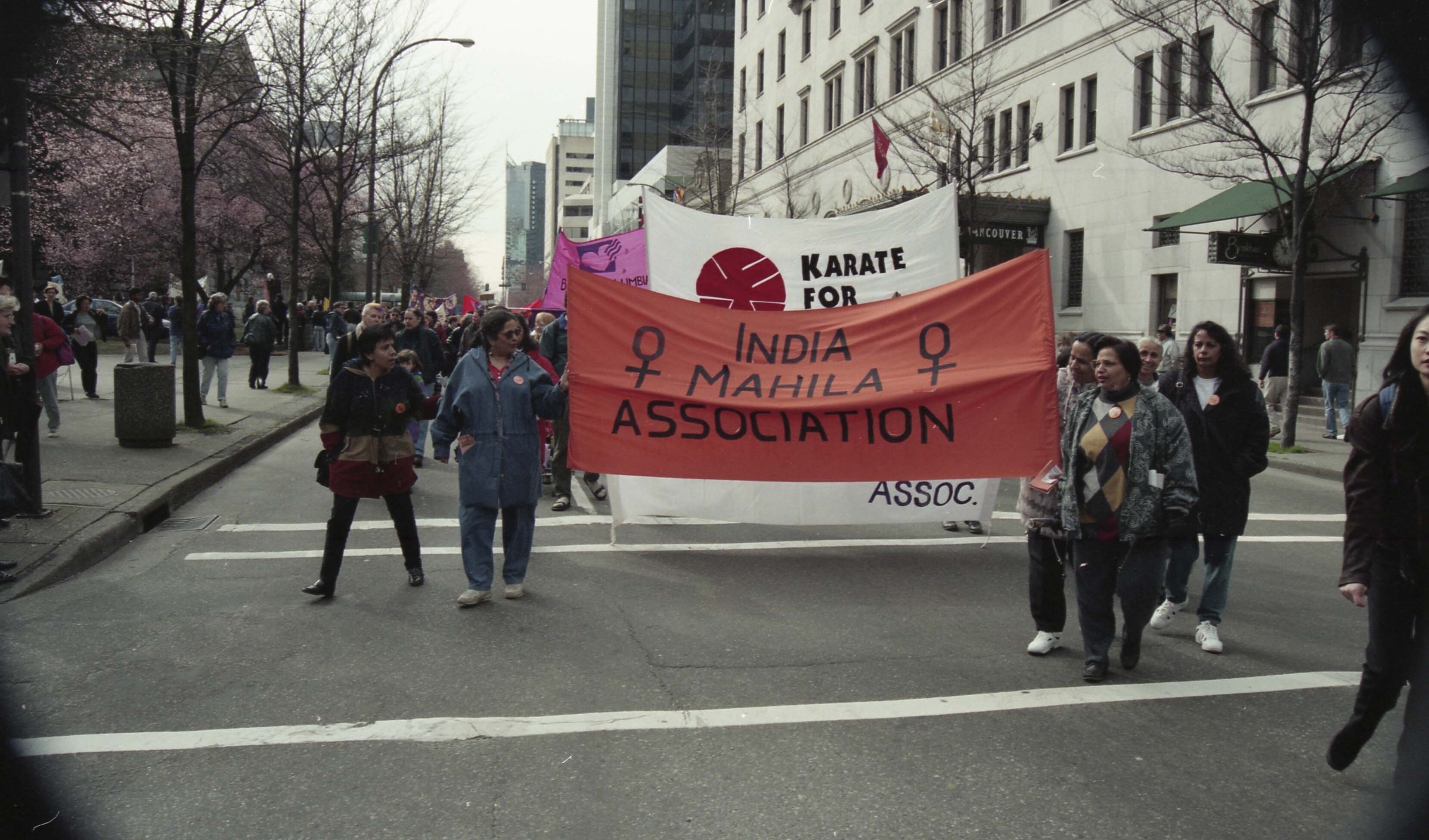
Photograph of a group of unidentified individuals, holding signs and banners, participating in the International Women's day parade which took place in Vancouver, British Columbia (B.C.).
International Women's Day (IWD) is a specific day dedicated to the advancement of women worldwide; celebrated annually on March 8, to honor the achievements of women across all aspects of life – social, economic, cultural, and political – while also advocating for gender equality. Originating from labor movements in the early 20th century, IWD has evolved into a globally recognized occasion marked by events, discussions, and initiatives advocating for inclusivity and equity. IWD was marked for the first time in 1911 in Austria, Denmark, Germany and Switzerland, on March 19, with more than one million women and men attending rallies.
International Women's Day (IWD) is a specific day dedicated to the advancement of women worldwide; celebrated annually on March 8, to honor the achievements of women across all aspects of life – social, economic, cultural, and political – while also advocating for gender equality. Originating from labor movements in the early 20th century, IWD has evolved into a globally recognized occasion marked by events, discussions, and initiatives advocating for inclusivity and equity. IWD was marked for the first time in 1911 in Austria, Denmark, Germany and Switzerland, on March 19, with more than one million women and men attending rallies.
Creator: Chandra Bodalia
Description
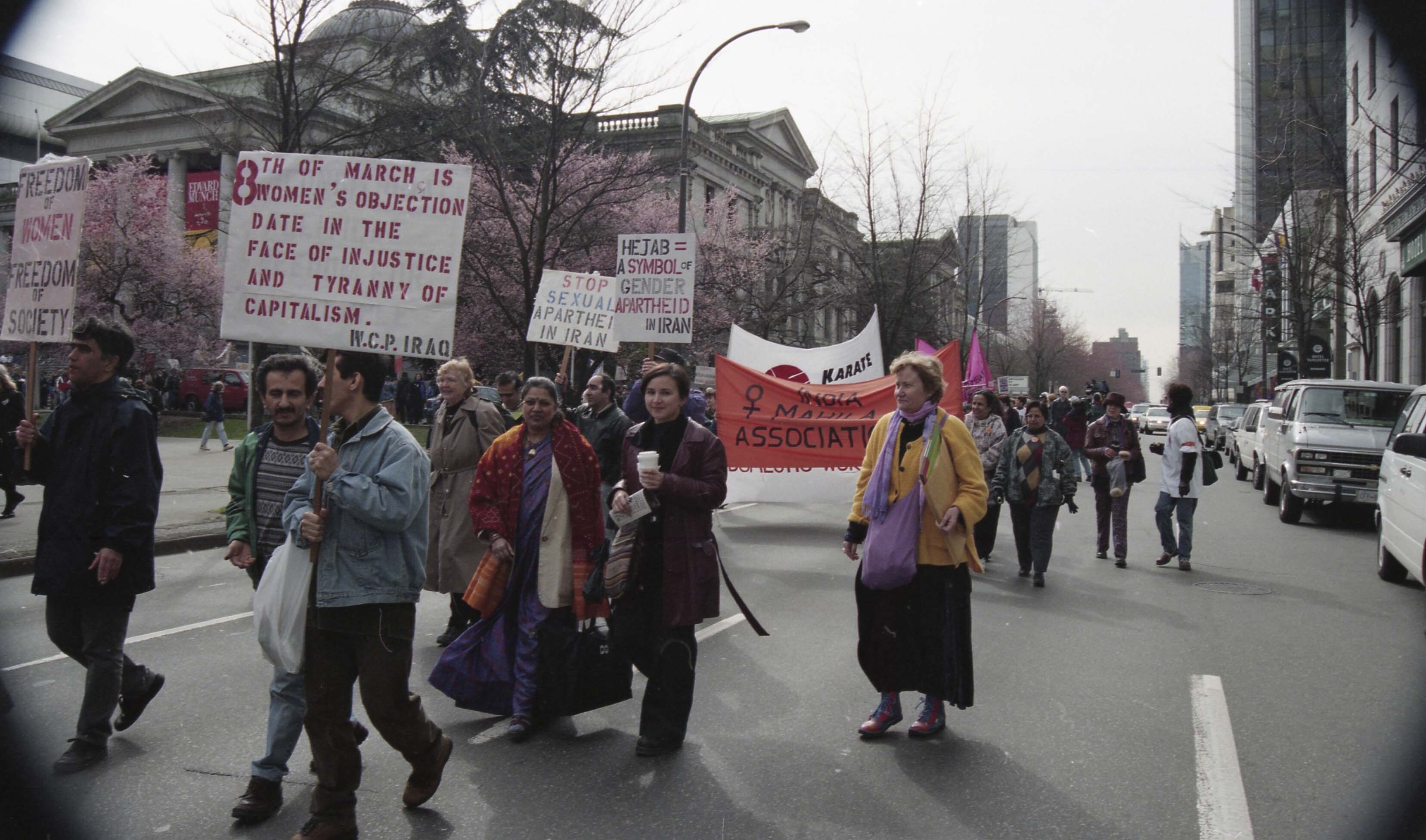
Photograph of a group of unidentified individuals, holding signs and banners, participating in the International Women's day parade which took place in Vancouver, British Columbia (B.C.).
International Women's Day (IWD) is a specific day dedicated to the advancement of women worldwide; celebrated annually on March 8, to honor the achievements of women across all aspects of life – social, economic, cultural, and political – while also advocating for gender equality. Originating from labor movements in the early 20th century, IWD has evolved into a globally recognized occasion marked by events, discussions, and initiatives advocating for inclusivity and equity. IWD was marked for the first time in 1911 in Austria, Denmark, Germany and Switzerland, on March 19, with more than one million women and men attending rallies.
International Women's Day (IWD) is a specific day dedicated to the advancement of women worldwide; celebrated annually on March 8, to honor the achievements of women across all aspects of life – social, economic, cultural, and political – while also advocating for gender equality. Originating from labor movements in the early 20th century, IWD has evolved into a globally recognized occasion marked by events, discussions, and initiatives advocating for inclusivity and equity. IWD was marked for the first time in 1911 in Austria, Denmark, Germany and Switzerland, on March 19, with more than one million women and men attending rallies.
Creator: Chandra Bodalia
Description
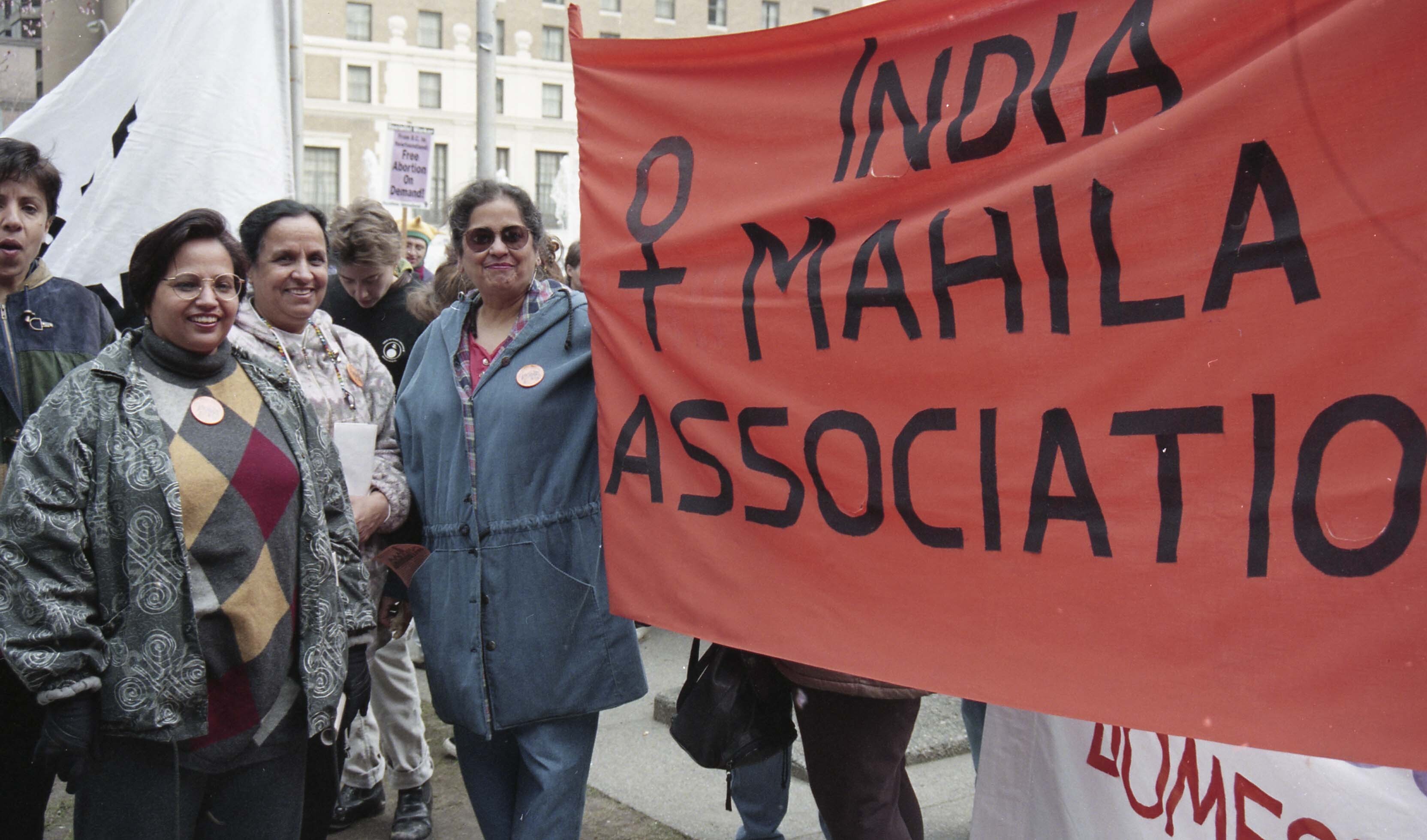
Photograph of the India Mahila Association participating in the International Women's Day event which took place in Vancouver, British Columbia (B.C.).
The India Mahila Association (IMA) is a non-profit, volunteer-driven organization established in 1973 to support and empower women of South Asian descent in Canada. Open to women of all backgrounds, IMA focuses on advocacy, education, and community engagement while addressing issues such as gender equality, violence, and discrimination. The organization operates without external funding and has created an endowment fund with the Vancouver Foundation to sustain its mission. For over 50 years, IMA has provided support, resources, and a platform for women to connect and uplift one another.
International Women's Day (IWD) is a specific day dedicated to the advancement of women worldwide; celebrated annually on March 8, to honor the achievements of women across all aspects of life – social, economic, cultural, and political – while also advocating for gender equality. Originating from labor movements in the early 20th century, IWD has evolved into a globally recognized occasion marked by events, discussions, and initiatives advocating for inclusivity and equity. IWD was marked for the first time in 1911 in Austria, Denmark, Germany and Switzerland, on March 19, with more than one million women and men attending rallies.
The India Mahila Association (IMA) is a non-profit, volunteer-driven organization established in 1973 to support and empower women of South Asian descent in Canada. Open to women of all backgrounds, IMA focuses on advocacy, education, and community engagement while addressing issues such as gender equality, violence, and discrimination. The organization operates without external funding and has created an endowment fund with the Vancouver Foundation to sustain its mission. For over 50 years, IMA has provided support, resources, and a platform for women to connect and uplift one another.
International Women's Day (IWD) is a specific day dedicated to the advancement of women worldwide; celebrated annually on March 8, to honor the achievements of women across all aspects of life – social, economic, cultural, and political – while also advocating for gender equality. Originating from labor movements in the early 20th century, IWD has evolved into a globally recognized occasion marked by events, discussions, and initiatives advocating for inclusivity and equity. IWD was marked for the first time in 1911 in Austria, Denmark, Germany and Switzerland, on March 19, with more than one million women and men attending rallies.
Creator: Chandra Bodalia
Description
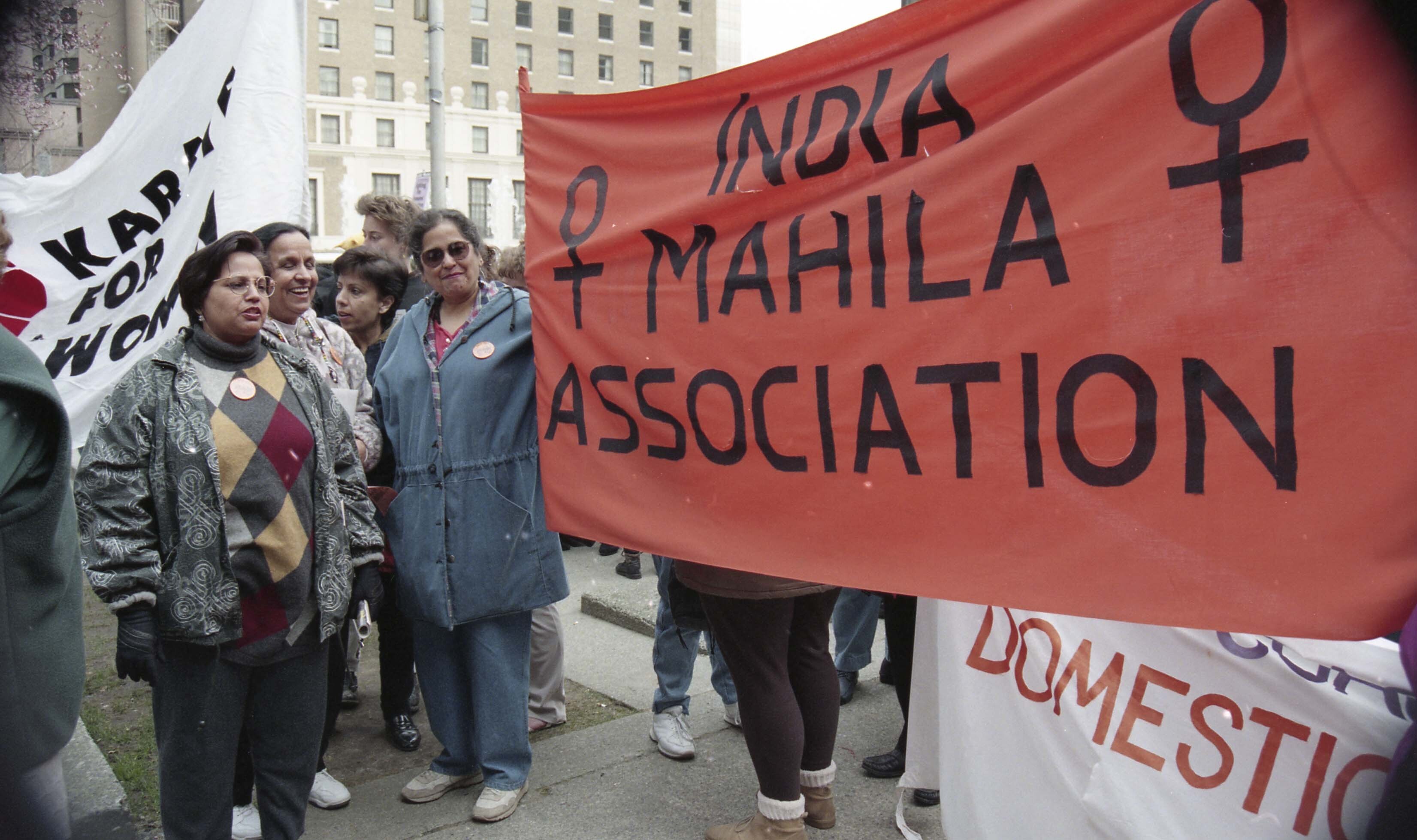
Photograph of the India Mahila Association participating in the International Women's Day event which took place in Vancouver, British Columbia (B.C.).
The India Mahila Association (IMA) is a non-profit, volunteer-driven organization established in 1973 to support and empower women of South Asian descent in Canada. Open to women of all backgrounds, IMA focuses on advocacy, education, and community engagement while addressing issues such as gender equality, violence, and discrimination. The organization operates without external funding and has created an endowment fund with the Vancouver Foundation to sustain its mission. For over 50 years, IMA has provided support, resources, and a platform for women to connect and uplift one another.
International Women's Day (IWD) is a specific day dedicated to the advancement of women worldwide; celebrated annually on March 8, to honor the achievements of women across all aspects of life – social, economic, cultural, and political – while also advocating for gender equality. Originating from labor movements in the early 20th century, IWD has evolved into a globally recognized occasion marked by events, discussions, and initiatives advocating for inclusivity and equity. IWD was marked for the first time in 1911 in Austria, Denmark, Germany and Switzerland, on March 19, with more than one million women and men attending rallies.
The India Mahila Association (IMA) is a non-profit, volunteer-driven organization established in 1973 to support and empower women of South Asian descent in Canada. Open to women of all backgrounds, IMA focuses on advocacy, education, and community engagement while addressing issues such as gender equality, violence, and discrimination. The organization operates without external funding and has created an endowment fund with the Vancouver Foundation to sustain its mission. For over 50 years, IMA has provided support, resources, and a platform for women to connect and uplift one another.
International Women's Day (IWD) is a specific day dedicated to the advancement of women worldwide; celebrated annually on March 8, to honor the achievements of women across all aspects of life – social, economic, cultural, and political – while also advocating for gender equality. Originating from labor movements in the early 20th century, IWD has evolved into a globally recognized occasion marked by events, discussions, and initiatives advocating for inclusivity and equity. IWD was marked for the first time in 1911 in Austria, Denmark, Germany and Switzerland, on March 19, with more than one million women and men attending rallies.
Creator: Chandra Bodalia
Description
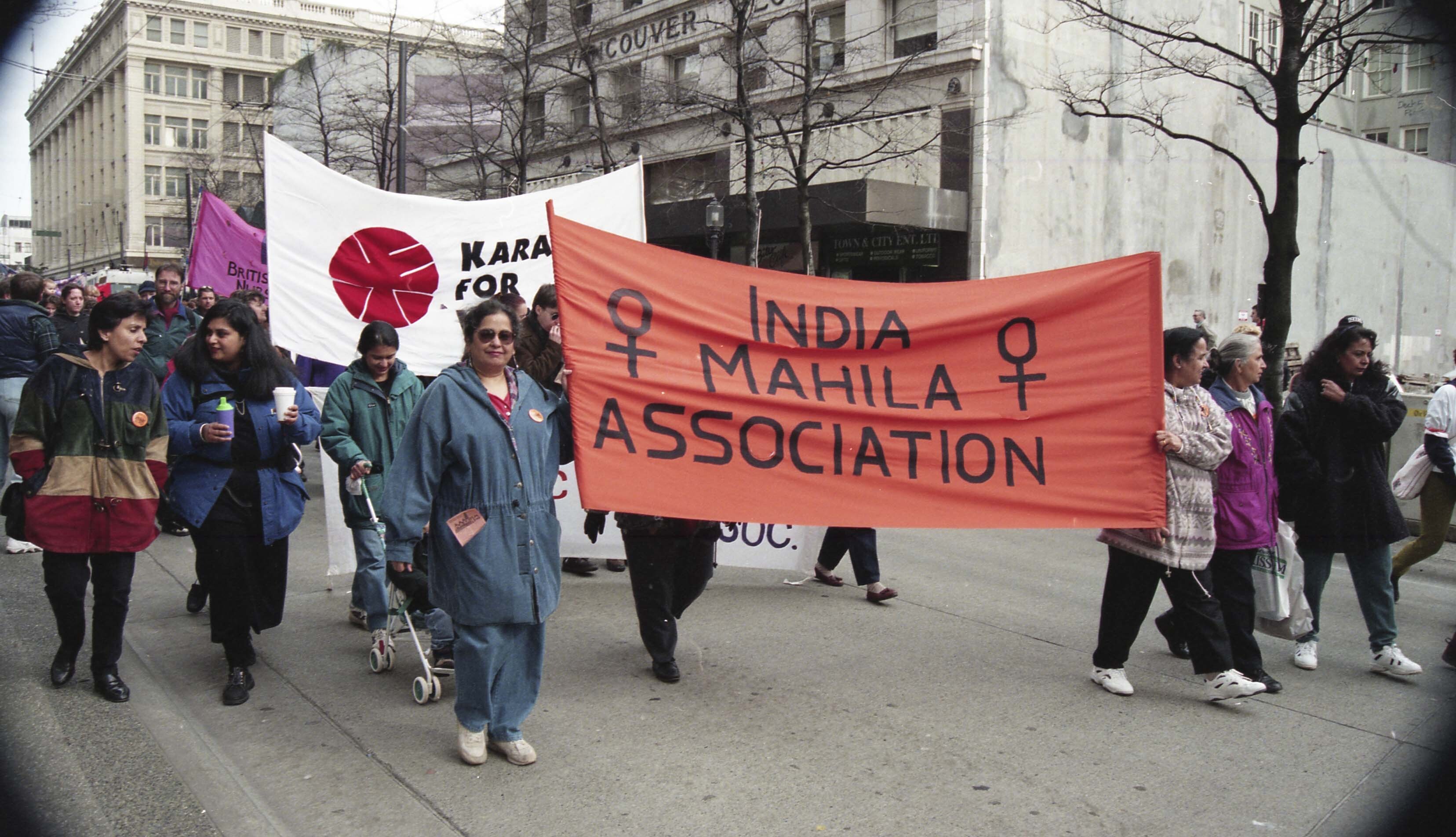
Photograph of the India Mahila Association participating in the International Women's Day parade which took place in Vancouver, British Columbia (B.C.).
The India Mahila Association (IMA) is a non-profit, volunteer-driven organization established in 1973 to support and empower women of South Asian descent in Canada. Open to women of all backgrounds, IMA focuses on advocacy, education, and community engagement while addressing issues such as gender equality, violence, and discrimination. The organization operates without external funding and has created an endowment fund with the Vancouver Foundation to sustain its mission. For over 50 years, IMA has provided support, resources, and a platform for women to connect and uplift one another.
International Women's Day (IWD) is a specific day dedicated to the advancement of women worldwide; celebrated annually on March 8, to honor the achievements of women across all aspects of life – social, economic, cultural, and political – while also advocating for gender equality. Originating from labor movements in the early 20th century, IWD has evolved into a globally recognized occasion marked by events, discussions, and initiatives advocating for inclusivity and equity. IWD was marked for the first time in 1911 in Austria, Denmark, Germany and Switzerland, on March 19, with more than one million women and men attending rallies.
The India Mahila Association (IMA) is a non-profit, volunteer-driven organization established in 1973 to support and empower women of South Asian descent in Canada. Open to women of all backgrounds, IMA focuses on advocacy, education, and community engagement while addressing issues such as gender equality, violence, and discrimination. The organization operates without external funding and has created an endowment fund with the Vancouver Foundation to sustain its mission. For over 50 years, IMA has provided support, resources, and a platform for women to connect and uplift one another.
International Women's Day (IWD) is a specific day dedicated to the advancement of women worldwide; celebrated annually on March 8, to honor the achievements of women across all aspects of life – social, economic, cultural, and political – while also advocating for gender equality. Originating from labor movements in the early 20th century, IWD has evolved into a globally recognized occasion marked by events, discussions, and initiatives advocating for inclusivity and equity. IWD was marked for the first time in 1911 in Austria, Denmark, Germany and Switzerland, on March 19, with more than one million women and men attending rallies.
Creator: Chandra Bodalia
Description
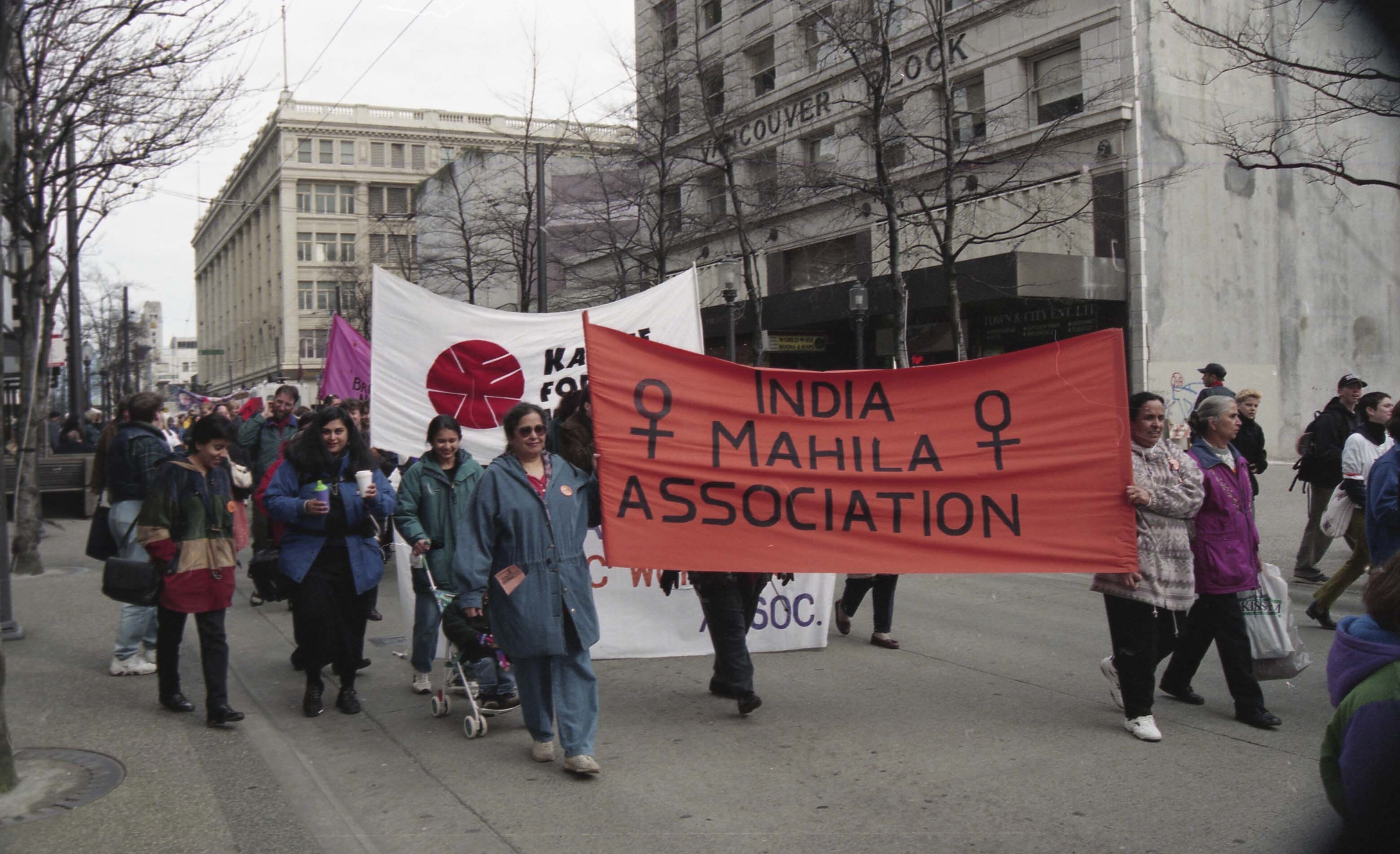
Photograph of the India Mahila Association participating in the International Women's Day parade which took place in Vancouver, British Columbia (B.C.).
The India Mahila Association (IMA) is a non-profit, volunteer-driven organization established in 1973 to support and empower women of South Asian descent in Canada. Open to women of all backgrounds, IMA focuses on advocacy, education, and community engagement while addressing issues such as gender equality, violence, and discrimination. The organization operates without external funding and has created an endowment fund with the Vancouver Foundation to sustain its mission. For over 50 years, IMA has provided support, resources, and a platform for women to connect and uplift one another.
International Women's Day (IWD) is a specific day dedicated to the advancement of women worldwide; celebrated annually on March 8, to honor the achievements of women across all aspects of life – social, economic, cultural, and political – while also advocating for gender equality. Originating from labor movements in the early 20th century, IWD has evolved into a globally recognized occasion marked by events, discussions, and initiatives advocating for inclusivity and equity. IWD was marked for the first time in 1911 in Austria, Denmark, Germany and Switzerland, on March 19, with more than one million women and men attending rallies.
The India Mahila Association (IMA) is a non-profit, volunteer-driven organization established in 1973 to support and empower women of South Asian descent in Canada. Open to women of all backgrounds, IMA focuses on advocacy, education, and community engagement while addressing issues such as gender equality, violence, and discrimination. The organization operates without external funding and has created an endowment fund with the Vancouver Foundation to sustain its mission. For over 50 years, IMA has provided support, resources, and a platform for women to connect and uplift one another.
International Women's Day (IWD) is a specific day dedicated to the advancement of women worldwide; celebrated annually on March 8, to honor the achievements of women across all aspects of life – social, economic, cultural, and political – while also advocating for gender equality. Originating from labor movements in the early 20th century, IWD has evolved into a globally recognized occasion marked by events, discussions, and initiatives advocating for inclusivity and equity. IWD was marked for the first time in 1911 in Austria, Denmark, Germany and Switzerland, on March 19, with more than one million women and men attending rallies.
Member of
Creator: Bodalia, Chandra
Description
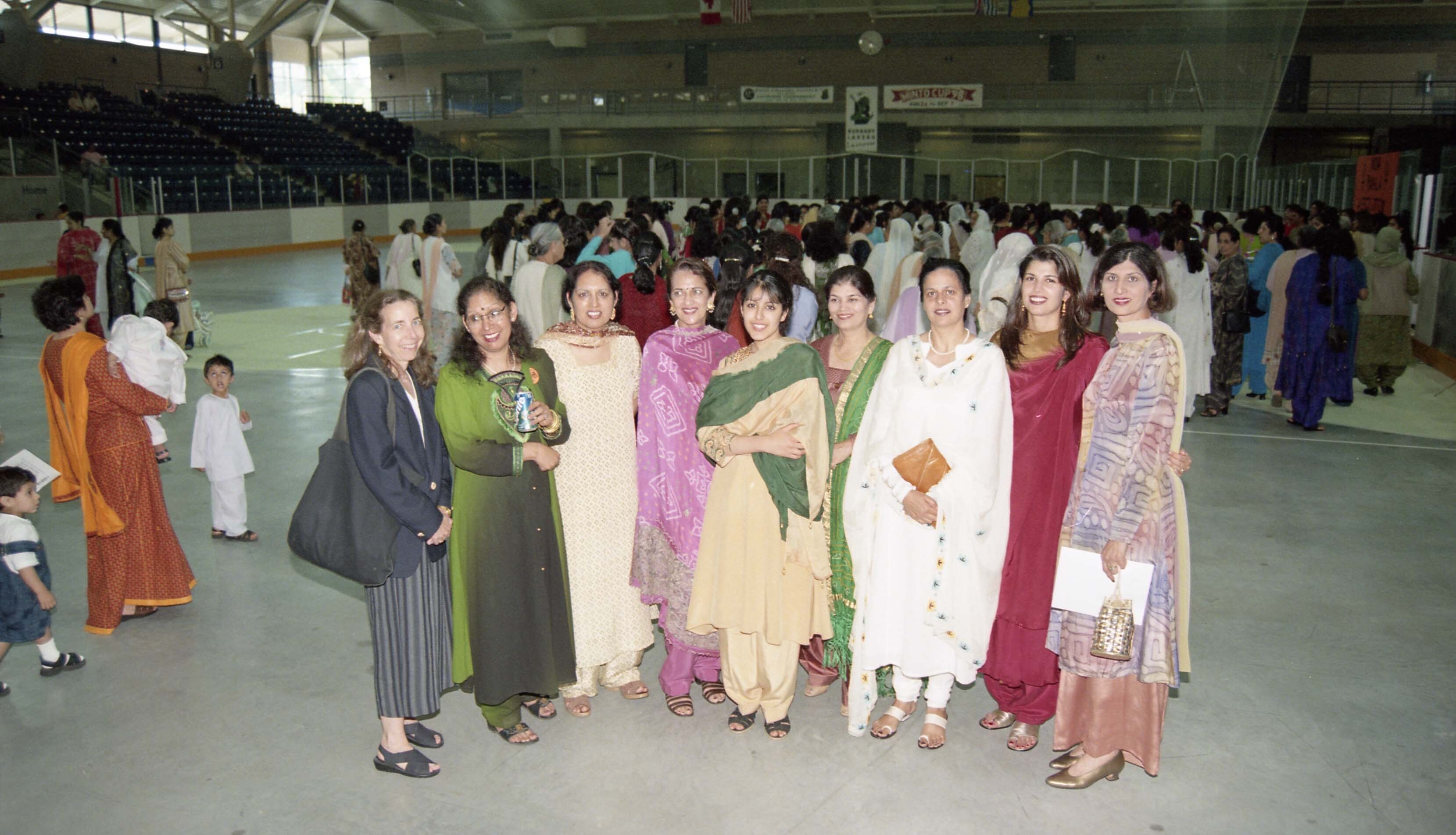
Photograph of a group of unidentified individuals at a Teeyan (Teej) festival celebration hosted by the India Mahila Association[?] on August 2, 1998[?]. The event was held in Cloverdale, in Surrey, British Columbia (B.C.).
Teeyan, also known as Teej, is a festival observed primarily by women in the northern regions of India, including Punjab, Rajasthan, Uttar Pradesh, Bihar, Odisha, and Madhya Pradesh. It takes place annually during the months of July or August, marking the beginning of the monsoon season. The festival is associated with religious observance and social gathering, particularly among newly married and unmarried women. Participants celebrate by adorning themselves in traditional attire and taking part in rituals dedicated to Goddess Parvati. The festival involves prayers for the well-being and longevity of husbands or future spouses and includes regional customs that vary by state.
The India Mahila Association (IMA) is a non-profit, volunteer-driven organization established in 1973 to support and empower women of South Asian descent in Canada. Open to women of all backgrounds, IMA focuses on advocacy, education, and community engagement while addressing issues such as gender equality, violence, and discrimination. The organization operates without external funding and has created an endowment fund with the Vancouver Foundation to sustain its mission. For over 50 years, IMA has provided support, resources, and a platform for women to connect and uplift one another.
Teeyan, also known as Teej, is a festival observed primarily by women in the northern regions of India, including Punjab, Rajasthan, Uttar Pradesh, Bihar, Odisha, and Madhya Pradesh. It takes place annually during the months of July or August, marking the beginning of the monsoon season. The festival is associated with religious observance and social gathering, particularly among newly married and unmarried women. Participants celebrate by adorning themselves in traditional attire and taking part in rituals dedicated to Goddess Parvati. The festival involves prayers for the well-being and longevity of husbands or future spouses and includes regional customs that vary by state.
The India Mahila Association (IMA) is a non-profit, volunteer-driven organization established in 1973 to support and empower women of South Asian descent in Canada. Open to women of all backgrounds, IMA focuses on advocacy, education, and community engagement while addressing issues such as gender equality, violence, and discrimination. The organization operates without external funding and has created an endowment fund with the Vancouver Foundation to sustain its mission. For over 50 years, IMA has provided support, resources, and a platform for women to connect and uplift one another.
Member of
Creator: Bodalia, Chandra
Description
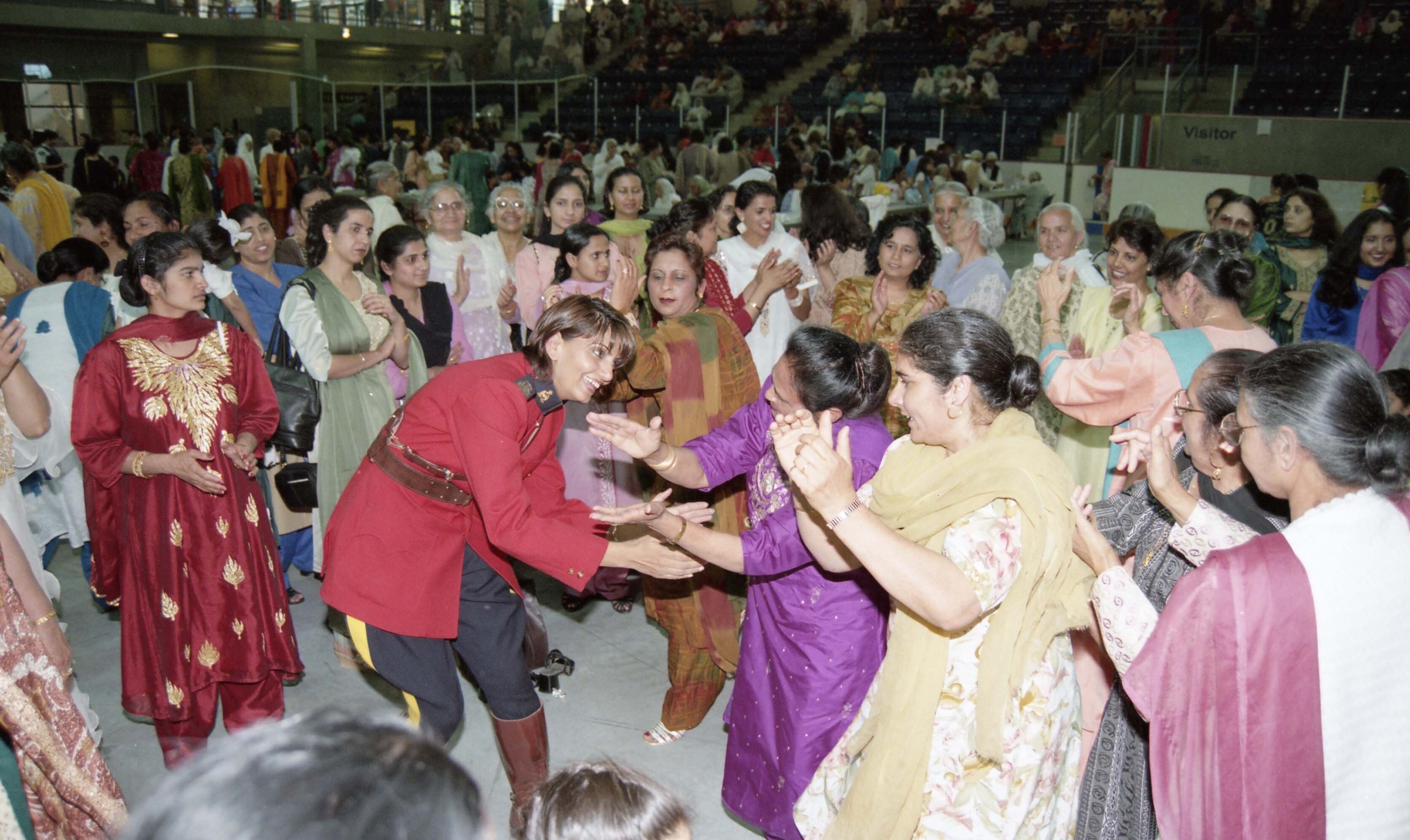
Photograph of a group of unidentified individuals performing folk songs and dancing during giddha [?] at a Teeyan (Teej) festival celebration hosted by the India Mahila Association[?] on August 2, 1998[?]. The event was held in Cloverdale, in Surrey, British Columbia (B.C.).
Teeyan, also known as Teej, is a festival observed primarily by women in the northern regions of India, including Punjab, Rajasthan, Uttar Pradesh, Bihar, Odisha, and Madhya Pradesh. It takes place annually during the months of July or August, marking the beginning of the monsoon season. The festival is associated with religious observance and social gathering, particularly among newly married and unmarried women. Participants celebrate by adorning themselves in traditional attire and taking part in rituals dedicated to Goddess Parvati. The festival involves prayers for the well-being and longevity of husbands or future spouses and includes regional customs that vary by state.
The India Mahila Association (IMA) is a non-profit, volunteer-driven organization established in 1973 to support and empower women of South Asian descent in Canada. Open to women of all backgrounds, IMA focuses on advocacy, education, and community engagement while addressing issues such as gender equality, violence, and discrimination. The organization operates without external funding and has created an endowment fund with the Vancouver Foundation to sustain its mission. For over 50 years, IMA has provided support, resources, and a platform for women to connect and uplift one another.
Giddha is a traditional folk dance performed by women in Punjab during festive occasions, including the Teej festival celebrated in the month of Sawan (July). As part of the Teej celebrations, women gather for twelve consecutive days to perform Giddha, which involves rhythmic clapping, singing of short couplets called boliyan, and expressive movements.
Teeyan, also known as Teej, is a festival observed primarily by women in the northern regions of India, including Punjab, Rajasthan, Uttar Pradesh, Bihar, Odisha, and Madhya Pradesh. It takes place annually during the months of July or August, marking the beginning of the monsoon season. The festival is associated with religious observance and social gathering, particularly among newly married and unmarried women. Participants celebrate by adorning themselves in traditional attire and taking part in rituals dedicated to Goddess Parvati. The festival involves prayers for the well-being and longevity of husbands or future spouses and includes regional customs that vary by state.
The India Mahila Association (IMA) is a non-profit, volunteer-driven organization established in 1973 to support and empower women of South Asian descent in Canada. Open to women of all backgrounds, IMA focuses on advocacy, education, and community engagement while addressing issues such as gender equality, violence, and discrimination. The organization operates without external funding and has created an endowment fund with the Vancouver Foundation to sustain its mission. For over 50 years, IMA has provided support, resources, and a platform for women to connect and uplift one another.
Giddha is a traditional folk dance performed by women in Punjab during festive occasions, including the Teej festival celebrated in the month of Sawan (July). As part of the Teej celebrations, women gather for twelve consecutive days to perform Giddha, which involves rhythmic clapping, singing of short couplets called boliyan, and expressive movements.
Member of
Creator: Bodalia, Chandra
Description
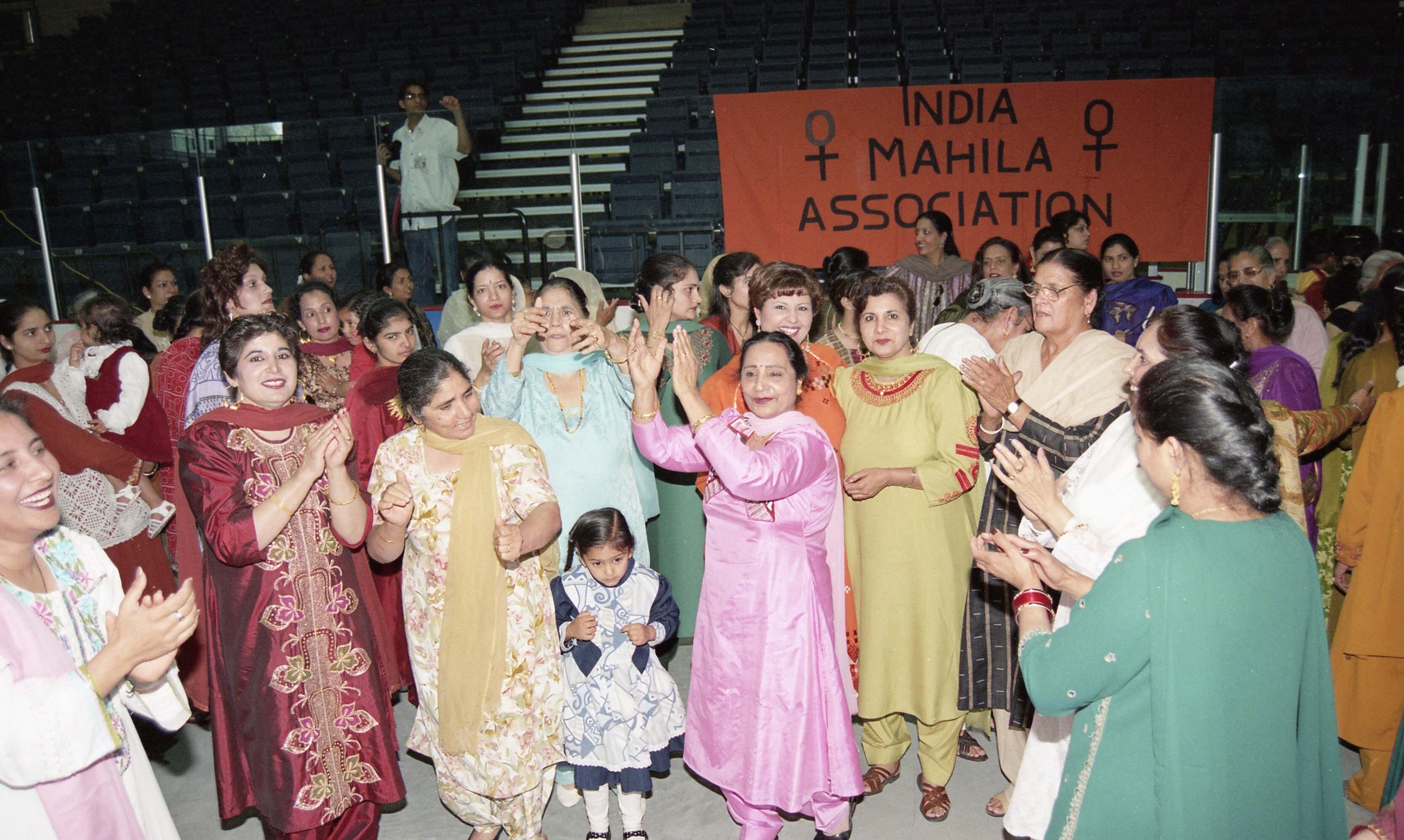
Photograph of a group of unidentified individuals performing folk songs and dancing during giddha [?] at a Teeyan (Teej) festival celebration hosted by the India Mahila Association[?] on August 2, 1998[?]. The event was held in Cloverdale, in Surrey, British Columbia (B.C.).
Teeyan, also known as Teej, is a festival observed primarily by women in the northern regions of India, including Punjab, Rajasthan, Uttar Pradesh, Bihar, Odisha, and Madhya Pradesh. It takes place annually during the months of July or August, marking the beginning of the monsoon season. The festival is associated with religious observance and social gathering, particularly among newly married and unmarried women. Participants celebrate by adorning themselves in traditional attire and taking part in rituals dedicated to Goddess Parvati. The festival involves prayers for the well-being and longevity of husbands or future spouses and includes regional customs that vary by state.
The India Mahila Association (IMA) is a non-profit, volunteer-driven organization established in 1973 to support and empower women of South Asian descent in Canada. Open to women of all backgrounds, IMA focuses on advocacy, education, and community engagement while addressing issues such as gender equality, violence, and discrimination. The organization operates without external funding and has created an endowment fund with the Vancouver Foundation to sustain its mission. For over 50 years, IMA has provided support, resources, and a platform for women to connect and uplift one another.
Giddha is a traditional folk dance performed by women in Punjab during festive occasions, including the Teej festival celebrated in the month of Sawan (July). As part of the Teej celebrations, women gather for twelve consecutive days to perform Giddha, which involves rhythmic clapping, singing of short couplets called boliyan, and expressive movements.
Teeyan, also known as Teej, is a festival observed primarily by women in the northern regions of India, including Punjab, Rajasthan, Uttar Pradesh, Bihar, Odisha, and Madhya Pradesh. It takes place annually during the months of July or August, marking the beginning of the monsoon season. The festival is associated with religious observance and social gathering, particularly among newly married and unmarried women. Participants celebrate by adorning themselves in traditional attire and taking part in rituals dedicated to Goddess Parvati. The festival involves prayers for the well-being and longevity of husbands or future spouses and includes regional customs that vary by state.
The India Mahila Association (IMA) is a non-profit, volunteer-driven organization established in 1973 to support and empower women of South Asian descent in Canada. Open to women of all backgrounds, IMA focuses on advocacy, education, and community engagement while addressing issues such as gender equality, violence, and discrimination. The organization operates without external funding and has created an endowment fund with the Vancouver Foundation to sustain its mission. For over 50 years, IMA has provided support, resources, and a platform for women to connect and uplift one another.
Giddha is a traditional folk dance performed by women in Punjab during festive occasions, including the Teej festival celebrated in the month of Sawan (July). As part of the Teej celebrations, women gather for twelve consecutive days to perform Giddha, which involves rhythmic clapping, singing of short couplets called boliyan, and expressive movements.
Member of
Creator: Bodalia, Chandra
Description
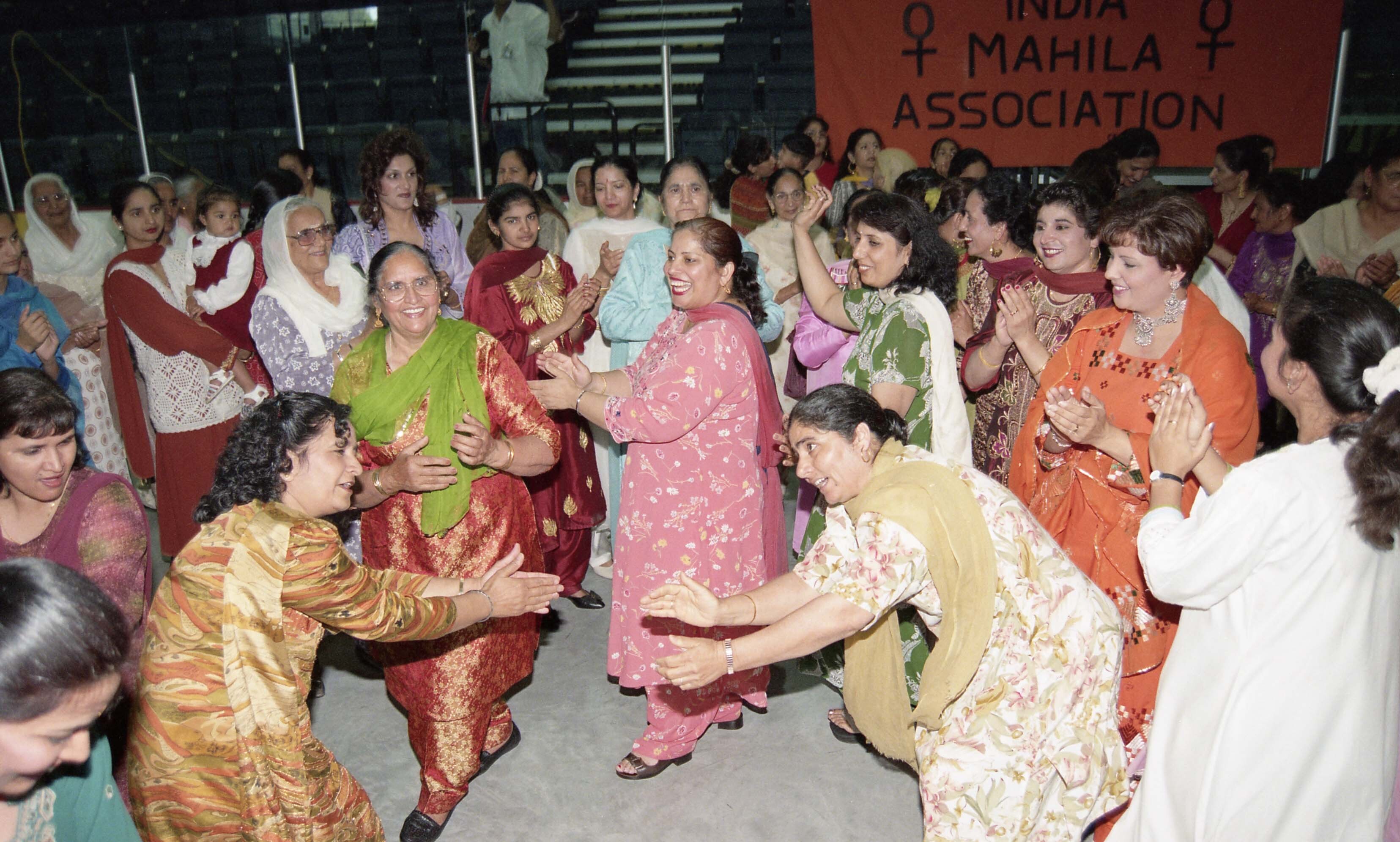
Photograph of a group of unidentified individuals performing folk songs and dancing during giddha [?] at a Teeyan (Teej) festival celebration hosted by the India Mahila Association[?] on August 2, 1998[?]. The event was held in Cloverdale, in Surrey, British Columbia (B.C.).
Teeyan, also known as Teej, is a festival observed primarily by women in the northern regions of India, including Punjab, Rajasthan, Uttar Pradesh, Bihar, Odisha, and Madhya Pradesh. It takes place annually during the months of July or August, marking the beginning of the monsoon season. The festival is associated with religious observance and social gathering, particularly among newly married and unmarried women. Participants celebrate by adorning themselves in traditional attire and taking part in rituals dedicated to Goddess Parvati. The festival involves prayers for the well-being and longevity of husbands or future spouses and includes regional customs that vary by state.
The India Mahila Association (IMA) is a non-profit, volunteer-driven organization established in 1973 to support and empower women of South Asian descent in Canada. Open to women of all backgrounds, IMA focuses on advocacy, education, and community engagement while addressing issues such as gender equality, violence, and discrimination. The organization operates without external funding and has created an endowment fund with the Vancouver Foundation to sustain its mission. For over 50 years, IMA has provided support, resources, and a platform for women to connect and uplift one another.
Giddha is a traditional folk dance performed by women in Punjab during festive occasions, including the Teej festival celebrated in the month of Sawan (July). As part of the Teej celebrations, women gather for twelve consecutive days to perform Giddha, which involves rhythmic clapping, singing of short couplets called boliyan, and expressive movements.
Teeyan, also known as Teej, is a festival observed primarily by women in the northern regions of India, including Punjab, Rajasthan, Uttar Pradesh, Bihar, Odisha, and Madhya Pradesh. It takes place annually during the months of July or August, marking the beginning of the monsoon season. The festival is associated with religious observance and social gathering, particularly among newly married and unmarried women. Participants celebrate by adorning themselves in traditional attire and taking part in rituals dedicated to Goddess Parvati. The festival involves prayers for the well-being and longevity of husbands or future spouses and includes regional customs that vary by state.
The India Mahila Association (IMA) is a non-profit, volunteer-driven organization established in 1973 to support and empower women of South Asian descent in Canada. Open to women of all backgrounds, IMA focuses on advocacy, education, and community engagement while addressing issues such as gender equality, violence, and discrimination. The organization operates without external funding and has created an endowment fund with the Vancouver Foundation to sustain its mission. For over 50 years, IMA has provided support, resources, and a platform for women to connect and uplift one another.
Giddha is a traditional folk dance performed by women in Punjab during festive occasions, including the Teej festival celebrated in the month of Sawan (July). As part of the Teej celebrations, women gather for twelve consecutive days to perform Giddha, which involves rhythmic clapping, singing of short couplets called boliyan, and expressive movements.