
Bhangra (Dance)
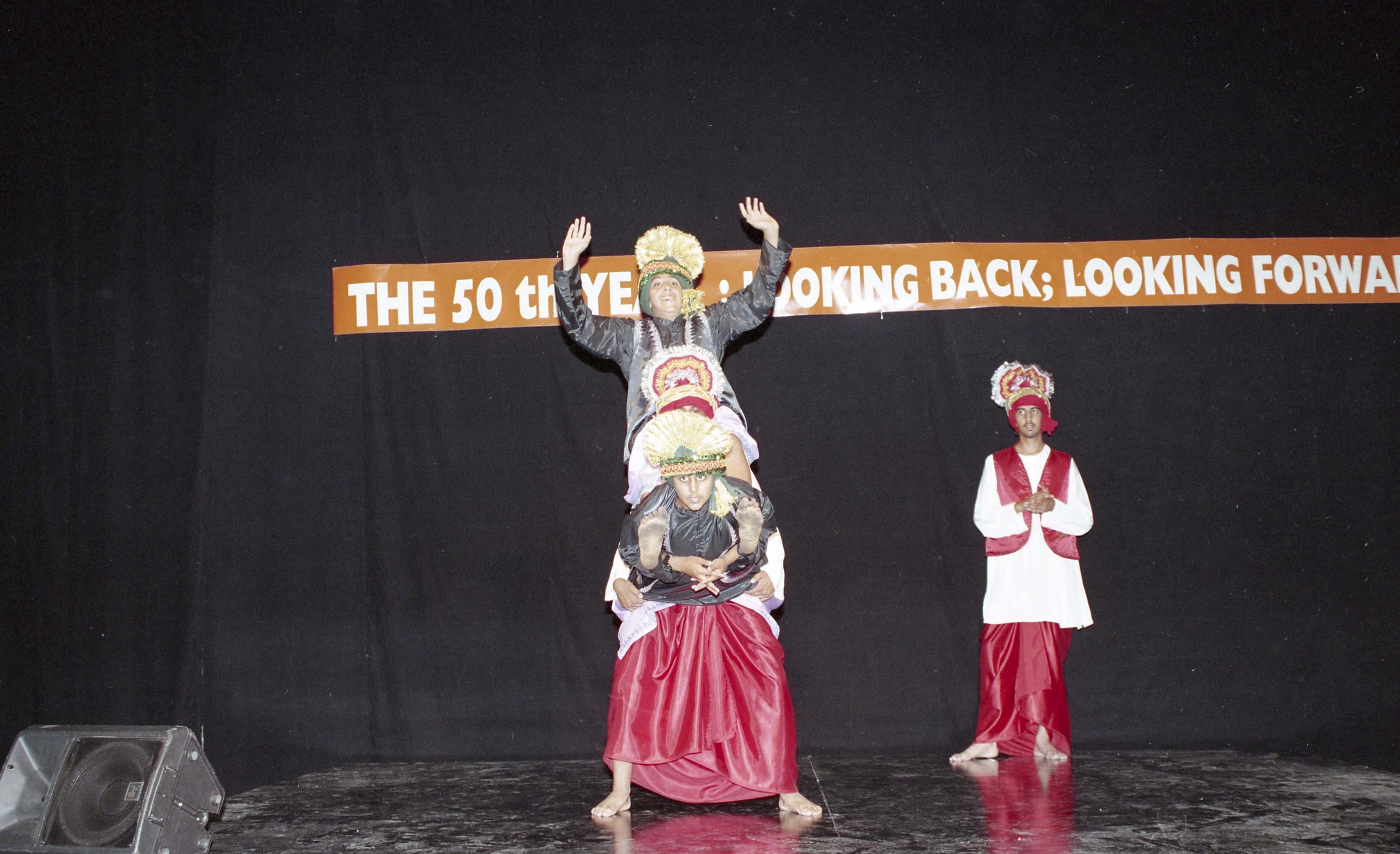
Creator: Chandra Bodalia
Description
Photograph of a group of unidentified individuals performing bhangra at an event organized by the South Asian Network for Secularism and Democracy (SANSAD). The event was called The 50th Year: Looking Back; Looking Forward, celebrating the 50th anniversary of the independence of India from colonial rule.
Bhangra is a folk dance and music form that originated from Punjab, India. It originated as a folk dance celebrated during the time of the harvest. It's traditionally danced to the dhol instrument, a large drum, accompanied by boliyan, short sets of lyrics that describe scenes or stories from Punjab.
The South Asian Network for Secularism and Democracy (SANSAD) is an organization of the South Asian diaspora based in British Columbia, Canada. It comprises people with origin in Bangladesh, India, Nepal, Pakistan, and Sri Lanka. The mission of SANSAD is to develop a secular democratic South Asian diaspora in Canada. SANSAD has grown out of a North American organization, called Non-Resident Indians for Secularism and Democracy (NRISAD) that was established in 1993. The Vancouver branch of the organization recognized through its practice that the concerns of NRISAD in regard to minorities and human rights were not specifically Indian but South Asian and had to be reformulated for the South Asian diaspora as a whole. This was realized with the formation of SANSAD in Vancouver in 2000.
Bhangra is a folk dance and music form that originated from Punjab, India. It originated as a folk dance celebrated during the time of the harvest. It's traditionally danced to the dhol instrument, a large drum, accompanied by boliyan, short sets of lyrics that describe scenes or stories from Punjab.
The South Asian Network for Secularism and Democracy (SANSAD) is an organization of the South Asian diaspora based in British Columbia, Canada. It comprises people with origin in Bangladesh, India, Nepal, Pakistan, and Sri Lanka. The mission of SANSAD is to develop a secular democratic South Asian diaspora in Canada. SANSAD has grown out of a North American organization, called Non-Resident Indians for Secularism and Democracy (NRISAD) that was established in 1993. The Vancouver branch of the organization recognized through its practice that the concerns of NRISAD in regard to minorities and human rights were not specifically Indian but South Asian and had to be reformulated for the South Asian diaspora as a whole. This was realized with the formation of SANSAD in Vancouver in 2000.
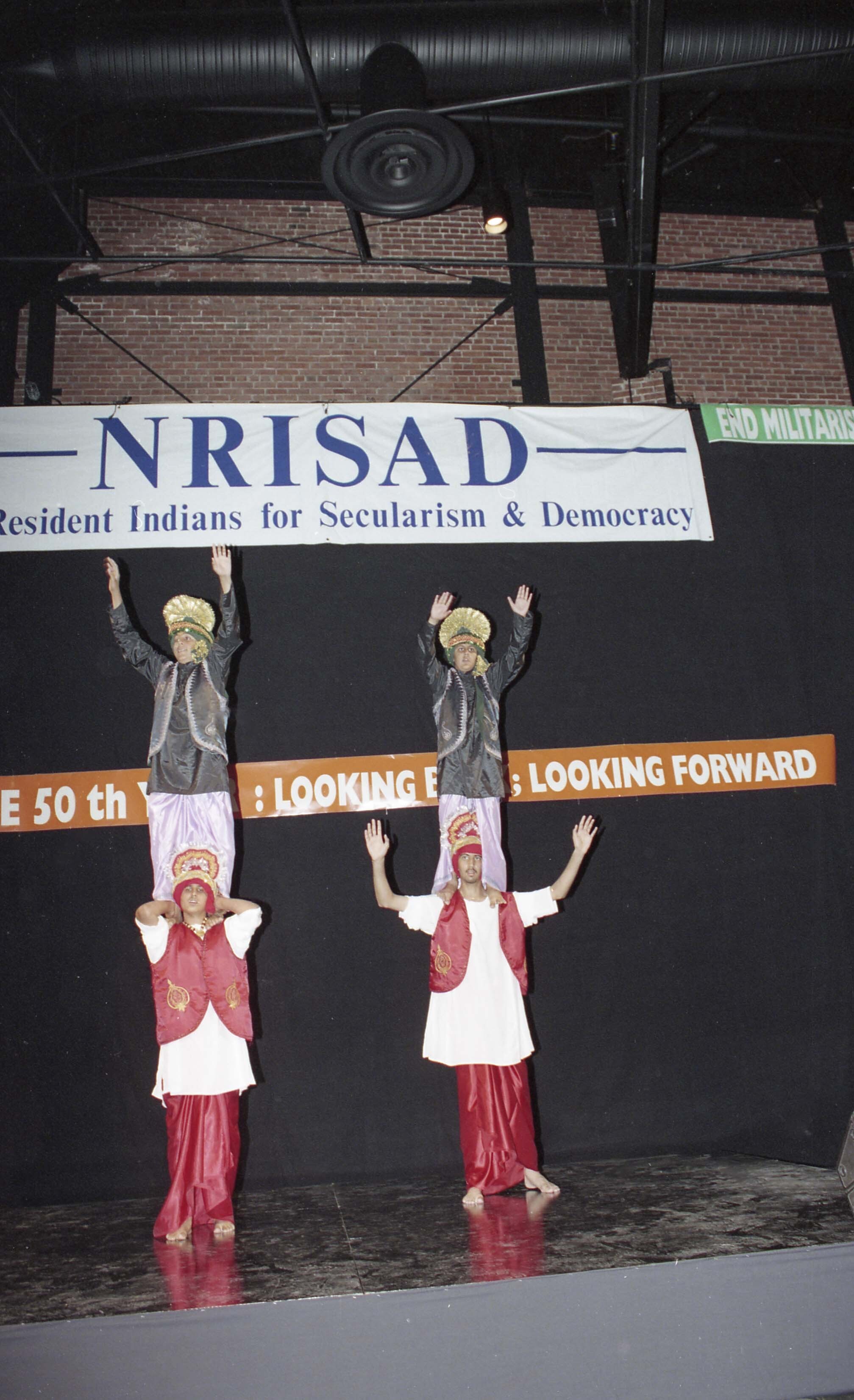
Creator: Chandra Bodalia
Description
Photograph of a group of unidentified individuals performing bhangra at an event organized by the South Asian Network for Secularism and Democracy (SANSAD). The event was called The 50th Year: Looking Back; Looking Forward, celebrating the 50th anniversary of the independence of India from colonial rule.
Bhangra is a folk dance and music form that originated from Punjab, India. It originated as a folk dance celebrated during the time of the harvest. It's traditionally danced to the dhol instrument, a large drum, accompanied by boliyan, short sets of lyrics that describe scenes or stories from Punjab.
The South Asian Network for Secularism and Democracy (SANSAD) is an organization of the South Asian diaspora based in British Columbia, Canada. It comprises people with origin in Bangladesh, India, Nepal, Pakistan, and Sri Lanka. The mission of SANSAD is to develop a secular democratic South Asian diaspora in Canada. SANSAD has grown out of a North American organization, called Non-Resident Indians for Secularism and Democracy (NRISAD) that was established in 1993. The Vancouver branch of the organization recognized through its practice that the concerns of NRISAD in regard to minorities and human rights were not specifically Indian but South Asian and had to be reformulated for the South Asian diaspora as a whole. This was realized with the formation of SANSAD in Vancouver in 2000.
Bhangra is a folk dance and music form that originated from Punjab, India. It originated as a folk dance celebrated during the time of the harvest. It's traditionally danced to the dhol instrument, a large drum, accompanied by boliyan, short sets of lyrics that describe scenes or stories from Punjab.
The South Asian Network for Secularism and Democracy (SANSAD) is an organization of the South Asian diaspora based in British Columbia, Canada. It comprises people with origin in Bangladesh, India, Nepal, Pakistan, and Sri Lanka. The mission of SANSAD is to develop a secular democratic South Asian diaspora in Canada. SANSAD has grown out of a North American organization, called Non-Resident Indians for Secularism and Democracy (NRISAD) that was established in 1993. The Vancouver branch of the organization recognized through its practice that the concerns of NRISAD in regard to minorities and human rights were not specifically Indian but South Asian and had to be reformulated for the South Asian diaspora as a whole. This was realized with the formation of SANSAD in Vancouver in 2000.
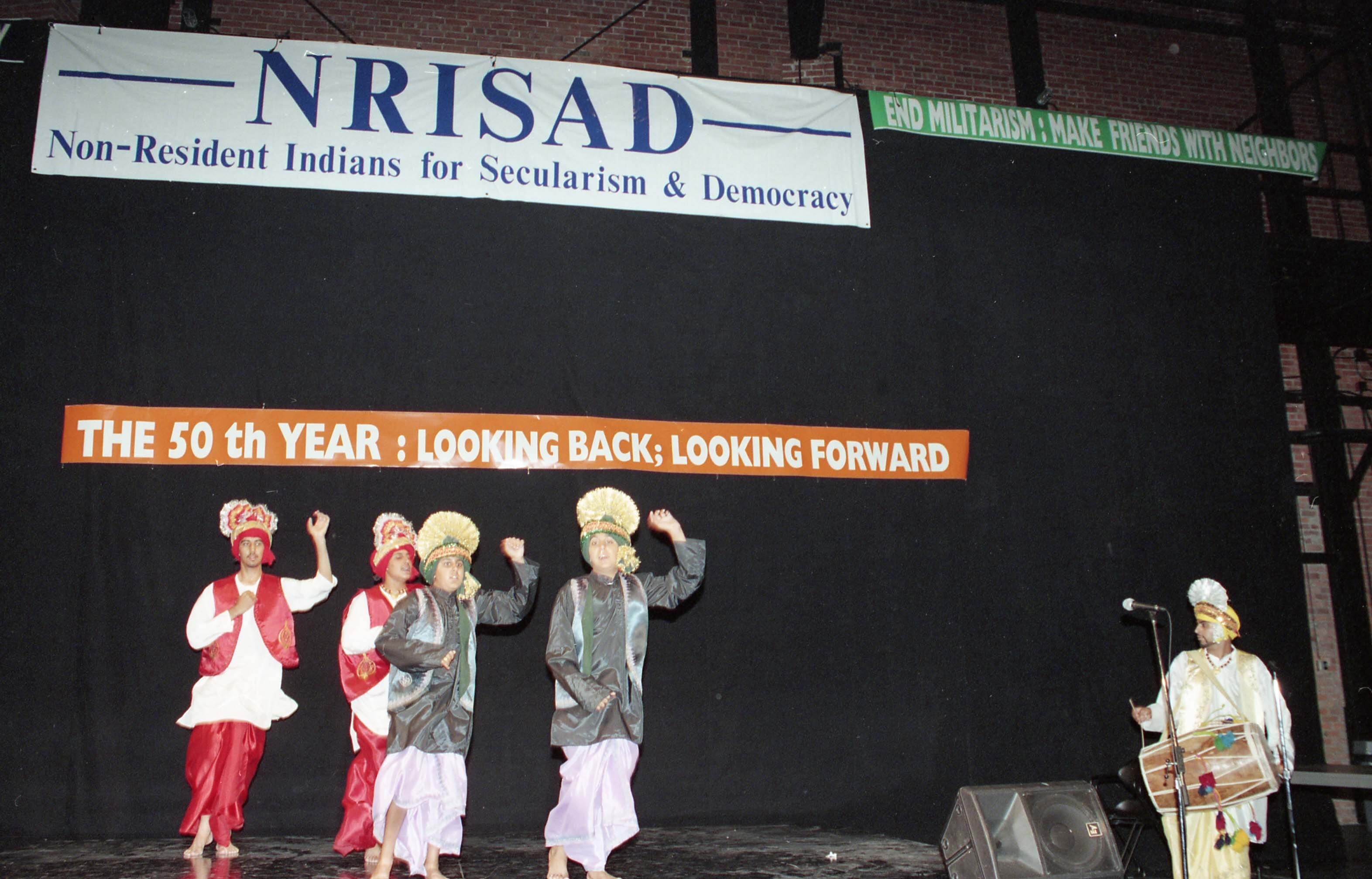
Creator: Chandra Bodalia
Description
Photograph of a group of unidentified individuals performing bhangra at an event organized by the South Asian Network for Secularism and Democracy (SANSAD). The event was called The 50th Year: Looking Back; Looking Forward, celebrating the 50th anniversary of the independence of India from colonial rule.
Bhangra is a folk dance and music form that originated from Punjab, India. It originated as a folk dance celebrated during the time of the harvest. It's traditionally danced to the dhol instrument, a large drum, accompanied by boliyan, short sets of lyrics that describe scenes or stories from Punjab.
The South Asian Network for Secularism and Democracy (SANSAD) is an organization of the South Asian diaspora based in British Columbia, Canada. It comprises people with origin in Bangladesh, India, Nepal, Pakistan, and Sri Lanka. The mission of SANSAD is to develop a secular democratic South Asian diaspora in Canada. SANSAD has grown out of a North American organization, called Non-Resident Indians for Secularism and Democracy (NRISAD) that was established in 1993. The Vancouver branch of the organization recognized through its practice that the concerns of NRISAD in regard to minorities and human rights were not specifically Indian but South Asian and had to be reformulated for the South Asian diaspora as a whole. This was realized with the formation of SANSAD in Vancouver in 2000.
Bhangra is a folk dance and music form that originated from Punjab, India. It originated as a folk dance celebrated during the time of the harvest. It's traditionally danced to the dhol instrument, a large drum, accompanied by boliyan, short sets of lyrics that describe scenes or stories from Punjab.
The South Asian Network for Secularism and Democracy (SANSAD) is an organization of the South Asian diaspora based in British Columbia, Canada. It comprises people with origin in Bangladesh, India, Nepal, Pakistan, and Sri Lanka. The mission of SANSAD is to develop a secular democratic South Asian diaspora in Canada. SANSAD has grown out of a North American organization, called Non-Resident Indians for Secularism and Democracy (NRISAD) that was established in 1993. The Vancouver branch of the organization recognized through its practice that the concerns of NRISAD in regard to minorities and human rights were not specifically Indian but South Asian and had to be reformulated for the South Asian diaspora as a whole. This was realized with the formation of SANSAD in Vancouver in 2000.
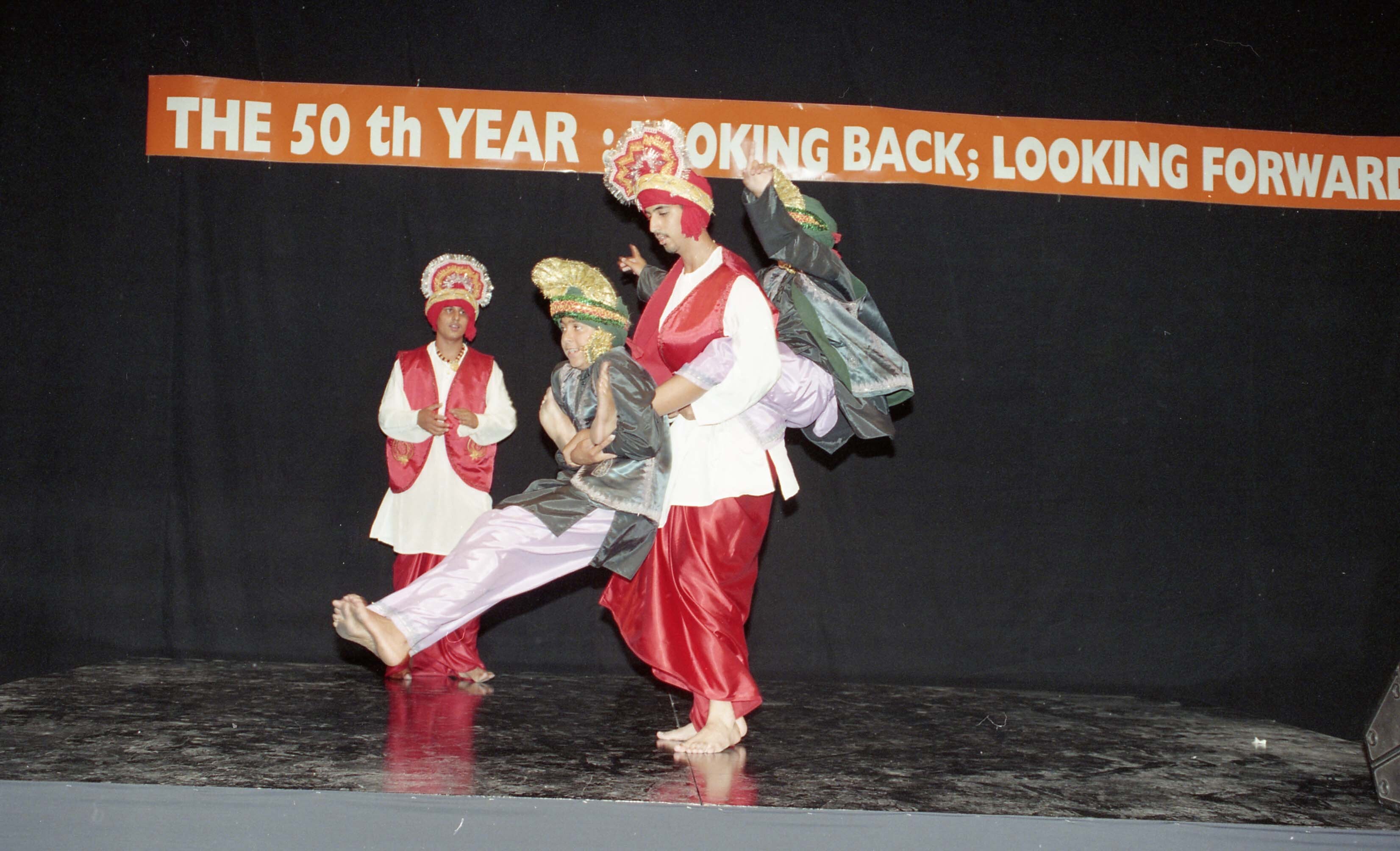
Creator: Chandra Bodalia
Description
Photograph of a group of unidentified individuals performing bhangra at an event organized by the South Asian Network for Secularism and Democracy (SANSAD). The event was called The 50th Year: Looking Back; Looking Forward, celebrating the 50th anniversary of the independence of India from colonial rule.
Bhangra is a folk dance and music form that originated from Punjab, India. It originated as a folk dance celebrated during the time of the harvest. It's traditionally danced to the dhol instrument, a large drum, accompanied by boliyan, short sets of lyrics that describe scenes or stories from Punjab.
The South Asian Network for Secularism and Democracy (SANSAD) is an organization of the South Asian diaspora based in British Columbia, Canada. It comprises people with origin in Bangladesh, India, Nepal, Pakistan, and Sri Lanka. The mission of SANSAD is to develop a secular democratic South Asian diaspora in Canada. SANSAD has grown out of a North American organization, called Non-Resident Indians for Secularism and Democracy (NRISAD) that was established in 1993. The Vancouver branch of the organization recognized through its practice that the concerns of NRISAD in regard to minorities and human rights were not specifically Indian but South Asian and had to be reformulated for the South Asian diaspora as a whole. This was realized with the formation of SANSAD in Vancouver in 2000.
Bhangra is a folk dance and music form that originated from Punjab, India. It originated as a folk dance celebrated during the time of the harvest. It's traditionally danced to the dhol instrument, a large drum, accompanied by boliyan, short sets of lyrics that describe scenes or stories from Punjab.
The South Asian Network for Secularism and Democracy (SANSAD) is an organization of the South Asian diaspora based in British Columbia, Canada. It comprises people with origin in Bangladesh, India, Nepal, Pakistan, and Sri Lanka. The mission of SANSAD is to develop a secular democratic South Asian diaspora in Canada. SANSAD has grown out of a North American organization, called Non-Resident Indians for Secularism and Democracy (NRISAD) that was established in 1993. The Vancouver branch of the organization recognized through its practice that the concerns of NRISAD in regard to minorities and human rights were not specifically Indian but South Asian and had to be reformulated for the South Asian diaspora as a whole. This was realized with the formation of SANSAD in Vancouver in 2000.
Creator: Chandra Bodalia
Description
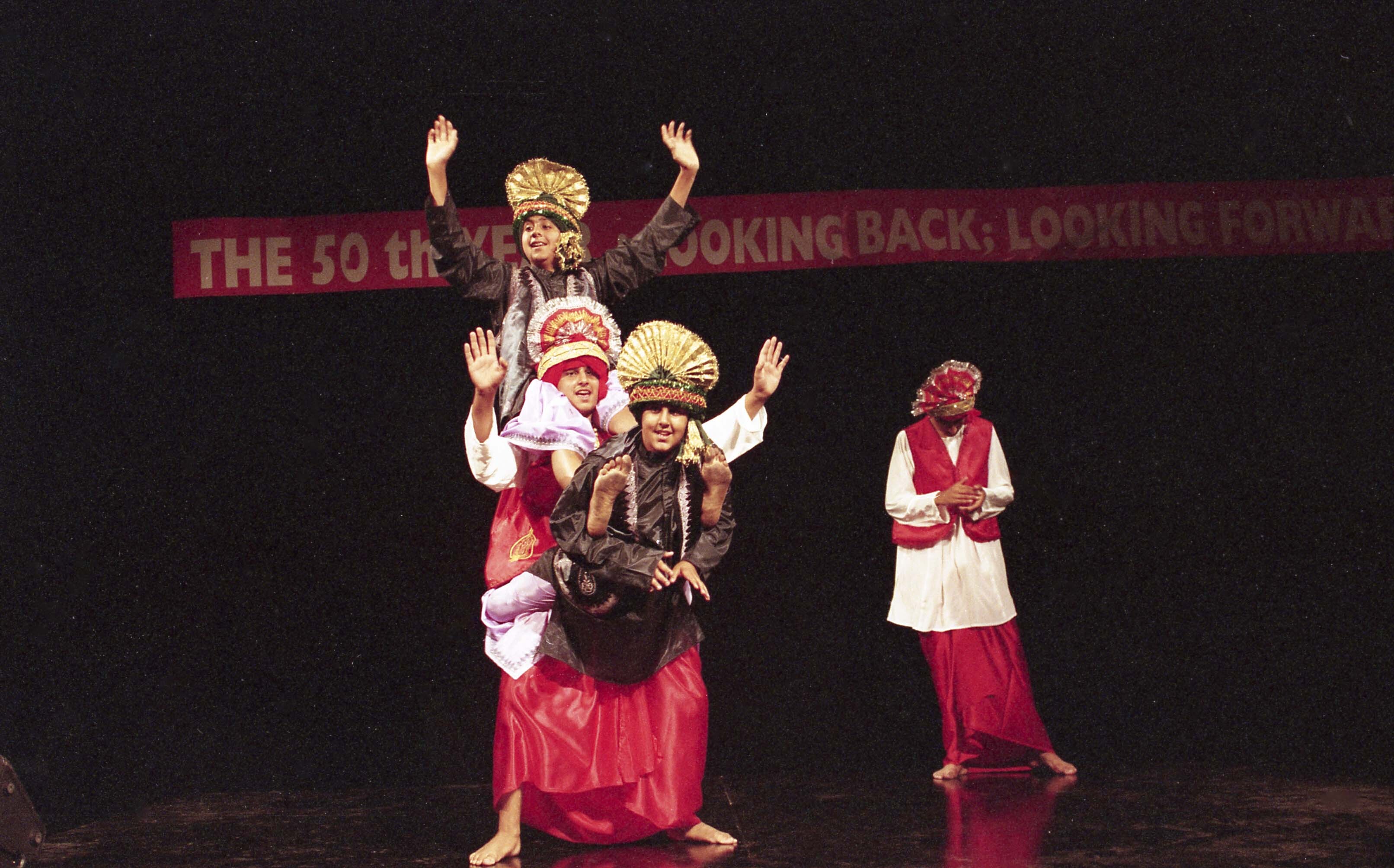
Photograph of a group of unidentified individuals performing bhangra at an event organized by the South Asian Network for Secularism and Democracy (SANSAD). The event was called The 50th Year: Looking Back; Looking Forward, celebrating the 50th anniversary of the independence of India from colonial rule.
Bhangra is a folk dance and music form that originated from Punjab, India. It originated as a folk dance celebrated during the time of the harvest. It's traditionally danced to the dhol instrument, a large drum, accompanied by boliyan, short sets of lyrics that describe scenes or stories from Punjab.
The South Asian Network for Secularism and Democracy (SANSAD) is an organization of the South Asian diaspora based in British Columbia, Canada. It comprises people with origin in Bangladesh, India, Nepal, Pakistan, and Sri Lanka. The mission of SANSAD is to develop a secular democratic South Asian diaspora in Canada. SANSAD has grown out of a North American organization, called Non-Resident Indians for Secularism and Democracy (NRISAD) that was established in 1993. The Vancouver branch of the organization recognized through its practice that the concerns of NRISAD in regard to minorities and human rights were not specifically Indian but South Asian and had to be reformulated for the South Asian diaspora as a whole. This was realized with the formation of SANSAD in Vancouver in 2000.
Bhangra is a folk dance and music form that originated from Punjab, India. It originated as a folk dance celebrated during the time of the harvest. It's traditionally danced to the dhol instrument, a large drum, accompanied by boliyan, short sets of lyrics that describe scenes or stories from Punjab.
The South Asian Network for Secularism and Democracy (SANSAD) is an organization of the South Asian diaspora based in British Columbia, Canada. It comprises people with origin in Bangladesh, India, Nepal, Pakistan, and Sri Lanka. The mission of SANSAD is to develop a secular democratic South Asian diaspora in Canada. SANSAD has grown out of a North American organization, called Non-Resident Indians for Secularism and Democracy (NRISAD) that was established in 1993. The Vancouver branch of the organization recognized through its practice that the concerns of NRISAD in regard to minorities and human rights were not specifically Indian but South Asian and had to be reformulated for the South Asian diaspora as a whole. This was realized with the formation of SANSAD in Vancouver in 2000.
Creator: Chandra Bodalia
Description
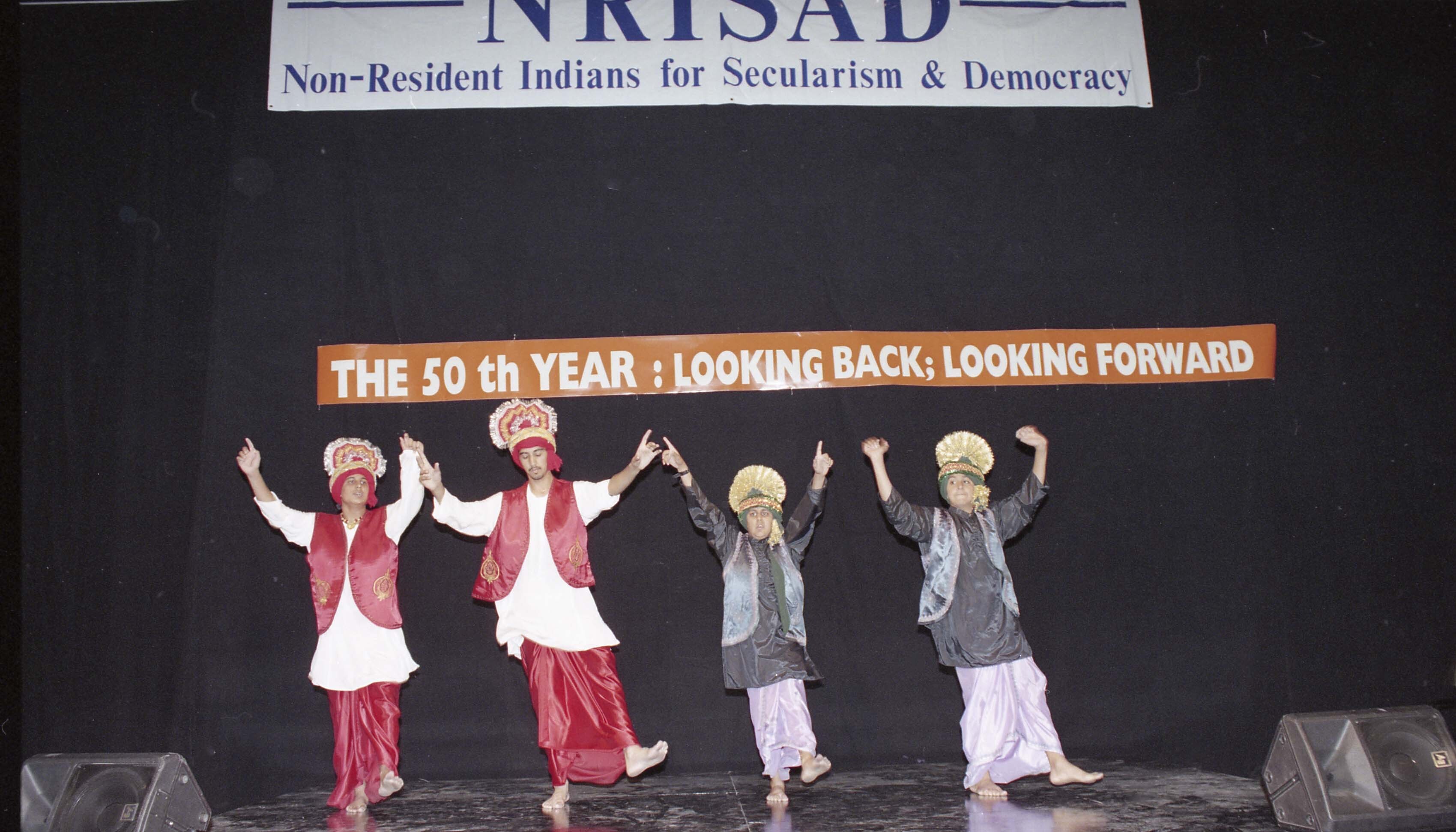
Photograph of a group of unidentified individuals performing bhangra at an event organized by the South Asian Network for Secularism and Democracy (SANSAD). The event was called The 50th Year: Looking Back; Looking Forward, celebrating the 50th anniversary of the independence of India from colonial rule.
Bhangra is a folk dance and music form that originated from Punjab, India. It originated as a folk dance celebrated during the time of the harvest. It's traditionally danced to the dhol instrument, a large drum, accompanied by boliyan, short sets of lyrics that describe scenes or stories from Punjab.
The South Asian Network for Secularism and Democracy (SANSAD) is an organization of the South Asian diaspora based in British Columbia, Canada. It comprises people with origin in Bangladesh, India, Nepal, Pakistan, and Sri Lanka. The mission of SANSAD is to develop a secular democratic South Asian diaspora in Canada. SANSAD has grown out of a North American organization, called Non-Resident Indians for Secularism and Democracy (NRISAD) that was established in 1993. The Vancouver branch of the organization recognized through its practice that the concerns of NRISAD in regard to minorities and human rights were not specifically Indian but South Asian and had to be reformulated for the South Asian diaspora as a whole. This was realized with the formation of SANSAD in Vancouver in 2000.
Bhangra is a folk dance and music form that originated from Punjab, India. It originated as a folk dance celebrated during the time of the harvest. It's traditionally danced to the dhol instrument, a large drum, accompanied by boliyan, short sets of lyrics that describe scenes or stories from Punjab.
The South Asian Network for Secularism and Democracy (SANSAD) is an organization of the South Asian diaspora based in British Columbia, Canada. It comprises people with origin in Bangladesh, India, Nepal, Pakistan, and Sri Lanka. The mission of SANSAD is to develop a secular democratic South Asian diaspora in Canada. SANSAD has grown out of a North American organization, called Non-Resident Indians for Secularism and Democracy (NRISAD) that was established in 1993. The Vancouver branch of the organization recognized through its practice that the concerns of NRISAD in regard to minorities and human rights were not specifically Indian but South Asian and had to be reformulated for the South Asian diaspora as a whole. This was realized with the formation of SANSAD in Vancouver in 2000.
Creator: Chandra Bodalia
Description
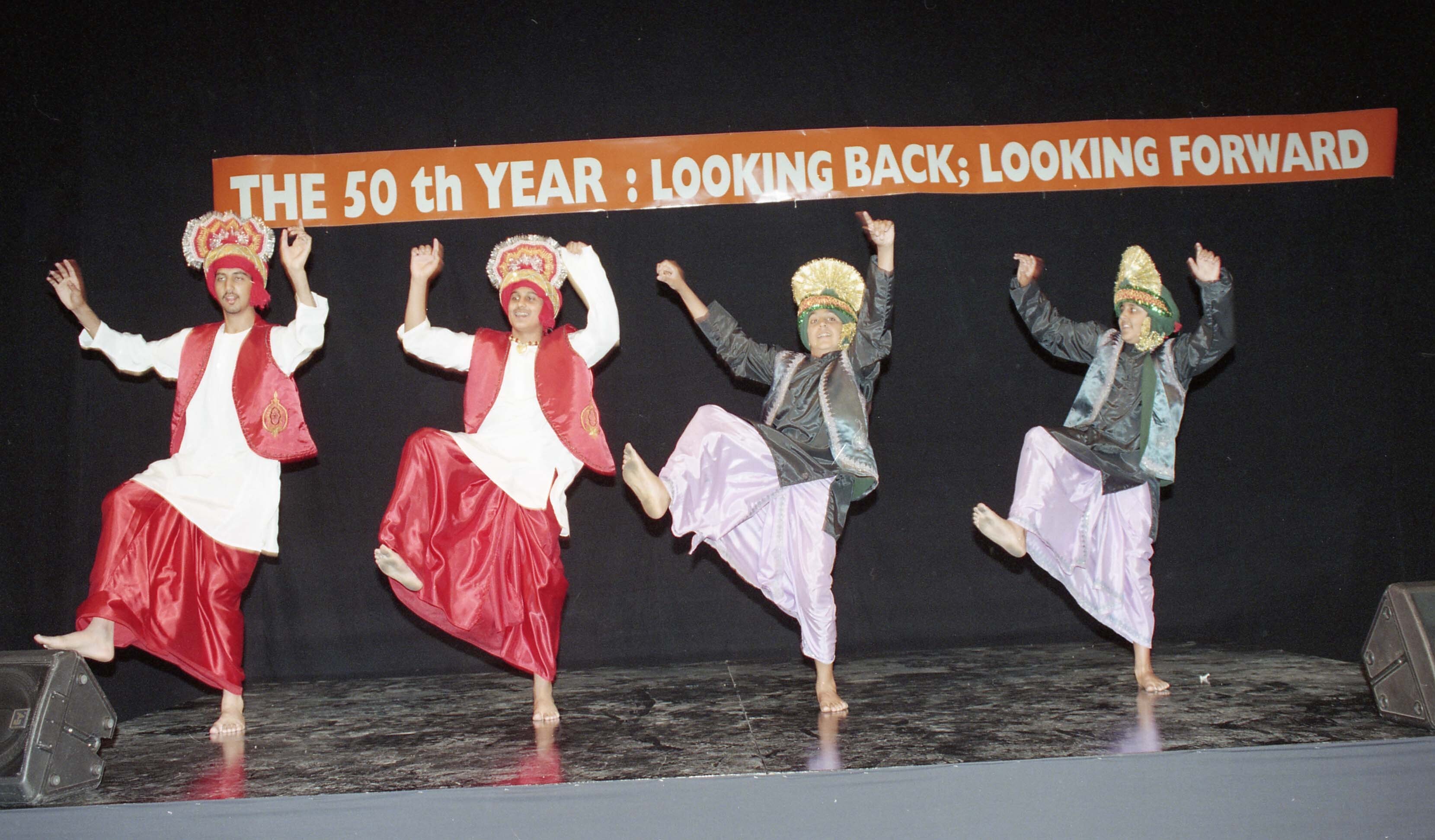
Photograph of a group of unidentified individuals performing bhangra at an event organized by the South Asian Network for Secularism and Democracy (SANSAD). The event was called The 50th Year: Looking Back; Looking Forward, celebrating the 50th anniversary of the independence of India from colonial rule.
Bhangra is a folk dance and music form that originated from Punjab, India. It originated as a folk dance celebrated during the time of the harvest. It's traditionally danced to the dhol instrument, a large drum, accompanied by boliyan, short sets of lyrics that describe scenes or stories from Punjab.
The South Asian Network for Secularism and Democracy (SANSAD) is an organization of the South Asian diaspora based in British Columbia, Canada. It comprises people with origin in Bangladesh, India, Nepal, Pakistan, and Sri Lanka. The mission of SANSAD is to develop a secular democratic South Asian diaspora in Canada. SANSAD has grown out of a North American organization, called Non-Resident Indians for Secularism and Democracy (NRISAD) that was established in 1993. The Vancouver branch of the organization recognized through its practice that the concerns of NRISAD in regard to minorities and human rights were not specifically Indian but South Asian and had to be reformulated for the South Asian diaspora as a whole. This was realized with the formation of SANSAD in Vancouver in 2000.
Bhangra is a folk dance and music form that originated from Punjab, India. It originated as a folk dance celebrated during the time of the harvest. It's traditionally danced to the dhol instrument, a large drum, accompanied by boliyan, short sets of lyrics that describe scenes or stories from Punjab.
The South Asian Network for Secularism and Democracy (SANSAD) is an organization of the South Asian diaspora based in British Columbia, Canada. It comprises people with origin in Bangladesh, India, Nepal, Pakistan, and Sri Lanka. The mission of SANSAD is to develop a secular democratic South Asian diaspora in Canada. SANSAD has grown out of a North American organization, called Non-Resident Indians for Secularism and Democracy (NRISAD) that was established in 1993. The Vancouver branch of the organization recognized through its practice that the concerns of NRISAD in regard to minorities and human rights were not specifically Indian but South Asian and had to be reformulated for the South Asian diaspora as a whole. This was realized with the formation of SANSAD in Vancouver in 2000.
Creator: Chandra Bodalia
Description
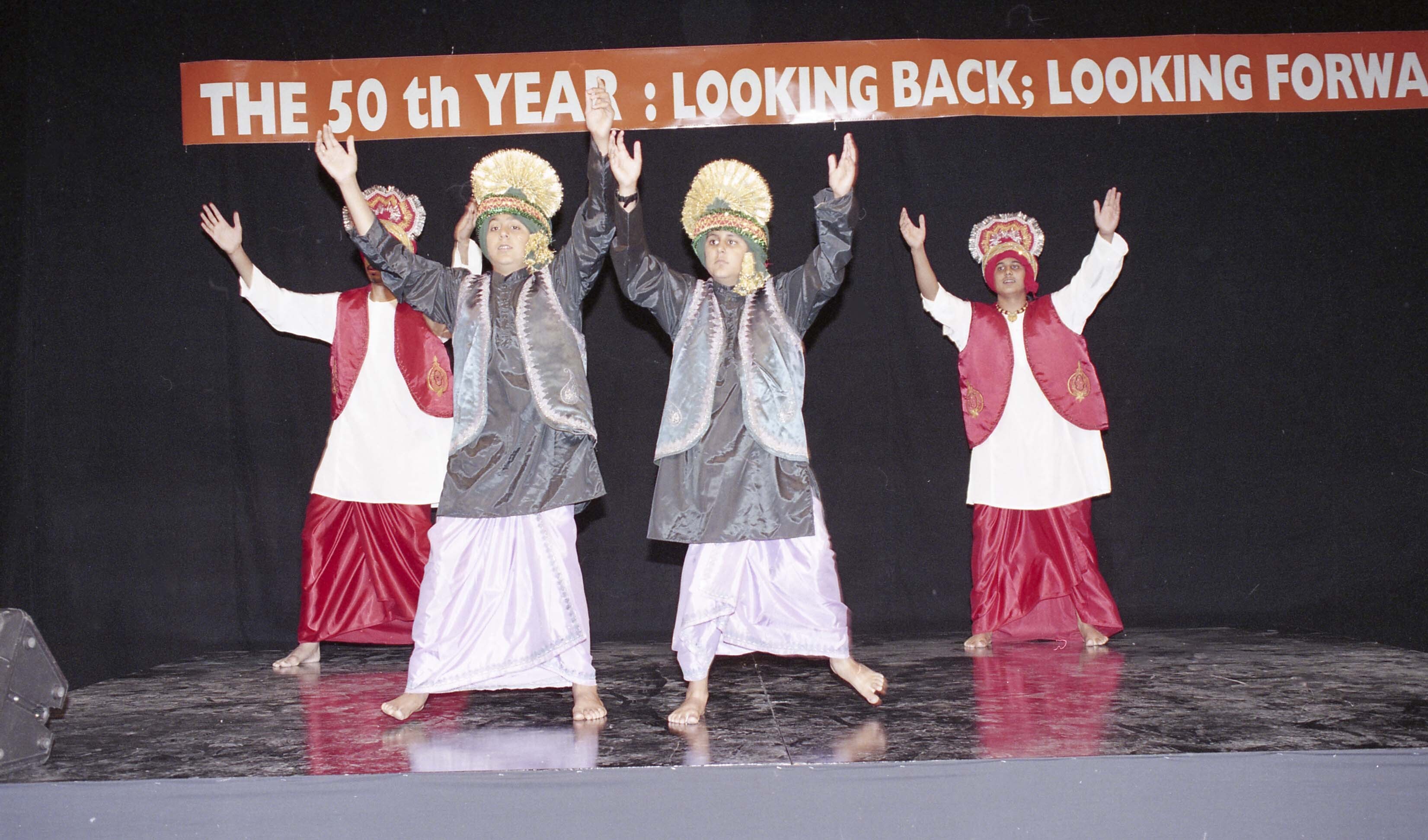
Photograph of a group of unidentified individuals performing bhangra at an event organized by the South Asian Network for Secularism and Democracy (SANSAD). The event was called The 50th Year: Looking Back; Looking Forward, celebrating the 50th anniversary of the independence of India from colonial rule.
Bhangra is a folk dance and music form that originated from Punjab, India. It originated as a folk dance celebrated during the time of the harvest. It's traditionally danced to the dhol instrument, a large drum, accompanied by boliyan, short sets of lyrics that describe scenes or stories from Punjab.
The South Asian Network for Secularism and Democracy (SANSAD) is an organization of the South Asian diaspora based in British Columbia, Canada. It comprises people with origin in Bangladesh, India, Nepal, Pakistan, and Sri Lanka. The mission of SANSAD is to develop a secular democratic South Asian diaspora in Canada. SANSAD has grown out of a North American organization, called Non-Resident Indians for Secularism and Democracy (NRISAD) that was established in 1993. The Vancouver branch of the organization recognized through its practice that the concerns of NRISAD in regard to minorities and human rights were not specifically Indian but South Asian and had to be reformulated for the South Asian diaspora as a whole. This was realized with the formation of SANSAD in Vancouver in 2000.
Bhangra is a folk dance and music form that originated from Punjab, India. It originated as a folk dance celebrated during the time of the harvest. It's traditionally danced to the dhol instrument, a large drum, accompanied by boliyan, short sets of lyrics that describe scenes or stories from Punjab.
The South Asian Network for Secularism and Democracy (SANSAD) is an organization of the South Asian diaspora based in British Columbia, Canada. It comprises people with origin in Bangladesh, India, Nepal, Pakistan, and Sri Lanka. The mission of SANSAD is to develop a secular democratic South Asian diaspora in Canada. SANSAD has grown out of a North American organization, called Non-Resident Indians for Secularism and Democracy (NRISAD) that was established in 1993. The Vancouver branch of the organization recognized through its practice that the concerns of NRISAD in regard to minorities and human rights were not specifically Indian but South Asian and had to be reformulated for the South Asian diaspora as a whole. This was realized with the formation of SANSAD in Vancouver in 2000.
Creator: Chandra Bodalia
Description
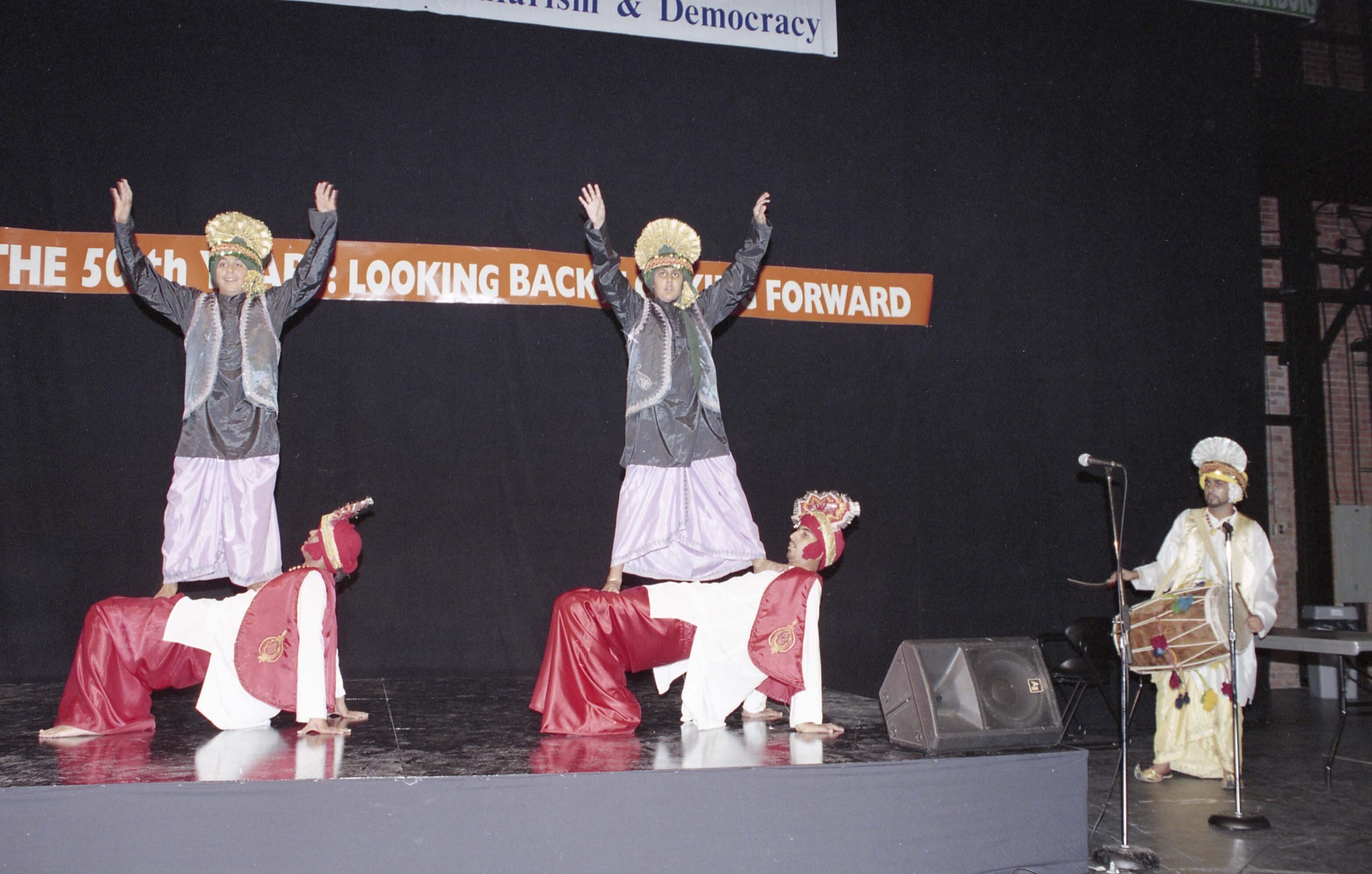
Photograph of a group of unidentified individuals performing bhangra at an event organized by the South Asian Network for Secularism and Democracy (SANSAD). The event was called The 50th Year: Looking Back; Looking Forward, celebrating the 50th anniversary of the independence of India from colonial rule.
Bhangra is a folk dance and music form that originated from Punjab, India. It originated as a folk dance celebrated during the time of the harvest. It's traditionally danced to the dhol instrument, a large drum, accompanied by boliyan, short sets of lyrics that describe scenes or stories from Punjab.
The South Asian Network for Secularism and Democracy (SANSAD) is an organization of the South Asian diaspora based in British Columbia, Canada. It comprises people with origin in Bangladesh, India, Nepal, Pakistan, and Sri Lanka. The mission of SANSAD is to develop a secular democratic South Asian diaspora in Canada. SANSAD has grown out of a North American organization, called Non-Resident Indians for Secularism and Democracy (NRISAD) that was established in 1993. The Vancouver branch of the organization recognized through its practice that the concerns of NRISAD in regard to minorities and human rights were not specifically Indian but South Asian and had to be reformulated for the South Asian diaspora as a whole. This was realized with the formation of SANSAD in Vancouver in 2000.
Bhangra is a folk dance and music form that originated from Punjab, India. It originated as a folk dance celebrated during the time of the harvest. It's traditionally danced to the dhol instrument, a large drum, accompanied by boliyan, short sets of lyrics that describe scenes or stories from Punjab.
The South Asian Network for Secularism and Democracy (SANSAD) is an organization of the South Asian diaspora based in British Columbia, Canada. It comprises people with origin in Bangladesh, India, Nepal, Pakistan, and Sri Lanka. The mission of SANSAD is to develop a secular democratic South Asian diaspora in Canada. SANSAD has grown out of a North American organization, called Non-Resident Indians for Secularism and Democracy (NRISAD) that was established in 1993. The Vancouver branch of the organization recognized through its practice that the concerns of NRISAD in regard to minorities and human rights were not specifically Indian but South Asian and had to be reformulated for the South Asian diaspora as a whole. This was realized with the formation of SANSAD in Vancouver in 2000.
Member of
Creator: Chandra Bodalia
Description
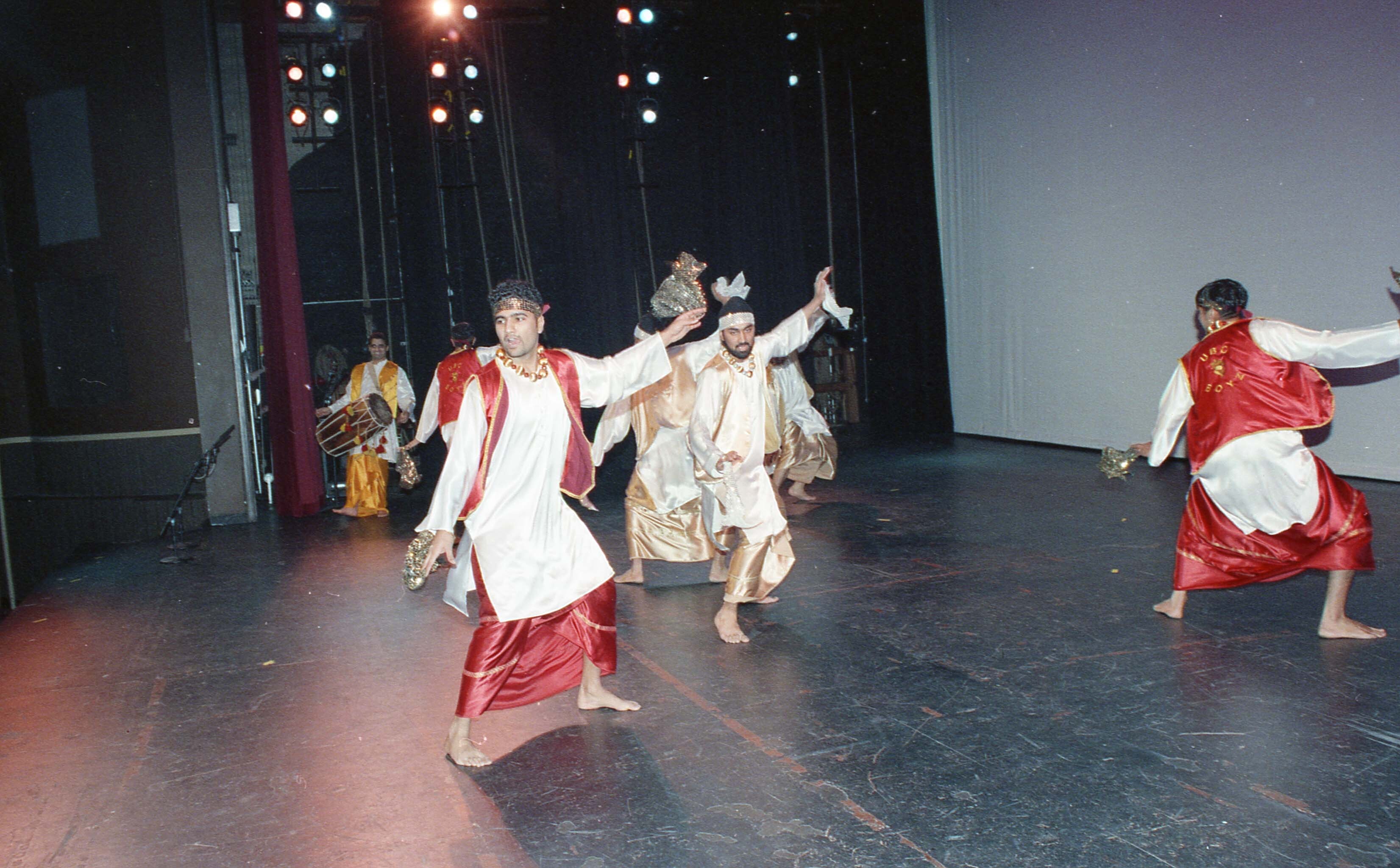
Photograph of an unidentified group of individuals performing in a cultural show at the Massey Theatre in New Westminster, British Columbia. The group of individuals were part of the University of British Columbia's (UBC) bhangra team, called UBC Boyz.
Massey Theatre opened in 1949 as British Columbia's largest theatre. Massey Theatre hosts musical theatre hits, international music and dance forms, children's entertainers, orchestras, choirs, ballets and stars of music. Governed as a registered non-profit charitable society run by an independent board of directors, Massey Theatre is neither a civic nor a school facility but a professional arts organization which works to support the performing arts throughout Metro Vancouver.
The UBC Bhangra Club was founded on October 1, 1992, by a group of students dedicated to promoting Punjabi culture at UBC. It serves as a vibrant platform for students to express themselves and engage with their community, enhancing cultural awareness and interaction.
Bhangra is a folk dance and music form that originated from Punjab, India. It originated as a folk dance celebrated during the time of the harvest. It's traditionally danced to the dhol instrument, a large drum, accompanied by boliyan, short sets of lyrics that describe scenes or stories from Punjab.
Massey Theatre opened in 1949 as British Columbia's largest theatre. Massey Theatre hosts musical theatre hits, international music and dance forms, children's entertainers, orchestras, choirs, ballets and stars of music. Governed as a registered non-profit charitable society run by an independent board of directors, Massey Theatre is neither a civic nor a school facility but a professional arts organization which works to support the performing arts throughout Metro Vancouver.
The UBC Bhangra Club was founded on October 1, 1992, by a group of students dedicated to promoting Punjabi culture at UBC. It serves as a vibrant platform for students to express themselves and engage with their community, enhancing cultural awareness and interaction.
Bhangra is a folk dance and music form that originated from Punjab, India. It originated as a folk dance celebrated during the time of the harvest. It's traditionally danced to the dhol instrument, a large drum, accompanied by boliyan, short sets of lyrics that describe scenes or stories from Punjab.