
Prayer in art
Member of
Creator: Bodalia, Chandra
Description
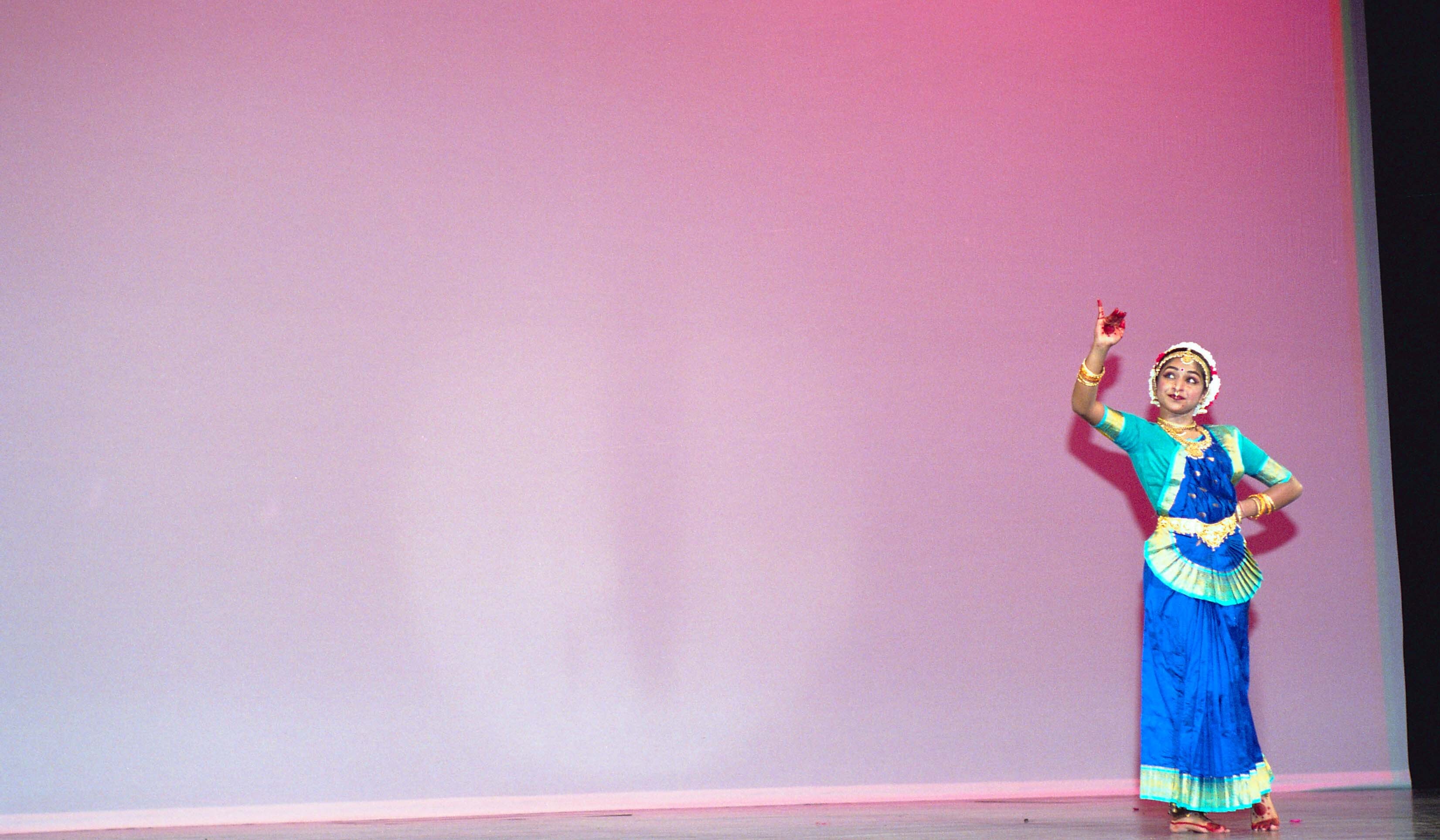
Photograph of an unidentified Bharatanatyam dancer performing on a theatrical stage.
Bharatanatyam, a classical dance style of India, is indigenous to the Tamil Nadu region and prevalent in southern India. Bharatanatyam serves the expression of Hindu religious themes and devotions. Bharatanatyam was originally performed exclusively by female temple dancers and was not brought to the stage for public performance until about 1930. A vital tradition of Bharatanatyam is a graduation performance, called Arangetram, in which graduates showcase their talents.
Bharatanatyam, a classical dance style of India, is indigenous to the Tamil Nadu region and prevalent in southern India. Bharatanatyam serves the expression of Hindu religious themes and devotions. Bharatanatyam was originally performed exclusively by female temple dancers and was not brought to the stage for public performance until about 1930. A vital tradition of Bharatanatyam is a graduation performance, called Arangetram, in which graduates showcase their talents.
Member of
Creator: Bodalia, Chandra
Description
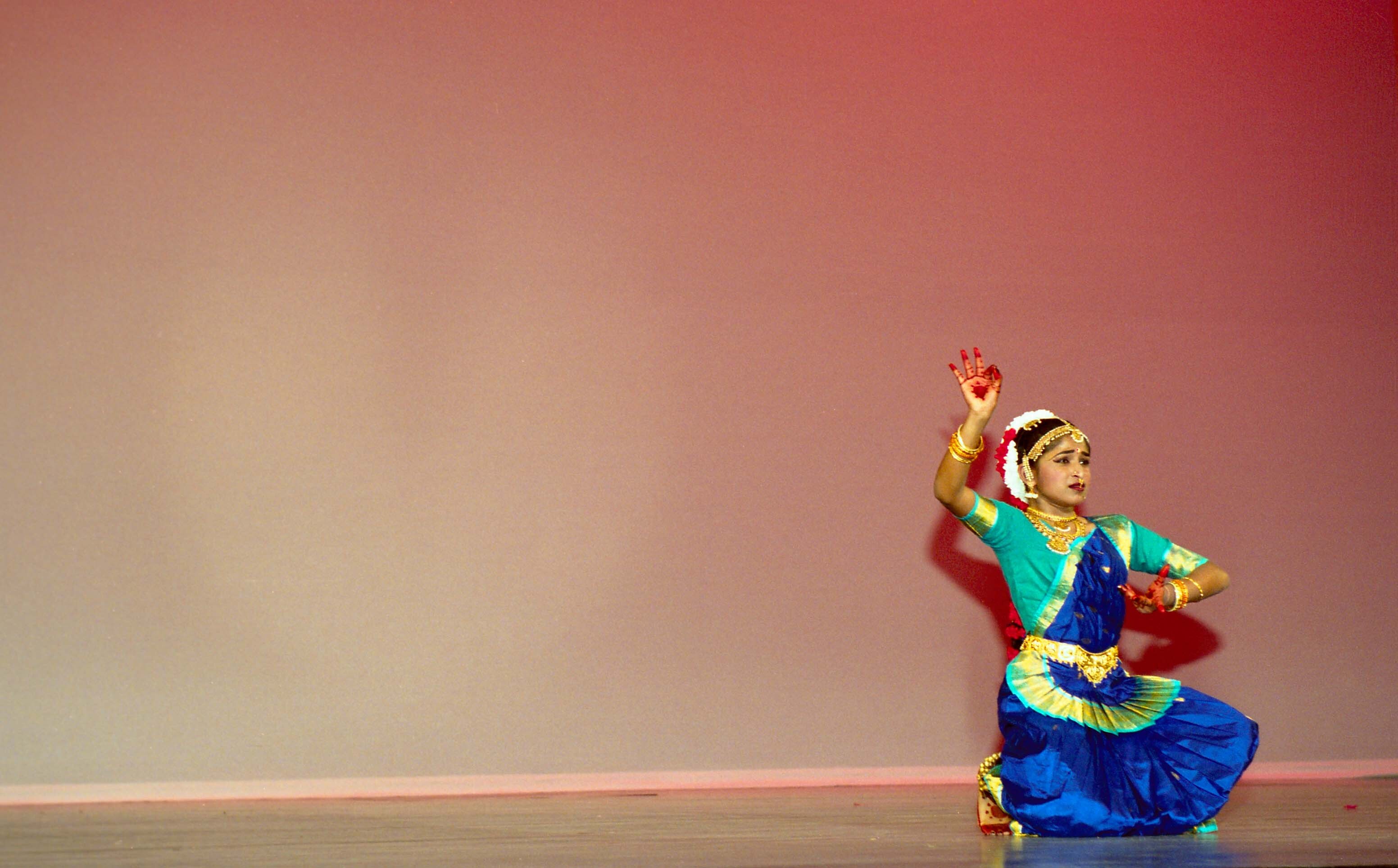
Photograph of an unidentified Bharatanatyam dancer performing on a theatrical stage.
Bharatanatyam, a classical dance style of India, is indigenous to the Tamil Nadu region and prevalent in southern India. Bharatanatyam serves the expression of Hindu religious themes and devotions. Bharatanatyam was originally performed exclusively by female temple dancers and was not brought to the stage for public performance until about 1930. A vital tradition of Bharatanatyam is a graduation performance, called Arangetram, in which graduates showcase their talents.
Bharatanatyam, a classical dance style of India, is indigenous to the Tamil Nadu region and prevalent in southern India. Bharatanatyam serves the expression of Hindu religious themes and devotions. Bharatanatyam was originally performed exclusively by female temple dancers and was not brought to the stage for public performance until about 1930. A vital tradition of Bharatanatyam is a graduation performance, called Arangetram, in which graduates showcase their talents.
Member of
Creator: Bodalia, Chandra
Description
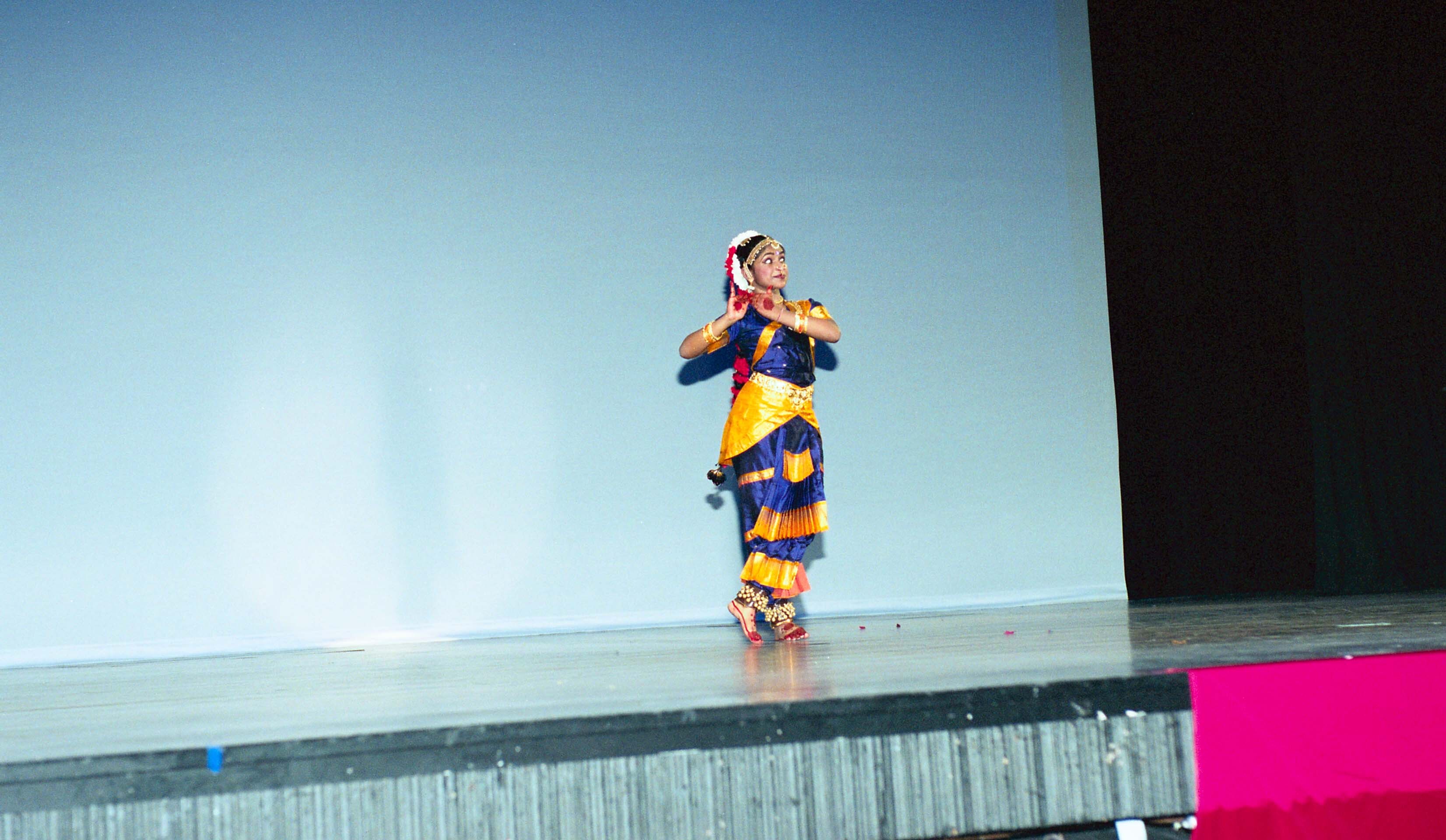
Photograph of an unidentified Bharatanatyam dancer performing on a theatrical stage.
Bharatanatyam, a classical dance style of India, is indigenous to the Tamil Nadu region and prevalent in southern India. Bharatanatyam serves the expression of Hindu religious themes and devotions. Bharatanatyam was originally performed exclusively by female temple dancers and was not brought to the stage for public performance until about 1930. A vital tradition of Bharatanatyam is a graduation performance, called Arangetram, in which graduates showcase their talents.
Bharatanatyam, a classical dance style of India, is indigenous to the Tamil Nadu region and prevalent in southern India. Bharatanatyam serves the expression of Hindu religious themes and devotions. Bharatanatyam was originally performed exclusively by female temple dancers and was not brought to the stage for public performance until about 1930. A vital tradition of Bharatanatyam is a graduation performance, called Arangetram, in which graduates showcase their talents.
Member of
Creator: Bodalia, Chandra
Description
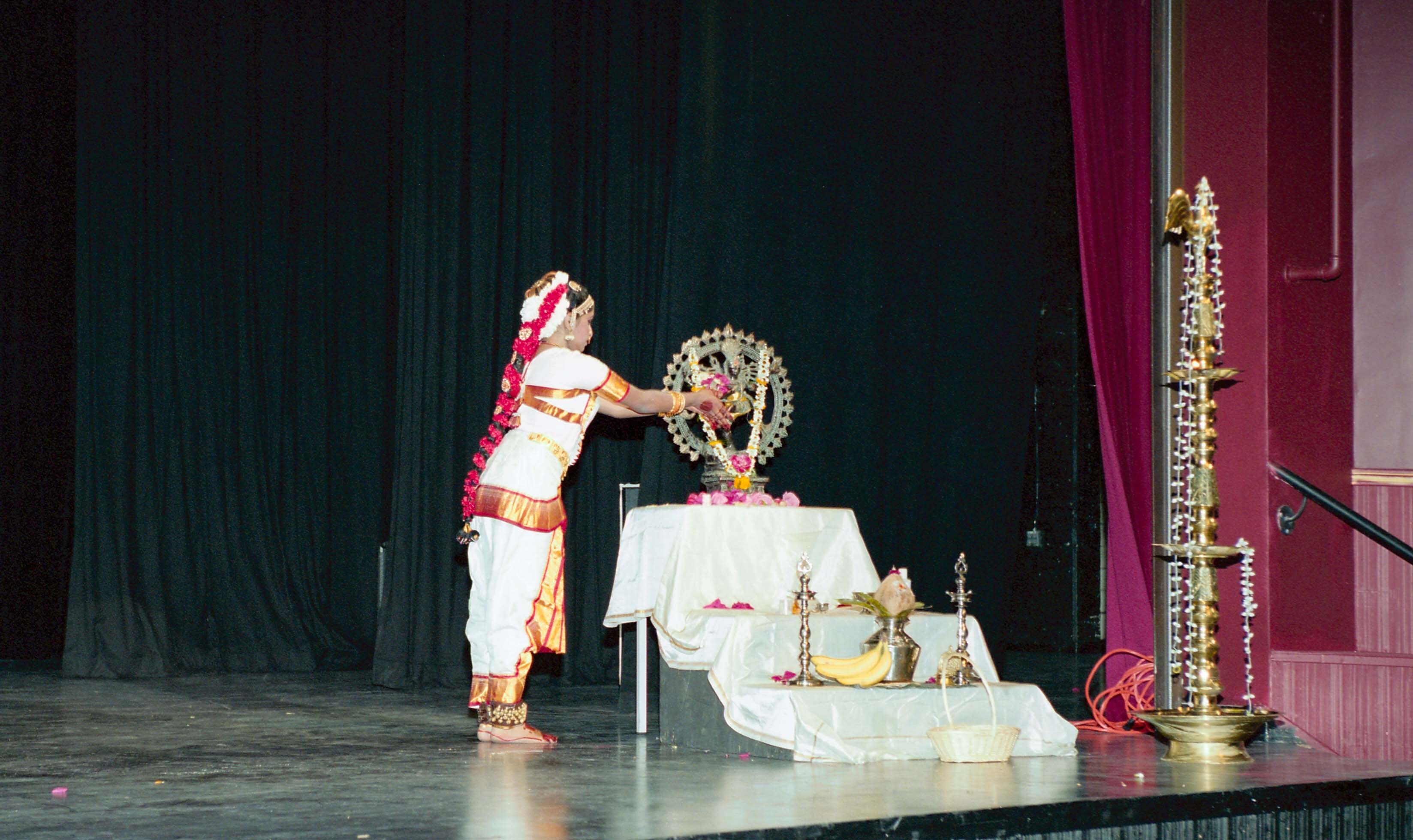
Photograph of an unidentified Bharatanatyam performer giving offerings to a Lord Shiva Nataraja sculpture displayed on a theatrical stage as a sign of prayer and respect.
Bharatanatyam, a classical dance style of India, is indigenous to the Tamil Nadu region and prevalent in southern India. Bharatanatyam serves the expression of Hindu religious themes and devotions. Bharatanatyam was originally performed exclusively by female temple dancers and was not brought to the stage for public performance until about 1930. A vital tradition of Bharatanatyam is a graduation performance, called Arangetram, in which graduates showcase their talents. It is a common practice in Indian classical dances to offer respect and prayers (Namaskaram), often before starting or after the completion of one's performance. Lord Shiva is considered the god of this dance form.
Bharatanatyam, a classical dance style of India, is indigenous to the Tamil Nadu region and prevalent in southern India. Bharatanatyam serves the expression of Hindu religious themes and devotions. Bharatanatyam was originally performed exclusively by female temple dancers and was not brought to the stage for public performance until about 1930. A vital tradition of Bharatanatyam is a graduation performance, called Arangetram, in which graduates showcase their talents. It is a common practice in Indian classical dances to offer respect and prayers (Namaskaram), often before starting or after the completion of one's performance. Lord Shiva is considered the god of this dance form.
Member of
Creator: Bodalia, Chandra
Description
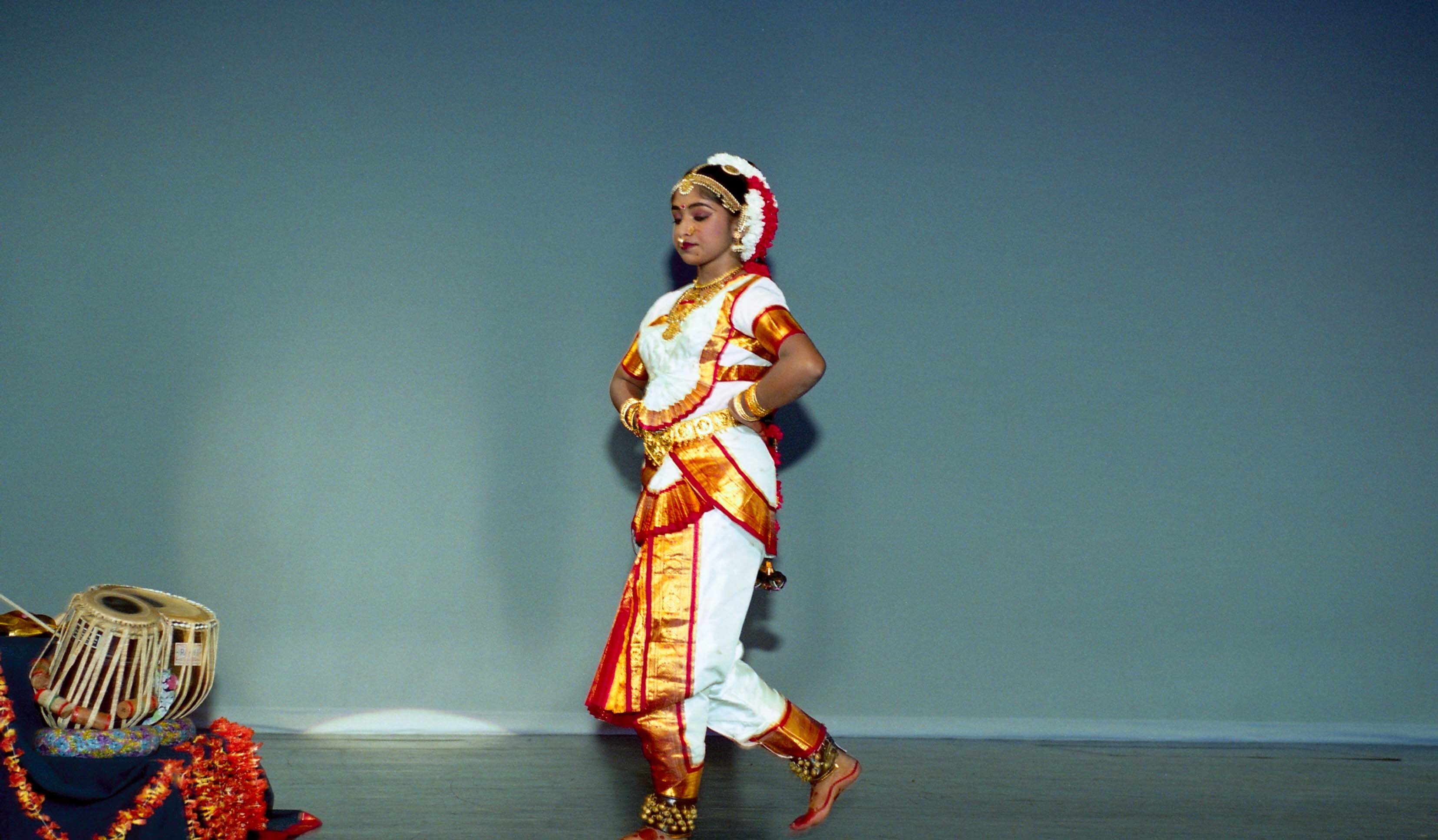
Photograph of an unidentified Bharatanatyam dancer performing on a theatrical stage.
Bharatanatyam, a classical dance style of India, is indigenous to the Tamil Nadu region and prevalent in southern India. Bharatanatyam serves the expression of Hindu religious themes and devotions. Bharatanatyam was originally performed exclusively by female temple dancers and was not brought to the stage for public performance until about 1930. A vital tradition of Bharatanatyam is a graduation performance, called Arangetram, in which graduates showcase their talents.
Bharatanatyam, a classical dance style of India, is indigenous to the Tamil Nadu region and prevalent in southern India. Bharatanatyam serves the expression of Hindu religious themes and devotions. Bharatanatyam was originally performed exclusively by female temple dancers and was not brought to the stage for public performance until about 1930. A vital tradition of Bharatanatyam is a graduation performance, called Arangetram, in which graduates showcase their talents.
Member of
Creator: Bodalia, Chandra
Description
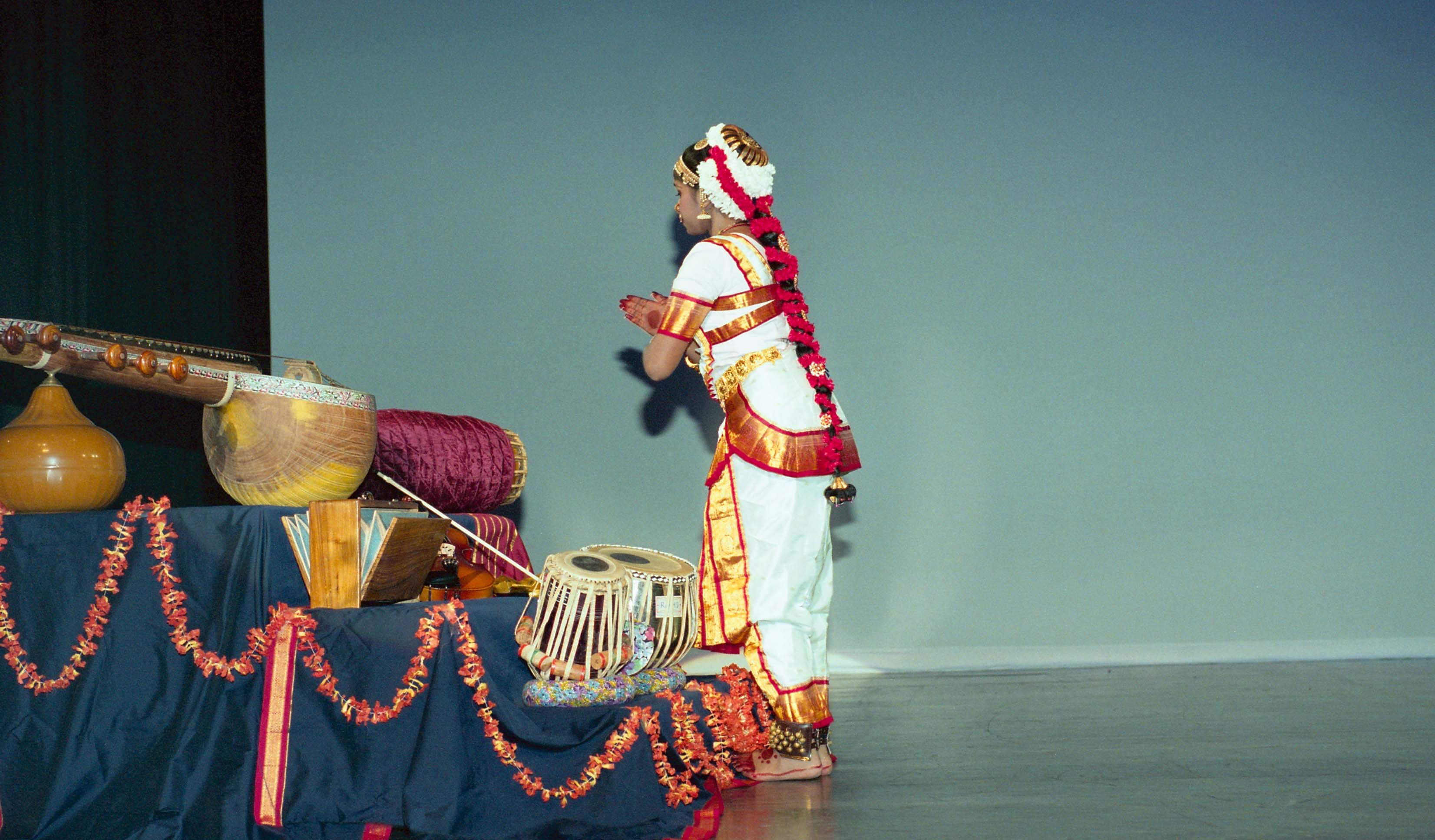
Photograph of an unidentified Bharatanatyam performer offering reverence to Indian classical musical instruments displayed on a theatrical stage.
Bharatanatyam, a classical dance style of India, is indigenous to the Tamil Nadu region and prevalent in southern India. Bharatanatyam serves the expression of Hindu religious themes and devotions. Bharatanatyam was originally performed exclusively by female temple dancers and was not brought to the stage for public performance until about 1930. A vital tradition of Bharatanatyam is a graduation performance, called Arangetram, in which graduates showcase their talents.
Bharatanatyam, a classical dance style of India, is indigenous to the Tamil Nadu region and prevalent in southern India. Bharatanatyam serves the expression of Hindu religious themes and devotions. Bharatanatyam was originally performed exclusively by female temple dancers and was not brought to the stage for public performance until about 1930. A vital tradition of Bharatanatyam is a graduation performance, called Arangetram, in which graduates showcase their talents.