
Bharata natyam
Member of
Creator: Bodalia, Chandra
Description
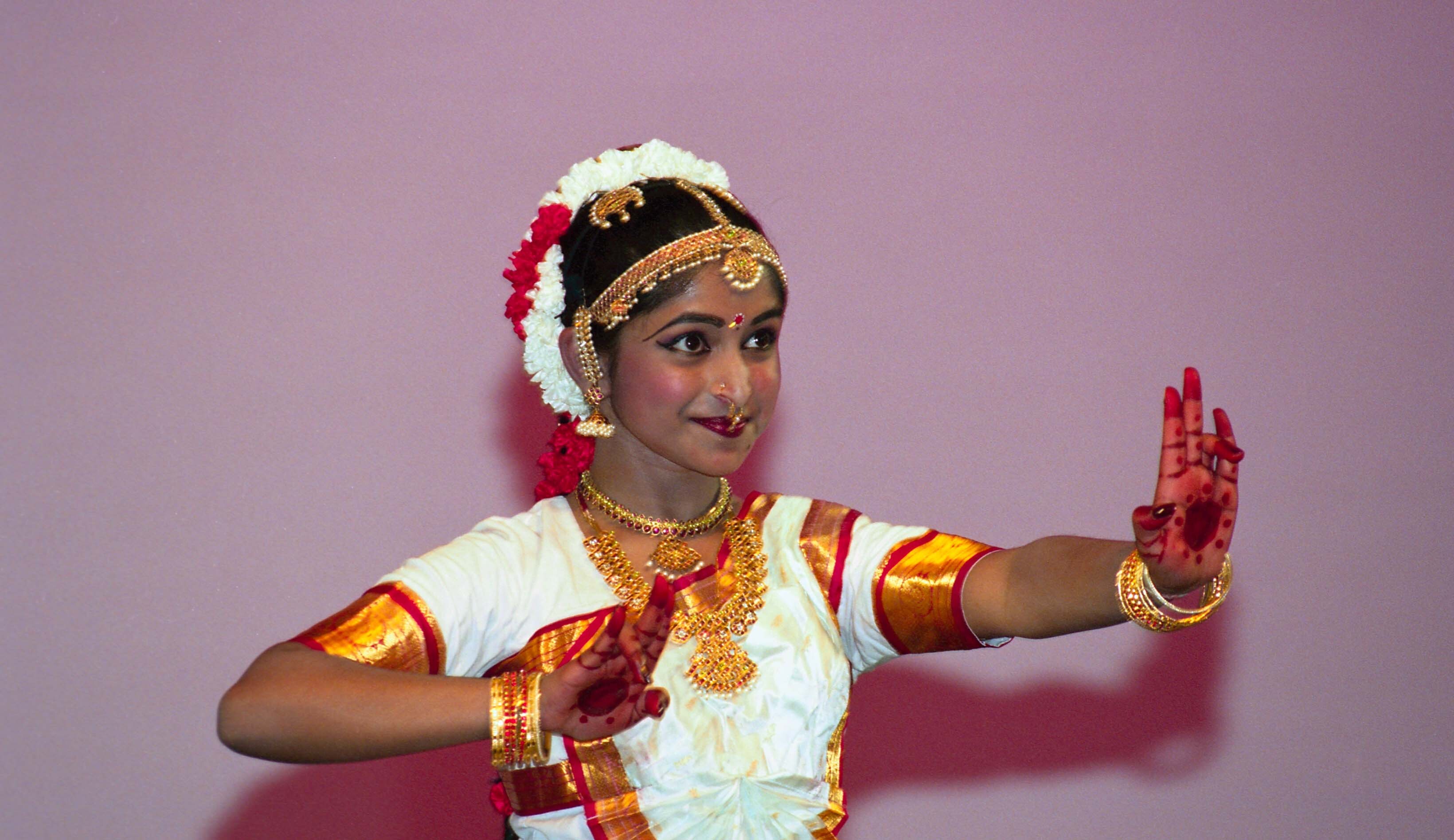
Photograph of an unidentified Bharatanatyam performer striking a classical pose through expressive hand gestures (mudra).
Bharatanatyam, a classical dance style of India, is indigenous to the Tamil Nadu region and prevalent in southern India. Bharatanatyam serves the expression of Hindu religious themes and devotions. Bharatanatyam was originally performed exclusively by female temple dancers and was not brought to the stage for public performance until about 1930. A vital tradition of Bharatanatyam is a graduation performance, called Arangetram, in which graduates showcase their talents.
Bharatanatyam, a classical dance style of India, is indigenous to the Tamil Nadu region and prevalent in southern India. Bharatanatyam serves the expression of Hindu religious themes and devotions. Bharatanatyam was originally performed exclusively by female temple dancers and was not brought to the stage for public performance until about 1930. A vital tradition of Bharatanatyam is a graduation performance, called Arangetram, in which graduates showcase their talents.
Member of
Creator: Bodalia, Chandra
Description
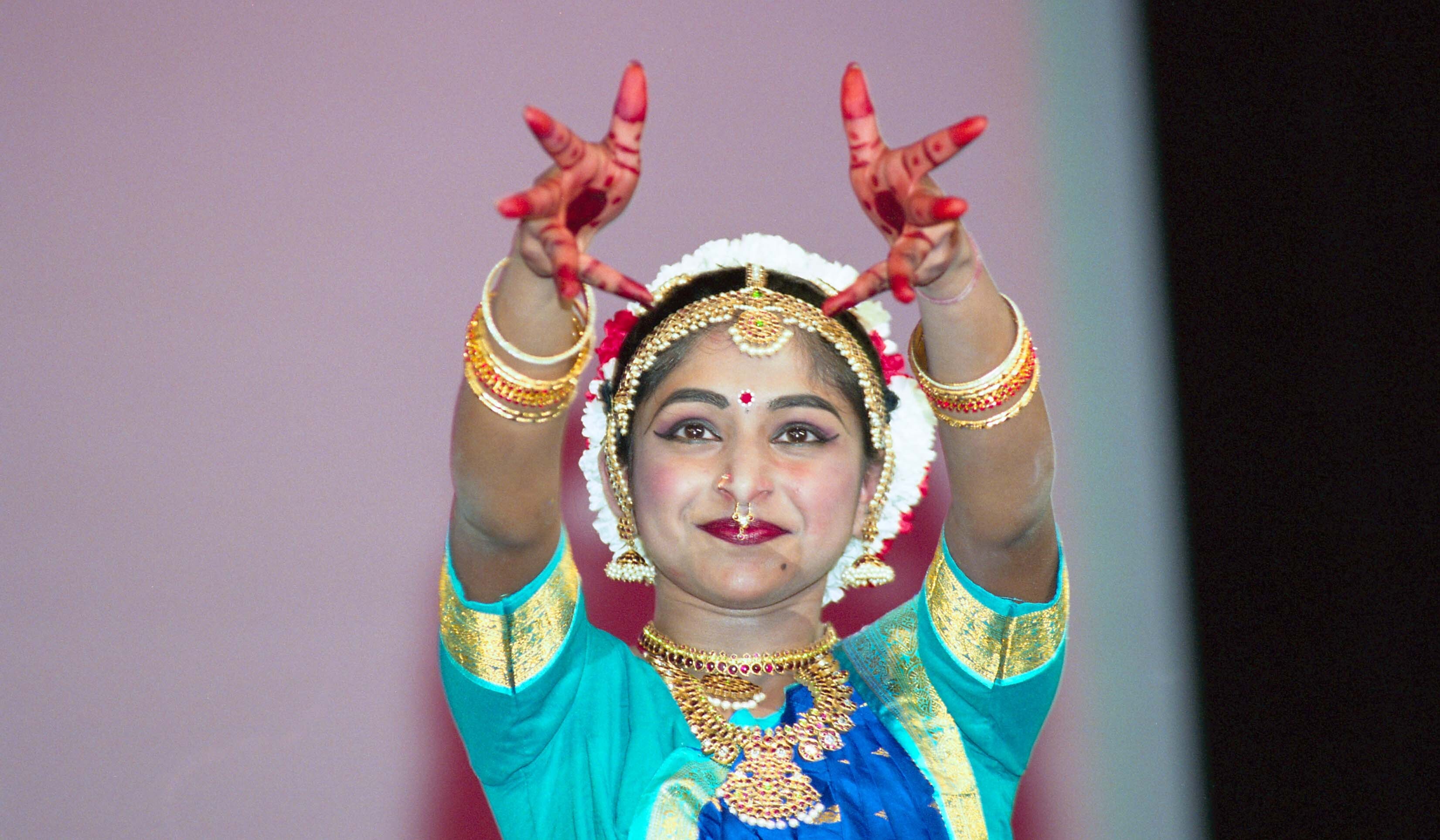
Photograph of an unidentified Bharatanatyam performer striking a classical pose through expressive hand gestures (mudra).
Bharatanatyam, a classical dance style of India, is indigenous to the Tamil Nadu region and prevalent in southern India. Bharatanatyam serves the expression of Hindu religious themes and devotions. Bharatanatyam was originally performed exclusively by female temple dancers and was not brought to the stage for public performance until about 1930. A vital tradition of Bharatanatyam is a graduation performance, called Arangetram, in which graduates showcase their talents.
Bharatanatyam, a classical dance style of India, is indigenous to the Tamil Nadu region and prevalent in southern India. Bharatanatyam serves the expression of Hindu religious themes and devotions. Bharatanatyam was originally performed exclusively by female temple dancers and was not brought to the stage for public performance until about 1930. A vital tradition of Bharatanatyam is a graduation performance, called Arangetram, in which graduates showcase their talents.
Member of
Creator: Bodalia, Chandra
Description
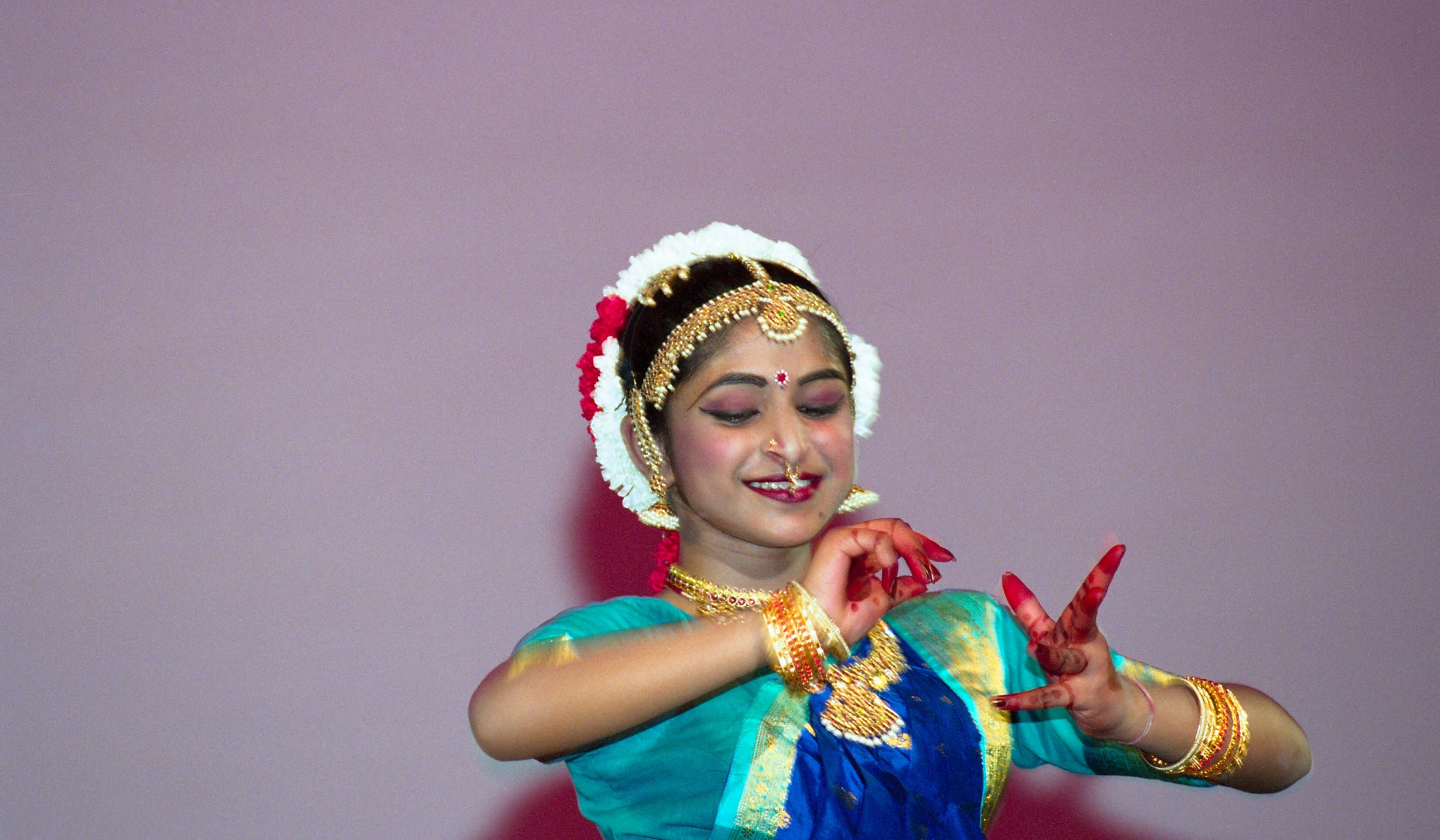
Photograph of an unidentified Bharatanatyam performer striking a classical pose through expressive hand gestures (mudra).
Bharatanatyam, a classical dance style of India, is indigenous to the Tamil Nadu region and prevalent in southern India. Bharatanatyam serves the expression of Hindu religious themes and devotions. Bharatanatyam was originally performed exclusively by female temple dancers and was not brought to the stage for public performance until about 1930. A vital tradition of Bharatanatyam is a graduation performance, called Arangetram, in which graduates showcase their talents.
Bharatanatyam, a classical dance style of India, is indigenous to the Tamil Nadu region and prevalent in southern India. Bharatanatyam serves the expression of Hindu religious themes and devotions. Bharatanatyam was originally performed exclusively by female temple dancers and was not brought to the stage for public performance until about 1930. A vital tradition of Bharatanatyam is a graduation performance, called Arangetram, in which graduates showcase their talents.
Member of
Creator: Bodalia, Chandra
Description
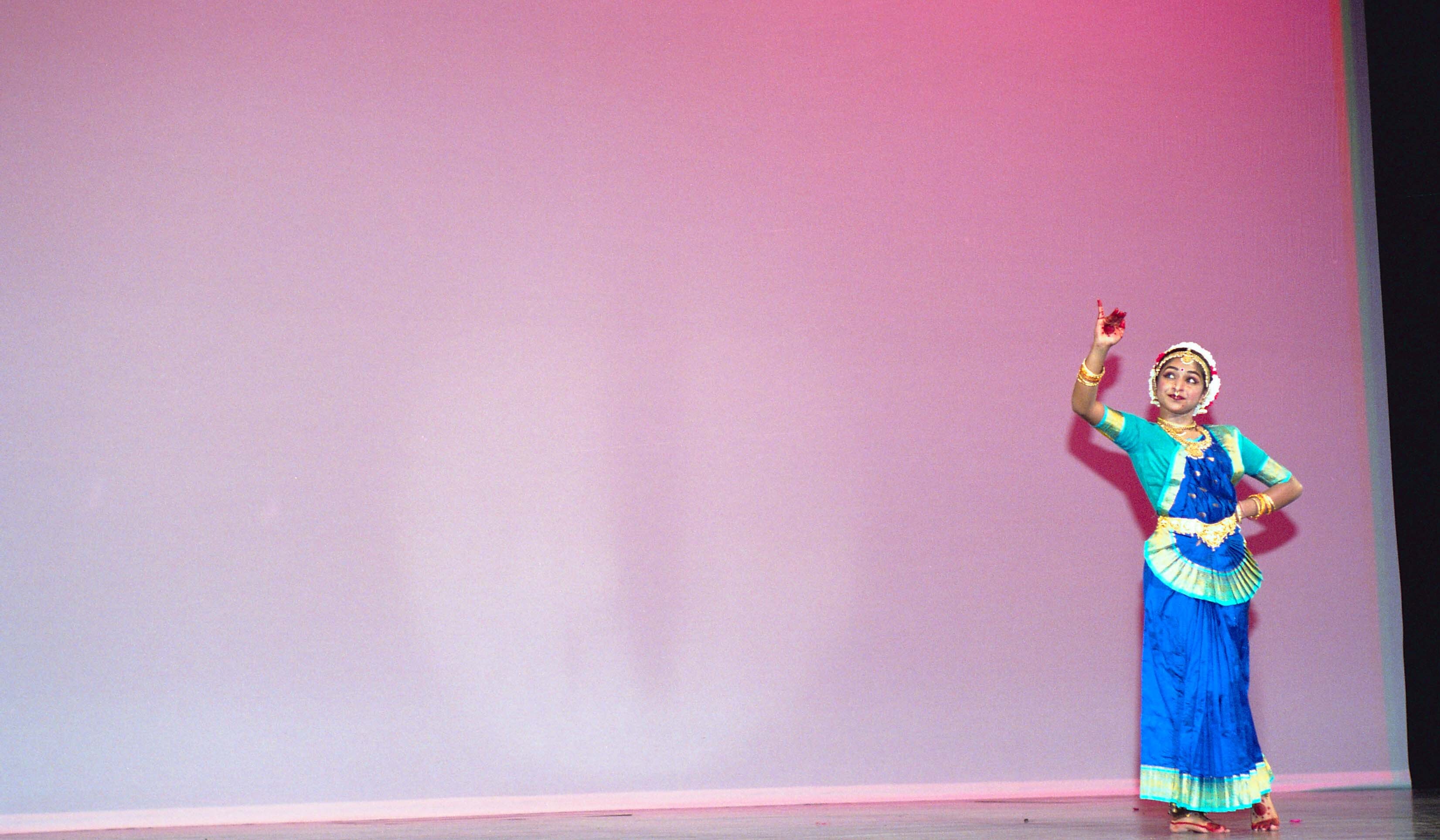
Photograph of an unidentified Bharatanatyam dancer performing on a theatrical stage.
Bharatanatyam, a classical dance style of India, is indigenous to the Tamil Nadu region and prevalent in southern India. Bharatanatyam serves the expression of Hindu religious themes and devotions. Bharatanatyam was originally performed exclusively by female temple dancers and was not brought to the stage for public performance until about 1930. A vital tradition of Bharatanatyam is a graduation performance, called Arangetram, in which graduates showcase their talents.
Bharatanatyam, a classical dance style of India, is indigenous to the Tamil Nadu region and prevalent in southern India. Bharatanatyam serves the expression of Hindu religious themes and devotions. Bharatanatyam was originally performed exclusively by female temple dancers and was not brought to the stage for public performance until about 1930. A vital tradition of Bharatanatyam is a graduation performance, called Arangetram, in which graduates showcase their talents.
Member of
Creator: Bodalia, Chandra
Description
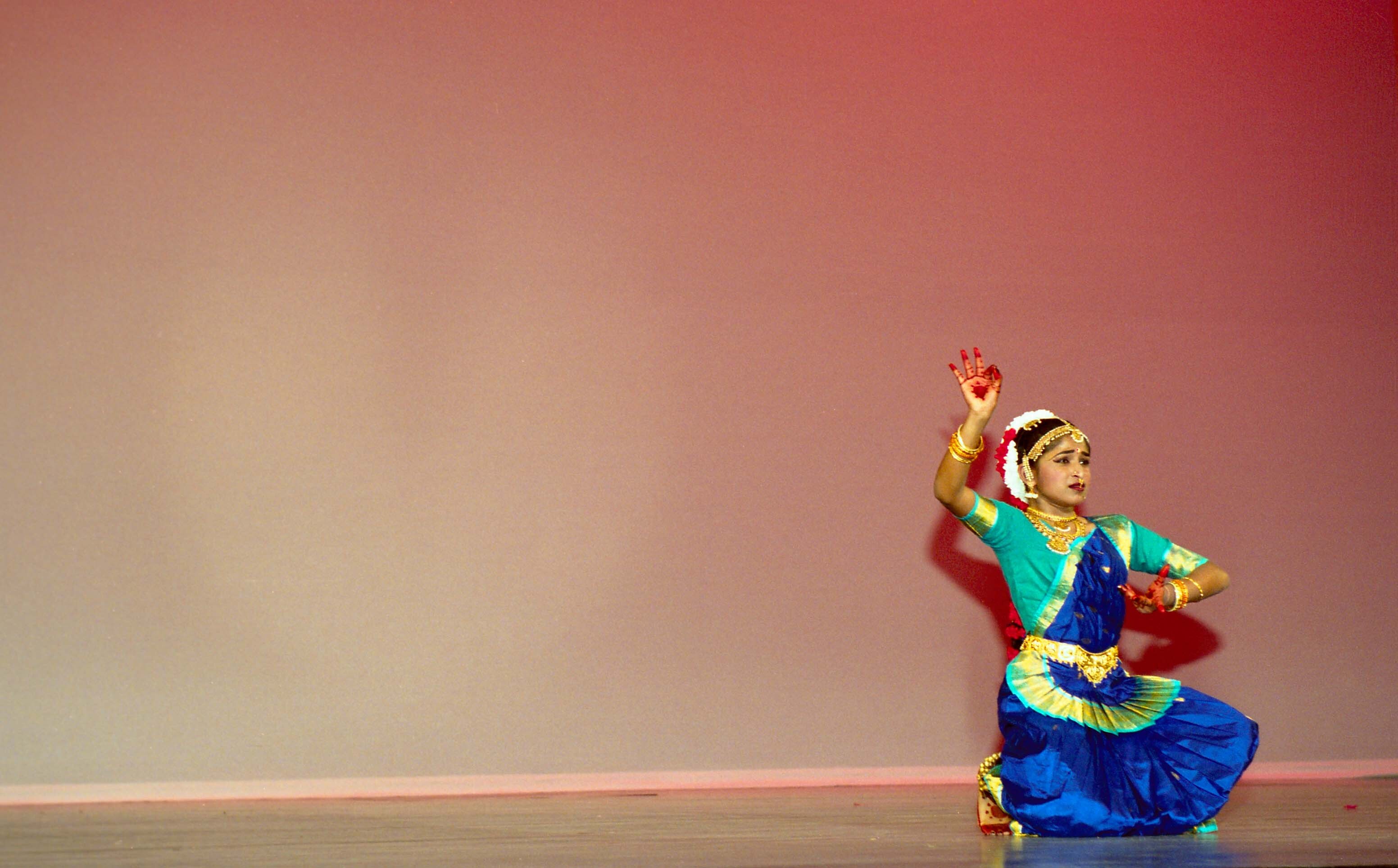
Photograph of an unidentified Bharatanatyam dancer performing on a theatrical stage.
Bharatanatyam, a classical dance style of India, is indigenous to the Tamil Nadu region and prevalent in southern India. Bharatanatyam serves the expression of Hindu religious themes and devotions. Bharatanatyam was originally performed exclusively by female temple dancers and was not brought to the stage for public performance until about 1930. A vital tradition of Bharatanatyam is a graduation performance, called Arangetram, in which graduates showcase their talents.
Bharatanatyam, a classical dance style of India, is indigenous to the Tamil Nadu region and prevalent in southern India. Bharatanatyam serves the expression of Hindu religious themes and devotions. Bharatanatyam was originally performed exclusively by female temple dancers and was not brought to the stage for public performance until about 1930. A vital tradition of Bharatanatyam is a graduation performance, called Arangetram, in which graduates showcase their talents.
Member of
Creator: Bodalia, Chandra
Description
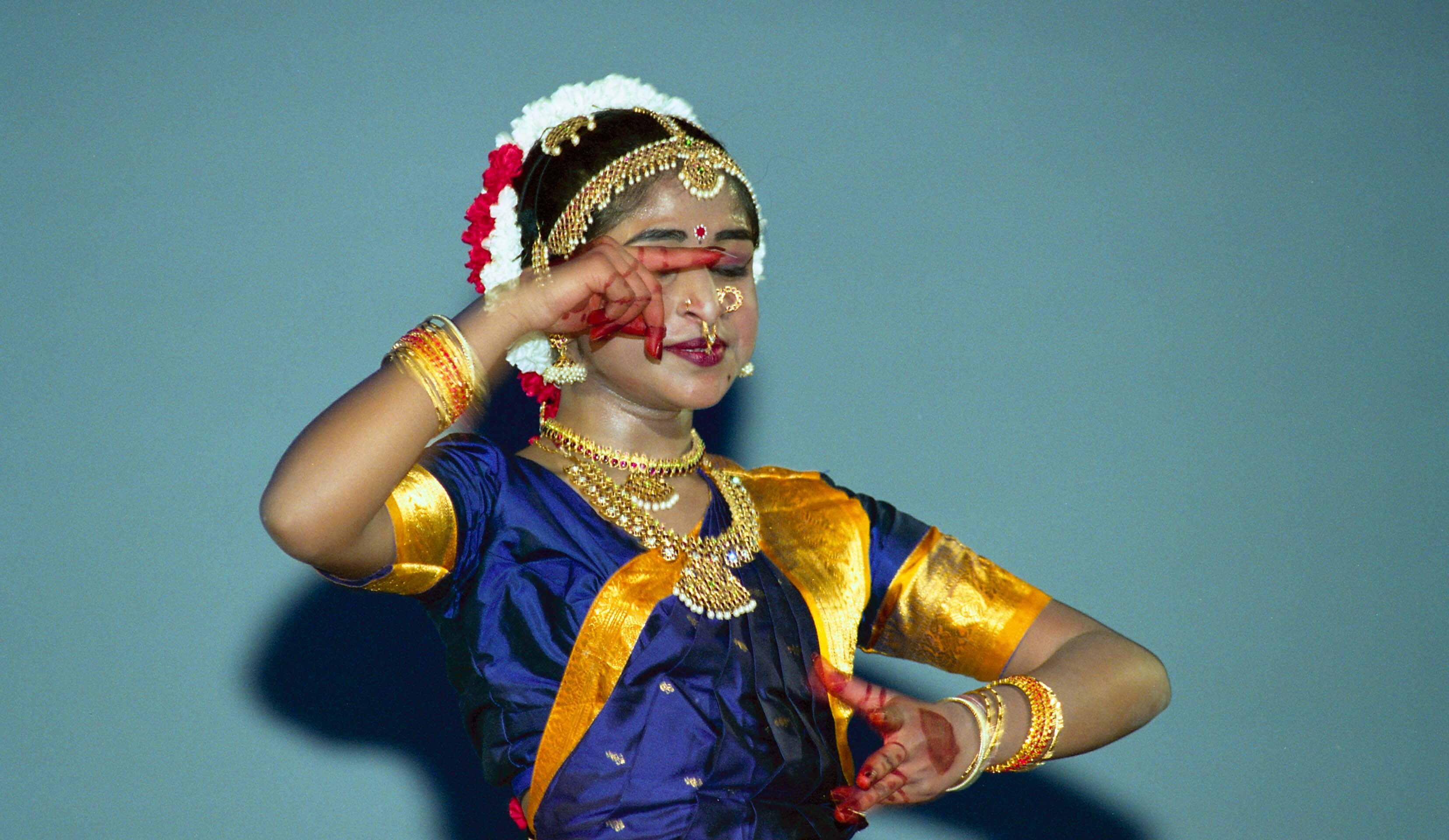
Photograph of an unidentified Bharatanatyam performer striking a classical pose through expressive hand gestures (mudra).
Bharatanatyam, a classical dance style of India, is indigenous to the Tamil Nadu region and prevalent in southern India. Bharatanatyam serves the expression of Hindu religious themes and devotions. Bharatanatyam was originally performed exclusively by female temple dancers and was not brought to the stage for public performance until about 1930. A vital tradition of Bharatanatyam is a graduation performance, called Arangetram, in which graduates showcase their talents.
Bharatanatyam, a classical dance style of India, is indigenous to the Tamil Nadu region and prevalent in southern India. Bharatanatyam serves the expression of Hindu religious themes and devotions. Bharatanatyam was originally performed exclusively by female temple dancers and was not brought to the stage for public performance until about 1930. A vital tradition of Bharatanatyam is a graduation performance, called Arangetram, in which graduates showcase their talents.
Member of
Creator: Bodalia, Chandra
Description
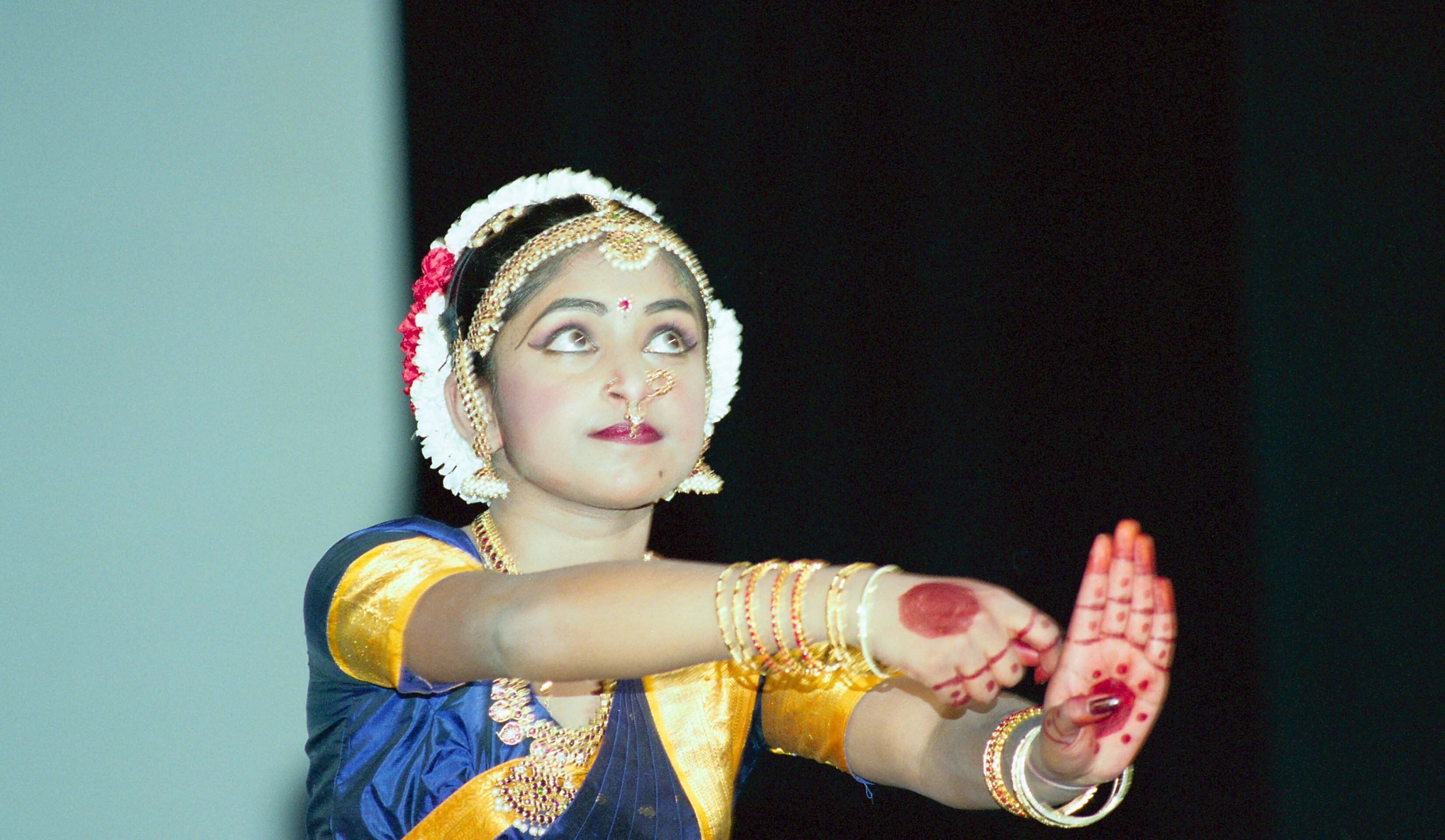
Photograph of an unidentified Bharatanatyam performer striking a classical pose through expressive hand gestures (mudra).
Bharatanatyam, a classical dance style of India, is indigenous to the Tamil Nadu region and prevalent in southern India. Bharatanatyam serves the expression of Hindu religious themes and devotions. Bharatanatyam was originally performed exclusively by female temple dancers and was not brought to the stage for public performance until about 1930. A vital tradition of Bharatanatyam is a graduation performance, called Arangetram, in which graduates showcase their talents.
Bharatanatyam, a classical dance style of India, is indigenous to the Tamil Nadu region and prevalent in southern India. Bharatanatyam serves the expression of Hindu religious themes and devotions. Bharatanatyam was originally performed exclusively by female temple dancers and was not brought to the stage for public performance until about 1930. A vital tradition of Bharatanatyam is a graduation performance, called Arangetram, in which graduates showcase their talents.
Member of
Creator: Bodalia, Chandra
Description
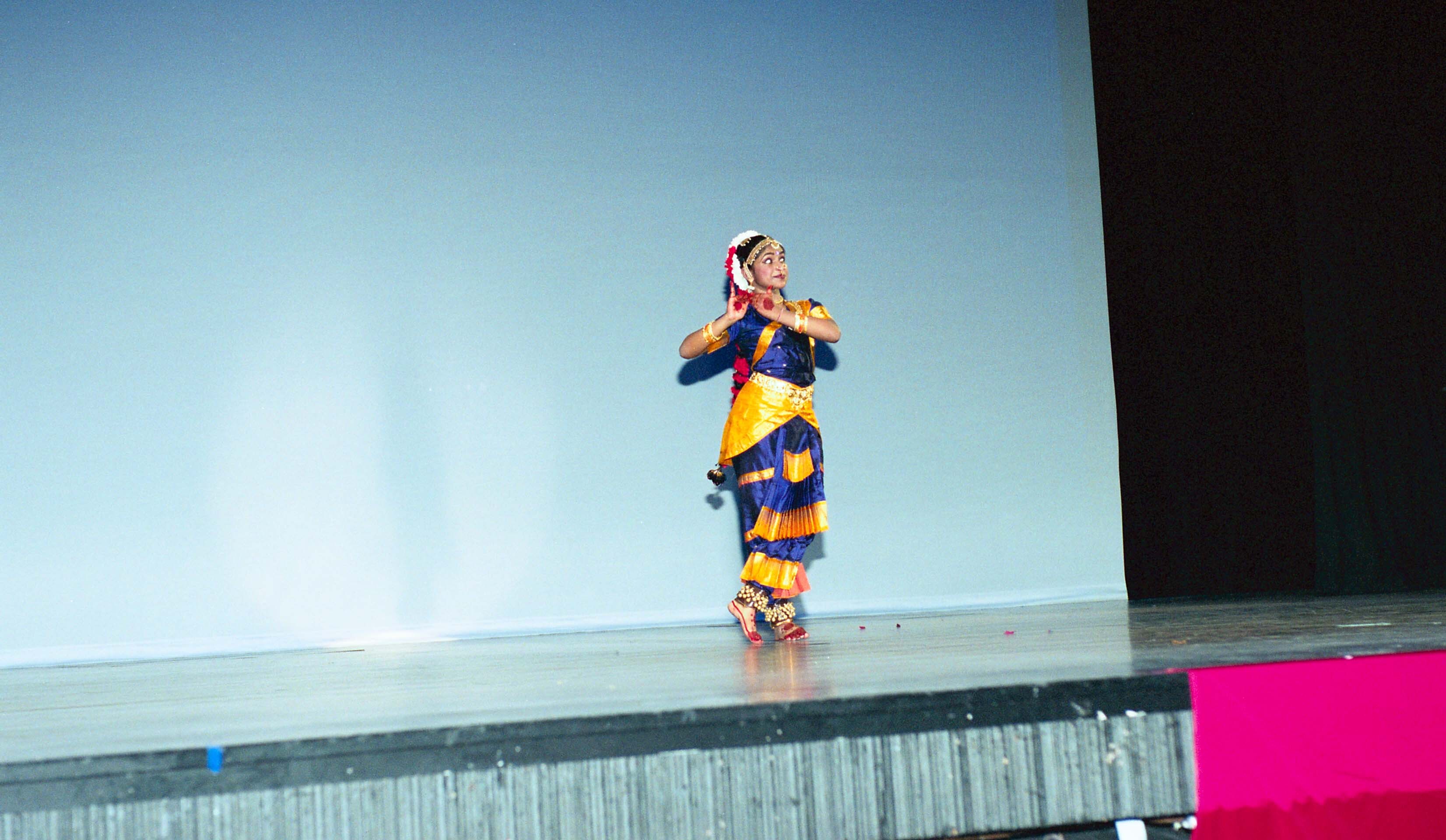
Photograph of an unidentified Bharatanatyam dancer performing on a theatrical stage.
Bharatanatyam, a classical dance style of India, is indigenous to the Tamil Nadu region and prevalent in southern India. Bharatanatyam serves the expression of Hindu religious themes and devotions. Bharatanatyam was originally performed exclusively by female temple dancers and was not brought to the stage for public performance until about 1930. A vital tradition of Bharatanatyam is a graduation performance, called Arangetram, in which graduates showcase their talents.
Bharatanatyam, a classical dance style of India, is indigenous to the Tamil Nadu region and prevalent in southern India. Bharatanatyam serves the expression of Hindu religious themes and devotions. Bharatanatyam was originally performed exclusively by female temple dancers and was not brought to the stage for public performance until about 1930. A vital tradition of Bharatanatyam is a graduation performance, called Arangetram, in which graduates showcase their talents.
Member of
Creator: Bodalia, Chandra
Description
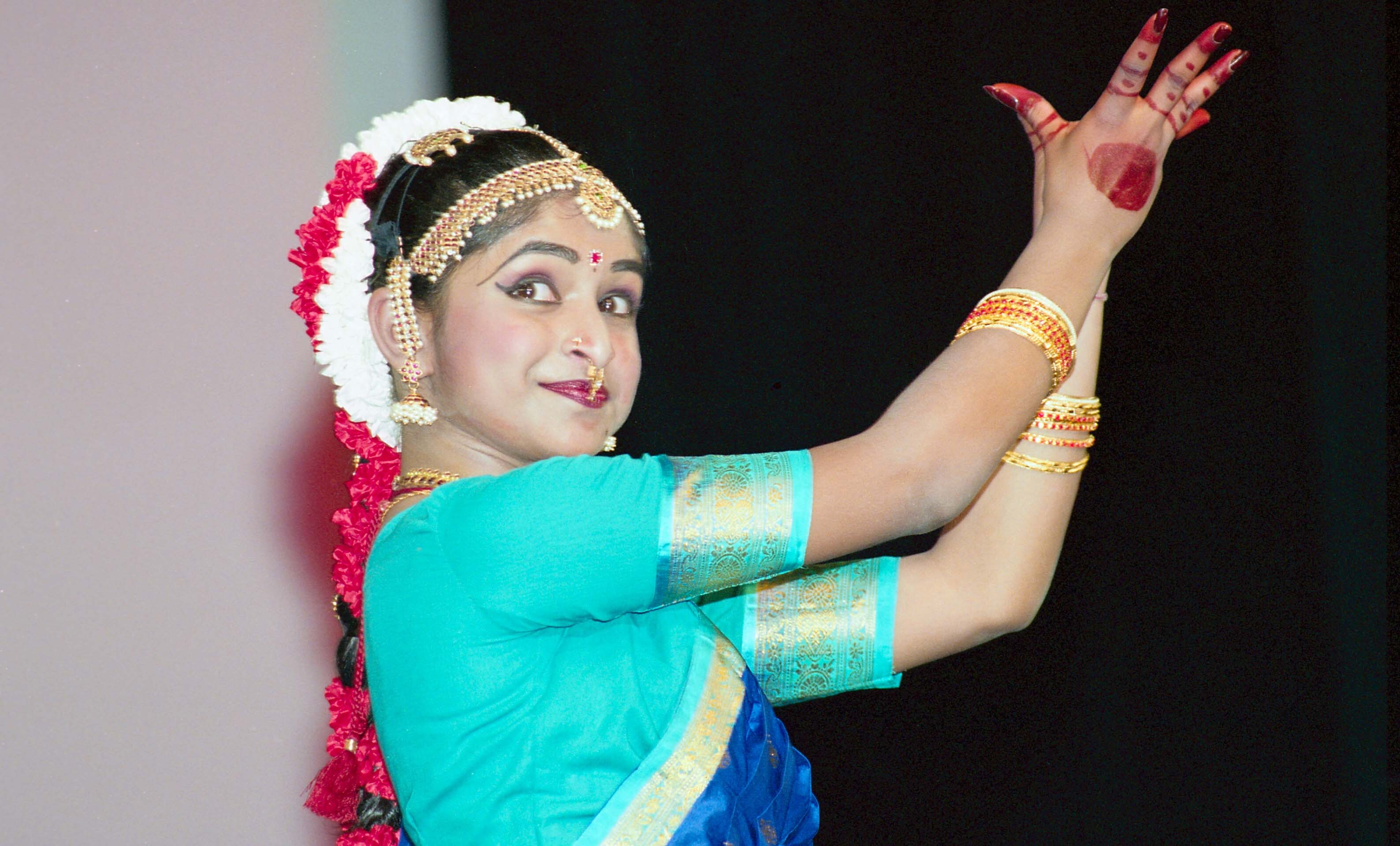
Photograph of an unidentified Bharatanatyam performer striking a classical pose through expressive hand gestures (mudra).
Bharatanatyam, a classical dance style of India, is indigenous to the Tamil Nadu region and prevalent in southern India. Bharatanatyam serves the expression of Hindu religious themes and devotions. Bharatanatyam was originally performed exclusively by female temple dancers and was not brought to the stage for public performance until about 1930. A vital tradition of Bharatanatyam is a graduation performance, called Arangetram, in which graduates showcase their talents.
Bharatanatyam, a classical dance style of India, is indigenous to the Tamil Nadu region and prevalent in southern India. Bharatanatyam serves the expression of Hindu religious themes and devotions. Bharatanatyam was originally performed exclusively by female temple dancers and was not brought to the stage for public performance until about 1930. A vital tradition of Bharatanatyam is a graduation performance, called Arangetram, in which graduates showcase their talents.
Member of
Creator: Bodalia, Chandra
Description
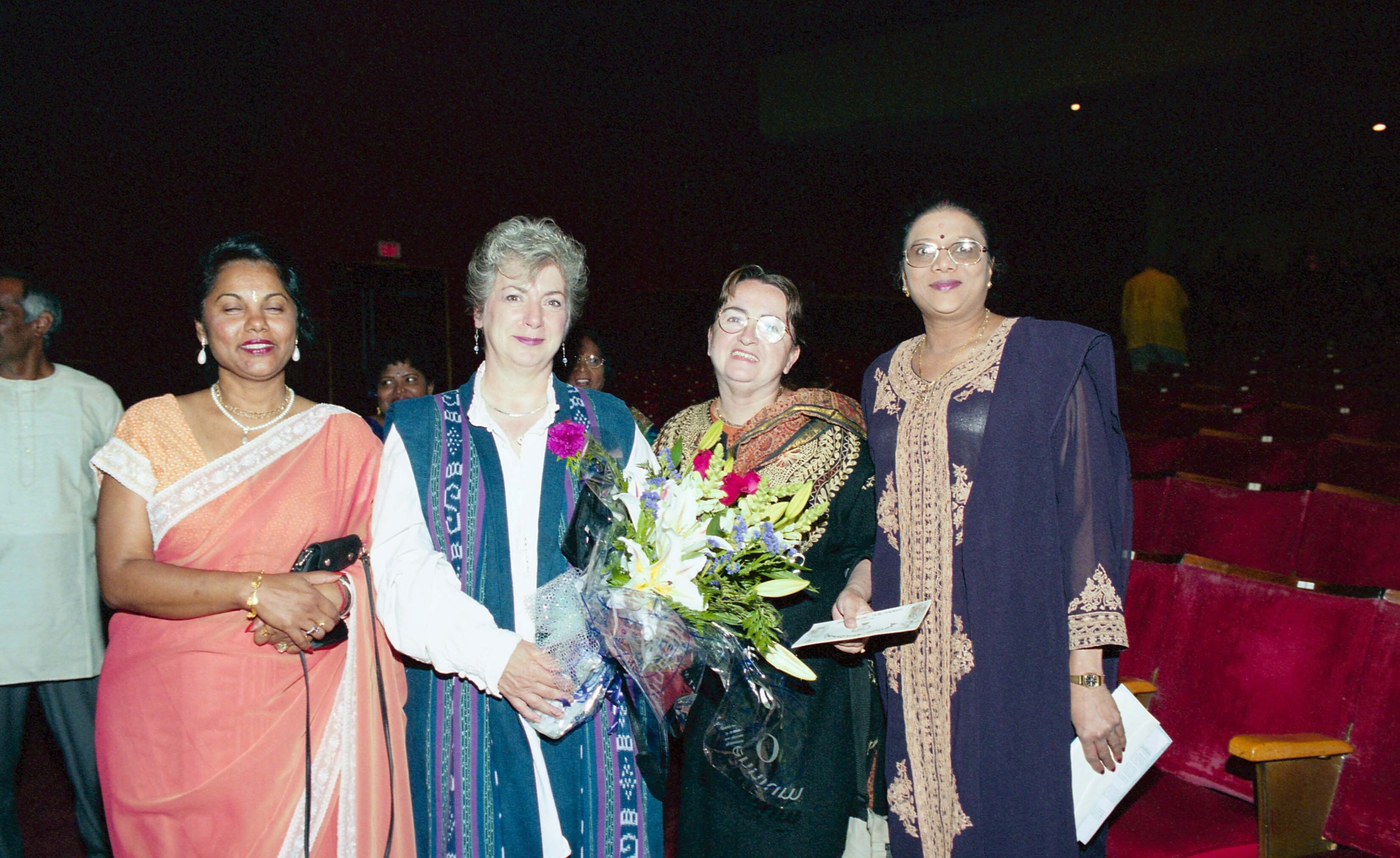
Photograph of a group of unidentified individuals attending a cultural dance performance event with Sue Hammell standing in the centre holding a bouquet of flowers.
Bharatanatyam, a classical dance style of India, is indigenous to the Tamil Nadu region and prevalent in southern India. Bharatanatyam serves the expression of Hindu religious themes and devotions. Bharatanatyam was originally performed exclusively by female temple dancers and was not brought to the stage for public performance until about 1930. A vital tradition of Bharatanatyam is a graduation performance, called Arangetram, in which graduates showcase their talents.
Sue Hammell is a former Member of the Legislative Assembly for Surrey-Green Timbers, serving multiple terms since 1991. She held key roles, including Minister for Women's Equality, and co-founded the Minerva Foundation for BC Women. Hammell also worked internationally to support female leaders and served as Executive Director of the Surrey Aboriginal Society.
Bharatanatyam, a classical dance style of India, is indigenous to the Tamil Nadu region and prevalent in southern India. Bharatanatyam serves the expression of Hindu religious themes and devotions. Bharatanatyam was originally performed exclusively by female temple dancers and was not brought to the stage for public performance until about 1930. A vital tradition of Bharatanatyam is a graduation performance, called Arangetram, in which graduates showcase their talents.
Sue Hammell is a former Member of the Legislative Assembly for Surrey-Green Timbers, serving multiple terms since 1991. She held key roles, including Minister for Women's Equality, and co-founded the Minerva Foundation for BC Women. Hammell also worked internationally to support female leaders and served as Executive Director of the Surrey Aboriginal Society.