
Bharata natyam
Member of
Creator: Bodalia, Chandra
Description
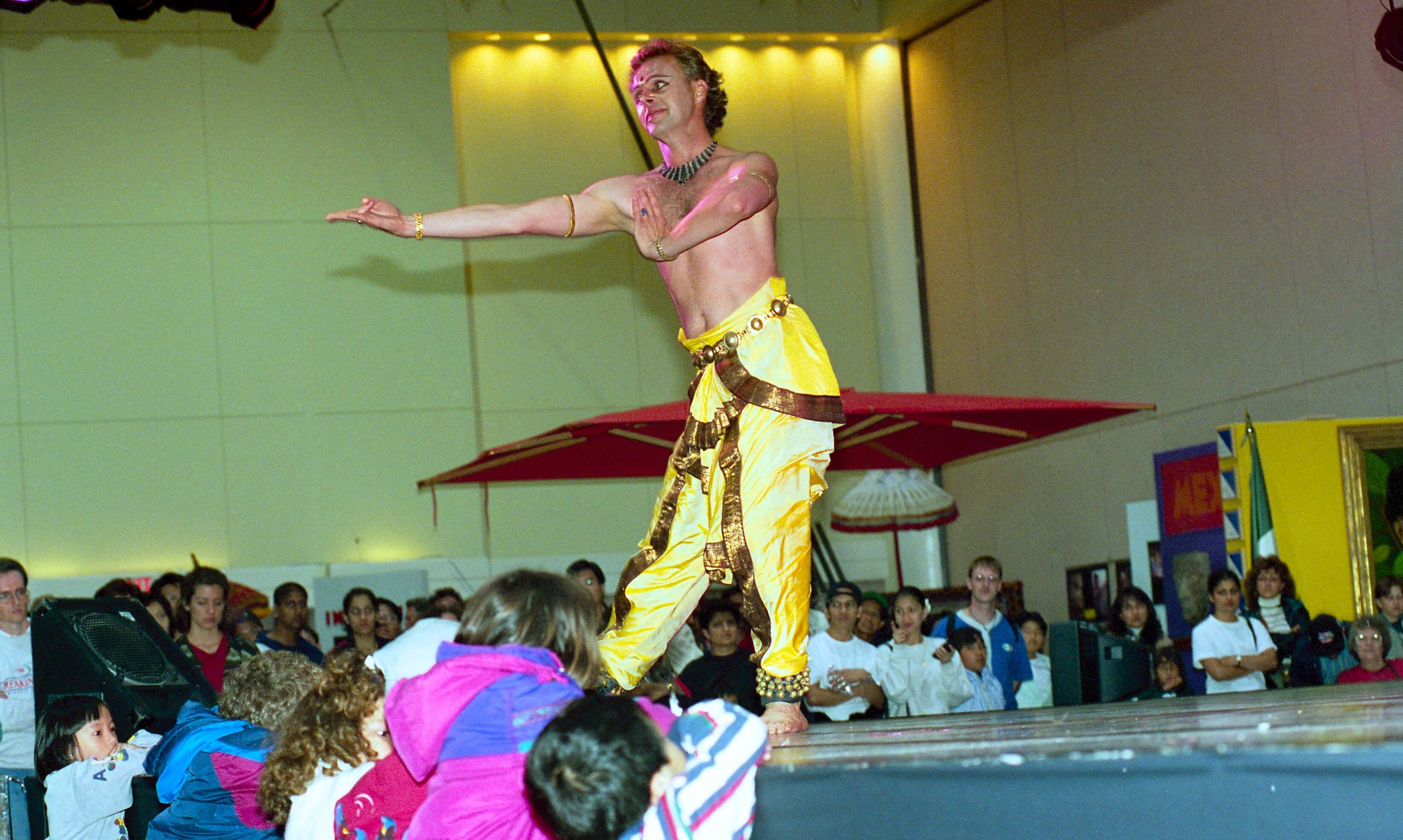
Photograph of an unidentified individual dressed in traditional attire performing Bharatanatyam, a classical folk dance, at the Canada Day celebration at Canada Place, Vancouver, British Columbia (B.C.).
Canada Day is the national day of Canada, celebrated annually on July 1. It marks the anniversary of the confederation of Canada in 1867, when the British North America Act united the provinces of Ontario, Quebec, New Brunswick, and Nova Scotia into one country. The day is observed with various events, including fireworks, parades, concerts, and cultural performances, as well as gatherings to celebrate Canada's history, diversity, and achievements.
Canada Day is the national day of Canada, celebrated annually on July 1. It marks the anniversary of the confederation of Canada in 1867, when the British North America Act united the provinces of Ontario, Quebec, New Brunswick, and Nova Scotia into one country. The day is observed with various events, including fireworks, parades, concerts, and cultural performances, as well as gatherings to celebrate Canada's history, diversity, and achievements.
Member of
Creator: Bodalia, Chandra
Description
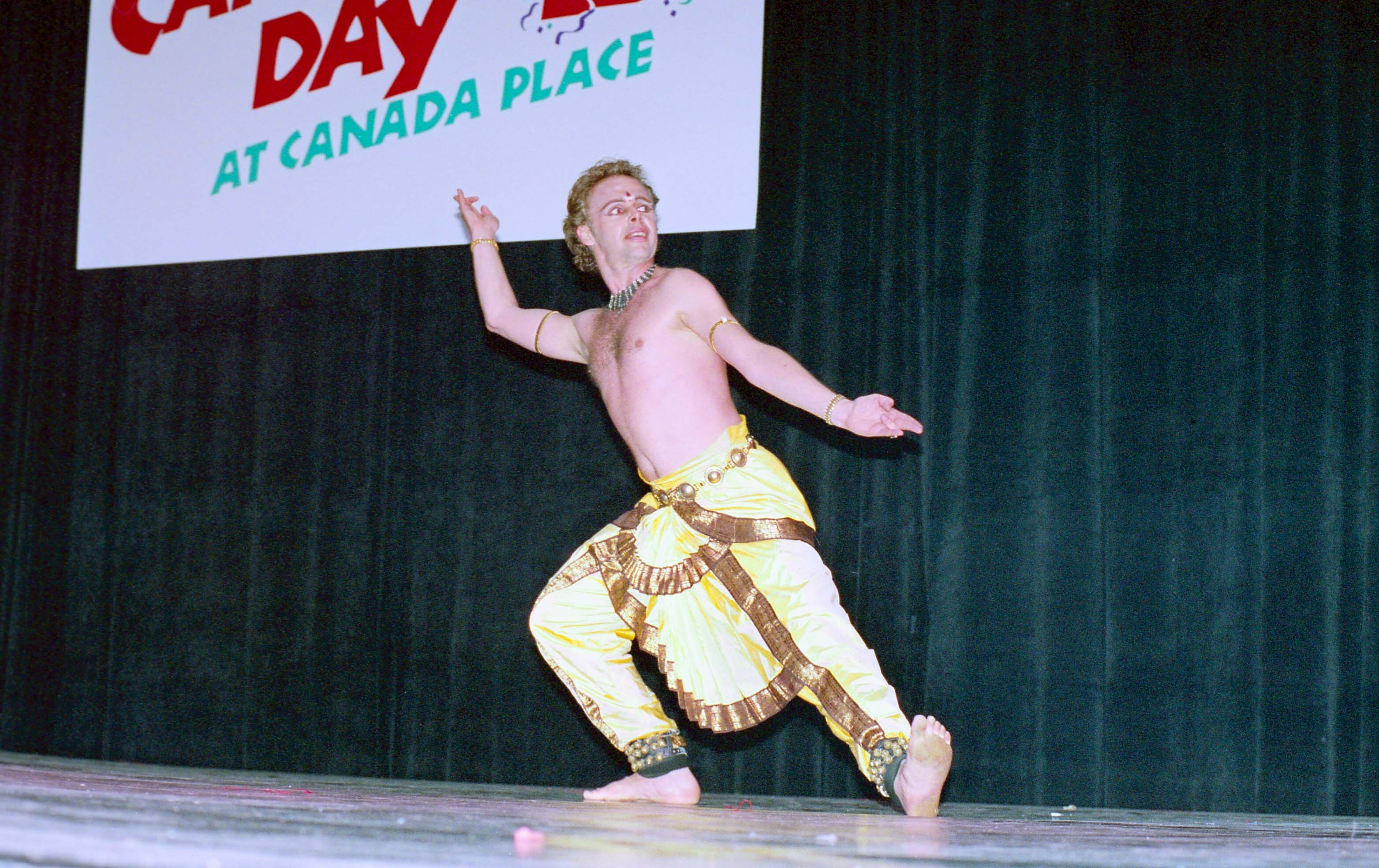
Photograph of an unidentified individual dressed in traditional attire performing Bharatanatyam, a classical folk dance, at the Canada Day celebration at Canada Place, Vancouver, British Columbia (B.C.).
Canada Day is the national day of Canada, celebrated annually on July 1. It marks the anniversary of the confederation of Canada in 1867, when the British North America Act united the provinces of Ontario, Quebec, New Brunswick, and Nova Scotia into one country. The day is observed with various events, including fireworks, parades, concerts, and cultural performances, as well as gatherings to celebrate Canada's history, diversity, and achievements.
Canada Day is the national day of Canada, celebrated annually on July 1. It marks the anniversary of the confederation of Canada in 1867, when the British North America Act united the provinces of Ontario, Quebec, New Brunswick, and Nova Scotia into one country. The day is observed with various events, including fireworks, parades, concerts, and cultural performances, as well as gatherings to celebrate Canada's history, diversity, and achievements.
Creator: Bodalia, Chandra
Description
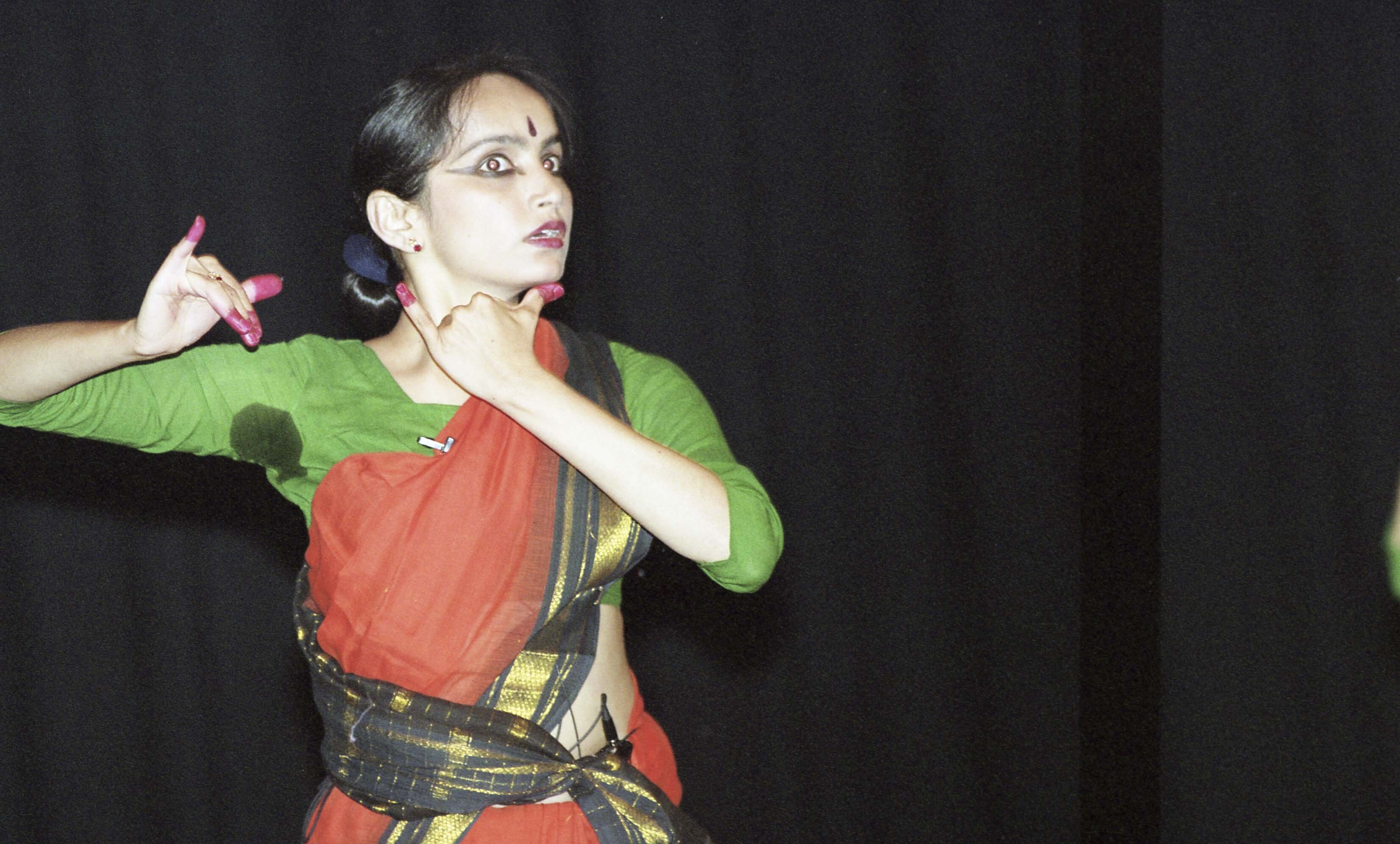
Photograph of Aparna Sansad Sindhoor performing Bharatanatyam, an Indian classical dance, onstage wearing a madisar drape bharatanatyam attire.
Aparna Sansad Sindhoor is a choreographer, director, and founder of Navarasa Dance Theater. Trained in Mysore-style Bharatanatyam, she also studied yoga, Kalari Payattu, aerial dance, music, and theater. She holds a PhD from Boston University and a gold medal in Dance from Mysore University. Sindhoor has created over fifteen contemporary dance-theater works performed internationally, choreographed for Indian films, and received the NPN Creation Award and an Ovation Award nomination. She works between India and the United States.
Bharatanatyam, a classical dance style of India, is indigenous to the Tamil Nadu region and prevalent in southern India. Bharatanatyam serves the expression of Hindu religious themes and devotions. Bharatanatyam was originally performed exclusively by female temple dancers and was not brought to the stage for public performance until about 1930. A vital tradition of Bharatanatyam is a graduation performance, called Arangetram, in which graduates showcase their talents.
Aparna Sansad Sindhoor is a choreographer, director, and founder of Navarasa Dance Theater. Trained in Mysore-style Bharatanatyam, she also studied yoga, Kalari Payattu, aerial dance, music, and theater. She holds a PhD from Boston University and a gold medal in Dance from Mysore University. Sindhoor has created over fifteen contemporary dance-theater works performed internationally, choreographed for Indian films, and received the NPN Creation Award and an Ovation Award nomination. She works between India and the United States.
Bharatanatyam, a classical dance style of India, is indigenous to the Tamil Nadu region and prevalent in southern India. Bharatanatyam serves the expression of Hindu religious themes and devotions. Bharatanatyam was originally performed exclusively by female temple dancers and was not brought to the stage for public performance until about 1930. A vital tradition of Bharatanatyam is a graduation performance, called Arangetram, in which graduates showcase their talents.
Creator: Bodalia, Chandra
Description
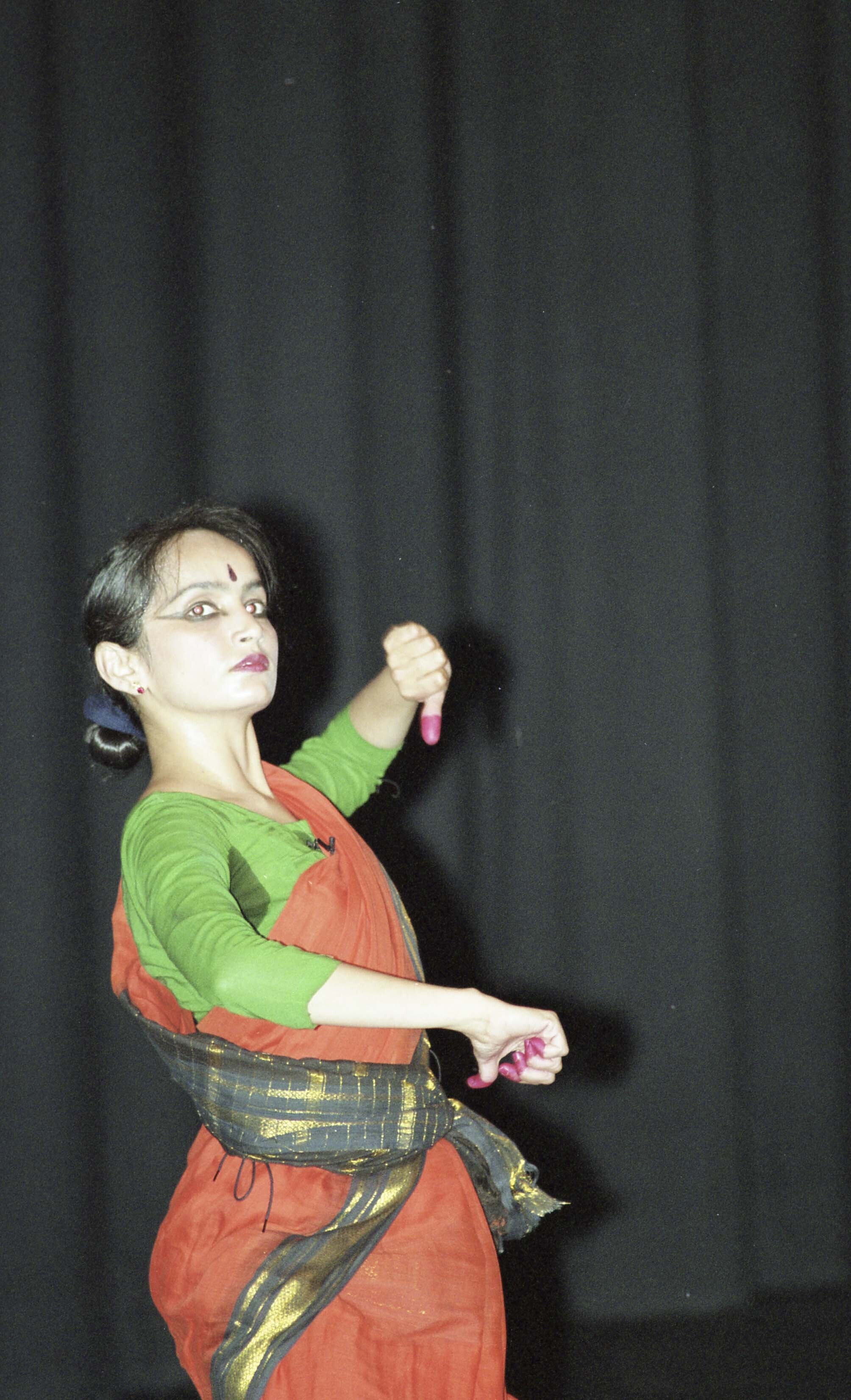
Photograph of Aparna Sansad Sindhoor performing Bharatanatyam, an Indian classical dance, onstage wearing a madisar drape bharatanatyam attire.
Aparna Sansad Sindhoor is a choreographer, director, and founder of Navarasa Dance Theater. Trained in Mysore-style Bharatanatyam, she also studied yoga, Kalari Payattu, aerial dance, music, and theater. She holds a PhD from Boston University and a gold medal in Dance from Mysore University. Sindhoor has created over fifteen contemporary dance-theater works performed internationally, choreographed for Indian films, and received the NPN Creation Award and an Ovation Award nomination. She works between India and the United States.
Bharatanatyam, a classical dance style of India, is indigenous to the Tamil Nadu region and prevalent in southern India. Bharatanatyam serves the expression of Hindu religious themes and devotions. Bharatanatyam was originally performed exclusively by female temple dancers and was not brought to the stage for public performance until about 1930. A vital tradition of Bharatanatyam is a graduation performance, called Arangetram, in which graduates showcase their talents.
Aparna Sansad Sindhoor is a choreographer, director, and founder of Navarasa Dance Theater. Trained in Mysore-style Bharatanatyam, she also studied yoga, Kalari Payattu, aerial dance, music, and theater. She holds a PhD from Boston University and a gold medal in Dance from Mysore University. Sindhoor has created over fifteen contemporary dance-theater works performed internationally, choreographed for Indian films, and received the NPN Creation Award and an Ovation Award nomination. She works between India and the United States.
Bharatanatyam, a classical dance style of India, is indigenous to the Tamil Nadu region and prevalent in southern India. Bharatanatyam serves the expression of Hindu religious themes and devotions. Bharatanatyam was originally performed exclusively by female temple dancers and was not brought to the stage for public performance until about 1930. A vital tradition of Bharatanatyam is a graduation performance, called Arangetram, in which graduates showcase their talents.
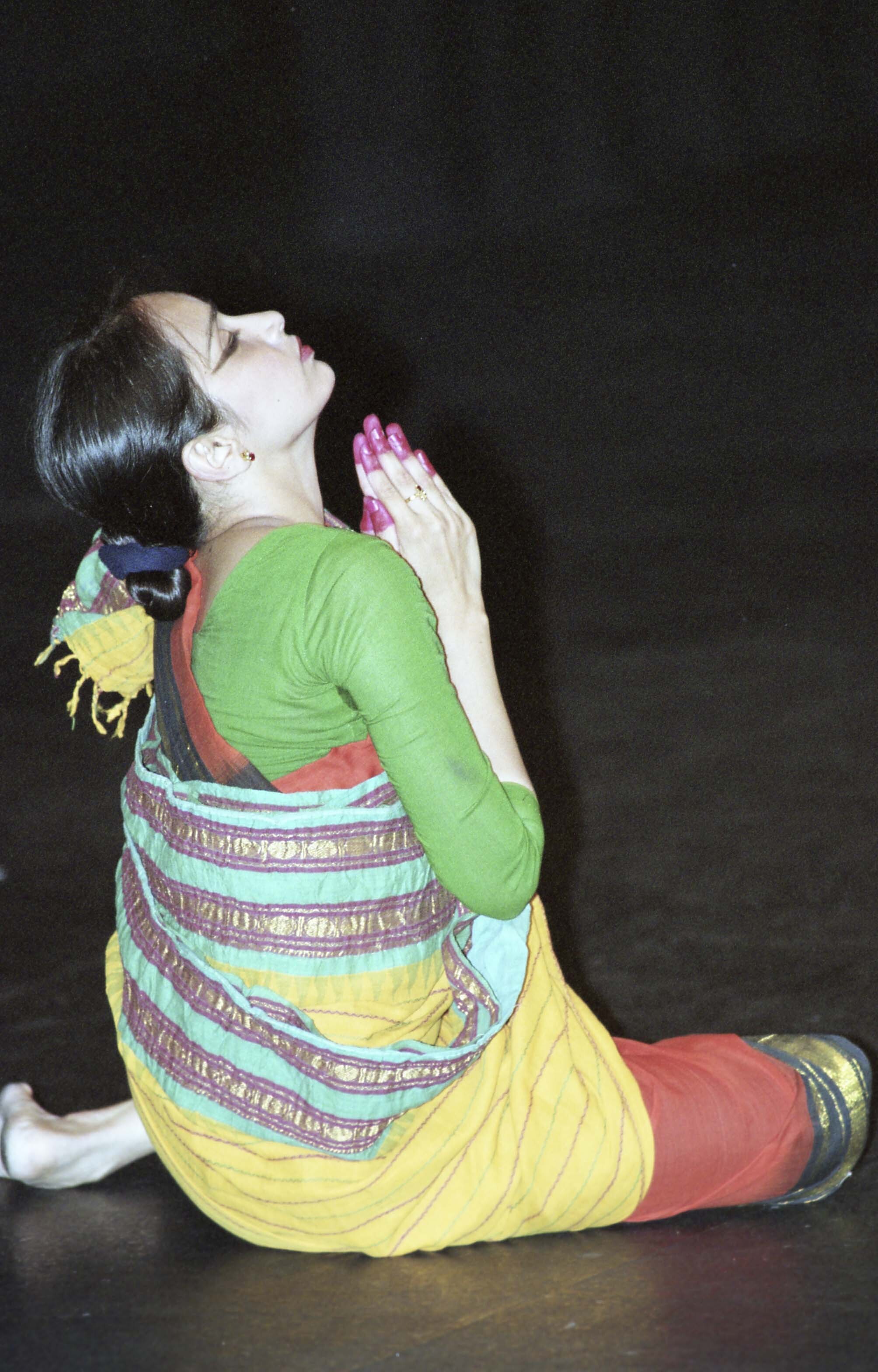
Creator: Bodalia, Chandra
Description
Photograph of Aparna Sansad Sindhoor performing Bharatanatyam, an Indian classical dance, onstage wearing a madisar drape bharatanatyam attire.
Aparna Sansad Sindhoor is a choreographer, director, and founder of Navarasa Dance Theater. Trained in Mysore-style Bharatanatyam, she also studied yoga, Kalari Payattu, aerial dance, music, and theater. She holds a PhD from Boston University and a gold medal in Dance from Mysore University. Sindhoor has created over fifteen contemporary dance-theater works performed internationally, choreographed for Indian films, and received the NPN Creation Award and an Ovation Award nomination. She works between India and the United States.
Bharatanatyam, a classical dance style of India, is indigenous to the Tamil Nadu region and prevalent in southern India. Bharatanatyam serves the expression of Hindu religious themes and devotions. Bharatanatyam was originally performed exclusively by female temple dancers and was not brought to the stage for public performance until about 1930. A vital tradition of Bharatanatyam is a graduation performance, called Arangetram, in which graduates showcase their talents.
Aparna Sansad Sindhoor is a choreographer, director, and founder of Navarasa Dance Theater. Trained in Mysore-style Bharatanatyam, she also studied yoga, Kalari Payattu, aerial dance, music, and theater. She holds a PhD from Boston University and a gold medal in Dance from Mysore University. Sindhoor has created over fifteen contemporary dance-theater works performed internationally, choreographed for Indian films, and received the NPN Creation Award and an Ovation Award nomination. She works between India and the United States.
Bharatanatyam, a classical dance style of India, is indigenous to the Tamil Nadu region and prevalent in southern India. Bharatanatyam serves the expression of Hindu religious themes and devotions. Bharatanatyam was originally performed exclusively by female temple dancers and was not brought to the stage for public performance until about 1930. A vital tradition of Bharatanatyam is a graduation performance, called Arangetram, in which graduates showcase their talents.
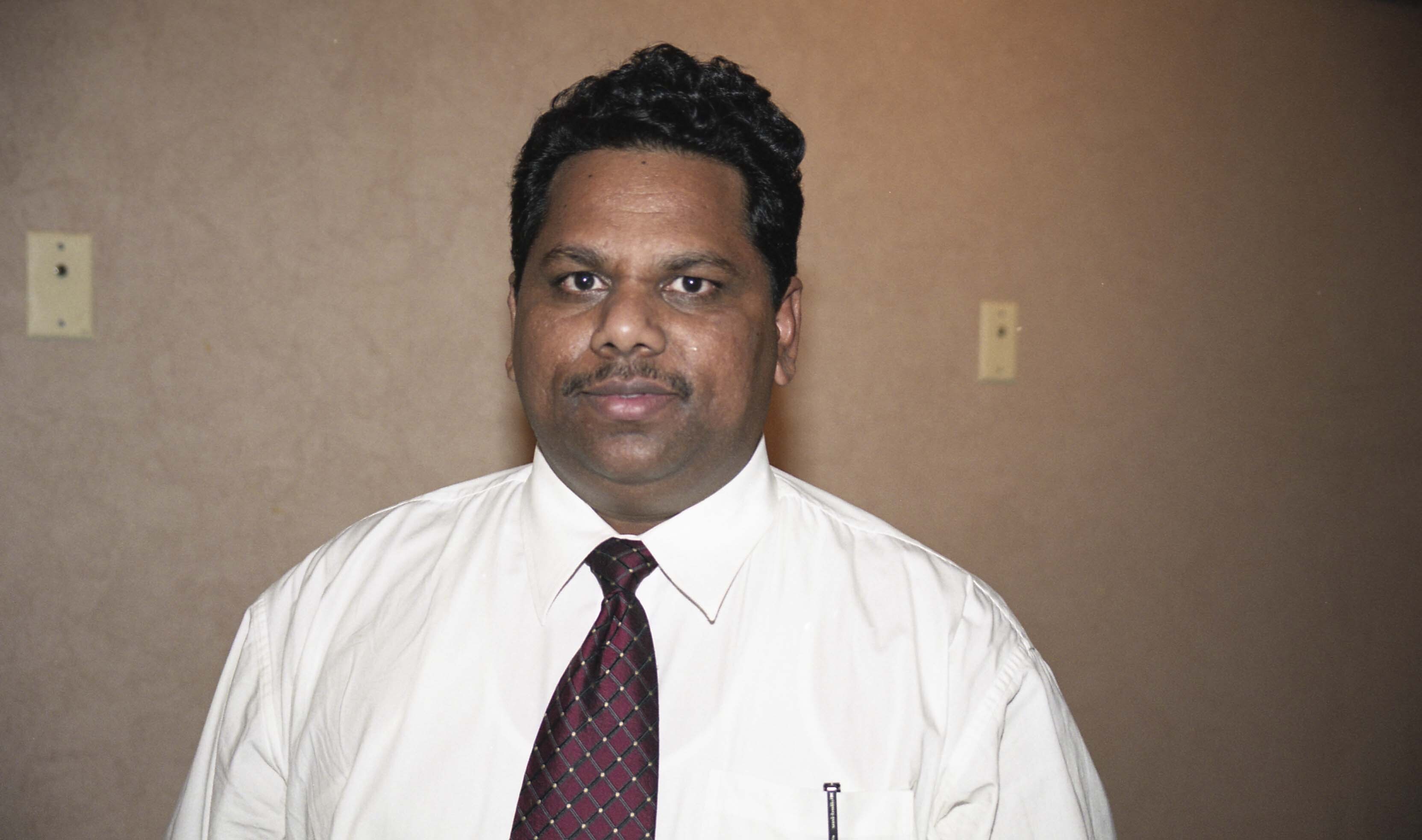
Creator: Bodalia, Chandra
Description
Photograph of an unidentified individual.
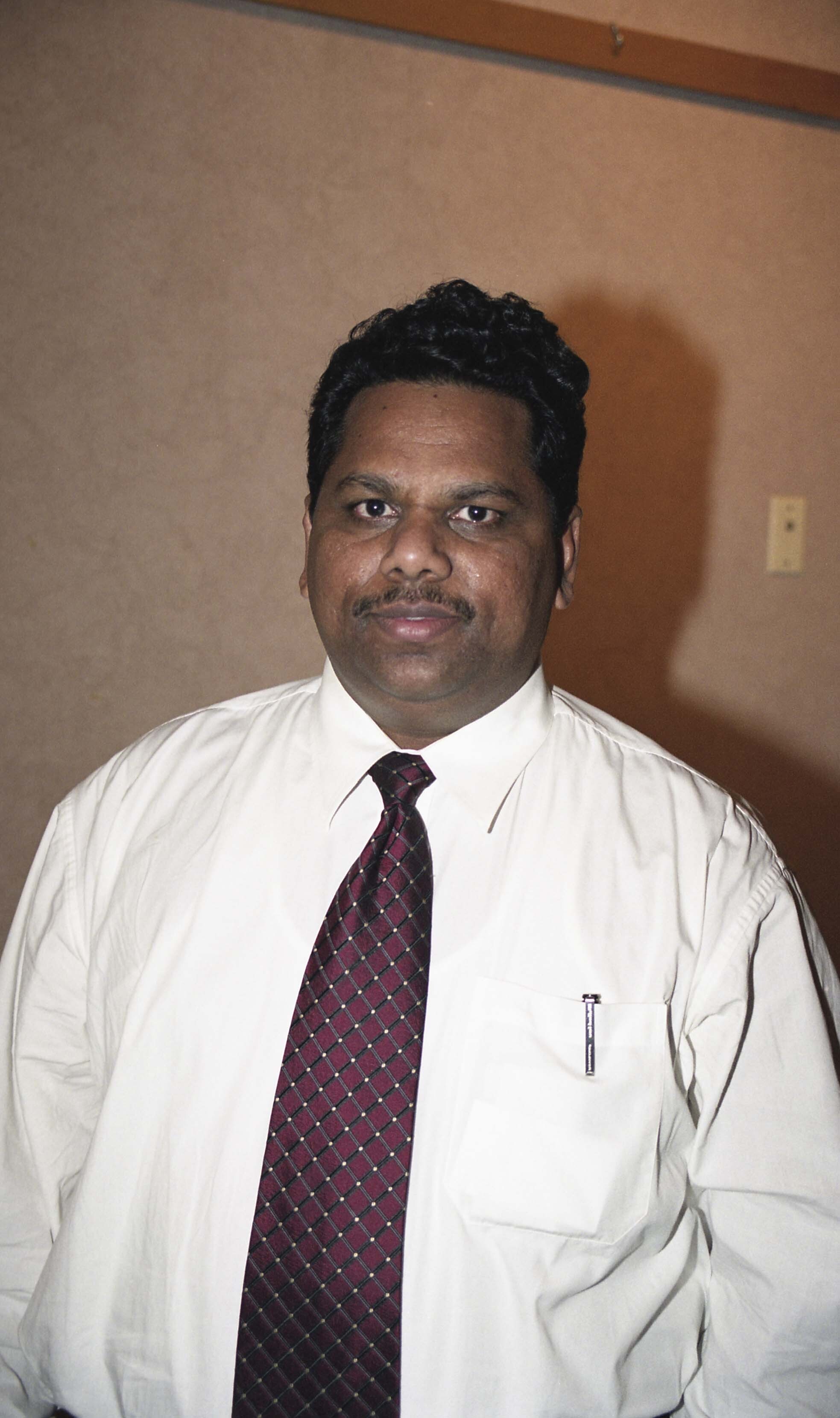
Creator: Bodalia, Chandra
Description
Photograph of an unidentified individual.
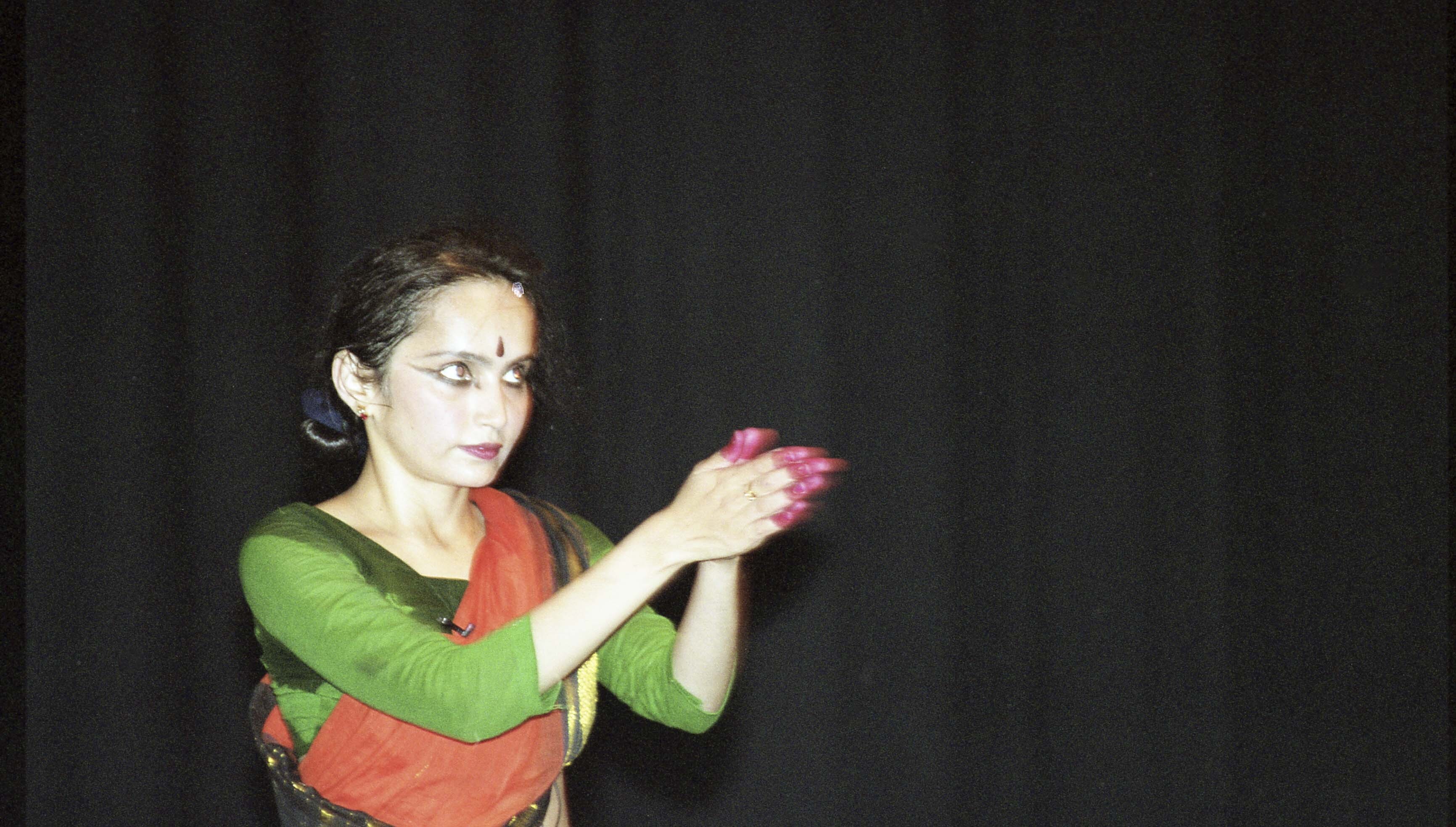
Creator: Bodalia, Chandra
Description
Photograph of Aparna Sansad Sindhoor performing Bharatanatyam, an Indian classical dance, onstage wearing a madisar drape bharatanatyam attire.
Aparna Sansad Sindhoor is a choreographer, director, and founder of Navarasa Dance Theater. Trained in Mysore-style Bharatanatyam, she also studied yoga, Kalari Payattu, aerial dance, music, and theater. She holds a PhD from Boston University and a gold medal in Dance from Mysore University. Sindhoor has created over fifteen contemporary dance-theater works performed internationally, choreographed for Indian films, and received the NPN Creation Award and an Ovation Award nomination. She works between India and the United States.
Bharatanatyam, a classical dance style of India, is indigenous to the Tamil Nadu region and prevalent in southern India. Bharatanatyam serves the expression of Hindu religious themes and devotions. Bharatanatyam was originally performed exclusively by female temple dancers and was not brought to the stage for public performance until about 1930. A vital tradition of Bharatanatyam is a graduation performance, called Arangetram, in which graduates showcase their talents.
Aparna Sansad Sindhoor is a choreographer, director, and founder of Navarasa Dance Theater. Trained in Mysore-style Bharatanatyam, she also studied yoga, Kalari Payattu, aerial dance, music, and theater. She holds a PhD from Boston University and a gold medal in Dance from Mysore University. Sindhoor has created over fifteen contemporary dance-theater works performed internationally, choreographed for Indian films, and received the NPN Creation Award and an Ovation Award nomination. She works between India and the United States.
Bharatanatyam, a classical dance style of India, is indigenous to the Tamil Nadu region and prevalent in southern India. Bharatanatyam serves the expression of Hindu religious themes and devotions. Bharatanatyam was originally performed exclusively by female temple dancers and was not brought to the stage for public performance until about 1930. A vital tradition of Bharatanatyam is a graduation performance, called Arangetram, in which graduates showcase their talents.

Creator: Bodalia, Chandra
Description
Photograph of Aparna Sansad Sindhoor performing Bharatanatyam, an Indian classical dance, onstage wearing a madisar drape bharatanatyam attire.
Aparna Sansad Sindhoor is a choreographer, director, and founder of Navarasa Dance Theater. Trained in Mysore-style Bharatanatyam, she also studied yoga, Kalari Payattu, aerial dance, music, and theater. She holds a PhD from Boston University and a gold medal in Dance from Mysore University. Sindhoor has created over fifteen contemporary dance-theater works performed internationally, choreographed for Indian films, and received the NPN Creation Award and an Ovation Award nomination. She works between India and the United States.
Bharatanatyam, a classical dance style of India, is indigenous to the Tamil Nadu region and prevalent in southern India. Bharatanatyam serves the expression of Hindu religious themes and devotions. Bharatanatyam was originally performed exclusively by female temple dancers and was not brought to the stage for public performance until about 1930. A vital tradition of Bharatanatyam is a graduation performance, called Arangetram, in which graduates showcase their talents.
Aparna Sansad Sindhoor is a choreographer, director, and founder of Navarasa Dance Theater. Trained in Mysore-style Bharatanatyam, she also studied yoga, Kalari Payattu, aerial dance, music, and theater. She holds a PhD from Boston University and a gold medal in Dance from Mysore University. Sindhoor has created over fifteen contemporary dance-theater works performed internationally, choreographed for Indian films, and received the NPN Creation Award and an Ovation Award nomination. She works between India and the United States.
Bharatanatyam, a classical dance style of India, is indigenous to the Tamil Nadu region and prevalent in southern India. Bharatanatyam serves the expression of Hindu religious themes and devotions. Bharatanatyam was originally performed exclusively by female temple dancers and was not brought to the stage for public performance until about 1930. A vital tradition of Bharatanatyam is a graduation performance, called Arangetram, in which graduates showcase their talents.
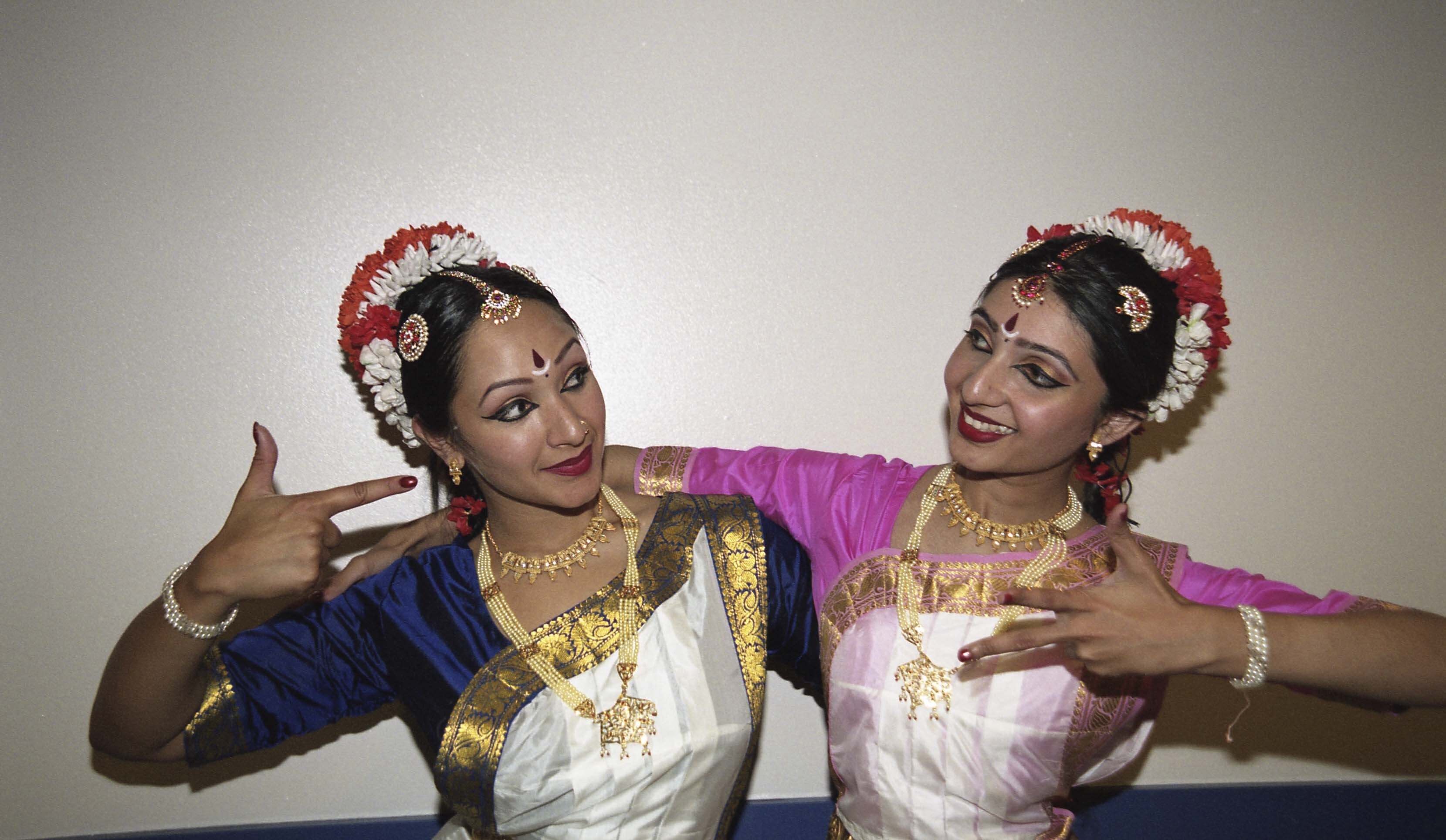
Creator: Bodalia, Chandra
Description
Photograph of Bharatanatyam dancers Ashika Narayan and Priya Kumar, students of Jai Govinda Dance Academy, striking a classical dance pose in madisar drape bharatanatyam attire. This picture is likely taken during their bharatanatyam arangetram (indian classical dance recital)[?].
The Jai Govinda Dance Academy operates under Mandala Arts and Culture in Vancouver, British Columbia, focusing on Bharatanatyam, a classical Indian dance form. The academy offers a structured training program encompassing beginner, intermediate, and advanced levels, along with professional development opportunities. The academy's curriculum is designed to guide dedicated students through a rigorous program, potentially leading to a dance graduation known as an arangetram. Ashika Narayan now serves on the Board of Directors of Mandala Arts and Culture.
Bharatanatyam, a classical dance style of India, is indigenous to the Tamil Nadu region and prevalent in southern India. Bharatanatyam serves the expression of Hindu religious themes and devotions. Bharatanatyam was originally performed exclusively by female temple dancers and was not brought to the stage for public performance until about 1930. A vital tradition of Bharatanatyam is a graduation performance, called Arangetram, in which graduates showcase their talents.
The Jai Govinda Dance Academy operates under Mandala Arts and Culture in Vancouver, British Columbia, focusing on Bharatanatyam, a classical Indian dance form. The academy offers a structured training program encompassing beginner, intermediate, and advanced levels, along with professional development opportunities. The academy's curriculum is designed to guide dedicated students through a rigorous program, potentially leading to a dance graduation known as an arangetram. Ashika Narayan now serves on the Board of Directors of Mandala Arts and Culture.
Bharatanatyam, a classical dance style of India, is indigenous to the Tamil Nadu region and prevalent in southern India. Bharatanatyam serves the expression of Hindu religious themes and devotions. Bharatanatyam was originally performed exclusively by female temple dancers and was not brought to the stage for public performance until about 1930. A vital tradition of Bharatanatyam is a graduation performance, called Arangetram, in which graduates showcase their talents.