
Associations, institutions, etc.
Creator: Chandra Bodalia
Description
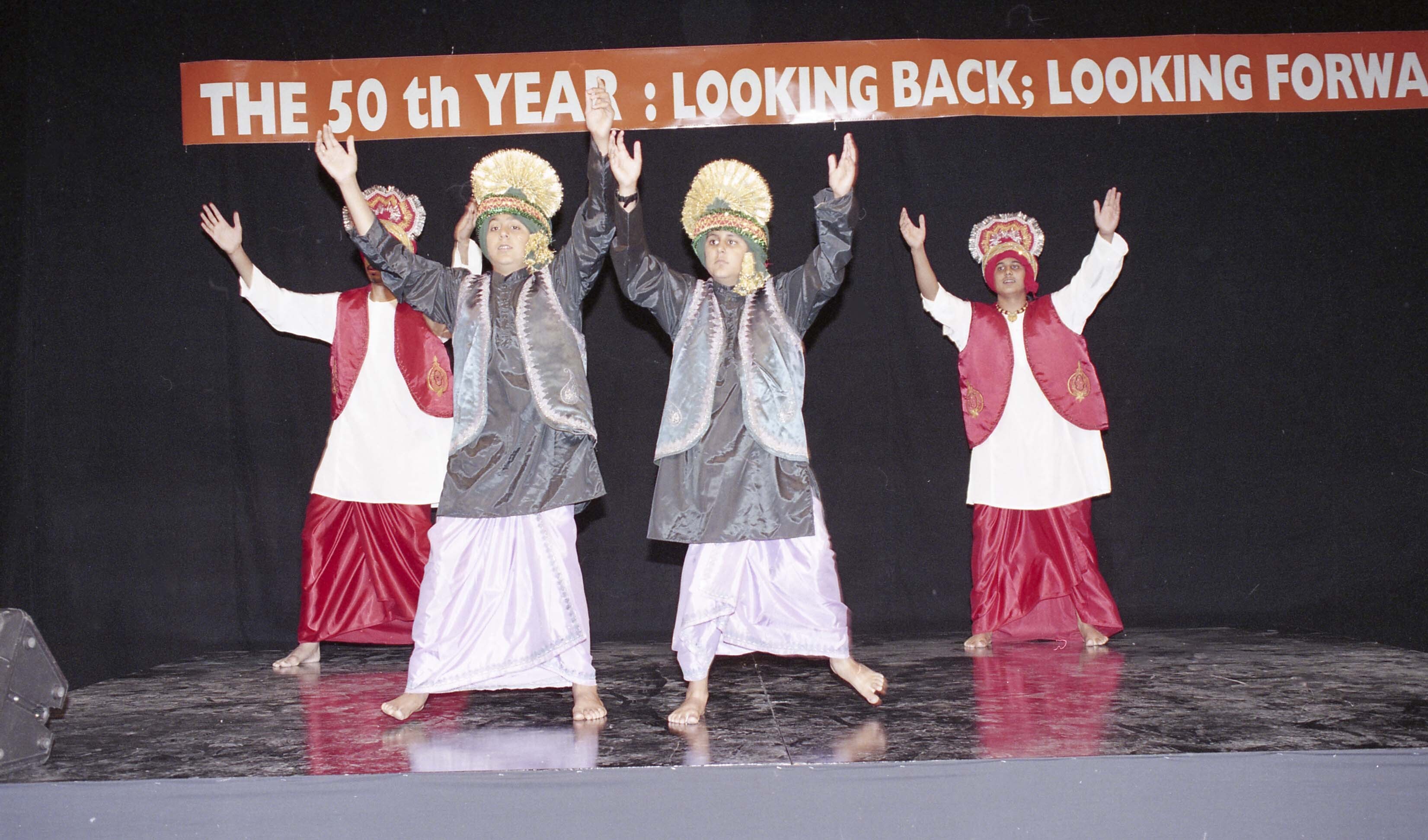
Photograph of a group of unidentified individuals performing bhangra at an event organized by the South Asian Network for Secularism and Democracy (SANSAD). The event was called The 50th Year: Looking Back; Looking Forward, celebrating the 50th anniversary of the independence of India from colonial rule.
Bhangra is a folk dance and music form that originated from Punjab, India. It originated as a folk dance celebrated during the time of the harvest. It's traditionally danced to the dhol instrument, a large drum, accompanied by boliyan, short sets of lyrics that describe scenes or stories from Punjab.
The South Asian Network for Secularism and Democracy (SANSAD) is an organization of the South Asian diaspora based in British Columbia, Canada. It comprises people with origin in Bangladesh, India, Nepal, Pakistan, and Sri Lanka. The mission of SANSAD is to develop a secular democratic South Asian diaspora in Canada. SANSAD has grown out of a North American organization, called Non-Resident Indians for Secularism and Democracy (NRISAD) that was established in 1993. The Vancouver branch of the organization recognized through its practice that the concerns of NRISAD in regard to minorities and human rights were not specifically Indian but South Asian and had to be reformulated for the South Asian diaspora as a whole. This was realized with the formation of SANSAD in Vancouver in 2000.
Bhangra is a folk dance and music form that originated from Punjab, India. It originated as a folk dance celebrated during the time of the harvest. It's traditionally danced to the dhol instrument, a large drum, accompanied by boliyan, short sets of lyrics that describe scenes or stories from Punjab.
The South Asian Network for Secularism and Democracy (SANSAD) is an organization of the South Asian diaspora based in British Columbia, Canada. It comprises people with origin in Bangladesh, India, Nepal, Pakistan, and Sri Lanka. The mission of SANSAD is to develop a secular democratic South Asian diaspora in Canada. SANSAD has grown out of a North American organization, called Non-Resident Indians for Secularism and Democracy (NRISAD) that was established in 1993. The Vancouver branch of the organization recognized through its practice that the concerns of NRISAD in regard to minorities and human rights were not specifically Indian but South Asian and had to be reformulated for the South Asian diaspora as a whole. This was realized with the formation of SANSAD in Vancouver in 2000.
Creator: Chandra Bodalia
Description
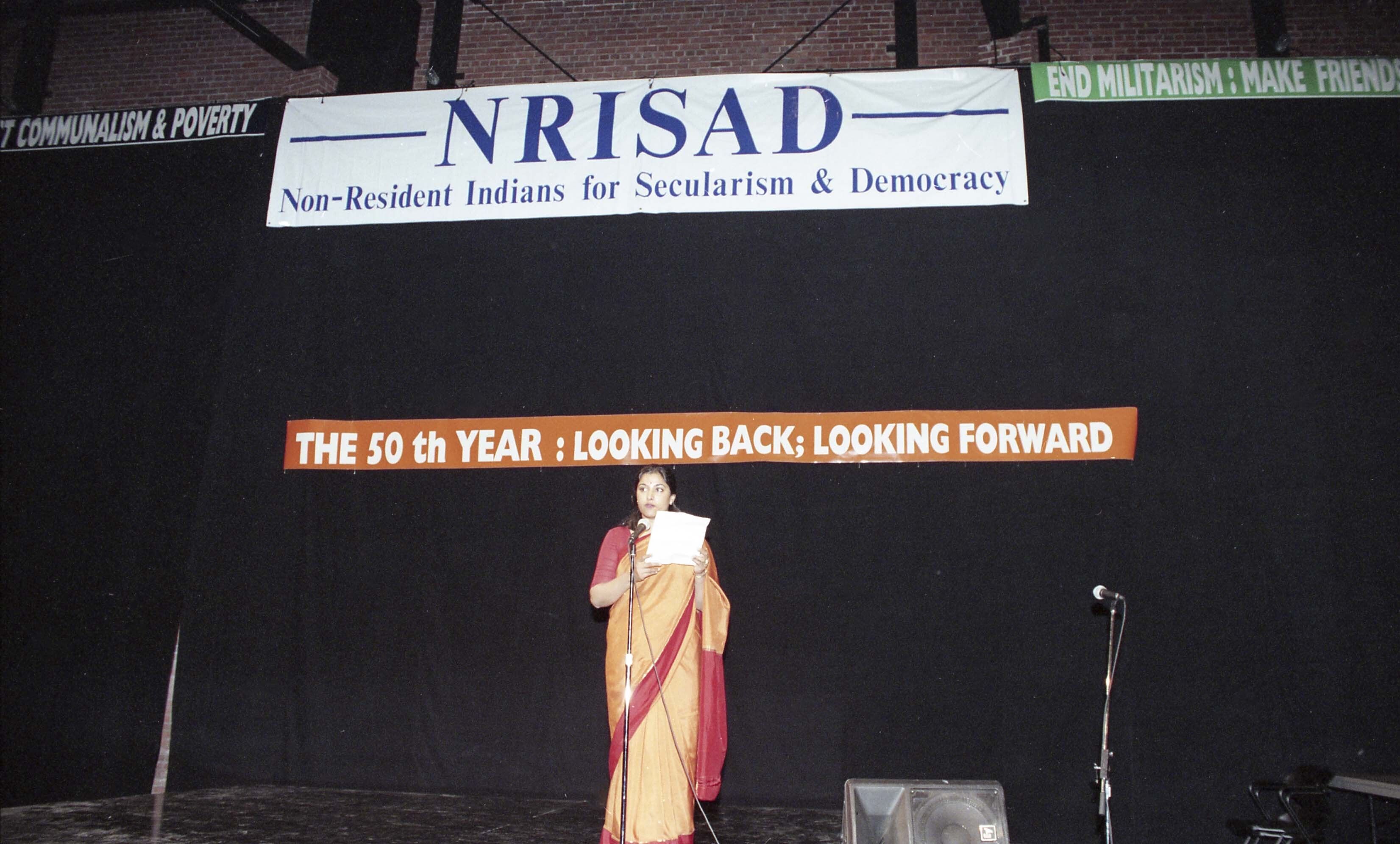
Photograph of an unidentified speaker at an event organized by the South Asian Network for Secularism and Democracy (SANSAD). The event was called The 50th Year: Looking Back; Looking Forward, celebrating the 50th anniversary of the independence of India from colonial rule.
The South Asian Network for Secularism and Democracy (SANSAD) is an organization of the South Asian diaspora based in British Columbia, Canada. It comprises people with origin in Bangladesh, India, Nepal, Pakistan, and Sri Lanka. The mission of SANSAD is to develop a secular democratic South Asian diaspora in Canada. SANSAD has grown out of a North American organization, called Non-Resident Indians for Secularism and Democracy (NRISAD) that was established in 1993. The Vancouver branch of the organization recognized through its practice that the concerns of NRISAD in regard to minorities and human rights were not specifically Indian but South Asian and had to be reformulated for the South Asian diaspora as a whole. This was realized with the formation of SANSAD in Vancouver in 2000.
The South Asian Network for Secularism and Democracy (SANSAD) is an organization of the South Asian diaspora based in British Columbia, Canada. It comprises people with origin in Bangladesh, India, Nepal, Pakistan, and Sri Lanka. The mission of SANSAD is to develop a secular democratic South Asian diaspora in Canada. SANSAD has grown out of a North American organization, called Non-Resident Indians for Secularism and Democracy (NRISAD) that was established in 1993. The Vancouver branch of the organization recognized through its practice that the concerns of NRISAD in regard to minorities and human rights were not specifically Indian but South Asian and had to be reformulated for the South Asian diaspora as a whole. This was realized with the formation of SANSAD in Vancouver in 2000.
Creator: Chandra Bodalia
Description
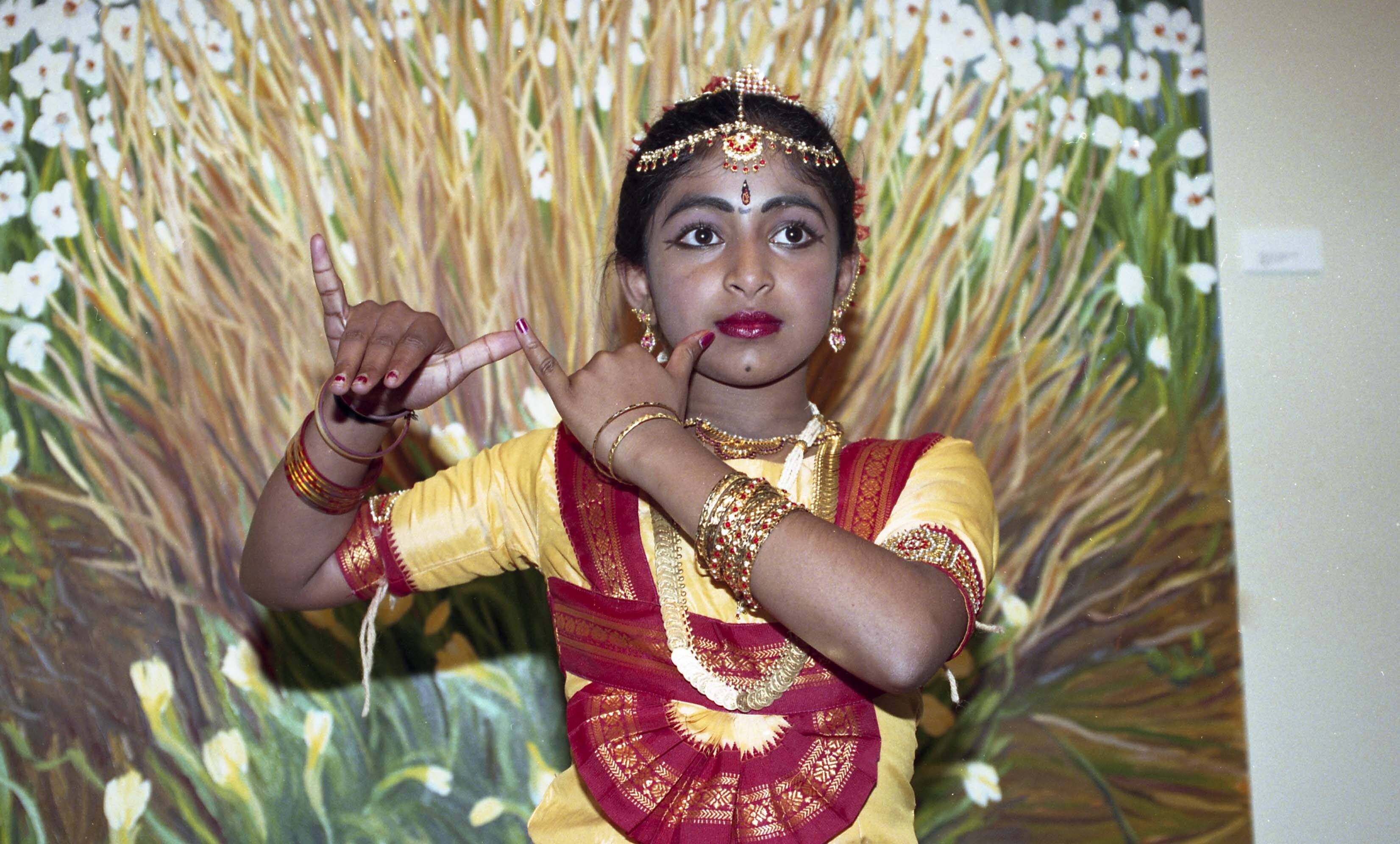
Photograph of an unidentified individual at an event organized by the South Asian Network for Secularism and Democracy (SANSAD). The event was called The 50th Year: Looking Back; Looking Forward, celebrating the 50th anniversary of the independence of India from colonial rule.
The South Asian Network for Secularism and Democracy (SANSAD) is an organization of the South Asian diaspora based in British Columbia, Canada. It comprises people with origin in Bangladesh, India, Nepal, Pakistan, and Sri Lanka. The mission of SANSAD is to develop a secular democratic South Asian diaspora in Canada. SANSAD has grown out of a North American organization, called Non-Resident Indians for Secularism and Democracy (NRISAD) that was established in 1993. The Vancouver branch of the organization recognized through its practice that the concerns of NRISAD in regard to minorities and human rights were not specifically Indian but South Asian and had to be reformulated for the South Asian diaspora as a whole. This was realized with the formation of SANSAD in Vancouver in 2000.
The South Asian Network for Secularism and Democracy (SANSAD) is an organization of the South Asian diaspora based in British Columbia, Canada. It comprises people with origin in Bangladesh, India, Nepal, Pakistan, and Sri Lanka. The mission of SANSAD is to develop a secular democratic South Asian diaspora in Canada. SANSAD has grown out of a North American organization, called Non-Resident Indians for Secularism and Democracy (NRISAD) that was established in 1993. The Vancouver branch of the organization recognized through its practice that the concerns of NRISAD in regard to minorities and human rights were not specifically Indian but South Asian and had to be reformulated for the South Asian diaspora as a whole. This was realized with the formation of SANSAD in Vancouver in 2000.
Creator: Chandra Bodalia
Description
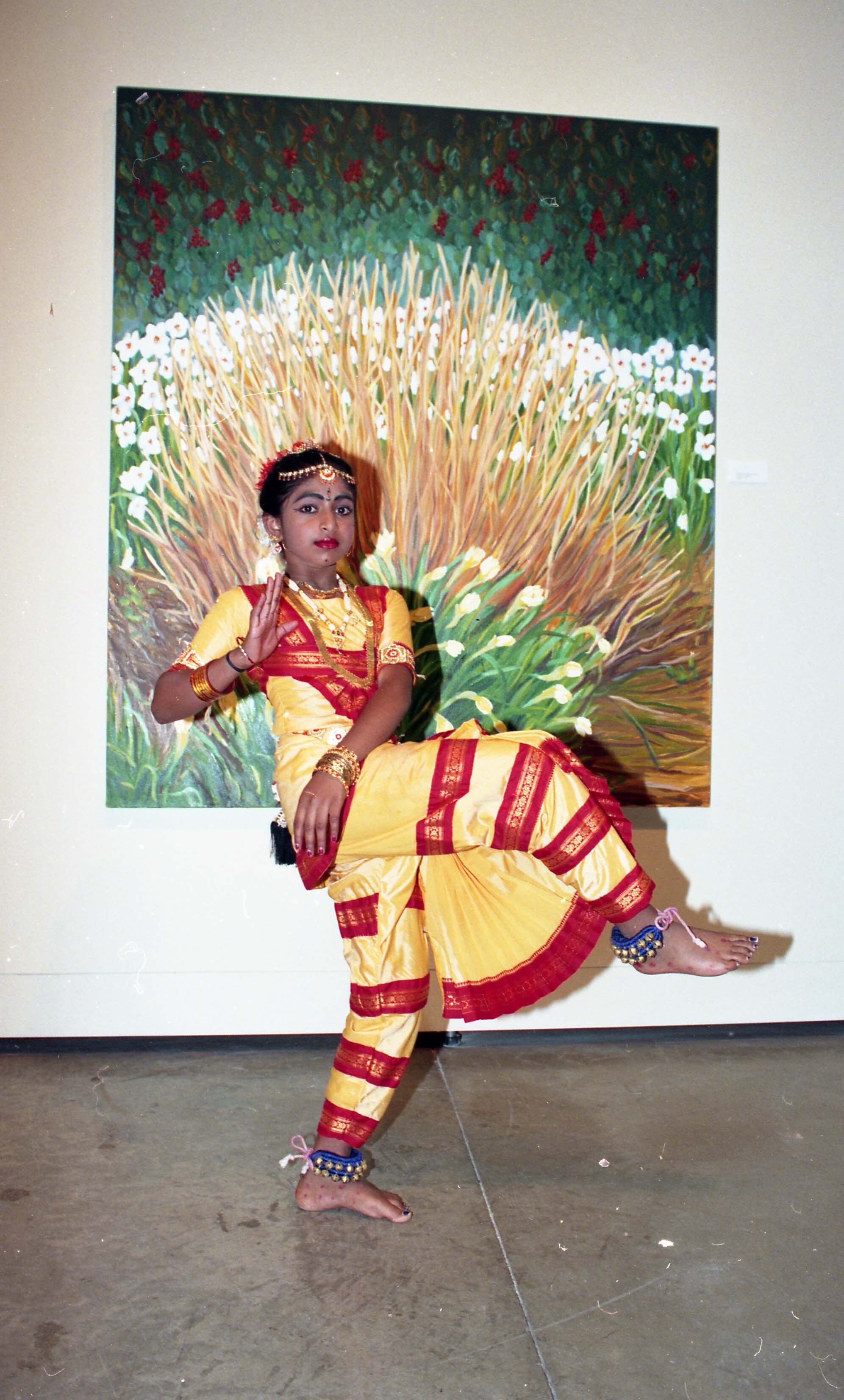
Photograph of an unidentified individual at an event organized by the South Asian Network for Secularism and Democracy (SANSAD). The event was called The 50th Year: Looking Back; Looking Forward, celebrating the 50th anniversary of the independence of India from colonial rule.
The South Asian Network for Secularism and Democracy (SANSAD) is an organization of the South Asian diaspora based in British Columbia, Canada. It comprises people with origin in Bangladesh, India, Nepal, Pakistan, and Sri Lanka. The mission of SANSAD is to develop a secular democratic South Asian diaspora in Canada. SANSAD has grown out of a North American organization, called Non-Resident Indians for Secularism and Democracy (NRISAD) that was established in 1993. The Vancouver branch of the organization recognized through its practice that the concerns of NRISAD in regard to minorities and human rights were not specifically Indian but South Asian and had to be reformulated for the South Asian diaspora as a whole. This was realized with the formation of SANSAD in Vancouver in 2000.
The South Asian Network for Secularism and Democracy (SANSAD) is an organization of the South Asian diaspora based in British Columbia, Canada. It comprises people with origin in Bangladesh, India, Nepal, Pakistan, and Sri Lanka. The mission of SANSAD is to develop a secular democratic South Asian diaspora in Canada. SANSAD has grown out of a North American organization, called Non-Resident Indians for Secularism and Democracy (NRISAD) that was established in 1993. The Vancouver branch of the organization recognized through its practice that the concerns of NRISAD in regard to minorities and human rights were not specifically Indian but South Asian and had to be reformulated for the South Asian diaspora as a whole. This was realized with the formation of SANSAD in Vancouver in 2000.
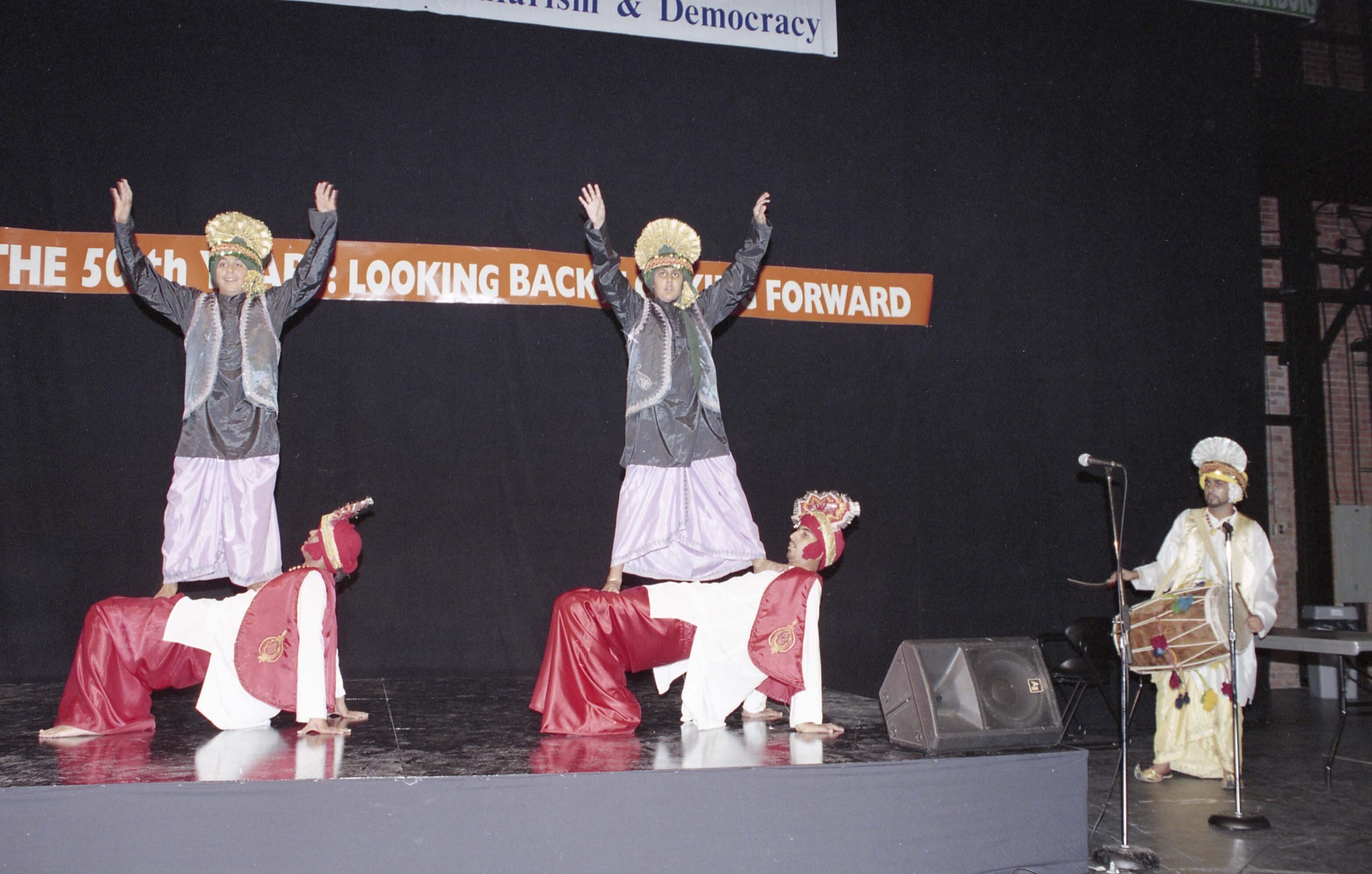
Creator: Chandra Bodalia
Description
Photograph of a group of unidentified individuals performing bhangra at an event organized by the South Asian Network for Secularism and Democracy (SANSAD). The event was called The 50th Year: Looking Back; Looking Forward, celebrating the 50th anniversary of the independence of India from colonial rule.
Bhangra is a folk dance and music form that originated from Punjab, India. It originated as a folk dance celebrated during the time of the harvest. It's traditionally danced to the dhol instrument, a large drum, accompanied by boliyan, short sets of lyrics that describe scenes or stories from Punjab.
The South Asian Network for Secularism and Democracy (SANSAD) is an organization of the South Asian diaspora based in British Columbia, Canada. It comprises people with origin in Bangladesh, India, Nepal, Pakistan, and Sri Lanka. The mission of SANSAD is to develop a secular democratic South Asian diaspora in Canada. SANSAD has grown out of a North American organization, called Non-Resident Indians for Secularism and Democracy (NRISAD) that was established in 1993. The Vancouver branch of the organization recognized through its practice that the concerns of NRISAD in regard to minorities and human rights were not specifically Indian but South Asian and had to be reformulated for the South Asian diaspora as a whole. This was realized with the formation of SANSAD in Vancouver in 2000.
Bhangra is a folk dance and music form that originated from Punjab, India. It originated as a folk dance celebrated during the time of the harvest. It's traditionally danced to the dhol instrument, a large drum, accompanied by boliyan, short sets of lyrics that describe scenes or stories from Punjab.
The South Asian Network for Secularism and Democracy (SANSAD) is an organization of the South Asian diaspora based in British Columbia, Canada. It comprises people with origin in Bangladesh, India, Nepal, Pakistan, and Sri Lanka. The mission of SANSAD is to develop a secular democratic South Asian diaspora in Canada. SANSAD has grown out of a North American organization, called Non-Resident Indians for Secularism and Democracy (NRISAD) that was established in 1993. The Vancouver branch of the organization recognized through its practice that the concerns of NRISAD in regard to minorities and human rights were not specifically Indian but South Asian and had to be reformulated for the South Asian diaspora as a whole. This was realized with the formation of SANSAD in Vancouver in 2000.

Creator: Chandra Bodalia
Description
Photograph of an unidentified speaker at an event organized by the South Asian Network for Secularism and Democracy (SANSAD). The event was called The 50th Year: Looking Back; Looking Forward, celebrating the 50th anniversary of the independence of India from colonial rule.
The South Asian Network for Secularism and Democracy (SANSAD) is an organization of the South Asian diaspora based in British Columbia, Canada. It comprises people with origin in Bangladesh, India, Nepal, Pakistan, and Sri Lanka. The mission of SANSAD is to develop a secular democratic South Asian diaspora in Canada. SANSAD has grown out of a North American organization, called Non-Resident Indians for Secularism and Democracy (NRISAD) that was established in 1993. The Vancouver branch of the organization recognized through its practice that the concerns of NRISAD in regard to minorities and human rights were not specifically Indian but South Asian and had to be reformulated for the South Asian diaspora as a whole. This was realized with the formation of SANSAD in Vancouver in 2000.
The South Asian Network for Secularism and Democracy (SANSAD) is an organization of the South Asian diaspora based in British Columbia, Canada. It comprises people with origin in Bangladesh, India, Nepal, Pakistan, and Sri Lanka. The mission of SANSAD is to develop a secular democratic South Asian diaspora in Canada. SANSAD has grown out of a North American organization, called Non-Resident Indians for Secularism and Democracy (NRISAD) that was established in 1993. The Vancouver branch of the organization recognized through its practice that the concerns of NRISAD in regard to minorities and human rights were not specifically Indian but South Asian and had to be reformulated for the South Asian diaspora as a whole. This was realized with the formation of SANSAD in Vancouver in 2000.
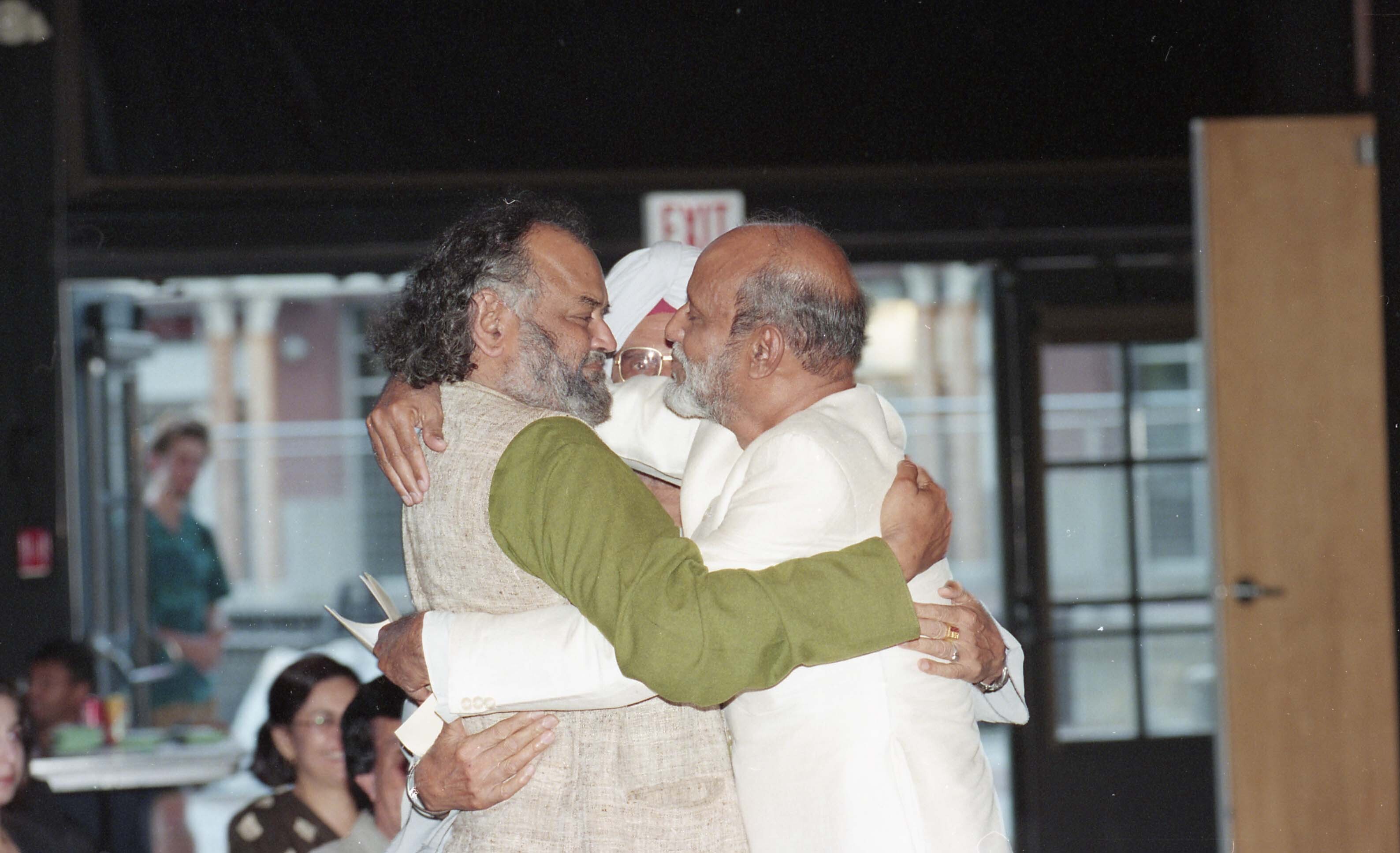
Creator: Chandra Bodalia
Description
Photograph of unidentified individuals, including Hari Sharma at an event organized by the South Asian Network for Secularism and Democracy (SANSAD). The event was called The 50th Year: Looking Back; Looking Forward, celebrating the 50th anniversary of the independence of India from colonial rule.
Hari Prakash Sharma (1934-2010) was a sociologist and Marxist scholar, who was born at Dadri in Uttar Pradesh, India. Sharma earned his BA from Agra University in 1954, and an MA in Social Work from Delhi University in 1960. In 1963, Sharma moved to the US to further his education. He received an MS in Social Work from Case Western Reserve University in 1964 and a PhD in Rural Sociology from Cornell University in 1968. He taught briefly at the University of California, Los Angeles before accepting a position at SFU. Sharma joined the Department of Political Science, Sociology, and Anthropology at Simon Fraser University in 1968 and taught until his retirement in 1999 when he was honoured by the university as Professor Emeritus. During 1971-72, Sharma was a founding member of and contributor to the Georgia Straight Collective, which produced a publication for radical and alternative views. In 1973, he went to Amnesty International in London and the Commission of Jurists in Geneva and made a written representation to the UN Human Rights Commission in an effort to publicize the condition of more than 30,000 political prisoners in Indian jails. In 1974, Sharma and his comrade Gautam Appa of the London School of Economics organized a petition of international scholars to protest the treatment of political prisoners in India, which he handed to the Indian Consulate in Vancouver, BC on August 15 of the same year. Sharma was a founder of the Indian People's Association in North America (IPANA) on June 25, 1975 and British Columbia Organization to Fight Racism (BCOFR). In 1989, Sharma united groups of the South Asian community to form the Komagata Maru Historical Society. The society united the community, and as a result of its activities, the government installed a commemorative plaque in Vancouver in 1989. Following the attack on the Babri Masjid mosque in December 1992, Hari Sharma became the prime mover in the formation of a North American organization dedicated to the defence of minority rights in India, also known as Non-Resident Indians for Secularism and Democracy (NRISAD). Under Sharma's leadership, NRISAD evolved into the South Asian Network for Secularism and Democracy (SANSAD) in 2000. It pursued the same quest as its predecessors for peace and democracy based secularism, human rights, and social justice. In September 1999, Sharma travelled to Montréal to join the founding of the International South Asia Forum (INSAF), a coalition of individuals and organizations dedicated to the promotion of peace and social justice in South Asia. He became its first President and organized the Second Conference in Vancouver in August 2001. In addition to his academic work and political activism, Hari Sharma was an accomplished literary writer and self-taught photographer.
The South Asian Network for Secularism and Democracy (SANSAD) is an organization of the South Asian diaspora based in British Columbia, Canada. It comprises people with origin in Bangladesh, India, Nepal, Pakistan, and Sri Lanka. The mission of SANSAD is to develop a secular democratic South Asian diaspora in Canada. SANSAD has grown out of a North American organization, called Non-Resident Indians for Secularism and Democracy (NRISAD) that was established in 1993. The Vancouver branch of the organization recognized through its practice that the concerns of NRISAD in regard to minorities and human rights were not specifically Indian but South Asian and had to be reformulated for the South Asian diaspora as a whole. This was realized with the formation of SANSAD in Vancouver in 2000.
Hari Prakash Sharma (1934-2010) was a sociologist and Marxist scholar, who was born at Dadri in Uttar Pradesh, India. Sharma earned his BA from Agra University in 1954, and an MA in Social Work from Delhi University in 1960. In 1963, Sharma moved to the US to further his education. He received an MS in Social Work from Case Western Reserve University in 1964 and a PhD in Rural Sociology from Cornell University in 1968. He taught briefly at the University of California, Los Angeles before accepting a position at SFU. Sharma joined the Department of Political Science, Sociology, and Anthropology at Simon Fraser University in 1968 and taught until his retirement in 1999 when he was honoured by the university as Professor Emeritus. During 1971-72, Sharma was a founding member of and contributor to the Georgia Straight Collective, which produced a publication for radical and alternative views. In 1973, he went to Amnesty International in London and the Commission of Jurists in Geneva and made a written representation to the UN Human Rights Commission in an effort to publicize the condition of more than 30,000 political prisoners in Indian jails. In 1974, Sharma and his comrade Gautam Appa of the London School of Economics organized a petition of international scholars to protest the treatment of political prisoners in India, which he handed to the Indian Consulate in Vancouver, BC on August 15 of the same year. Sharma was a founder of the Indian People's Association in North America (IPANA) on June 25, 1975 and British Columbia Organization to Fight Racism (BCOFR). In 1989, Sharma united groups of the South Asian community to form the Komagata Maru Historical Society. The society united the community, and as a result of its activities, the government installed a commemorative plaque in Vancouver in 1989. Following the attack on the Babri Masjid mosque in December 1992, Hari Sharma became the prime mover in the formation of a North American organization dedicated to the defence of minority rights in India, also known as Non-Resident Indians for Secularism and Democracy (NRISAD). Under Sharma's leadership, NRISAD evolved into the South Asian Network for Secularism and Democracy (SANSAD) in 2000. It pursued the same quest as its predecessors for peace and democracy based secularism, human rights, and social justice. In September 1999, Sharma travelled to Montréal to join the founding of the International South Asia Forum (INSAF), a coalition of individuals and organizations dedicated to the promotion of peace and social justice in South Asia. He became its first President and organized the Second Conference in Vancouver in August 2001. In addition to his academic work and political activism, Hari Sharma was an accomplished literary writer and self-taught photographer.
The South Asian Network for Secularism and Democracy (SANSAD) is an organization of the South Asian diaspora based in British Columbia, Canada. It comprises people with origin in Bangladesh, India, Nepal, Pakistan, and Sri Lanka. The mission of SANSAD is to develop a secular democratic South Asian diaspora in Canada. SANSAD has grown out of a North American organization, called Non-Resident Indians for Secularism and Democracy (NRISAD) that was established in 1993. The Vancouver branch of the organization recognized through its practice that the concerns of NRISAD in regard to minorities and human rights were not specifically Indian but South Asian and had to be reformulated for the South Asian diaspora as a whole. This was realized with the formation of SANSAD in Vancouver in 2000.
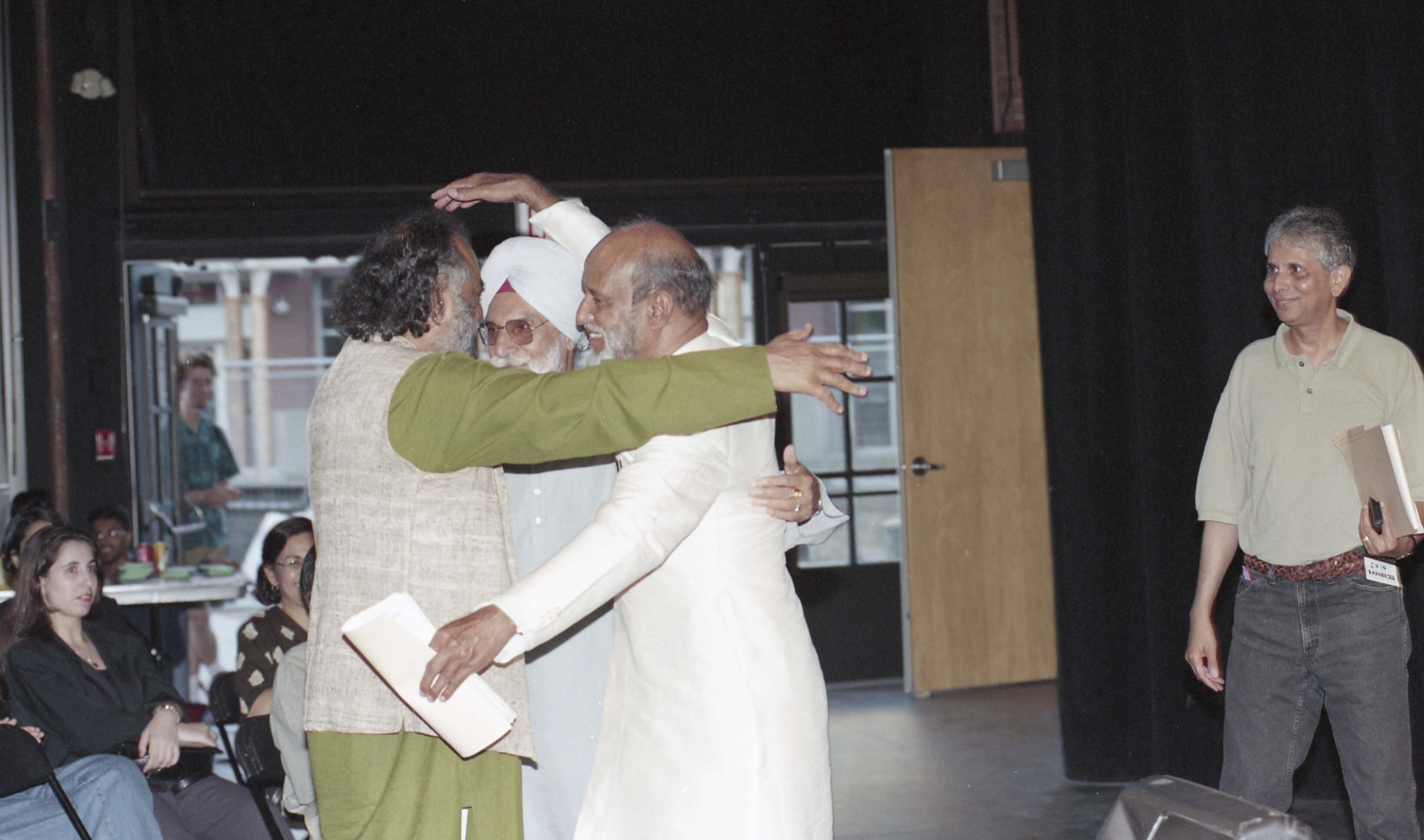
Creator: Chandra Bodalia
Description
Photograph of unidentified individuals, including Hari Sharma at an event organized by the South Asian Network for Secularism and Democracy (SANSAD). The event was called The 50th Year: Looking Back; Looking Forward, celebrating the 50th anniversary of the independence of India from colonial rule.
Hari Prakash Sharma (1934-2010) was a sociologist and Marxist scholar, who was born at Dadri in Uttar Pradesh, India. Sharma earned his BA from Agra University in 1954, and an MA in Social Work from Delhi University in 1960. In 1963, Sharma moved to the US to further his education. He received an MS in Social Work from Case Western Reserve University in 1964 and a PhD in Rural Sociology from Cornell University in 1968. He taught briefly at the University of California, Los Angeles before accepting a position at SFU. Sharma joined the Department of Political Science, Sociology, and Anthropology at Simon Fraser University in 1968 and taught until his retirement in 1999 when he was honoured by the university as Professor Emeritus. During 1971-72, Sharma was a founding member of and contributor to the Georgia Straight Collective, which produced a publication for radical and alternative views. In 1973, he went to Amnesty International in London and the Commission of Jurists in Geneva and made a written representation to the UN Human Rights Commission in an effort to publicize the condition of more than 30,000 political prisoners in Indian jails. In 1974, Sharma and his comrade Gautam Appa of the London School of Economics organized a petition of international scholars to protest the treatment of political prisoners in India, which he handed to the Indian Consulate in Vancouver, BC on August 15 of the same year. Sharma was a founder of the Indian People's Association in North America (IPANA) on June 25, 1975 and British Columbia Organization to Fight Racism (BCOFR). In 1989, Sharma united groups of the South Asian community to form the Komagata Maru Historical Society. The society united the community, and as a result of its activities, the government installed a commemorative plaque in Vancouver in 1989. Following the attack on the Babri Masjid mosque in December 1992, Hari Sharma became the prime mover in the formation of a North American organization dedicated to the defence of minority rights in India, also known as Non-Resident Indians for Secularism and Democracy (NRISAD). Under Sharma's leadership, NRISAD evolved into the South Asian Network for Secularism and Democracy (SANSAD) in 2000. It pursued the same quest as its predecessors for peace and democracy based secularism, human rights, and social justice. In September 1999, Sharma travelled to Montréal to join the founding of the International South Asia Forum (INSAF), a coalition of individuals and organizations dedicated to the promotion of peace and social justice in South Asia. He became its first President and organized the Second Conference in Vancouver in August 2001. In addition to his academic work and political activism, Hari Sharma was an accomplished literary writer and self-taught photographer.
The South Asian Network for Secularism and Democracy (SANSAD) is an organization of the South Asian diaspora based in British Columbia, Canada. It comprises people with origin in Bangladesh, India, Nepal, Pakistan, and Sri Lanka. The mission of SANSAD is to develop a secular democratic South Asian diaspora in Canada. SANSAD has grown out of a North American organization, called Non-Resident Indians for Secularism and Democracy (NRISAD) that was established in 1993. The Vancouver branch of the organization recognized through its practice that the concerns of NRISAD in regard to minorities and human rights were not specifically Indian but South Asian and had to be reformulated for the South Asian diaspora as a whole. This was realized with the formation of SANSAD in Vancouver in 2000.
Hari Prakash Sharma (1934-2010) was a sociologist and Marxist scholar, who was born at Dadri in Uttar Pradesh, India. Sharma earned his BA from Agra University in 1954, and an MA in Social Work from Delhi University in 1960. In 1963, Sharma moved to the US to further his education. He received an MS in Social Work from Case Western Reserve University in 1964 and a PhD in Rural Sociology from Cornell University in 1968. He taught briefly at the University of California, Los Angeles before accepting a position at SFU. Sharma joined the Department of Political Science, Sociology, and Anthropology at Simon Fraser University in 1968 and taught until his retirement in 1999 when he was honoured by the university as Professor Emeritus. During 1971-72, Sharma was a founding member of and contributor to the Georgia Straight Collective, which produced a publication for radical and alternative views. In 1973, he went to Amnesty International in London and the Commission of Jurists in Geneva and made a written representation to the UN Human Rights Commission in an effort to publicize the condition of more than 30,000 political prisoners in Indian jails. In 1974, Sharma and his comrade Gautam Appa of the London School of Economics organized a petition of international scholars to protest the treatment of political prisoners in India, which he handed to the Indian Consulate in Vancouver, BC on August 15 of the same year. Sharma was a founder of the Indian People's Association in North America (IPANA) on June 25, 1975 and British Columbia Organization to Fight Racism (BCOFR). In 1989, Sharma united groups of the South Asian community to form the Komagata Maru Historical Society. The society united the community, and as a result of its activities, the government installed a commemorative plaque in Vancouver in 1989. Following the attack on the Babri Masjid mosque in December 1992, Hari Sharma became the prime mover in the formation of a North American organization dedicated to the defence of minority rights in India, also known as Non-Resident Indians for Secularism and Democracy (NRISAD). Under Sharma's leadership, NRISAD evolved into the South Asian Network for Secularism and Democracy (SANSAD) in 2000. It pursued the same quest as its predecessors for peace and democracy based secularism, human rights, and social justice. In September 1999, Sharma travelled to Montréal to join the founding of the International South Asia Forum (INSAF), a coalition of individuals and organizations dedicated to the promotion of peace and social justice in South Asia. He became its first President and organized the Second Conference in Vancouver in August 2001. In addition to his academic work and political activism, Hari Sharma was an accomplished literary writer and self-taught photographer.
The South Asian Network for Secularism and Democracy (SANSAD) is an organization of the South Asian diaspora based in British Columbia, Canada. It comprises people with origin in Bangladesh, India, Nepal, Pakistan, and Sri Lanka. The mission of SANSAD is to develop a secular democratic South Asian diaspora in Canada. SANSAD has grown out of a North American organization, called Non-Resident Indians for Secularism and Democracy (NRISAD) that was established in 1993. The Vancouver branch of the organization recognized through its practice that the concerns of NRISAD in regard to minorities and human rights were not specifically Indian but South Asian and had to be reformulated for the South Asian diaspora as a whole. This was realized with the formation of SANSAD in Vancouver in 2000.
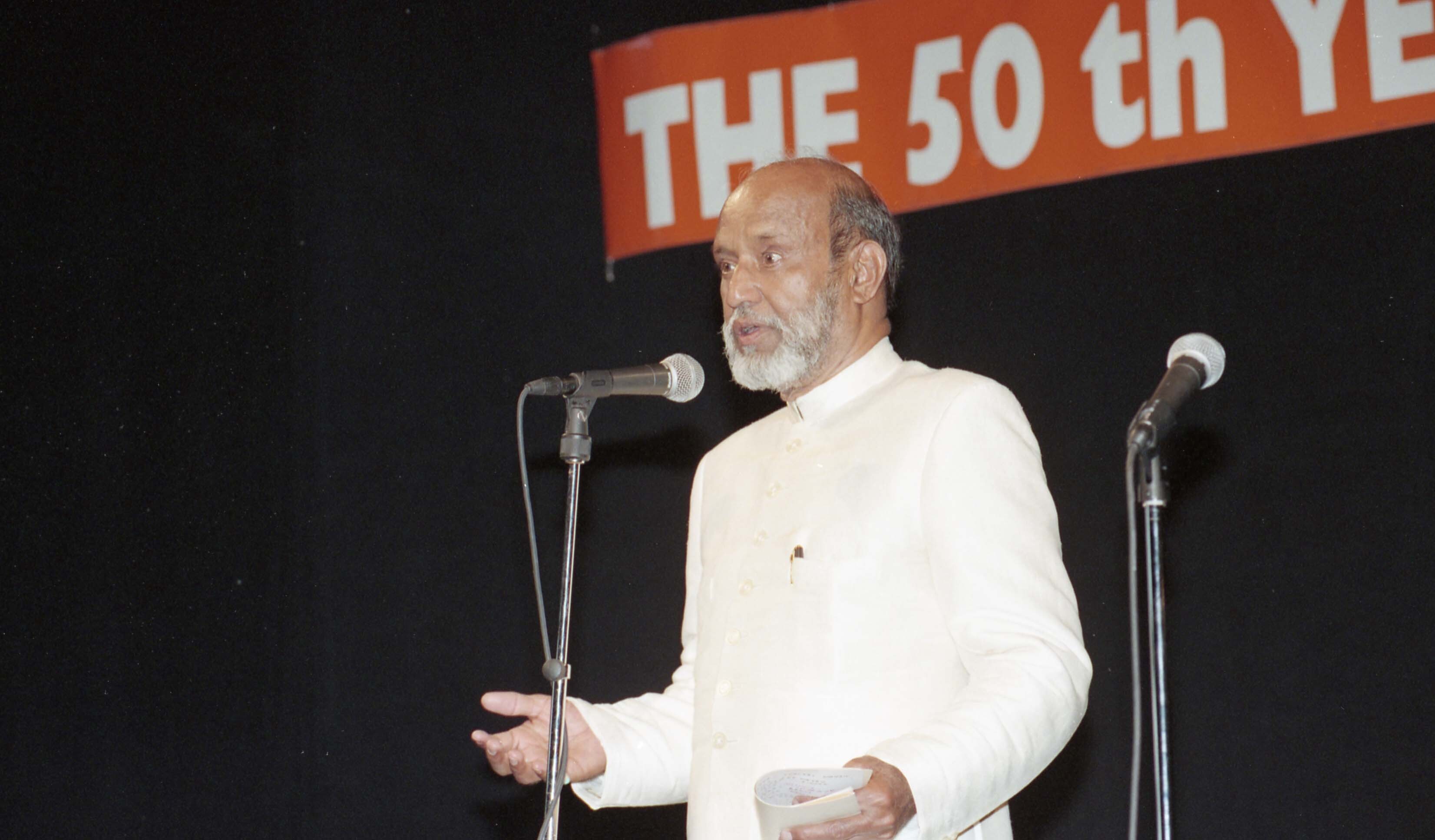
Creator: Chandra Bodalia
Description
Photograph of an unidentified speaker at an event organized by the South Asian Network for Secularism and Democracy (SANSAD). The event was called The 50th Year: Looking Back; Looking Forward, celebrating the 50th anniversary of the independence of India from colonial rule.
The South Asian Network for Secularism and Democracy (SANSAD) is an organization of the South Asian diaspora based in British Columbia, Canada. It comprises people with origin in Bangladesh, India, Nepal, Pakistan, and Sri Lanka. The mission of SANSAD is to develop a secular democratic South Asian diaspora in Canada. SANSAD has grown out of a North American organization, called Non-Resident Indians for Secularism and Democracy (NRISAD) that was established in 1993. The Vancouver branch of the organization recognized through its practice that the concerns of NRISAD in regard to minorities and human rights were not specifically Indian but South Asian and had to be reformulated for the South Asian diaspora as a whole. This was realized with the formation of SANSAD in Vancouver in 2000.
The South Asian Network for Secularism and Democracy (SANSAD) is an organization of the South Asian diaspora based in British Columbia, Canada. It comprises people with origin in Bangladesh, India, Nepal, Pakistan, and Sri Lanka. The mission of SANSAD is to develop a secular democratic South Asian diaspora in Canada. SANSAD has grown out of a North American organization, called Non-Resident Indians for Secularism and Democracy (NRISAD) that was established in 1993. The Vancouver branch of the organization recognized through its practice that the concerns of NRISAD in regard to minorities and human rights were not specifically Indian but South Asian and had to be reformulated for the South Asian diaspora as a whole. This was realized with the formation of SANSAD in Vancouver in 2000.
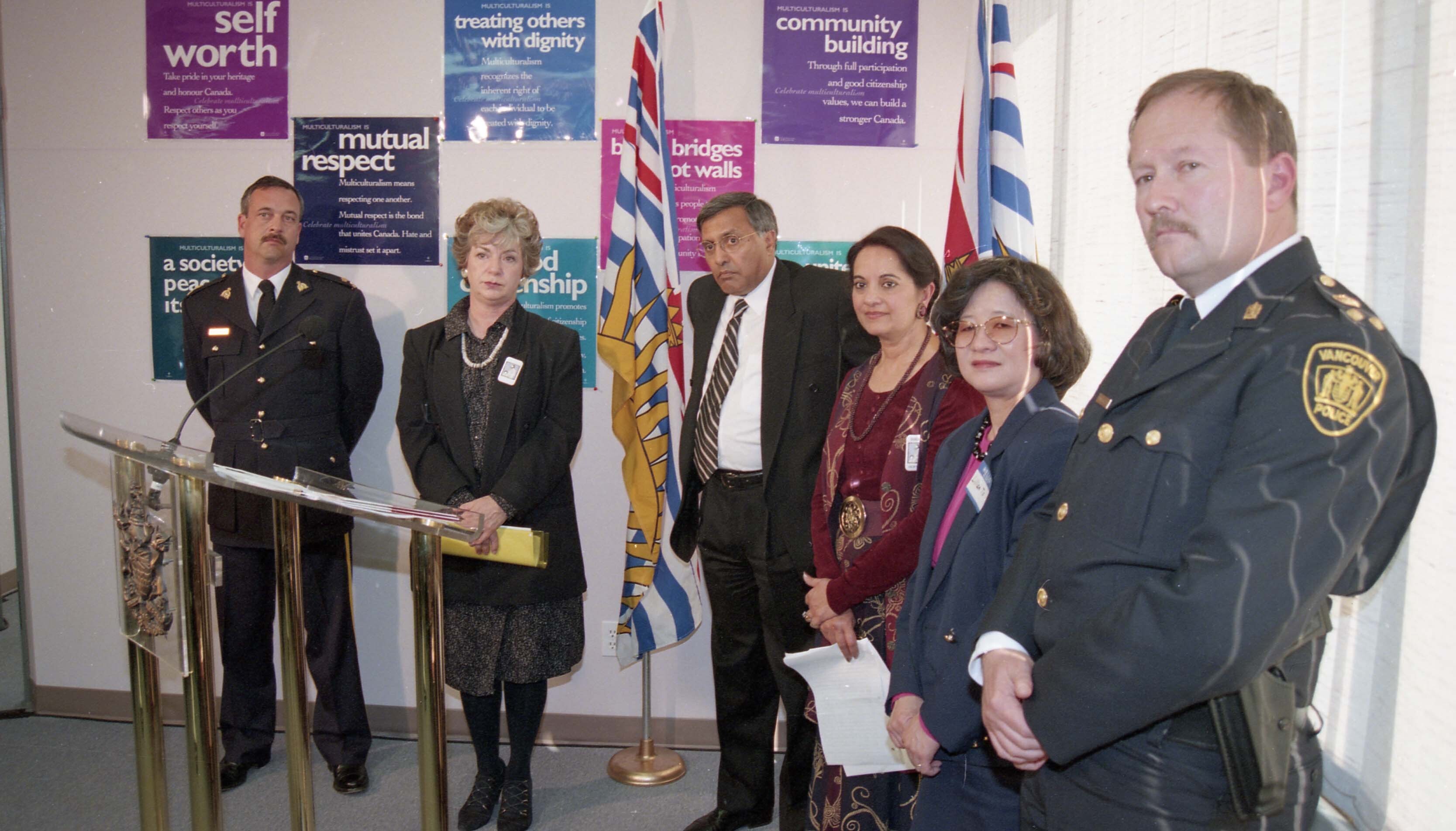
Creator: Chandra Bodalia
Description
Photograph of Sue Hammell, Ujjal Dosanjh, Shashi Assanand and Lilian To, with unidentified individuals, at an event organized by the Vancouver & Lower Mainland Multicultural Family Support Services Society (VLMFSS).
Sue Hammell is a former Member of the Legislative Assembly for Surrey-Green Timbers, serving multiple terms since 1991. She held key roles, including Minister for Women's Equality, and co-founded the Minerva Foundation for BC Women. Hammell also worked internationally to support female leaders and served as Executive Director of the Surrey Aboriginal Society.
Ujjal Dosanjh is a Canadian lawyer, civil rights activist, and politician. Born in Panjab, India in 1947, Dosanjh emigrated to England at the age of 17 and came to Canada four years later, in 1968. He started off at a Vancouver sawmill, but when a back injury hindered his career at the mill, he enrolled at Langara College and completed a degree in political science at Simon Fraser University. He earned a law degree at the University of British Columbia and established a law practice in Vancouver in 1979. First elected as MLA for Vancouver-Kensington in 1991, Dosanjh twice served as Caucus Chair and also chaired the Select Standing Committee on Parliamentary Reform, Ethical Conduct, Standing Orders and Private Bills. Dosanjh was sworn in as British Columbia's 33rd Premier and Canada's first Indo-Canadian Premier on February 24, 2000, serving until 2001. He had previously served as Minister of Government Services and Minister Responsible for Multiculturalism, Human Rights, Sports and Immigration in 1995, and served as Attorney General from August 1995 to February 2000. He was also the leader of the provincial New Democratic Party (NDP) and later served as a Member of Parliament with the Liberal Party. A long time human rights activist, his past community involvements include: South Vancouver Neighbourhood House, MOSAIC, the B.C. Multicultural Society and the B.C. Civil Liberties Association. In 1977 he helped set up the first farm workers' legal information services while he was chair of the Labour Advocacy Research Association. Throughout his career, Dosanjh has been a strong advocate for social justice, healthcare, and public policy issues.
Shashi Assanand (1942 - 2021) was a registered social worker and the founder of the Vancouver and Lower Mainland Multicultural Family Services Society (VLMFSS), where she served as an Executive Director. She worked for over 30 years in the settlement and anti-violence sectors, providing support for immigrant and refugee women facing family violence and advocating for cultural competency within professional services. Assanand was born in Uganda and relocated to the United Kingdom before settling in Richmond, Canada in 1975, where she began working as a family counsellor. She established VLMFSS in 1991 to offer counseling and support to immigrant and refugee women and children. The organization provided services that addressed issues related to family violence and facilitated community dialogue. Assanand's work led to the development of crime prevention programs for immigrant and refugee women. In recognition of her contributions, Assanand received the Order of British Columbia in 2020 and several other awards, including the 2002 Queen's Golden Jubilee Medal, a YWCA Women of Distinction Award in 2014, and an Honorary Doctorate degree from the University of British Columbia in 2021.
Lilian To was born in Guangdong, China and raised in Hong Kong. In 1974, she immigrated to Vancouver, Canada and worked at S.U.C.C.E.S.S for two years. S.U.C.C.E.S.S. is a non-partisan, non-profit multicultural Canadian organization that offers programs and services in the areas of newcomer settlement, English-language training, employment and entrepreneurship, family, youth and seniors programming, health education, community development, affordable housing, and seniors care. In 1979, To obtained a master's degree in Social Work from the University of British Columbia. In 1987, To rejoined S.U.C.C.E.S.S. as Executive Director and worked tirelessly to promote multicultural harmony in the community and bridge the cultural gap between newcomers and Canadians. Under her leadership, To expanded the services of S.U.C.C.E.S.S. from a basic immigrant agency that served the Chinese community to a multi-service and multilingual organization serving Metro Vancouver. Her commitment to giving those in need the best quality services led to building S.U.C.C.E.S.S.'s Social Services Centre – Dr. Dorothy Lam Building, Simon K.Y. Lee Seniors Care Home and Chieng's Adult Day Centre, and operation of the Harmony House Assisted Living Residence along Shanghai Alley, the birthplace of Vancouver's Chinatown. Over her lifetime, To received numerous recognitions and awards for her contributions to Canada, including, the Courvoisier Leadership Award for Public Service, the Citation for Citizenship by the federal department of Citizenship and Immigration — a national honour is handed to individuals or organizations that help newcomers integrate — along with the 1991 Vancouver Multicultural Society's Distinguished Service Award in the area of public service and the 1999 YWCA Women of Distinction award in the category of management, professions and trade. The City of Vancouver has recognized her legacy with a street and park named in her honour.
The Vancouver & Lower Mainland Multicultural Family Support Services Society (VLMFSS) is a non-profit organization pioneered to provide culturally responsive, trauma-informed, confidential and free services with immigrant/refugee women and children facing the challenges of family violence in more than 20 languages. VLMFSS was established in September 1991 by Shashi Assanand who became the first Executive Director. The Ministry for Children and Families Development (formerly known as the Ministry of Social Services) approved a proposal from the Vancouver Society of Immigrant and Visible Minority Women to create a culturally sensitive and multilingual agency dedicated to assisting immigrant, visible minority, refugee, and women without immigration status and their families who face family violence / gender-based violence (GBV) / intimate partner violence (IPV). VLMFSS was conceived within the kitchens of a group of immigrant women who held a strong passion for advocating on behalf of racialized immigrant women and children affected by family violence/GBV/IPV. VLMFSS is based in Burnaby, British Columbia.
Sue Hammell is a former Member of the Legislative Assembly for Surrey-Green Timbers, serving multiple terms since 1991. She held key roles, including Minister for Women's Equality, and co-founded the Minerva Foundation for BC Women. Hammell also worked internationally to support female leaders and served as Executive Director of the Surrey Aboriginal Society.
Ujjal Dosanjh is a Canadian lawyer, civil rights activist, and politician. Born in Panjab, India in 1947, Dosanjh emigrated to England at the age of 17 and came to Canada four years later, in 1968. He started off at a Vancouver sawmill, but when a back injury hindered his career at the mill, he enrolled at Langara College and completed a degree in political science at Simon Fraser University. He earned a law degree at the University of British Columbia and established a law practice in Vancouver in 1979. First elected as MLA for Vancouver-Kensington in 1991, Dosanjh twice served as Caucus Chair and also chaired the Select Standing Committee on Parliamentary Reform, Ethical Conduct, Standing Orders and Private Bills. Dosanjh was sworn in as British Columbia's 33rd Premier and Canada's first Indo-Canadian Premier on February 24, 2000, serving until 2001. He had previously served as Minister of Government Services and Minister Responsible for Multiculturalism, Human Rights, Sports and Immigration in 1995, and served as Attorney General from August 1995 to February 2000. He was also the leader of the provincial New Democratic Party (NDP) and later served as a Member of Parliament with the Liberal Party. A long time human rights activist, his past community involvements include: South Vancouver Neighbourhood House, MOSAIC, the B.C. Multicultural Society and the B.C. Civil Liberties Association. In 1977 he helped set up the first farm workers' legal information services while he was chair of the Labour Advocacy Research Association. Throughout his career, Dosanjh has been a strong advocate for social justice, healthcare, and public policy issues.
Shashi Assanand (1942 - 2021) was a registered social worker and the founder of the Vancouver and Lower Mainland Multicultural Family Services Society (VLMFSS), where she served as an Executive Director. She worked for over 30 years in the settlement and anti-violence sectors, providing support for immigrant and refugee women facing family violence and advocating for cultural competency within professional services. Assanand was born in Uganda and relocated to the United Kingdom before settling in Richmond, Canada in 1975, where she began working as a family counsellor. She established VLMFSS in 1991 to offer counseling and support to immigrant and refugee women and children. The organization provided services that addressed issues related to family violence and facilitated community dialogue. Assanand's work led to the development of crime prevention programs for immigrant and refugee women. In recognition of her contributions, Assanand received the Order of British Columbia in 2020 and several other awards, including the 2002 Queen's Golden Jubilee Medal, a YWCA Women of Distinction Award in 2014, and an Honorary Doctorate degree from the University of British Columbia in 2021.
Lilian To was born in Guangdong, China and raised in Hong Kong. In 1974, she immigrated to Vancouver, Canada and worked at S.U.C.C.E.S.S for two years. S.U.C.C.E.S.S. is a non-partisan, non-profit multicultural Canadian organization that offers programs and services in the areas of newcomer settlement, English-language training, employment and entrepreneurship, family, youth and seniors programming, health education, community development, affordable housing, and seniors care. In 1979, To obtained a master's degree in Social Work from the University of British Columbia. In 1987, To rejoined S.U.C.C.E.S.S. as Executive Director and worked tirelessly to promote multicultural harmony in the community and bridge the cultural gap between newcomers and Canadians. Under her leadership, To expanded the services of S.U.C.C.E.S.S. from a basic immigrant agency that served the Chinese community to a multi-service and multilingual organization serving Metro Vancouver. Her commitment to giving those in need the best quality services led to building S.U.C.C.E.S.S.'s Social Services Centre – Dr. Dorothy Lam Building, Simon K.Y. Lee Seniors Care Home and Chieng's Adult Day Centre, and operation of the Harmony House Assisted Living Residence along Shanghai Alley, the birthplace of Vancouver's Chinatown. Over her lifetime, To received numerous recognitions and awards for her contributions to Canada, including, the Courvoisier Leadership Award for Public Service, the Citation for Citizenship by the federal department of Citizenship and Immigration — a national honour is handed to individuals or organizations that help newcomers integrate — along with the 1991 Vancouver Multicultural Society's Distinguished Service Award in the area of public service and the 1999 YWCA Women of Distinction award in the category of management, professions and trade. The City of Vancouver has recognized her legacy with a street and park named in her honour.
The Vancouver & Lower Mainland Multicultural Family Support Services Society (VLMFSS) is a non-profit organization pioneered to provide culturally responsive, trauma-informed, confidential and free services with immigrant/refugee women and children facing the challenges of family violence in more than 20 languages. VLMFSS was established in September 1991 by Shashi Assanand who became the first Executive Director. The Ministry for Children and Families Development (formerly known as the Ministry of Social Services) approved a proposal from the Vancouver Society of Immigrant and Visible Minority Women to create a culturally sensitive and multilingual agency dedicated to assisting immigrant, visible minority, refugee, and women without immigration status and their families who face family violence / gender-based violence (GBV) / intimate partner violence (IPV). VLMFSS was conceived within the kitchens of a group of immigrant women who held a strong passion for advocating on behalf of racialized immigrant women and children affected by family violence/GBV/IPV. VLMFSS is based in Burnaby, British Columbia.